Lessons
Unlocking the Minds of History's Most Influential Figures: Their Legacies and Impact on the Modern World. AI-Generated.
"Explore the lives and legacies of history’s game-changers." "Dive into the stories of visionaries who shaped our world." "Discover how their actions resonate in modern times."
By Asanga Coorey2 years ago in History
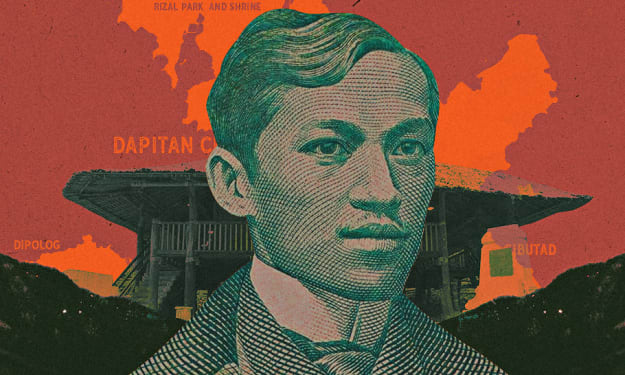
OPINION | ‘Look what you made me do’: A study on Rizal’s justification of the existence of Filipino indolence and its roots
The Indolence of The Filipino by José Rizal “We must confess that indolence does actually and positively exist there; only that, instead of holding it to be the cause of the backwardness and the trouble, we regard it as the effect of the trouble and the backwardness, by fostering the development of a lamentable predisposition.” — José Rizal, 1890.
By Precious Altura2 years ago in History
OPINION | ‘BABAE KA! Hindi Babae Lang’
IN THE BEGINNING… A group of 20 young women in Malolos, Bulacan, petitioned for permission to start a “night school” at Rufina Reyes’ house on December 12, 1888, during the visit of Governor-General Valeriano Wyler. They dubbed Seor Teodoro Sandino, a professor of Latin at the time, as the most qualified person to teach them the “beautiful Spanish language.” To Marcelo del Pilar, Graceano Lopez Jeana, and Jose Rizal, Filipino women were breaking off the chains of colonialism, but the Augustinians parish priest saw it as an act of rebellion. In 1869, the 20 women launched the school in Rufina Reyes’ house. Rizal was ecstatic to find women in the Philippines who resembled them. In February 1889, he sent them a letter written in Tagalog. Jose Rizal left a legacy for Filipino women in his essay “To the Young Women of Malolos,” in which he speaks to all diverse types of women, encompassing young children, maidens, wives, and mothers. Rizal emphasizes in his article what he wants Filipino women to remember. This piece was composed while he was in London.
By Precious Altura2 years ago in History
The Origin of the Maneki Neko cat
The Maneki Neko, also known as the "beckoning cat," is a popular Japanese figurine believed to bring good luck and fortune to its owner. The origin of the Maneki Neko is steeped in folklore and historical anecdotes, with several stories explaining how this charming cat became a symbol of prosperity.
By m habibullah2 years ago in History
The Rich Tapestry of India's History: A Journey Through Time
India, a land of vibrant colors, diverse cultures, and deep spirituality, boasts a history that is as intricate and fascinating as its present. From ancient civilizations and grand empires to colonial subjugation and the eventual triumph of independence, the story of India is a captivating saga of resilience, innovation, and transformation. This article delves into the significant epochs of Indian history, unraveling the layers of its past that have shaped the nation we know today.
By Mohit Rana2 years ago in History
"The Buffett Way"
One of the most renowned figures in the realm of stock market investing is Warren Buffett, often hailed as one of the world's wealthiest individuals due to his savvy investment strategies and insights. Buffett's success is built on a foundation of disciplined principles and a deep understanding of business fundamentals rather than short-term market fluctuations. Warren Buffett, born in 1930, is the chairman and CEO of Berkshire Hathaway, a multinational conglomerate holding company based in Omaha, Nebraska. His journey to becoming a billionaire investor began in his youth when he started investing in stocks and businesses. Over the decades, Buffett has amassed a vast fortune primarily through long-term investments in companies he believes have enduring competitive advantages and strong management teams. His approach contrasts sharply with the speculative trading often associated with stock markets. **Key Principles of Warren Buffett's Investing Strategy:** 1. **Value Investing:** Buffett is a proponent of value investing, which involves identifying companies whose intrinsic value is not fully reflected in their current stock prices. He looks for companies with strong fundamentals, including consistent earnings, manageable debt levels, and a competitive edge in their industry. 2. **Long-Term Perspective:** Buffett famously advocates for long-term investing, often saying that his favorite holding period is "forever." This mindset allows investments to compound over time, benefiting from both capital appreciation and dividends. 3. **Margin of Safety:** Buffett emphasizes the importance of buying stocks at a discount to their intrinsic value to protect against downside risk. This margin of safety provides a buffer against unforeseen market downturns or company-specific challenges. 4. **Focus on Quality:** He prefers companies with durable competitive advantages, often referred to as economic moats. These advantages can come from strong brands, patents, cost advantages, or network effects that protect the company from competitors. 5. **Management Quality:** Buffett places significant importance on the quality of a company's management team. He looks for honest and competent leaders who have a track record of making prudent business decisions and allocating capital wisely. **Steps to Properly Invest in the Stock Market:**
By Dharanidharan T 2 years ago in History