Lessons
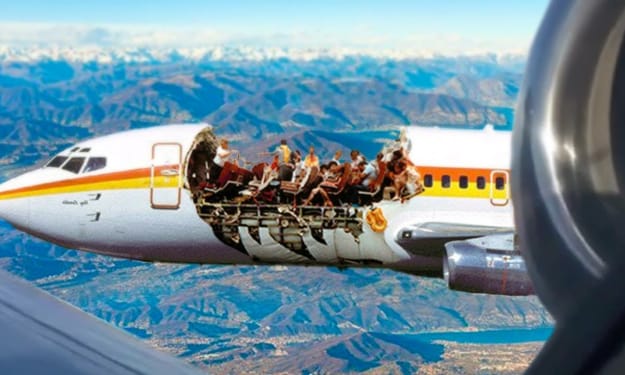
This Airplane lost its roof at 24000 fits what happened next?
This Airplane lost its roof at 24000 fits what happened next? On a seemingly routine flight passengers and crew aboard an aircraft at 24,000 feet experienced a nightmare scenario part of the plane’s roof suddenly tore away exposing them to the open sky. What followed was a dramatic struggle for survival a test of human resilience and an investigation into the causes of such a catastrophic event. The moment the roof separated from the fuselage an explosive decompression occurred. The air inside the cabin which was pressurized to mimic conditions at a much lower altitude rushed out violently. Anything that was not securely fastened loose objects, papers even lightweight belongings was immediately sucked out into the sky. The deafening roar of wind replaced all other sounds making communication nearly impossible. For those on board the experience was both terrifying and disorienting. Passengers and crew who were not wearing seatbelts felt an immense force pulling at them. Some who were unlucky enough to be near the area of structural failure were partially ejected held back only by their seatbelts or the sheer luck of their position. The temperature inside the aircraft plummeted instantly dropping to well below freezing as the cabin lost its ability to regulate heat. Breathing became difficult because the rapid decompression caused a significant reduction in oxygen levels.
By Adnan Rasheed2 years ago in History
The Hollow Heart
**The Hollow Heart** In the sleepy, foggy town of Black Hollow, there was a legend of the Lover's Tree. It stood at the forest's border, its gnarled branches reaching toward the sky like skeletal fingers. They said that if you carved the name of your sweetheart and yours into its trunk, your love would last eternally. But they hushed of a cost—no one was willing to speak aloud.
By Md Nurul Imam Babu2 years ago in History
The Nairobi Incident
If, by any chance you find yourself in a matatu from Thika Rd (especially the ones that ply the Kasarani-Mwiki road) heading to town, its not unlikely to find some traffic around Muthaiga all the way to the city. To avoid this, the driver is likely to detour at Ngara, a route that will likely take you through Grogan Rd downtown. The street is full of shady spare parts dealers and mechanics in work overalls that have seen better days. Before buildings came up in that street, the strip of land belonged to Ewart Grogan, a pioneer colonialist who judged, somewhat correctly, that the centre of the newly established Nairobi would be somewhere around there. Stories of the man who traversed the entire span of the continent to win his dream girl then settled in the East African Protectorate and built his fortunes from scratch have been told but underneath was a ruthless reputation and brutish nature which can never be erased from memory.
By HINGES OF TIME2 years ago in History
The Divine Feminine in Kamakshi Amman Temple: A Sacred Manifestation of Shakti
Introduction: The Power of the Divine Feminine at Kamakshi Amman Temple At the heart of the Kamakshi Amman Temple in Kanchipuram, Tamil Nadu, lies a profound spiritual presence—the embodiment of Shakti, the divine feminine energy. The goddess Sri Kamakshi Ambal represents the sacred force that is both nurturing and transformative, playing a crucial role in the cosmic order.
By Sri Kamakshi Ambal Temple2 years ago in History
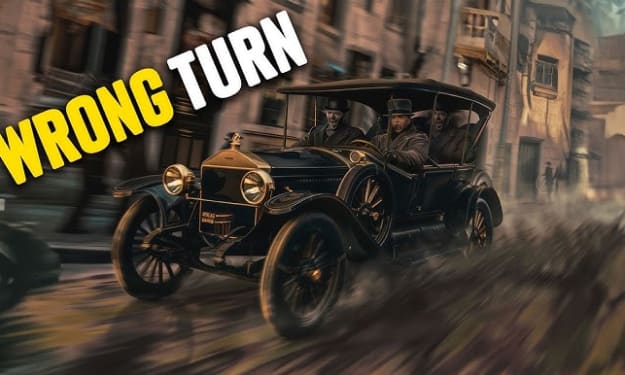
One Wrong Turn That Sparked World War
One Wrong Turn That Sparked World War World War I one of the deadliest conflicts in human history was ignited by a series of complex political economic and military factors. However at the heart of it all was a single event an assassination that in many ways can be seen as the result of one wrong turn. The fateful decision that led Archduke Franz Ferdinand’s car down the wrong street on June 28, 1914 changed the course of history setting off a chain reaction that led to global warfare. This incident though seemingly insignificant in the grand scheme of things played a pivotal role in the outbreak of World War I. The political landscape of early 20th century Europe was marked by tensions alliances and nationalist movements. Austria Hungary a vast empire struggling with internal ethnic divisions found itself facing a growing wave of Slavic nationalism particularly from Serbia. The Austro Hungarian Empire viewed Serbia as a threat suspecting that it was encouraging separatist movements within its borders. Meanwhile Serbia emboldened by its recent victories in the Balkan Wars sought to expand its influence particularly over territories where Slavic populations resided. This growing animosity created a volatile situation one that needed only a spark to erupt into full scale war.
By Adnan Rasheed2 years ago in History
Chief Iron Tail and the Early Automobile
A photo of Chief Iron Tail an original leader of the Lakota Sioux turning the crank of an early automobile, circa 1915. This image was rich in symbolism it represented the convergence of two worlds with little in common the long and wealthy traditions of Native American culture, and the progressive technological innovations of the 20th century.
By Rohitha Lanka2 years ago in History
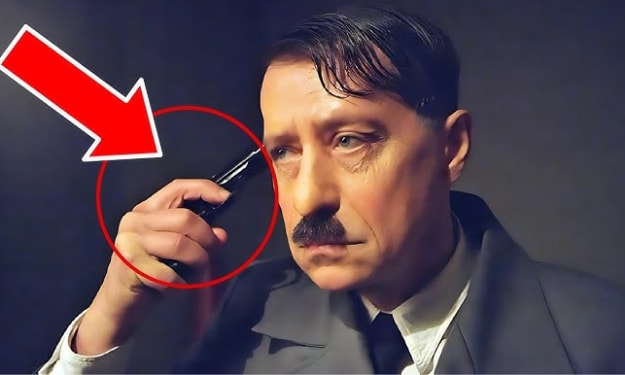
Hitler's Last 10 Days
Hitler's Last 10 Days The last ten days of Adolf Hitler’s life are among the most significant and dramatic moments in history. By April 1945 World War II was nearing its end and Nazi Germany was on the verge of complete collapse. Soviet forces were closing in on Berlin and Hitler had chosen to remain in the capital refusing to flee. He had taken refuge in the Führerbunker an underground shelter beneath the Reich Chancellery where he was surrounded by his closest advisors guards and staff. Outside Berlin was crumbling under relentless bombardment but inside the bunker Hitler was trapped in a world where delusion and reality had blurred. April 20, 1945 marked Hitler’s 56th birthday but it was far from a celebration. High ranking Nazi officials like Joseph Goebbels and other loyalists formally congratulated him, but the atmosphere was grim. As he stepped out of the bunker he met with a group of young soldiers many just sixteen or seventeen who had been hastily recruited to defend Berlin. He shook their hands knowing well that they were untrained and stood little chance against the advancing Soviet army. Yet he remained fixated on his belief that Germany could still turn the war around. In the following days as Soviet forces pushed deeper into Berlin Hitler’s psychological state deteriorated rapidly. He held frequent meetings with his generals demanding updates but every report was bleak. By April 22 during a heated conference he erupted in rage accusing his commanders of betraying him and failing to follow his orders. It was at this moment that he first openly admitted that Germany had lost the war. His generals realizing the futility of resistance knew that staying in Berlin meant certain death. However no one dared to contradict him.
By Adnan Rasheed2 years ago in History
The Limuru Conference (1966).
Tom Mboya set off the chain of events that led to the Limuru Conference. As David Goldsworthy narrates in the book, Tom Mboya: The Man Kenya Wanted to Forget, he cunningly set a trap for Odinga which the latter obliviously walked into. On 15th February 1966, Mboya tabled a motion in Parliament condemning dissident groups in KANU and asked that all who were against the government should declare themselves. Odinga immediately voiced his disapproval of the motion expressing that he had not been consulted regarding it and stormed out of the House but not before attacking Mboya directly calling him ‘The American ambassador to Kenya’. The motion did pass in his absence but only after 7 hours of vicious debates in which both camps voiced their personal and political disparities to each other in a manner that had never been done before in the country.
By HINGES OF TIME2 years ago in History