Lessons
The Morris Carter Land Commission (1932)
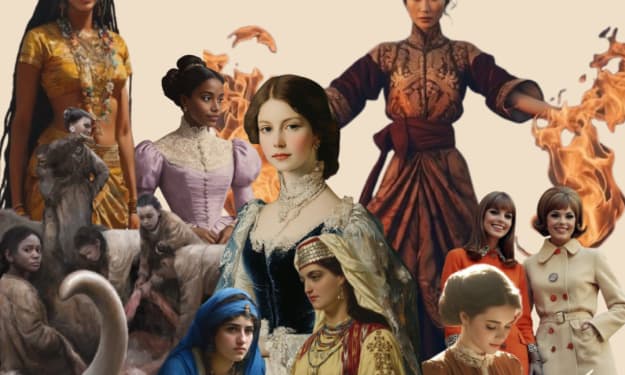
The Closer Union plan (see Colonial Villains: Edward Grigg) was meant to unite Kenya, Uganda and Tanganyika colonies into a single British East African federation. In the spring of 1931, East African delegates were invited to London to ‘represent the Native Races’ and tell the Joint Committee on Closer Union what they thought about the government of East Africa. The ones from Kenya were Rev. Ezekiel Apindi, president of the Kavirondo Taxpayers Welfare Association, from the west, up near Lake Victoria; the Kamba sub headman James Mutua, from the country east of Nairobi; and Chief Koinange wa Mbiyu, the president of the Kikuyu Association. This experience of immersion into the imperial capital of London was also meant to dazzle them enough to tell of England’s modernity upon returning back to the colonies.
By HINGES OF TIMEabout a year ago in History
The Morning Market Storyteller
Before the first rays of sunlight painted the sky, the morning market came alive with the smell of warm bread, ripe fruit, and fresh herbs as merchants set up their stalls. Old Farid, the storyteller, was one of them, sitting in his usual spot next to the spice vendor's cart. He was a mainstay of the market, as much a part of its rhythm as the cries of traders hawking their wares. Clad in a faded indigo robe, his face weathered like ancient parchment, he sat on a worn wooden stool with his staff resting across his lap, and he told stories each morning as the market came to life.
By MD SHAMIM RANAabout a year ago in History
"Beneath the Sands of Time: The Controversial Discovery of a Subterranean Metropolis Under Egypt’s Pyramids"
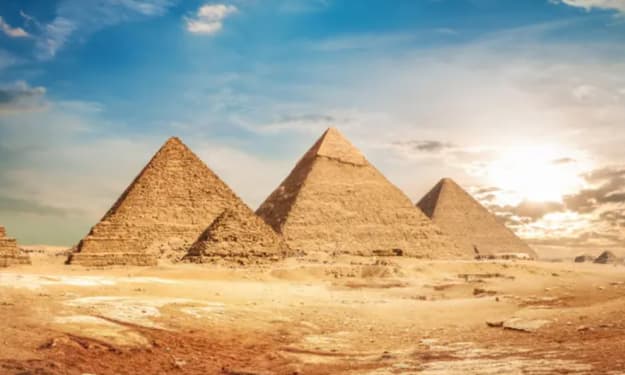
The Eternal Allure of Egypt’s Mysteries The Great Pyramids of Giza, guardians of the desert for over 4,500 years, have long captivated humanity. These colossal structures, aligned with celestial precision, are testaments to the sophistication of ancient Egyptian civilization. Yet, as modern technology peels back layers of sand and stone, a provocative theory has emerged: beneath the pyramids and the Sphinx lies a sprawling subterranean network—a “hidden city” that could redefine Egyptology. This claim, however, has ignited fierce debate among experts, pitting traditional archaeologists against interdisciplinary researchers armed with radar scans and AI-driven simulations.
By Nada solimanabout a year ago in History
Arab Pointers in the Desert. AI-Generated.
The sun blazed over the Endless Sands, a sea of dunes that stretched beyond the horizon, shimmering with heat and secrets. This was the domain of the Banu Ziyad, a nomadic tribe renowned for their mastery of the desert and their prized companions—the Arab Pointers. These dogs were no ordinary hounds; slender and swift, with coats of burnished gold and eyes like polished onyx, they were bred for the hunt, their senses honed to track prey across the merciless expanse. To the Banu Ziyad, they were more than beasts—they were kin, guardians, and the heartbeat of their survival.
By Great pleasureabout a year ago in History
Frédéric Chopin and George Sand. AI-Generated.
In the world of classical music and literature, few romances have captivated the imagination as intensely as the tumultuous relationship between Frédéric Chopin, the Polish composer, and George Sand, the French author. Theirs was a love story marked by creative collaboration, personal turmoil, and ultimately, heartbreak. A Chance Encounter It was the summer of 1838, and Chopin, then 28, was vacationing in the French countryside. Sand, 34, was already an established writer, known for her bold and unconventional novels. The two met at a dinner party, and their initial encounter was marked by a spark of mutual attraction. A Whirlwind Romance As the days turned into weeks, Chopin and Sand romance blossomed. They spent hours talking about music, literature and philosophy, finding solace in each other's creative passions. Sand was captivated by Chopin's genius, and he, in turn, was drawn to her intelligence and independence. A Creative Partnership Their romance soon evolved into a creative partnership, with Sand becoming Chopin's muse and confidante. He would play his latest compositions for her, seeking her feedback and criticism. Sand, meanwhile, would read her latest writings to him, finding inspiration in his music. A Turbulent Relationship However, their relationship was not without its challenges. Chopin's fragile health and Sand's tumultuous past made for a volatile mix. The couple's arguments grew more frequent, with Chopin's family and friends disapproving of Sand's unconventional lifestyle. A Heartbreaking Separation In 1847, after nearly a decade together, Chopin and Sand separated. The breakup was a devastating blow to both parties, with Chopin's health deteriorating rapidly in the aftermath. Sand, meanwhile, was left to pick up the pieces of her shattered heart. A Legacy of Music and Literature Despite the heartbreak, Chopin and Sand relationship left an indelible mark on the world of music and literature. Chopin's music, in particular, continues to inspire generations of musicians and music lovers. Sand's writings, meanwhile, remain a testament to her bold and unconventional spirit. Further more The story of Chopin and Sand serves as a poignant reminder that even the most creative and passionate relationships can be fragile and fleeting. Yet, it is in these moments of beauty and heartbreak that we find the inspiration for some of the most sublime and enduring works of art in human history. A Lasting Impact The impact of Chopin and Sand's relationship can still be felt today. Chopin's music remains a staple of classical piano repertoire, with his nocturnes, waltzes and preludes continuing to inspire generations of musicians. Sand's writings, meanwhile, have had a lasting impact on French literature. Her novels, such as "Indiana" and "Valentine," remain classics of French Romanticism, and her commitment to social justice and women's rights continues to inspire writers and activists around the world. A Legacy of Love Despite the heartbreak and turmoil that marked their relationship, Chopin and Sand love for each other remained strong until the end. Chopin died in 1849, at the age of 39 and Sand was devastated by his loss. In the years that followed, Sand continued to write and advocate for social justice, but she never forgot the love she had shared with Chopin. Her memoirs, published after her death, remain a testament to the enduring power of their love. A Timeless Tale The story of Chopin and Sand is a timeless tale of love, loss, and creativity. It reminds us that even in the darkest moments, there is always the potential for beauty and transcendence. As we reflect on the lives and loves of these two remarkable artists, we are reminded of the enduring power of music and literature to inspire, to comfort and to transform us. A Final Tribute In the end, Chopin and Sand's love story is a testament to the human spirit's capacity for creativity, passion and endurance. Though their time together was marked by turmoil and heartbreak, their love remains a beacon of hope and inspiration, reminding us that even in the darkest moments, beauty and transcendence are always possible. CONCLUSION As we bid farewell to this star-crossed couple, we remember the words of George Sand, who wrote, "The most beautiful things in life are those that are felt, not those that are seen." Indeed, the love of Chopin and Sand is a beautiful thing, one that continues to inspire and captivate us to this day.
By Henry Lucyabout a year ago in History
Why Did Michael and the Devil Dispute Over Moses’ Body? . AI-Generated.
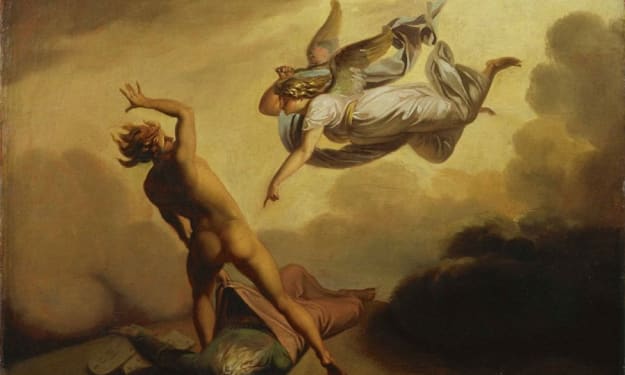
Introduction The account of Michael and the devil contending over the body of Moses, found in Jude 9, has long intrigued scholars, theologians, and biblical commentators. The passage presents a curious and enigmatic episode in which the archangel Michael disputes with Satan over the burial place of Moses, but does not engage in a blasphemous judgment. Instead, Michael says, "The Lord rebuke you." This event, though brief, raises significant questions regarding the nature of spiritual warfare, the roles of angels and demons, and the mysterious burial of Moses. To understand why this dispute occurred, we must first examine the context, the historical and theological background, and the symbolic implications of this confrontation.
By Kilama Apollo Ocholaabout a year ago in History