Lessons
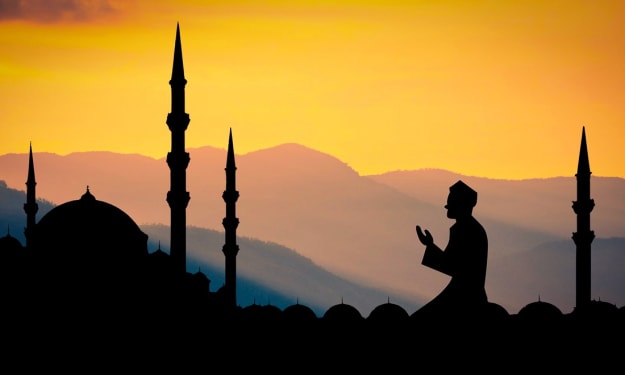
Sunset in the mountains of Durmitor
Sunset in the mountains of Durmitor The afternoon was different. The sun was slowly setting on the mountainside, spreading golden colors in the sky. The sunset could be seen from the campus dormitory, like a perfectly arranged scene—as if painted by Allah with his own hands.
By Arshad Aliabout a year ago in History
I Had Not Failed My Country
Few tales in athletics have as much resonance as that of the renowned swimmer Brojen Das, who became the first Asian to successfully cross the English Channel. More than merely recounting a personal triumph, his line "I Had Not Failed My Country" is a potent illustration of commitment, tenacity, and an unwavering love for one's nation. In addition to sharing his victory, Brojen Das's words illuminate the heart of a man who, with each stroke he made at sea, carried the aspirations of a whole country.
By Md. Saidul Islam Sanjidabout a year ago in History
America may be a superpower now, but do you know which country was a superpower in 7 th century?
### Abu Bakr: The First Caliph's Life and Leadership **Lifestyle of Abu Bakr** 1. **Simplicity and Humility**: Abu Bakr al-Siddiq was known for his modest lifestyle. He lived simply, often wearing plain clothing and avoiding extravagance. His deep faith and dedication to Islamic principles were reflected in his humility. 2. **Piety and Devotion**: Abu Bakr was very committed to the teachings of Islam because he was a close friend of the Prophet Muhammad. He was known for his strong moral character, integrity, and dedication to prayer and community service. 3. **Family Man**: Abu Bakr was married several times and had multiple children. He was well-known for his kindness and support of his family and the community as a whole, frequently providing assistance to those in need. 4. **Role of Advisory] He frequently conferred with the Prophet's other companions, valuing their perspectives and fostering a sense of collective leadership within the early Muslim community. **War Style of Abu Bakr** 1. **Decisive Leadership**: Abu Bakr's leadership was marked by decisiveness. He quickly addressed challenges, particularly during the Ridda Wars, where he took swift action against tribes that had renounced Islam after the Prophet's death. 2. **Motivational Speeches**: He inspired his followers through powerful speeches, appealing to their faith and sense of duty. His ability to motivate troops was crucial in rallying support for military campaigns. 3. **Strategic Alliances**: Abu Bakr was aware of how crucial it was to form alliances with various tribes and leaders. This diplomatic approach helped consolidate power and expand the influence of the Islamic state. 4. **Military Organization**: He organized the Muslim army into units and appointed experienced commanders, such as Khalid ibn al-Walid, who played a significant role in military campaigns. His forces were well-coordinated and disciplined. The Conquests of Abu Bakr 1. **Ridda Wars (632–633 CE)**: After the death of Muhammad, several tribes in Arabia renounced Islam. Abu Bakr launched the Ridda Wars to bring these tribes back under Islamic authority. The apostate tribes were defeated by his forces, restoring Islamic unity in Arabia. 2. **Expansion into the Sassanian Empire**: Following the Ridda Wars, Abu Bakr focused on the Sassanian Empire (Persia). His military campaigns led to significant victories, including the Battle of Qadisiyyah, which opened the way for further conquests in Persian territory. 3. **Conquest of Byzantine Territories**: Abu Bakr also initiated campaigns against the Byzantine Empire, particularly in the Levant region. His forces seized important cities, paving the way for his successor, Umar ibn al-Khattab, to expand further. 4. **Foundation for Future Expansion**: Abu Bakr's military successes laid the groundwork for the Islamic state's rapid expansion. His leadership and strategies enabled the Muslim community to grow and thrive, leading to the establishment of one of the largest empires in history. ### Conclusion Abu Bakr's lifestyle, characterized by simplicity and devotion, combined with his decisive leadership and strategic military approach, enabled him to consolidate the Islamic community and expand its influence significantly. His successful campaigns against both the Sassanian and Byzantine empires set the stage for the further expansion of Islam, making him a pivotal figure in Islamic history. The Muslim world continues to honor and respect his legacy as the first caliph.
By MD.A.R Neazabout a year ago in History
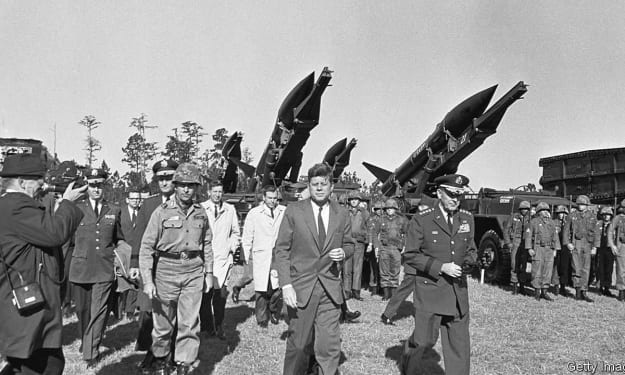
The Day the World Almost Ended, And How We Dodged Disaster
Have you ever lie awake at night wondering how close we’ve come to total annihilation? I’m not talking about asteroids or supervolcanoes—I’m talking about human decisions, split-second choices, and sheer dumb luck that kept us from blowing ourselves to smithereens. Spoiler alert: we're still around. But believe me, the story of how we survived is more bizarre than any Hollywood blockbuster. Let's dive into one of the most horrific times in history—the Cuban Missile Crisis—and see how humanity nearly dodged a nuclear catastrophe.
By ChronoCuratorabout a year ago in History
The founder Of Pakistan
The Founder of Pakistan: Muhammad Ali Jinnah In the early years of the 20th century, as the British Empire ruled over the Indian subcontinent, a visionary leader emerged who would one day change the course of history. His name was Muhammad Ali Jinnah, and he would go on to become the founder of Pakistan, a country created as a homeland for the Muslims of South Asia.
By aadam khanabout a year ago in History
2025 Youth & Health: Discover the Fountain of Youth. AI-Generated.
2025 Youth & Health: Discover the Fountain of Youth Looking ahead to 2025, we all want to stay young and healthy. The idea of finding the "fountain of youth" has changed. Now, it's about the newest wellness trends and tech that help us live longer.
By Junayed Ahmedabout a year ago in History
Lets explore about Nasa
We know that Nasa stands for the national aeronautic and Space administration . The National Aeronautics and Space Administration (NASA) is the United States government agency responsible for the nation's civilian space program and for aeronautics and aerospace research. Established on July 29, 1958, NASA has led many of the world’s most groundbreaking space missions and scientific discoveries.
By Nafis Hossenabout a year ago in History
Umar ibn al-Katab (RA) in California and women in need
One day, Islam's second caliph, Umar ibn al-Katab (RA) in California, passed through the city of Medina. When they went, they came across an older woman sitting on the side of the road, looking very sad and desperate. When Umar (ra) saw her, he gently approached: "Why are you sitting here alone, an old lady? What worries you? "
By Md Tuhin Chowdhury.about a year ago in History
Global Climate Change
Climate Change on a Global Scale: A Key Challenge of Our Time Global climate change is one of the most pressing challenges facing humanity today. It refers to the long-term alterations in temperature, precipitation, wind patterns, and other aspects of the Earth's climate system. Human activities, particularly the release of greenhouse gases like carbon dioxide, methane, and nitrous oxide, are largely to blame for these shifts. Global warming is the result of heat being trapped in Earth's atmosphere by these gases. The impacts of climate change are far-reaching and affect every region of the world, disrupting ecosystems, economies, and societies.
By Md Sohrab hossainabout a year ago in History