General
Photos of Macron’s U.K. State Visit, From a Carriage Ride to a Polite Kiss
French President Emmanuel Macron and his wife, Brigitte, commenced a three-day state visit to the United Kingdom, marked by ceremonial elegance, political symbolism, and moments of personal charm. The grand diplomatic event that was to follow began with their arrival at RAF Northolt. Greeted by the Prince and Princess of Wales, Macron's gallant gesture of gently air-kissing Princess Kate's hand drew both admiration and curiosity, as such gestures are rarely seen in royal protocol but not expressly prohibited.
By GLOBAL NEWSabout a year ago in History
Historical Places to Visit in Iraq
If you crave adventure, authenticity, and a deep connection to the roots of human civilization, few destinations compare to Iraq. For travelers considering a visit to Iraq from the USA, the country offers a tapestry of ancient cities, sacred shrines, and bustling markets—each telling a story that shaped the world. With the support of MidAsia Routes, your journey to Iraq becomes not just possible, but truly unforgettable.
By Sumit Pruthiabout a year ago in History
Vasco da Gama: Explorer, Conqueror, or Villain?
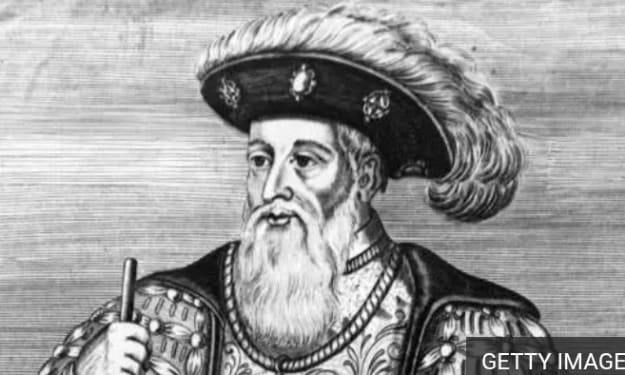
When Vasco da Gama Set Fire to a Ship Filled with Women and Children Heading to Mecca The character Kelu, raised under Portuguese rule, had only one thought in mind: to eliminate Vasco. This is the dialogue introducing the main character Chirakkal Kelu in the famous Malayalam film Urumi, even before he appears on screen. The life of the film's protagonist, Kelu, revolves solely around the mission of killing the Portuguese sailor Vasco da Gama. To achieve this goal, he faces numerous obstacles, builds a revolutionary army, and clashes with the Portuguese forces. In this battle, he loses his closest friend. But in the end, not only does he fail to achieve his goal, but he also loses his life. Chirakkal Kelu, who desires to assassinate Vasco da Gama, is a fictional character. But Prithviraj’s portrayal of this role in Urumi became a great cinematic experience and gained immense popularity in Kerala. Viewers praised the film highly. Although Vasco da Gama is celebrated in European history for discovering the sea route to India, in Malayalam films, folklore, and songs, he is portrayed as a villain. On March 25, 1497, Vasco da Gama set out from Lisbon, the capital of Portugal, for India. He had the backing of the Portuguese king for this voyage. After months of travel, he became the first European to reach India by sea. This journey earned him the title of a “hero” in European history. Even in our school textbooks, Vasco da Gama is credited for opening trade routes and playing a significant role in the spice trade. Europe’s Dream of Reaching India American historian Charles E. Nowell, in his book The Great Discoveries, writes about Vasco da Gama: > “Vasco da Gama, who established direct contact with India, was a man of strong physique and strong character. Although he was illiterate, cruel, and violent, he was also loyal and fearless.” He was given the responsibility of leading the voyage to India, a task not meant for the soft-hearted. In January 1497, King Manuel I of Portugal tasked Vasco da Gama with fulfilling “Europe's dream of reaching India.” For centuries, many European nations tried to be the first to reach India. Even a small country like Portugal was competing in this race. However, Arab and Persian traders had already reached India and established trade networks. They were importing spices, particularly from the Malabar region (present-day Kerala), through Muslim merchants. Historian John F. Richards writes in The Mughal Empire: > “Before the Portuguese arrived, Muslims and their ships dominated Gujarat, Malabar, and Arabian Sea ports.” In 1492, Columbus arrived in the Americas. Until his death, he believed that the land he had discovered was part of Asia and that India was nearby. George M. Tully writes in his book The Voyages and Adventures of Vasco da Gama: > “This is why he called the inhabitants of that land ‘Indians.’” For Europeans, India was envisioned as a wealthy land filled with gold, diamonds, precious stones, and expensive spices like pepper. Asia—especially India—was viewed as a land of immense riches and allure. William Logan writes in Malabar Manual that Vasco da Gama's fleet consisted of three ships: > São Rafael, São Gabriel, and São Miguel. Each ship was staffed with officers, sailors, and other crew members. When Vasco da Gama first came to India, his fleet was quite small. Historical sources differ on exactly how many people accompanied him. But one thing is certain: some of them were convicts. The book M. Nomed Deus: The Journal of the First Voyage of Vasco da Gama to India, 1497–1499 mentions that during the voyage, ten convicts were pardoned and sent along. The Portuguese king pardoned their crimes and sent them to assist on this mission. Some historians suggest another reason behind this decision—perhaps the king thought it better for these convicts to risk dying at sea rather than waste away in Portuguese prisons. One of the most important of these criminals was a "New Christian" named João Nunes, a recently converted Jew who could speak some Arabic and Hebrew. The same journal states: > "João Nunes was intelligent and understood the Muslims' language." Was He the First European to Set Foot in India? When Vasco da Gama’s ship reached Kerala on May 20, 1498, food was arranged on board while anchored just off the coast. It is recorded that Vasco first landed at Kappad village in the Kozhikode district of Kerala. However, according to historian and scholar M.G.S. Narayanan, Vasco first visited the Pantalayani region near the Kollam district. Small Malabar boats approached Vasco's ships and questioned his origins, asking, “Which country are you from?” It is quite possible that the first European to set foot on Indian soil was not Vasco da Gama himself, but one of his crew members—a convict. According to Vasco da Gama and the Sea Route to India: > “Before Vasco set foot on land, he sent someone who could speak Arabic and Hebrew to the shore.” Thus, the first European to reach the Malabar coast may have been João Nunes, a recent convert who spoke Arabic and Hebrew. But there is no concrete documentation to confirm this. A Disappointing First Visit to India When Vasco da Gama's translator met two Arab traders onshore, they suspected him to be an enemy. They shouted, “May the devil take you!” They then asked, “Why have you come here?” The translator replied, “We are Christians and have come in search of spices.” This exchange between the first European visitors and the Arab traders is mentioned in many historical accounts. Later, Vasco da Gama, along with a few selected men, went ashore, leaving the rest of the crew on the ships with instructions to remain alert. Historical accounts suggest that he was received with courtesy and respect. However, Vasco’s first visit to India was not as successful as he had hoped. The Hindu king of Kozhikode (called the Zamorin by the Portuguese) considered Vasco’s gifts simple and unimpressive and mocked them. The Arab Muslim traders, who dominated the spice trade, strongly opposed the arrival of the Portuguese. Historian M.G.S. Narayanan, in an interview with The Hindu, said: > “The Portuguese demanded a monopoly on the pepper trade, but the Zamorin refused because the trade was already under Muslim control.” After this, the Portuguese allied with the Kingdom of Cochin and established trading centers there. Later, they turned toward Goa, near the Vijayanagara Empire. Vasco da Gama returned to Europe in 1499 with a small quantity of spices. Nevertheless, he was given a grand welcome in Portugal. K.M. Panikkar writes in Asia and Western Dominance: > “The spices brought back from India during Vasco's first voyage were sold at a huge profit, many times more than the cost of the entire expedition.” It was then that the Portuguese realized the wealth of India. Vasco’s Second Voyage to India Vasco da Gama’s first voyage (1497–1499) established a sea route between Europe and India but failed to secure a strong trade agreement with the Zamorin of Kerala. Arab Muslim traders, long dominant in the Indian Ocean spice trade, condemned and resisted the Portuguese. Historian Sanjay Subrahmanyam writes in The Career and Legend of Vasco da Gama: > “For Vasco, the Muslim traders of Kozhikode were not only economic rivals but religious and cultural enemies.” > “Their strong position at the Zamorin’s court was a major obstacle to Portuguese ambitions.” To counter this threat, the Portuguese government planned a second expedition. This time, the goal was clear: establish Portuguese dominance in India, take revenge for earlier failures, and monopolize the spice trade. In February 1502, Vasco da Gama set out from Lisbon with 20 warships and about 1,500 soldiers. The fleet was equipped with cannons and other weapons, ready for battle. On September 11 of the same year, his fleet arrived at the coast of Kannur in Kerala. One of Vasco's crew members documented in The Journal of the First Voyage of Vasco da Gama to India: > “There we saw ships returning from Mecca. These ships were transporting spices to our country (Portugal). We captured them so that only the king of Portugal could directly trade spices from India.” > “We then captured a ship bound for Mecca, carrying 380 men, many women, and children.” > “We looted at least 12,000 ducats (gold coins) and other valuables from the ship. Then, on October 1, we set the ship and everyone on board ablaze.” The ship referred to here as the "Mecca ship" was a large vessel named Miri. According to historian K.M. Panikkar, this ship belonged to the brother of Khoja Qasim, a wealthy merchant from Kozhikode. The ship, seized by Vasco’s forces, was carrying many women, children, and elderly pilgrims bound for Hajj. It was also filled with valuable trade goods. > “Vasco ordered the ship to be burned. Women begged for mercy for their children. Portuguese soldiers watched from their ships as every soul aboard was burned alive, their screams echoing across the sea.” Gaspar Correia writes in Lendas da Índia: > “No one survived. The cries of those on the brink of death echoed across the ocean. Vasco remained unmoved, as calm as if nothing had happened.” This incident deeply disturbed even some Portuguese of the time and became a key reason why Vasco da Gama is remembered in Kerala’s history as a villain.
By Ikram Ullahabout a year ago in History
A Heart Full of Hope and I Remain Blind
There are moments when the mind wanders, caught in the suffocating grip of uncertainty. It is like standing at the edge of a cliff, with nothing but a thick fog ahead, yet knowing there is something beautiful waiting just beyond the mist. My heart, as fragile as it is, carries hope — hope that someday the fog will lift, and the light will find its way to me. But for now, I remain blind.
By wilson wongabout a year ago in History