General
Which Religion Is Right. Islam or Christianity?
The question of which religion is right—Islam or Christianity—has been asked for centuries by followers of both faiths and seekers of truth. Both religions are monotheistic, believe in the same God of Abraham, and promote moral values like honesty, kindness, and charity. Yet they differ in major theological beliefs, especially regarding the nature of God, the role of Jesus, and the path to salvation. To understand which religion might be closer to the truth, it’s essential to examine their beliefs, scriptures, historical origins, and how they guide followers in life.
By USA daily update about a year ago in History
Body of Missing Man Found Intact After 28 Years in Kohistan Glacier, Pakistan
Mystery of a Missing Man’s Body Found After 28 Years in a Glacier in Kohistan, Pakistan: “The Body Was Intact, Even the Clothes Weren’t Torn” When Umar Khan went to Lady Valley with a few friends, they unexpectedly discovered a human body while exploring the glaciers and mountains. Umar Khan, a resident of Palas in Kohistan and a livestock trader, often visits Lady Valley during the summer. This is a region where snow remains on mountain peaks year-round, making the sudden sighting of a human body shocking to everyone. Umar Khan explained, “The body was completely intact. Even the clothes weren’t torn.” Upon searching the body, they found a national ID card with the name “Naseeruddin” on it. District Police Officer Amjad Hussain of Kohai Palas confirmed that this is a 28-year-old incident in which it appears the man fell into a glacier. He added that at the time, police had completed the inquiry and closed the case, as no missing person report was ever filed by Naseeruddin’s family. However, Umar Khan, who found the body, said, “As soon as we found the ID card, the people with me instantly remembered Naseeruddin and his family. They had once left Palas due to a family feud and disappeared into this glacier.” Naseeruddin left behind two children and a widow. Who Was Naseeruddin? At the time of his disappearance, Naseeruddin was accompanied by his younger brother, Kasiruddin. The two, residents of Palas, Kohistan, had been forced to leave their hometown due to a family feud. According to retired Kohistan police officer Abdul Aziz and other locals, one of Naseeruddin’s brothers, Gardezi, was allegedly killed in the name of “honor,” which led the family to leave the area. Abdul Aziz said, “That was a time when access to Palas was very difficult. There were no communication networks, and such incidents usually didn’t reach the police. People also didn’t report them.” “Police would get information through their own sources, but if the victim’s family didn’t report the matter, it was impossible for police to intervene.” He added that when Gardezi and a girl were allegedly murdered in the name of honor, Gardezi’s father, Bahram, declared he would take revenge instead of filing a case. In response, the opposing party filed a case against Bahram and his sons, Naseeruddin and Kasiruddin. According to the retired officer, “The father surrendered himself to authorities, but the two brothers went into hiding fearing arrest. Years later, Bahram was acquitted, but the family couldn’t return to Palas and moved to Allai.” Kasiruddin said he remained a fugitive until 2023, when he finally surrendered and was acquitted a few months later. How Did Naseeruddin Disappear? On August 3, 2025, when Kasiruddin went to Lady Valley to retrieve his brother’s body, he spoke to the BBC. He said he and Naseeruddin had come from Allai to the Supat Valley in Kohistan to buy horses for trade. They used to bring livestock and horses from Kohistan to Allai, where there was high demand. Due to the family feud, they often took unconventional and dangerous routes. This was in June 1997. After buying the horses in Supat Valley, they traveled to Naran-Kaghan and spent the night there before heading back to Allai. Upon re-entering the Kohistan region, they asked for directions and were guided toward Lady Valley. Kasiruddin said that during the afternoon, while traveling through Lady Valley, Naseeruddin was on horseback, and he was walking on foot. “When we reached the top, suddenly, we heard gunshots.” According to him, he suspected that the gunfire came from enemies. However, there is no independent confirmation of this, and local police did not receive any such report. Kasiruddin insists that after the gunfire, Naseeruddin entered a cave. “I turned back to where I saw him enter the ice cave, but he wasn’t there. I even stepped into the icy cave, but found nothing.” He said he searched for his brother with the help of others for a long time, but failed. Eventually, on family advice, he offered a funeral prayer (janaza) at the glacier, assuming his brother had perished. Umar Khan said that although he visits this area almost every year, “What I saw this year is unbelievable.” “This year, the glacier is melting rapidly, and we feel the temperatures are noticeably higher in the area.” He added that when Naseeruddin was possibly trapped in the glacier or cave, he may have survived only for a few minutes. “We didn’t find any remains of the horse either.” He believes the body remained inside the glacier for many years, which is likely why it was so well-preserved. Bodies preserved in glaciers are often found in surprisingly intact conditions, even after centuries. Umar Khan said he had to hike for a day to reach an area with mobile signal, after which he contacted Naseeruddin’s relatives. We buried the body temporarily, fearing that it might decompose if left exposed outside the glacier.” Kasiruddin said, “We’re now headed toward Beladi. After 28 years, I am going back there. Once there, I’ll decide whether to leave my brother’s body buried at the current site or bring it back.” He added that decision would also depend on whether their former rivals allow the burial to take place in Palas or not. Glaciers Are Melting Rapidly Professor Dr. Muhammad Bilal, Head of the Environmental Sciences Department at COMSATS University Abbottabad, explained the science behind the phenomenon. “When a body enters a glacier, the extremely cold temperature rapidly freezes it,” he said. This sudden freezing prevents decomposition. Additionally, the natural enzymes and bacteria that usually break down tissue become inactive in the freezing environment.” Dr. Bilal said that oxygen levels in glaciers are also very low, making it difficult for bacteria that rely on oxygen to survive and decompose the body. Low moisture content also causes the body’s fluids to dry out. This process is called ‘mummification,’ where the body dries naturally and can remain preserved for extended periods. He added that the surrounding snow forms a natural protective layer around the body. “This layer shields the body from external elements, germs, insects, and temperature changes. All these factors drastically slow down or stop the decomposition process, which is why even bodies that are thousands of years old are sometimes found intact in glaciers.” However, he also noted that the reappearance of such bodies is a sign of climate change, indicating that glaciers are melting faster. Dr. Adnan Ahmad Tahir, a glacier researcher from COMSATS University Abbottabad, said that the body found in Lady Valley had likely been buried under snow for years. Our glaciers are retreating and melting at an unusual rate due to several environmental factors.” He cited flash floods and glacial lake outburst events as examples and said that similar events are causing an increase in the recovery of buried objects and bodies. In the past three years, snowfall in these regions has decreased, and snow now melts more quickly, exposing glaciers directly to sunlight and accelerating their melting,” he explained.
By Real contentabout a year ago in History
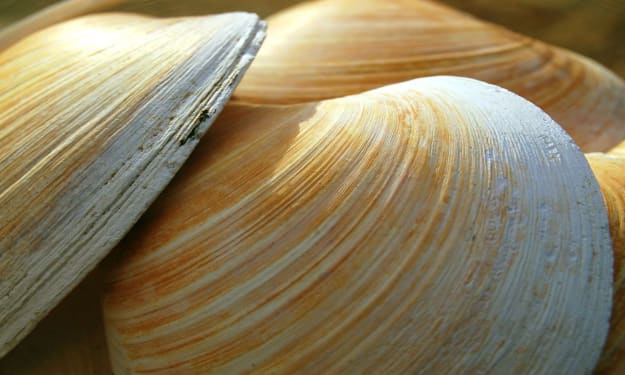
The Ocean’s Oldest Secret: A Clam That Lived for Over 500 Years
A Surprising Discovery Beneath the Waves When it comes to the longest-living creatures on Earth, ancient trees like bristlecone pines or slow-moving Galápagos tortoises usually dominate the conversation. But deep beneath the icy waters off the coast of Iceland, an unassuming mollusk shattered those expectations. In 2006, scientists discovered what would become known as Ming the Clam—a specimen of the species Arctica islandica, later confirmed to be the oldest living clam in recorded history.
By charliesamuelabout a year ago in History
The Angel Number 0100: A Divine Call for Spiritual New Beginnings
The Angel Number 0100: A Divine Call for Spiritual New Beginnings In the world of numerology, every number sequence carries a specific vibration and a message from the universe. When a number like angel number 0100 appears repeatedly, it's a powerful sign that your angels are communicating with you. This number is a beacon of divine guidance, signaling a new beginning that is deeply rooted in your spiritual journey. It's a call to trust your intuition, embrace a new path, and boldly step into the next phase of your life.
By Sthephanieabout a year ago in History
The Cradle of Civilization. AI-Generated.
The Cradle of Civilization: Unearthing the Enduring Legacy of the Ancient Near East Forget dusty textbooks and dry lectures. Step back in time – way back – to a world where the first cities rose from the mudflats, writing scratched its way onto clay, and laws were carved in stone for all to see. Welcome to the Ancient Near East, the vibrant, complex, and utterly foundational crucible where the very blueprint of Western civilization was forged. This isn't just history; it's the origin story of us.
By Yand Bullosyabout a year ago in History
Ashes in Her Eyes: A Child’s Memory of War
Ashes in Her Eyes: A Child’s Memory of War She doesn’t remember when the sky changed color. One day it was blue—bright and full of clouds shaped like rabbits. The next, it was gray, thick with smoke, and roaring louder than any storm she'd ever heard. Mila was only six when the war came to her street, and by the time it left, nothing was the same—not her house, not her teddy bear, and not her heart.
By Wings of Time about a year ago in History
Demons: Reality or Fantasy? Exploring the Origins, Myths, Science, and Beliefs Behind the World's Darkest Entities
Description: Are demons real, or are they just products of myth, fear, and misunderstanding? This extensive article dissects the concept of demons across religions, cultures, and scientific perspectives. From ancient Mesopotamian spirits to Hollywood’s horror portrayals, explore how demons have shaped human imagination, belief systems, and the battle between good and evil.
By Stefano D'angelloabout a year ago in History
Frozen in Fear: The 12-Year-Old Boy Who Survived a Blizzard Alone for 3 Days ❄️🧒🏻🏔️
On December 8, 2017, 12-year-old Artem Kuznetsov set out before dawn to cross a narrow mountain pass and deliver fresh bread 🍞 to his grandmother’s cabin. The frost sparkled ❄️ on every surface, and the snow was piled high from a storm earlier that week. He pulled his woolen cap over his ears, zipped up his jacket tight, and stepped out into what looked like a peaceful winter morning. He had done this journey many times before. The trail was narrow but clear, winding through pine forests 🌲 and across frozen streams. It usually took him less than an hour. He had no reason to believe this time would be any different. But halfway along the trail, things changed. The wind picked up sharply, blowing so hard it pushed him sideways. What had been gentle snowfall turned into a wall of ice 🌬️. The trees began to blur together. Within minutes, Artem realized he couldn’t see more than a few meters ahead. The footprints behind him were already vanishing. He considered turning back. But something stubborn inside him pushed forward. He thought of his grandmother, sick and alone, waiting for the bread he carried. He’d promised her 🤞. He had to keep going. Then he missed a turn. One wrong step in that blizzard, and the trail was gone. He turned in circles, calling out, hoping to hear someone respond—but all he heard was the wind screaming through the trees. He reached into his coat pocket to grab his phone 📱. The screen flickered and died in his gloved hand. The battery had frozen solid. Panic hit him in the chest like a punch 💔. He was alone. Truly alone. By late afternoon, it had grown dark. The storm hadn’t let up. Snow slapped his face. His fingers began to burn, then go numb 🥶. He knew if he stopped moving, he would freeze to death. But he couldn’t walk forever either. Eventually, he found a shallow dip beneath a fallen pine. He used branches and snow to form a rough shelter — barely enough to block the wind. He curled into a ball, hugging his knees, trying to conserve warmth. He had no food. No fire. Nothing but the coat on his back. That first night was endless. He didn’t sleep. Every noise made him jump. Wolves lived in those woods 🐾. He kept whispering to himself, just to hear something human. Back in his village, rescue teams had already begun searching. But with heavy snow and howling winds, they covered only a small area. Most feared the worst. The second day, Artem forced himself to move again. He drank melted snow cupped in his hands 💧. His face was swollen and raw. He wandered for hours with no sense of direction. Everything looked the same: white, gray, trees, and silence. His legs felt like they no longer belonged to him. That night, he didn’t build a shelter. He simply collapsed against a tree and let snow fall over him like a blanket. By the third morning, he felt hollow — like a ghost. But he kept going. Something inside him refused to quit. He thought of his grandmother again. Of her voice. Of warm soup 🍲. Of the way she smiled when he knocked at her door. He kept moving. That afternoon, a shepherd passing through the lower woods spotted small footprints in the snow. He followed them with suspicion and curiosity — until he saw something ahead: a thin boy, pale and shaking, barely upright. The man ran to him, removed his own coat, and wrapped it around Artem’s frozen frame. Artem’s lips were blue 💙. His eyes blinked slowly. But he was alive. Doctors later called it a miracle ✨. Artem suffered frostbite and exhaustion, but no lasting damage. He had survived three days in –22 °C weather with no food, no gear, and no way to call for help. When asked how he made it, Artem simply said, “I just wanted to see my grandma again.❤️
By Echoes by Imadabout a year ago in History
The Forgotten Whaling Ports of the Eastern Seaboard
On a foggy morning in 1847, a solitary figure stood on a creaking New England pier, staring out into a gray and endless horizon. The brine of the Atlantic clung to his coat, and somewhere in the mist, a ship’s bell tolled. Around him, the harbor groaned with life: men heaving barrels of whale oil onto carts, the smell of salted blubber drifting through the air, gulls circling with their mournful cries. It was the heartbeat of a world now almost forgotten—a world where tiny coastal towns lit the globe with the oil of giants from the sea.
By The Iron Lighthouseabout a year ago in History
Chevrolet Nomad 1955. A Timeless American Icon.
The 1955 Chevrolet Nomad is one of the most iconic and admired cars in American automotive history. With its unique blend of style, performance, and practicality, the Nomad stands out as a classic station wagon that captured the imagination of car lovers across generations. It was more than just a vehicle—it was a bold statement of design and innovation at a time when the U.S. car industry was booming with creativity.
By USA daily update about a year ago in History
titanic: The Unsinkable Tragedy That Shook the sector
The giant, hailed as the biggest and maximum costly passenger deliver of its time, stays one of the maximum haunting maritime disasters in human history. Built with the finest generation of the early twentieth century and promoted as “unsinkable,” the RMS large tragically sank on its maiden voyage in April 1912, leaving at the back of a legacy of sorrow, mystery, and enduring fascination.
By Samiullah Adilabout a year ago in History