General
World War I: The Great War That Changed the World
Introduction World War I, also known as the "Great War," was one of the most transformative and devastating events in modern history. Fought between 1914 and 1918, it involved most of the world’s great powers, reshaped global politics, and laid the groundwork for much of the twentieth century’s turbulence. What began as a regional conflict in the Balkans escalated into a global war due to entangled alliances, militarism, imperial rivalries, and rising nationalism. By the time it ended, millions were dead, empires had collapsed, and the world was permanently altered.
By Hamza Muhammadabout a year ago in History
The Silent Struggles of Ordinary People During World War I
Introduction When history recalls World War I, it often highlights the generals, the trenches, and the dramatic battles. Yet behind the clashing armies were millions of ordinary men, women, and children who faced unimaginable struggles. Their lives were filled with hunger, fear, loss, and uncertainty. The Great War, fought from 1914 to 1918, was not only a conflict of nations but also a test of human endurance for everyday people caught in its shadow.
By Waqas Ahmad about a year ago in History
The Last Night of Constantinople (1453)
A City at the Crossroads of History For more than a thousand years, Constantinople stood as the bridge between East and West. Known as the capital of the Byzantine Empire, it was not only a fortress of Christianity but also a hub of trade, culture, and knowledge. Its massive walls, built by Emperor Theodosius II, had repelled countless sieges. For centuries, enemies stood outside its gates and failed. The city was seen as almost invincible—until the spring of 1453.
By Waqas Ahmad about a year ago in History
The Child Who Vanished — and the Man Who Came Back
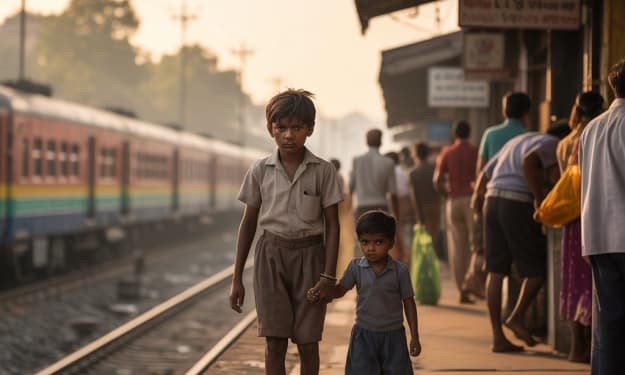
The Night Everything Changed Saroo Brierley was born in Khandwa, Madhya Pradesh, India. Life was fragile. His father had abandoned the family, and his mother worked carrying stones to earn enough to feed her children. Saroo often begged or scavenged food alongside his older brother Guddu. Despite their hardships, the boys shared laughter, dreams, and the quiet understanding that they only had each other.
By Atif khurshaidabout a year ago in History
Pakistan vs India: A Historic Rivalry and the Global Role of the United States
Introduction The rivalry between Pakistan and India remains one of the world’s most enduring and dangerous conflicts. Emerging in 1947 from the violent partition of British India, the two nations have fought wars, engaged in border clashes, endured terrorism, and faced recurring political hostility. At the heart of this struggle lies the Kashmir dispute, but the rivalry extends to economics, regional influence, religion, and geopolitics.
By Hamza Muhammadabout a year ago in History
Israel, the Muslim World, and the United States: A Geopolitical Triangle of Conflict and Power
Introduction The Middle East has long been the focal point of world politics, not only due to its geographical significance but also because of its cultural, religious, and economic importance. Central to this discourse lies the ongoing conflict between Israel and the Muslim world, a relationship marked by tension, wars, failed peace efforts, and deep mistrust. Adding a further layer of complexity is the role of the United States, which has been Israel’s closest ally while simultaneously maintaining strategic ties with key Muslim-majority nations.
By Hamza Muhammadabout a year ago in History
Zipho Memela: A Tale of Two Careers. Content Warning.
The name Zipho Memela is associated with two different public personas, each having made a mark in their respective fields. While one is a former hip-hop artist from Durban, the other is an entrepreneur and author.
By Kin Mancookabout a year ago in History
The Giants of North America, Bones, Headlines, and a Century of Silence
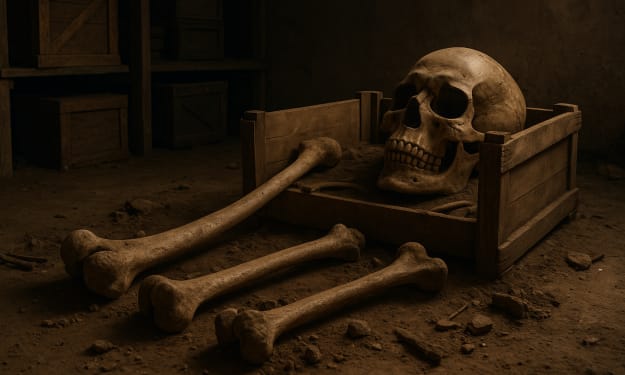
Behind The Scenes The story begins in quiet places, fields along river bends, hills that rise gently over the Midwest, burial mounds shaped by hands far older than the United States itself. In the late nineteenth and early twentieth centuries, farmers cut into those mounds, road crews leveled them for progress, and local papers reported discoveries that should have changed the way we tell history. They described skeletons of unusual size, skulls with features that did not match the average measurements of the day, long bones that drew crowds and curiosity in county seats from Ohio to Wisconsin. Reporters wrote in brisk, matter-of-fact tones, as if describing a sports score or a harvest tally. Then, almost as quickly, the words faded from view, leaving behind a mystery.
By The Secret History Of The Worldabout a year ago in History
The Copper Scroll: Directions to Lost Treasure Beyond the Dead Sea
A Discovery Unlike Any Other In 1952, a significant discovery was made within the barren caves near Qumran, located near the Dead Sea. This find, unlike any other in the region, consisted of a pair of scrolls hammered out of copper. These scrolls, unlike the fragile manuscripts written on parchment or papyrus that were typically found, contained a record that read more like instructions, as though someone had left behind a coded guide to something immense.
By The Secret History Of The Worldabout a year ago in History
Oddball Cemeteries of the U.S.: Where Americana Refuses to Stay Buried
America is famous for its highways, diners, neon signs, and baseball diamonds. But if you want a true look at the nation’s eccentric soul, don’t just look at where people lived, look at where they’re buried. From clowns and cowboys to frozen dead guys and epitaphs that double as comedy routines, cemeteries in the U.S. are less about quiet reflection and more about eternal Americana.
By The Iron Lighthouseabout a year ago in History
The Rise and Fall of the French Kingdom: From Glory to Revolution
The Rise and Fall of the French Kingdom: From Glory to Revolution How a thousand years of monarchy shaped France — and how revolution forever changed it. For more than a thousand years, France was not a republic, but a kingdom ruled by powerful dynasties. Kings shaped the nation’s identity, led it through wars and alliances, and left behind a legacy of culture, art, and governance that still echoes through history. Yet, what rose to unimaginable heights of glory would one day crumble in the fires of revolution. The Birth of a Kingdom The story of the French Kingdom begins in the 5th century, with the rise of the Franks. Under the leadership of King Clovis I, the tribes were united into one powerful realm. Clovis’s conversion to Christianity was more than a personal choice; it tied the monarchy to the Roman Catholic Church, giving the crown both spiritual authority and political legitimacy. This foundation allowed the kingdom to grow steadily. Over the centuries, the Capetian dynasty consolidated power, building the early framework of what would become modern France. The Golden Age of Power By the 17th century, France had reached the peak of its influence. The reign of King Louis XIV, famously known as the Sun King, marked the height of French power and prestige. His vision of centralized power turned France into Europe’s cultural and political capital. Louis XIV built the magnificent Palace of Versailles, a symbol of royal glory and absolute power. Under his rule, art, literature, and architecture flourished. French fashion, philosophy, and etiquette spread across Europe, making France the cultural center of the world. But this golden age came at a cost. The extravagance of the monarchy, combined with expensive wars, drained the royal treasury. The seeds of discontent were quietly being sown among the people. Cracks in the Crown As the decades passed, the gap between the monarchy and the common people widened. The tax burden fell heavily on the poor, while the nobility and clergy enjoyed privileges and exemptions. Crops failed, bread prices soared, and frustration simmered in villages and cities alike. By the time King Louis XVI and Queen Marie Antoinette sat on the throne in the late 18th century, the kingdom was drowning in debt and unrest. Their lavish lifestyle, while exaggerated by rumors, became a symbol of royal indifference to the struggles of ordinary people. The Revolution That Changed Everything In 1789, the tension finally snapped. What began as calls for reform erupted into the French Revolution, a movement that would not only topple a monarchy but also reshape the world. The storming of the Bastille marked the beginning of a dramatic transformation. By 1792, the monarchy was abolished. The king and queen were tried, convicted of treason, and sent to the guillotine. For the first time in its history, France declared itself a republic. The principles of liberty, equality, and fraternity spread far beyond France, inspiring movements in Europe, the Americas, and beyond. The Legacy of the French Kingdom Though the monarchy fell, its legacy remains woven into the fabric of France. The stunning palaces, cathedrals, and works of art from the royal era continue to attract millions of visitors every year. The legal and administrative systems shaped under the monarchy laid the foundation for the modern French state. More importantly, the story of the French Kingdom reminds us of the fragility of power and the strength of the human desire for change. What was once the mightiest monarchy in Europe became a lesson in how unchecked privilege can lead to upheaval. A Kingdom That Lives On Today, France stands as a republic, but the echoes of its royal past are everywhere — from the streets of Paris to the quiet countryside castles. The story of the French Kingdom is not just about kings and queens; it’s about a nation’s journey through time, shaped by ambition, struggle, and the unending quest for liberty.
By Behind the Curtainabout a year ago in History