General
The Rooms Lost in the White House East Wing Demolition
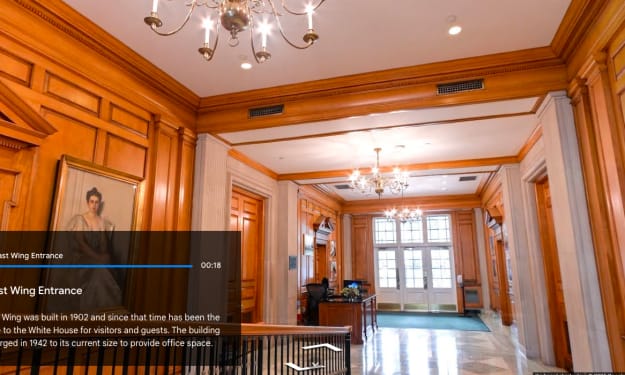
East Wing Entrance — Established in 1902 as part of the original East Terrace; used for public access since 1942. During World War II (1942–1945), the Visitor's Entrance facilitated discreet wartime briefings. In 1962, it welcomed dignitaries like Empress Farah of Iran for tours led by Jacqueline Kennedy. Served as the gateway for all non-official visitors.
By Scott Christenson🌴11 months ago in History
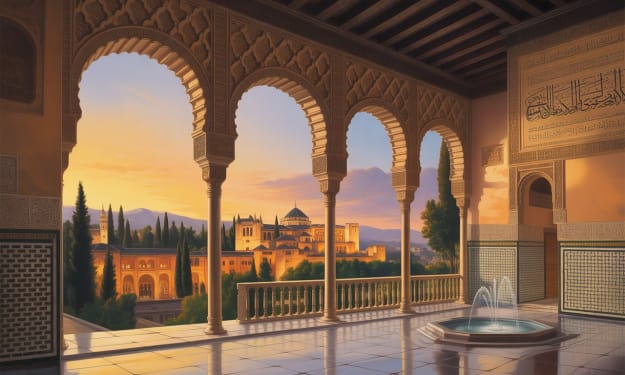
The Secret Society That Controls America — The Truth Behind the Symbol
Have you ever looked closely at a one-dollar bill? Most people see the familiar green paper, the number one, and the face of George Washington. But if you turn it around, you’ll notice something strange. A pyramid. An eye floating above it. Latin words that whisper of mystery — Annuit Coeptis. Novus Ordo Seclorum. For decades, Americans have wondered what this symbol really means. Why is an ancient pyramid — something from Egypt — sitting on the most powerful nation’s currency? And who decided to put an eye hovering over it, watching everything? To many, it’s just design. But for others, it’s a mark — a signature of something hidden. Something powerful. A secret society that shaped the foundation of the United States itself. This story begins not with money, but with belief — the belief that a few chosen minds could hold the knowledge to guide the world. Back in the 1700s, when the thirteen colonies were still under British rule, a quiet movement was spreading across Europe — a group called the Freemasons. They weren’t politicians or kings, but thinkers, builders, and dreamers. They believed in symbols, geometry, and a divine order — the idea that numbers and shapes could connect humanity to a higher truth. Among their secrets were the tools of architecture: the square, the compass, and the all-seeing eye. To the Masons, that eye wasn’t about control. It represented enlightenment — the wisdom of a higher power watching over the just. Now imagine this: as America was being born, many of its founding fathers — George Washington, Benjamin Franklin, Paul Revere — were Freemasons. Their secret gatherings weren’t about power, but about philosophy. They believed they were creating not just a country, but a symbol — a nation built on reason, liberty, and divine order. And so, when it came time to design the Great Seal of the United States, their symbols naturally followed. In 1776, as revolution raged, the first committee met to create the Great Seal. The design changed many times. Eagles, shields, stars, and circles came and went. But one image stayed — the pyramid. To the founders, it symbolized strength and endurance. The thirteen steps represented the thirteen colonies. And the unfinished top meant the nation was still growing, its destiny incomplete. But then came the most mysterious part — the eye above it. Charles Thomson, one of the men behind the seal, described it as “the Eye of Providence.” He said it symbolized God watching over the new nation. But skeptics today ask: why was that same eye used by Freemasons centuries earlier? Was it coincidence… or connection? As the years went by, the eye became more than just a symbol of faith. It became a message hidden in plain sight. You can see it in architecture — carved into buildings in Washington D.C., engraved in Masonic halls, and painted in the Capitol’s dome itself. The same pattern repeats: light, geometry, and the ever-present eye watching from above. Some historians argue that this isn’t proof of conspiracy — it’s proof of influence. The Freemasons, after all, were everywhere in early America. They were scientists, inventors, and leaders. They used symbolism like a secret language, embedding their beliefs into the country’s DNA. But others aren’t so sure. Because behind every ideal, there’s always control. Why were these symbols hidden in plain sight? Why on the very currency millions would touch every day? The truth is, no one can agree. Some say it was simply a tribute to divine guidance. Others claim it was a quiet nod — a way for Freemasons to mark their work, like an artist signing a masterpiece. But as centuries passed, new groups began to emerge, taking inspiration — or perhaps, continuation — from these old symbols. Groups that would later be accused of pulling the strings of governments and economies. And that brings us to the real question — did the secret societies of the past die with the revolutionaries, or did they simply evolve? If they did, who’s really watching us today from that ancient symbol on our money? One thing is certain: the Founding Fathers believed in power beyond politics — the kind that doesn’t show itself in laws or titles, but in ideas that last for centuries. Whether it’s a mark of faith or a sign of control… the Eye of Providence continues to watch. By the time the nineteenth century arrived, the world had changed — but the whispers about hidden power had not. The Freemasons had built their lodges across America. Ordinary people joined for friendship and charity, but higher up, the rituals grew more mysterious. Candles, symbols, oaths, and secret rooms gave them an air of mystique. Outsiders began to ask: what are they hiding? It wasn’t long before another name began to stir fear — the Illuminati. Originating in Bavaria in the late 1700s, they claimed to seek enlightenment, reason, and freedom from religious oppression. But rumors spread that they were plotting to overthrow monarchies and take control of the world. When the Illuminati was banned in Europe, many believed its members fled underground, blending into other secret orders — including, some say, the Freemasons in America. By the 1800s, the idea of a hidden hand guiding history had become irresistible. Newspapers, pamphlets, and early novels painted images of secret councils deciding wars and revolutions from behind closed doors. In America, every unexplained event became fuel for the theory — the Masons, the bankers, the politicians, all linked by invisible threads. But perhaps the most striking evidence of hidden influence came from architecture. The city of Washington D.C. itself — designed with Masonic input — contains streets and landmarks aligned in strange geometric patterns. Look at an aerial map, and some claim to see pentagrams, compasses, and other Masonic shapes woven into the very grid of the capital. Coincidence? Or careful design? Even the placement of key monuments seemed to echo ancient patterns. The Washington Monument — an Egyptian-style obelisk — rises precisely aligned with the Capitol and the White House. To the eye of the believer, it’s not just design. It’s a code. A map of power. By the 20th century, these ideas evolved again. The concept of a single “New World Order” began to spread — a phrase that still haunts debates today. Presidents, bankers, and secret meetings were said to be shaping a global system ruled not by nations, but by hidden elites. The dollar bill’s pyramid and the words Novus Ordo Seclorum — Latin for “New Order of the Ages” — only added fuel to the fire. For many Americans, that phrase felt like confirmation. The proof was in their hands — printed on the very money they used. How could it be coincidence? Yet the truth, as always, is more complicated. Those Latin words were originally chosen to mark the beginning of a new era — the birth of a nation freed from kings. But in the modern world, their meaning shifted. Words like “new order” began to sound less like freedom, and more like control. Throughout the 1900s, secret societies took on new forms. The Skull and Bones at Yale — an elite club whose members would go on to become presidents, judges, and CIA directors. The Bohemian Club — a gathering in California where world leaders met in the woods, performing rituals before a giant stone owl. To outsiders, it looked like a joke. But to those who believe in symbols, it was something else — the continuation of the same hidden traditions. When powerful men repeat ancient symbols, people start to wonder if history is repeating itself too. The question isn’t just who belongs to these societies, but what they discuss behind closed doors. Are they simply networking? Or planning the next chapter of the world’s story? Documents from the early 1900s reveal something intriguing. Masonic lodges were still active within American government circles. In fact, several presidents — from Franklin D. Roosevelt to Harry Truman — were confirmed Freemasons. Roosevelt himself approved the design of the dollar bill in 1935, the same one bearing the pyramid and the eye. Was it a patriotic gesture, or a subtle reminder of who really shaped the nation’s destiny? Meanwhile, conspiracy culture exploded. Books, radio shows, and eventually television documentaries began connecting dots between secret groups, world events, and corporate power. Each generation found its own version of the same fear: that democracy was an illusion, and true authority lay in unseen hands. Some saw it in the Federal Reserve, a system that controls America’s money but is privately owned and barely understood by the public. Others pointed to global organizations — the United Nations, the Bilderberg Group, or the World Economic Forum — as the new faces of the same old power. The words changed, the faces changed, but the idea stayed the same: a small circle controlling the many. But here’s where things get strange. Whenever you try to trace the truth — to find hard evidence — it slips away. There are no official documents, no public confessions. Only patterns, coincidences, and symbols. And yet, those symbols keep reappearing — on buildings, on currency, even in pop culture. The pyramid, the eye, the owl, the compass — all remnants of the old societies that supposedly vanished. It’s as if the language of the secret world never died. It simply went quiet. Hidden not in underground chambers, but in plain sight — on the walls of institutions, in the logos of corporations, and in the rituals of the powerful. Could it be that the real secret is not who controls the world… but how easily we stop questioning who does? As America grew into a superpower, the whispers grew louder. Wars, financial collapses, assassinations — every event found its way into the theory. Every symbol became a clue. But if the Freemasons once shaped the birth of America, who shapes it now? Are they the same minds reborn under new names? Or just the same human hunger — for order, for knowledge, and for control — repeating itself in endless cycles? The more you look, the more one thing becomes clear. History isn’t written by everyone. It’s guided — sometimes by visionaries, sometimes by those who wish to remain unseen. And the dollar in your hand… might just carry the last surviving signature of that hidden power. By the dawn of the twenty-first century, America had entered a new kind of world — one built not on stone lodges and candlelit rooms, but on satellites, data, and digital surveillance. Yet even in this age of technology, the same question echoed through the internet, through chatrooms and documentaries, through every corner of curiosity. Who really controls America? People no longer searched through old books for answers. They searched online, uncovering connections between billionaires, corporations, politicians, and old secret societies. The theories evolved. The Freemasons and the Illuminati gave way to new names — global elites, the deep state, and shadow governments. The idea was always the same: the symbols had not disappeared, they had merely adapted. The all-seeing eye, once carved in stone, now glowed through cameras, satellites, and screens. The pyramid of power no longer stood in marble — it was built from networks of data, hidden ownership, and silent influence. What once took secret handshakes and private meetings could now be done with algorithms and encryption. The modern secret society didn’t need temples anymore. It lived in code, in corporations, and in systems ordinary people never see. But there’s an irony in all of this. The more connected the world became, the more divided it felt. Truth and fiction blurred. Every secret document, every anonymous post, every leak became a spark for the old fire — that hidden powers were pulling the strings. And maybe, in some ways, they were. Because influence today doesn’t need symbols. It needs information. Still, those ancient signs remain. Look closely at modern American institutions — the architecture of Washington, the emblems of intelligence agencies, even corporate logos — and you’ll find the same geometry, the same eye, the same balance of light and shadow. Whether intentional or not, they form a bridge between the past and the present. A reminder that power, no matter how it evolves, always leaves a mark. In the early 2000s, people began noticing something odd. Movies, music videos, even advertisements seemed to echo the same symbols — pyramids, eyes, wings, and hidden gestures. Some said it was artistic coincidence. Others said it was programming — a quiet continuation of a centuries-old language meant for those who understood. The idea that the entertainment industry itself had become a tool of hidden influence spread quickly. Maybe it was parody. Maybe it was truth disguised as fiction. But beyond the theories and the fear lies something deeper — the realization that symbols only hold power because people give it to them. The Eye of Providence, carved above the pyramid, once meant divine guidance. Over time, it became a symbol of control. Yet perhaps its true meaning was never about domination, but awareness — a reminder that someone, somewhere, is always watching. Throughout history, nations rise and fall, but their symbols endure. They outlive kings, presidents, and revolutions. The eye on the dollar bill has done the same. It has become more than ink and design. It’s a mirror. It reflects the same question that’s haunted humanity since the beginning: who is really in control — the rulers, or the ruled? Maybe that’s why the symbol was left unfinished. The pyramid without its top — a message that power is never complete, that humanity’s search for truth never ends. Every generation adds another layer, trying to reach that glowing eye, trying to understand the world above them. And yet, as we move deeper into the digital age, the real mystery might not be in the past, but in the future. As artificial intelligence grows smarter, as corporations gather data on every human being, and as invisible systems decide who gets what, when, and how — maybe the secret society isn’t hidden anymore. Maybe it’s us, building it piece by piece, one click at a time. The pyramid now lives in the cloud, and the eye watches from every screen. Its gaze is not divine, but human — reflecting our curiosity, our ambition, and our fear. We’ve become the watchers and the watched, the architects and the prisoners of our own creation. So the next time you hold a dollar bill, look closely. The symbols haven’t changed in over two hundred years. But maybe their meaning has. Maybe they were never warnings of evil, but lessons in awareness — that the true power lies not in secrecy, but in understanding. Because the moment you begin to question, the moment you start to see patterns for yourself, the illusion breaks. And perhaps that’s what the symbol was trying to tell us all along. The Eye of Providence doesn’t just watch the world. It invites us to open our own.
By Umar Farooq11 months ago in History
The Forgotten Fields: Part VI – Tennis
I. The Pop of the Racket It begins with a sound... A sharp pop! The crisp collision of a faded ball against a wooden racket. Sneakers skid against sunbaked asphalt. Cicadas hum somewhere in the distance. A chain-link fence rattles as a wild serve bounces wide. The net sags just a little too low in the middle.
By The Iron Lighthouse11 months ago in History
Adolf Hitler: The Rise, Reign, and Ruin of a Dark Vision
In the annals of history, few names strike fear, fascination, and horror as powerfully as Adolf Hitler. His story is one of obsession, ambition, and destruction—a tale of how one man’s ideology reshaped the world and left a scar that can never fully heal.
By Fazal wahid 11 months ago in History
Nokia vs iPhone: Can the Classic Giant Challenge the Modern King of Smartphones
In the ever-evolving world of technology, the battle between Nokia and iPhone represents more than just two brands — it symbolizes two different eras of innovation. Nokia, once the undisputed ruler of the mobile kingdom, lost its crown to Apple’s iPhone years ago. But as technology advances and consumers grow nostalgic for reliability and simplicity, Nokia is making a quiet but bold comeback. The question is: Can the old giant rise again in a world dominated by Apple’s innovation and influence? The Legacy of Nokia Before the age of touchscreens and apps, Nokia was the heartbeat of communication. From the iconic Nokia 3310 to the sleek N Series, it shaped the mobile experience for billions. People still remember the durability, battery life, and dependability of Nokia phones. But when Apple introduced the iPhone in 2007, the industry changed overnight. Touchscreens replaced keypads, app stores replaced physical games, and style began to matter as much as substance. Nokia tried to adapt but struggled with its software choices. By clinging to Symbian OS and partnering late with Windows Mobile, the company lost ground. By 2013, Apple and Android had claimed the throne, leaving Nokia a faint echo of its former glory. iPhone: The Evolution of Innovation Apple’s iPhone became more than a phone — it became a cultural symbol. Every launch redefined expectations: first with touchscreens, then with Face ID, cinematic photography, AI-powered processing, and now the Vision Pro ecosystem integrating augmented reality. Apple didn’t just build devices; it built an ecosystem that connected phones, watches, laptops, and homes. In 2025, Apple’s rumored iPhone 17 Pro pushes boundaries further with neural chips, enhanced AI imaging, and advanced sustainability materials. Apple’s strategy is clear: lead the future by blending technology with lifestyle, not just utility. Nokia’s Comeback Strategy But Nokia hasn’t disappeared — far from it. Under HMD Global, the brand has rebuilt its identity through simplicity, security, and trust. In recent years, Nokia has focused on 5G technology, eco-friendly materials, and long-lasting design. Unlike Apple’s luxury approach, Nokia targets users seeking durability, affordability, and practicality. In 2025, rumors suggest Nokia is developing a modular smartphone that allows users to replace parts like cameras and batteries — a move toward sustainability and customization. If successful, this could redefine how we view smartphone longevity. Imagine a phone you don’t have to replace every two years — that’s the kind of innovation modern consumers are beginning to crave. The Clash of Philosophy The future rivalry between Nokia and iPhone may not be about specs or price — it’s about philosophy. Apple’s strength lies in ecosystem control — everything is integrated, polished, and premium. Nokia’s emerging strength lies in freedom, repairability, and trust. Apple represents “innovation through experience.” Nokia now represents “innovation through purpose.” In a world increasingly conscious of electronic waste, digital privacy, and sustainability, Nokia’s philosophy might find a growing audience. The Future: Coexistence or Competition? By 2030, experts predict that the smartphone market will split into two directions — hyper-premium AI ecosystems and sustainable modular devices. Apple dominates the first, but Nokia could pioneer the second. Imagine a future where: iPhones lead in AI-driven creativity, augmented reality, and connected living. Nokias lead in reliable connectivity, longer lifespans, and environmentally responsible design. Both brands may cater to different kinds of users — the tech enthusiast vs. the practical minimalist. Instead of head-to-head competition, they might shape two sides of the same digital revolution. Conclusion: A New Era of Smart Balance The Nokia vs iPhone story isn’t about who wins the next sales war — it’s about who defines the next chapter of human communication. Apple continues to shape how we interact with technology, while Nokia reminds us to value the purpose of it. As the smartphone world matures, users no longer just want faster processors or more pixels; they want trust, ethics, and longevity. Nokia’s comeback may not dethrone the iPhone, but it could inspire a new balance in technology — one where innovation meets responsibility. So, while iPhone continues to evolve into the future of digital luxury, Nokia quietly builds the foundation for sustainable communication. In the end, both might not be rivals — but partners shaping the two faces of tomorrow’s tech world.
By Fazal wahid 11 months ago in History
From Norma Jeane To Marilyn
There are some names that never fade, no matter how many years pass. Marilyn Monroe is one of them. She wasn’t just a movie star or a beautiful face on a poster—she was a woman searching for love, acceptance, and peace in a world that often saw her only for her smile. Behind the glamour, the diamonds, and the dazzling lights was someone fragile and real, someone who longed to be understood.
By Carolyn Patton11 months ago in History
Breaking Barriers: Jesse L. Brown's Historic Achievement and the Legacy of the USS Jesse L. Brown
Breaking Barriers: Jesse L. Brown's Historic Achievement and the Legacy of the USS Jesse L. Brown On October 21, 1948, a young man from Mississippi pinned on his wings and changed history forever. Jesse L. Brown stepped into the cockpit as the first African-American naval aviator in the U.S. Navy. His story breaks through barriers and lights the way for others. Imagine facing doubt at every turn, yet pushing forward to fly high. This moment came right after World War II, when the military started to open doors for Black service members. Back then, segregation ruled much of the South and the armed forces. African Americans fought for a spot in the skies, but rules kept them grounded. Brown's success marked the start of real change in naval aviation.
By Story silver book 11 months ago in History
The Forgotten Fields: Part V – Soccer
I. The Sound of the Game Before the scoreboards, before the TV deals and plastic cleats, there was the sound... A sharp thud of a leather ball smacking against a threadbare boot. The metallic ring of a goalpost that was once a pipe from the shipyard. The whistle of wind through chain-link fences. Mud sucking at heels. Steam rising from factory stacks in the distance.
By The Iron Lighthouse11 months ago in History
Room 207 – The Haunted Hostel That Taught the Value of Time
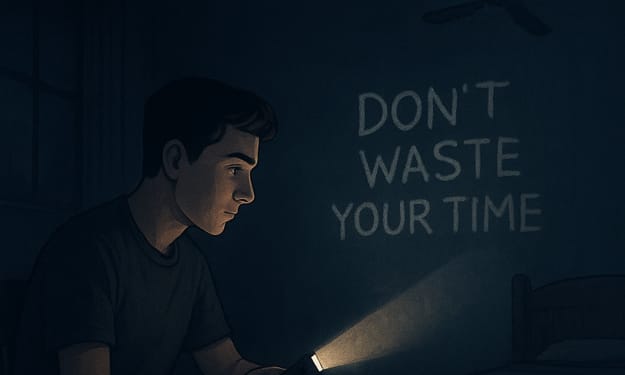
🕯️ Room 207 It was the first week of college, and the boys’ hostel was alive with laughter, music, and the chaos that only new beginnings can bring. Among the hundreds of students dragging their suitcases down the long, echoing corridors, Ahmed stood out — quiet, curious, and eager to start fresh. When the warden handed him his room key, he smiled politely. “Room 207,” the warden said. “Top floor, end of the hallway.” Then, almost as if by reflex, he added under his breath, “No one’s lasted there long.” Ahmed raised an eyebrow. “Why?” The warden looked away. “You’ll be fine,” he said curtly and walked off. --- The Room Room 207 was old — older than the rest of the hostel. The paint on the walls peeled in thin strips, the ceiling fan groaned like it carried secrets, and the window rattled every time the wind blew through the courtyard. But it had a good view — the college tower on one side and the football field on the other. Ahmed liked it. That night, he unpacked, played some music, and started arranging his books. Around midnight, when the hostel lights dimmed, he noticed something odd on the wall behind the study desk — faint white chalk marks. He leaned closer. It said: > “Don’t waste your time.” He smiled. “Some senior’s idea of a joke,” he thought, and rubbed it off. --- The Whisper Two nights later, while he was studying for his first quiz, the lights flickered and went out. The whole building fell silent except for the rain tapping against the window. He took out his phone flashlight — and froze. The same message was back on the wall. Fresh. > “Don’t waste your time.” This time, the handwriting looked… different. More deliberate. More recent. Ahmed laughed nervously, trying to shake off the chill creeping up his spine. “Must be one of the guys pulling a prank,” he muttered. But the door was locked from inside. He didn’t sleep much that night. --- The Story of Salman A few days later, Ahmed was chatting with his roommate from next door, Bilal, when he casually mentioned the writing on the wall. Bilal’s face went pale. “You don’t know about that room?” he asked. Ahmed frowned. “What about it?” Bilal looked around, lowered his voice, and said, “There used to be a student named Salman in that room. Brilliant guy. Always top of his class. But during finals last year, he… well, he didn’t make it.” Ahmed stared. “What do you mean?” Bilal sighed. “He pushed himself too hard. Barely slept, barely ate. The night before his last exam, they found him unconscious at his desk. Heart failure. He’d been awake for three nights straight.” He paused. “After that, people said strange things started happening in 207. The message started appearing — the same words Salman used to tell everyone: ‘Don’t waste your time.’” Ahmed didn’t know what to say. He laughed it off, but deep down, the story stayed with him. --- The Change That night, Ahmed sat at his desk again, staring at the blank wall. He whispered, “If you’re still here, Salman, I hear you.” From then on, things were different. He started managing his time better. He woke early, studied with focus, and took breaks when needed. The wall remained blank for weeks — until one night before finals. When Ahmed came back from the library, exhausted, he noticed a faint glow on the wall. The same words had returned: > “Don’t waste your time.” But this time, there was something new below it. > “You’re doing well.” He stood still for a long time, heart pounding — not from fear, but from something else. Gratitude. --- Graduation Day Three years passed. Ahmed became one of the top students in his department. Everyone admired his discipline and calm confidence. When people asked how he managed to stay so consistent, he always smiled and said, > “Someone once reminded me that time is precious.” The day he graduated, he returned to Room 207 one last time. The hostel was quieter now, almost peaceful. He unlocked the door, stepped inside, and looked around. The same peeling paint, the same creaking fan — and the same wall. He picked up a piece of chalk from the desk and wrote carefully beneath the old message: > “Thank you, Salman. Your words changed my life.” Then he placed his graduation cap on the desk, as if leaving a gift for an old friend. --- Years Later Five years later, a new batch of students arrived. One of them, a first-year named Hassan, got assigned to Room 207. The warden hesitated but handed him the key anyway. That night, as Hassan unpacked, he noticed faint words on the wall. > “Don’t waste your time.” He chuckled. “Must be the previous student’s handwriting,” he thought. He turned on some music, sat down to study — and for a brief moment, felt as if someone was sitting beside him, quietly turning the pages of his notebook. From that day, Hassan never procrastinated again. --- The Legacy Room 207 became more than just a room — it became a quiet legend. Students whispered about it in the mess hall, seniors warned juniors not to take it lightly, but those who stayed there always came out changed. Some said they felt a presence that pushed them to do better. Others claimed that whenever they were about to give up, they’d find that same message reappearing — glowing faintly on the wall. > “Don’t waste your time.” No one ever erased it completely. It became a symbol — a reminder that some lessons are too powerful to fade, even with time. --- The Realization One evening, Ahmed returned to campus as a guest lecturer. After his talk, he visited the old hostel, just for nostalgia. The corridors still smelled the same — like damp walls and chai. When he reached the third floor, he paused in front of Room 207. The door was open, light spilling into the hallway. Inside, a student sat studying, unaware of Ahmed standing there. The chalk writing was still visible on the wall — the same words that had once changed his life. Ahmed smiled, whispered softly, > “You kept your promise, Salman.” And as he turned to leave, the fan above creaked — once, gently — as if someone was acknowledging him. Outside, the sun dipped below the horizon, and the hostel lights flickered on, one by one. But in Room 207, the light never really went out. --- ✨ Moral: > Some people leave this world, but their lessons stay alive — written not just on walls, but in the hearts of those who choose to listen.
By Muhammad Daud 11 months ago in History