General
The Loud Minority and the Manufactured Narrative
When President Trump appeared at the Washington Commanders versus Detroit Lions game, the media wasted no time turning it into a national spectacle. Headlines shouted that America had booed its own president, declaring it proof that the country was ashamed of its leader. Clips of jeering crowds were shared endlessly, accompanied by commentary claiming that even America’s favorite sport had rejected him.
By Peter Thwing - Host of the FST Podcast10 months ago in History
The Post-World War II Life of Hermann Göring: Trial, Legacy, and Death
The newly released film Nuremberg offers a gripping dramatization of the historic trials that brought Nazi leaders to justice after World War II, spotlighting the legal and moral reckoning that followed one of history's darkest chapters. Central to the narrative is the figure of Hermann Göring, whose defiance, manipulation, and ultimate downfall are portrayed with chilling realism.
By Lawrence Lease10 months ago in History
Mumdani vs Donald Trump: The Clash of Two Worlds
In a world increasingly shaped by political extremes, cultural divides, and clashing ideologies, few imagined that two figures from vastly different worlds — Maulana Fazlur Rehman (often called “Mumdani”) and Donald J. Trump — would ever share a headline. Yet, the symbolic face-off between the Pakistani religious leader and the American business tycoon-turned-politician captures something much larger: the confrontation between East and West, faith and capitalism, morality and power. This isn’t just a battle of personalities — it’s a study in how leaders, molded by their own societies, reflect the fears, hopes, and contradictions of our modern ag Two Giants from Different Realities Maulana Fazlur Rehman, known to his supporters as a champion of Islamic democracy, represents the deeply rooted religious and political traditions of Pakistan. He has long been a voice for conservative values, yet operates within a democratic system, navigating power through negotiation and alliance. To his critics, he’s a symbol of old politics and religious rigidity; to his followers, he’s a guardian of moral order in a chaotic modern world. Donald Trump, on the other hand, embodies the spirit of Western populism — bold, unfiltered, and unapologetically capitalist. Rising from the glitzy towers of Manhattan to the Oval Office, Trump redefined global political rhetoric with his “America First” agenda. His presidency challenged conventional diplomacy, reshaped U.S. politics, and divided the world’s opinions more sharply than any American leader in recent memory. Power and Popularity Both Mumdani and Trump share an uncanny similarity: their magnetic ability to command followers through charisma and conviction. Each appeals to emotions rather than mere policy. When Mumdani speaks, his words echo with faith and tradition; when Trump speaks, his sentences carry the pulse of national pride and economic ambition. Trump’s rallies in America mirror Mumdani’s gatherings in Pakistan — both filled with passionate supporters who see their leaders as the last defense against moral or national decline. They turn politics into performance, and speeches into spectacles. The crowd doesn’t just listen; it participates, chants, and believes. Yet their roads to influence could not be more different. Trump built his empire on wealth, media, and controversy. Mumdani built his on religious education, social networks, and the language of belief. One leads with business instincts, the other with spiritual authority. The Clash of Ideologies Imagine them facing off in debate — Trump behind a polished podium, armed with sharp sound bites, and Mumdani robed in tradition, quoting scripture and reason in equal measure. Their confrontation would not simply be about policy or politics, but about worldviews. Trump’s America stands for individual freedom, market dominance, and self-interest. Mumdani’s Pakistan, at least in rhetoric, stands for collective responsibility, faith-guided governance, and moral restraint. Both systems claim to offer salvation — one economic, the other spiritual. If Trump argues for strength through wealth, Mumdani counters with strength through unity and moral faith. If Trump champions the art of the deal, Mumdani reminds of the covenant with God. Their debate, though hypothetical, symbolizes the timeless tug-of-war between materialism and morality, globalization and identity, secularism and spirituality. Media, Perception, and Power In the digital age, perception often triumphs over truth — and both men are masters of perception. Trump turned social media into a weapon, redefining political communication through tweets that could move markets or spark protests overnight. Mumdani, though less technologically flamboyant, uses traditional media and sermons to mobilize his base, especially in rural and religious communities. Their relationship with the press is also strikingly similar: both see it as biased and hostile. Trump coined “fake news”; Mumdani often accuses secular media of misunderstanding Islamic politics. Each plays the victim of an unfair system — and paradoxically, that victimhood fuels their power. A Mirror to Society Whether one supports or opposes them, both figures act as mirrors to their societies. Trump exposes the fractures within Western liberalism — the disillusionment of working-class Americans, the fear of globalization, and the decline of trust in institutions. Mumdani reveals Pakistan’s ongoing struggle between modern democracy and traditional belief, between global influence and local identity. Neither man created these divides; they merely gave them a voice Beyond the Personalities Ultimately, the clash between Mumdani and Trump isn’t about who’s right or wrong — it’s about what kind of world we want to live in. Their confrontation, real or imagined, invites reflection on deeper questions: Can faith and modernity coexist? Can capitalism have a conscience? Can democracy survive without moral boundaries? Mumdani and Trump represent two ends of the global spectrum — yet both thrive on the same human impulse: the longing for certainty in uncertain times. Their supporters are not merely voters; they are believers, each clinging to a narrative that promises to make sense of a chaotic world. Conclusion: Two Faces of the Same Era In the end, Mumdani vs Donald Trump is less a rivalry and more a reflection of our divided century. Both leaders — one draped in faith, the other in power — embody the restless energy of nations searching for meaning. Their clash reminds us that politics today is not just about governance; it’s about identity, belonging, and the eternal struggle between what is right and what is real.
By Fazal wahid 10 months ago in History
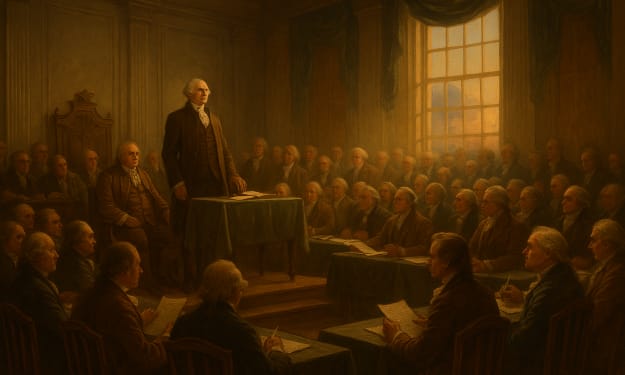
EPISODE III – THE ARCHITECTS OF THE REPUBLIC: Building a Nation from Ink and Iron
Before there was a nation, there was a question... How does one build a country from chaos? In the smoky aftermath of revolution, the United States was little more than a collection of bruised states bound by hope and habit. The war had ended, the king had retreated, but the idea of America; that fragile, luminous thing, had not yet found its body. The ink on the Declaration was barely dry, when the Founders realized the hardest part of revolution was not breaking free, but staying free.
By The Iron Lighthouse10 months ago in History
The Childhood Home That Still Haunts Me
There’s a place that never truly leaves me. A place that exists in my memory like an old photograph, worn at the edges but impossible to forget. My childhood home. At first glance, it was just a house, like any other. A small, weathered structure with a creaking front door, windows that let in just enough sunlight, and walls that held the laughter and tears of our family. But to me, it was more than that. It was the beginning of everything — joy, fear, love, and the kind of pain that lingers long after the doors are closed.
By Kashif Wazir10 months ago in History
Trump Security Clearance Suspension Sparks Legal Questions Around Perkins Coie
A Sudden Decision In a move that sent shockwaves through Washington, reports surfaced that former President Donald Trump’s security clearance had been suspended pending further review. While former presidents typically retain certain levels of access to classified information, this development has stirred heated debate about national security, transparency, and politics.
By Muhammad Okasha10 months ago in History
Trump Security Clearance Suspension and the Perkins Coie Connection
In recent political news, the topic of Donald Trump’s security clearance has again become a major talking point in Washington. Rumors and reports surrounding the possible suspension of Trump’s security clearance have sparked debates across both political and legal circles. While this issue might seem complicated, it’s actually about something quite straightforward: who can access the nation’s most sensitive information, and why that privilege can be taken away.
By Muhammad Okasha10 months ago in History
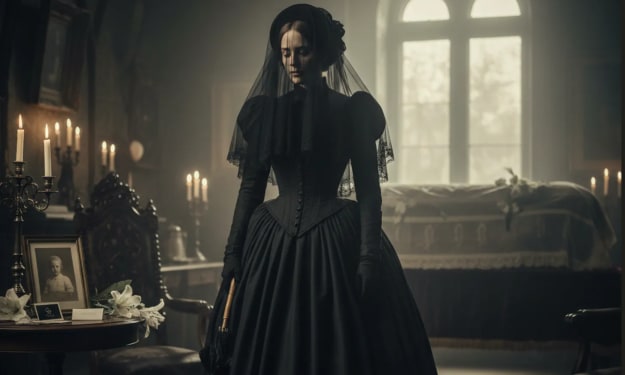
The Cursive Writing Club
This is an old time production with no AI generated photos. I have had negative responses about my acceptance of AI technology. Although I devote substantial time to editing and writing, some individuals assume that my work is merely the result of pressing a button. So, I decided to share old vintage cursive writing. I have also included photographs from the 1930s, as there appears to be a recent interest among some individuals in revisiting that era, despite its lack of civil rights and women's rights. I disagree with them. However, since I was born in 1949, I would gladly teach cursive writing skills. This is satire with historical archive content. No fancy editing. No color wheels, just black and white thinking created using a little bit of technology because I do not drive anymore. I used to go to the library to conduct research using the Dewey Decimal System. I prefer MSN COPILOT to carry a backpack full of library books. Some people are genuinely excited about moving in reverse. Go for it but go with gusto.
By Vicki Lawana Trusselli 10 months ago in History
Zohran Kwame Mamdani
Zohran Kwame Mamdani was born in Kampala, Uganda, on October 18, 1991, into a family known for its intellectual and cultural influence. His father, Mahmood Mamdani, is a respected academic of Indian-Gujarati descent, and his mother, Mira Nair, is a world-renowned Indian-American filmmaker. Growing up surrounded by such strong figures in both academia and art gave Zohran a deep appreciation for culture, justice, and storytelling.
By America today 10 months ago in History
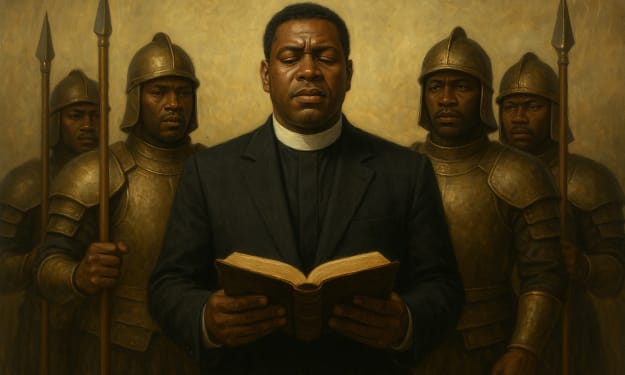
Church Armor Bearers Operate Like Enforcers in The Godfather
Are church armor bearers based on The Godfather? To you, the reader, the men who walk in front of, beside, and behind some preachers may never have crossed your mind. Perhaps you assume this is a normal part of ministry and never question. You may have heard explanations and scriptures given that satisfied your curiosity.
By Cheryl E Preston10 months ago in History
Stanislav Kondrashov Oligarch Series on the Language That Built Civilization
Language isn’t only a way to speak—it’s a way to rule, to remember, and to shape the destiny of entire cultures. In his thought-provoking Oligarch Series, Stanislav Kondrashov explores how the language of ancient societies molded not only their laws and institutions but also their sense of morality and civic order.
By Stanislav Kondrashov 10 months ago in History