General
Ancestors and Spiritual gifts.
I used to think spiritual gifts were something people chose—something you decided to develop once you became “spiritual enough.” I believed intuition, spiritual awareness, and psychic sensitivity were skills you learned over time. What I didn’t know was that many spiritual gifts are ancestral inheritances, passed down quietly through generations.
By divinefeminineOmo9 months ago in History
When One Star Trek Episode Beats Tarantino: Why Thoughtful Science Fiction Still Wins. AI-Generated.
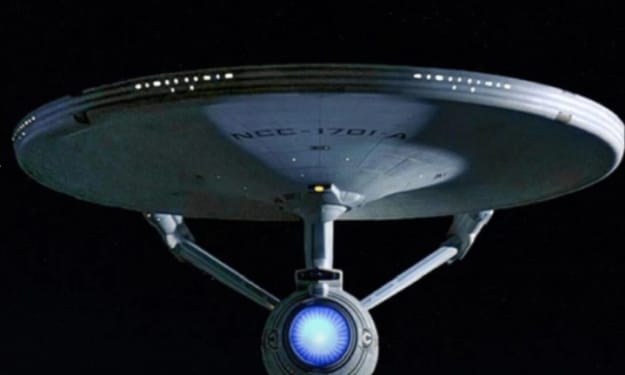
In the vast silence of space, a starship glides beneath the pale glow of the Moon. Earth curves gently below, fragile and blue. The image feels familiar, almost comforting—yet it carries a deeper meaning. It represents not just a television franchise, but a philosophy. A way of thinking about humanity, power, ethics, and the future. This is Star Trek, and more than half a century after its birth, it still manages to do something extraordinary: sometimes, a single episode says more than an entire blockbuster film. In recent years, fans and critics alike have repeated a provocative claim—that one Star Trek episode can beat Quentin Tarantino. Not in style. Not in shock value. But in meaning. At first glance, the comparison feels unfair. Quentin Tarantino is one of the most influential filmmakers of modern cinema. His dialogue crackles, his violence is stylized, his characters unforgettable. And yet, when it comes to moral weight, philosophical depth, and long-lasting cultural impact, Star Trek often operates on a different level entirely. This is not an attack on Tarantino. It is a reminder of what thoughtful science fiction can achieve when it dares to ask difficult questions instead of merely entertaining us. --- Two Visions of Storytelling Tarantino’s cinema is rooted in rebellion. His films thrive on chaos, revenge, moral ambiguity, and pop-culture remixing. He does not offer answers—he offers confrontation. Violence is exaggerated, dialogue is sharp, and history itself is often rewritten for emotional release. Star Trek, by contrast, is built on inquiry. Instead of asking “What if we take revenge?”, Star Trek asks: What does it mean to be human? Who deserves rights? Can morality survive technological power? Is peace possible without domination? These questions are not shouted. They are explored patiently, often within the structure of a single 45-minute episode. That is where the comparison begins to make sense. --- Star Trek Is Not About Space—It’s About Us Despite its spaceships and alien species, Star Trek has never really been about space. Space is merely the setting. The real subject is humanity. Created in the 1960s during the Cold War, Star Trek imagined a future where humanity had survived its worst instincts. Racism, extreme nationalism, and unchecked greed were no longer driving forces. Instead, cooperation, diplomacy, and curiosity shaped civilization. This vision was radical. At a time when the world was divided by ideology and nuclear fear, Star Trek showed a multicultural crew working together—not because they were perfect, but because they had learned from their mistakes. That optimism is not naïve. It is aspirational. --- The Power of a Single Episode Some Star Trek episodes have achieved something rare in television: they function as standalone philosophical essays. The Measure of a Man (The Next Generation) This episode centers on one question: Is Data a machine, or a person? In less than an hour, it explores: Artificial intelligence Slavery Legal rights Consciousness Moral responsibility No explosions. No villains. Just a courtroom, a debate, and a devastating realization: if one sentient being can be owned, then none of us are truly free. Few films—Tarantino’s included—attempt this level of ethical clarity. --- Darmok In this episode, communication itself becomes the conflict. An alien species speaks only through metaphor, making understanding nearly impossible. What follows is a meditation on: Language barriers Cultural misunderstanding The limits of translation The cost of empathy There is no villain to defeat—only ignorance to overcome. This is storytelling as philosophy. --- Violence vs. Consequence Tarantino’s violence is deliberate. It is exaggerated, often cathartic. Blood becomes spectacle. Death becomes punctuation. Star Trek treats violence differently. In Star Trek, violence is almost always a failure—of diplomacy, understanding, or patience. When weapons are used, they carry weight. Characters question their decisions. Consequences linger. This difference matters. One approach shocks us into awareness. The other invites us into reflection. And reflection lasts longer. --- Why Star Trek Still Feels Relevant in 2025 As we approach a future shaped by artificial intelligence, space exploration, surveillance technology, and ethical uncertainty, Star Trek feels less like fantasy and more like preparation. Modern society now faces questions Star Trek asked decades ago: Should AI have rights? Who controls advanced technology? Can power exist without exploitation? What happens when progress outpaces morality? Star Trek does not offer easy answers—but it insists the questions matter. That insistence is powerful. --- Tarantino’s Genius—and His Limits Tarantino is a master of style. His films are unforgettable experiences. But they are largely introspective—they explore violence, history, and identity through a distinctly human, often American lens. Star Trek is broader. It imagines humanity as one species among many. It forces us to see ourselves as others. It asks us to judge our values not by dominance, but by compassion. This is not better or worse—it is simply deeper in scope. --- Why One Episode Can Outweigh a Film A Tarantino film may dominate cultural conversation for months. A Star Trek episode can shape how people think for decades. Scientists, astronauts, engineers, and philosophers have cited Star Trek as inspiration. It helped normalize: Women in leadership roles Racial equality on screen Peaceful conflict resolution Ethical technology use That impact cannot be measured in box office numbers. --- The Enterprise as a Symbol The starship Enterprise is not a weapon. It is a vessel of exploration. Its mission is not conquest—but understanding. In an age obsessed with power, that message feels almost revolutionary. The image of the Enterprise beneath the Moon reminds us that technology should elevate humanity, not replace its conscience. --- Entertainment vs. Enlightenment There is nothing wrong with entertainment. Tarantino excels at it. But enlightenment—the quiet shift in how we see ourselves—is rarer. Star Trek achieves that not through spectacle, but through trust. Trust that the audience is intelligent. Trust that ideas matter. Trust that the future can be better if we choose it to be. --- Conclusion: Why Star Trek Endures When people say “one Star Trek episode beats Tarantino,” they are not dismissing cinema. They are celebrating intention. Star Trek dares to imagine a future where humanity learns instead of dominates, listens instead of destroys, and explores instead of conquers. In a world still struggling with division, fear, and unchecked power, that vision feels more necessary than ever. Sometimes, the most powerful story is not the loudest—but the wisest. And sometimes, a single episode is enough.
By Zahid Hussain9 months ago in History
The Polleras of Rebellion: Skateboarders, Science, and the 90-Year Legacy of Jane Goodall. AI-Generated.
The world is changing, but perhaps not in the ways we expected. In the high-altitude streets of Cochabamba, Bolivia, the sound of polyurethane wheels hitting sun-baked pavement creates a rhythmic clatter. But the figures riding these skateboards aren't the stereotypical teenage boys in baggy hoodies. Instead, they are women dressed in pollera skirts, many-layered petticoats, and felt bowler hats. These are the ImillaSkate collective. "Imilla" means "young girl" in Aymara and Quechua, and their mission is as steep as the Andes: to reclaim their indigenous identity through a sport once deemed "un-ladylike." Simultaneously, across the globe, the scientific and environmental community celebrates a monumental milestone: 90 years of Jane Goodall. At first glance, a British primatologist and a group of Bolivian skateboarders might seem worlds apart. However, they are bound by a singular, powerful thread—Hope. This article explores how the spirit of Jane Goodall’s nine decades of activism mirrors the grassroots rebellion of the ImillaSkate, proving that conservation, identity, and hope are the most radical acts of the 21st century. Section 1: Jane Goodall—90 Years of Redefining Humanity To understand the "90 Years of Hope" mentioned in the image, one must understand the woman who defied every glass ceiling in science. In 1960, Jane Goodall entered the Gombe Stream National Park in Tanzania. She didn’t have a PhD; she had a notebook, binoculars, and an open heart. Her discovery—that chimpanzees make and use tools—shook the foundations of anthropology. It forced humanity to redefine itself. But Jane’s legacy isn’t just about chimps. It is about the interconnectedness of all living things. As she reached her 90th year, her message shifted from "observing nature" to "saving it." Through her Roots & Shoots program and the Jane Goodall Institute, she has spent decades empowering local communities to become guardians of their own land. Section 2: The ImillaSkate—Indigenous Pride on Wheels Now, look back at the image of the two women. Their gaze is steady, their posture proud. They wear the pollera, a garment that was once a symbol of colonial oppression and later, a source of discrimination against indigenous women in Bolivia. For decades, women in polleras (often called Cholitas) were banned from certain public squares and restaurants. Today, the ImillaSkate collective uses these skirts as a uniform of power. The Skateboard as a Tool: For these women, the skateboard is more than sports equipment; it is a vehicle for visibility. Cultural Preservation: By skating in traditional attire, they are saying, "We do not need to give up our heritage to participate in the modern world." Section 3: Why This Image Matters for "Vital Impacts" The caption in your image mentions "Vital Impacts" and "Nature of Hope." This refers to a global initiative where world-class photographers sell their prints to fund conservation efforts. The inclusion of the ImillaSkate in a Jane Goodall tribute is intentional. It represents "Intersectionality." 1. Environmentalism is Social: You cannot save the forest if you do not empower the people who live near it. 2. Representation: Seeing indigenous women as the "face" of hope reminds us that the climate movement must be diverse to succeed. Section 4: The Core Message—Hope as a Discipline Jane Goodall often says, "Hope is not a passive state. It is an action." The women in the photo embody this. Skating in a pollera is difficult. It is heavy. It catches the wind. It is an "inconvenient" way to skate. Similarly, conservation is "inconvenient." Protecting the planet requires us to go against the grain of easy consumption. The Four Pillars of Modern Hope: The Human Intellect: Our ability to solve problems like Jane did. The Resilience of Nature: Nature’s ability to bounce back if given a chance. The Power of Youth: Groups like ImillaSkate leading the charge. The Indomitable Human Spirit: The refusal to stay down after a fall—whether off a skateboard or in the face of a climate crisis. Conclusion: A Call to Action As we look at the 90-year journey of Jane Goodall and the courageous strides of the ImillaSkate, the message is clear: Identity is your strength. Whether you are a scientist in the jungle or a skater in the city, your "Hope" is the most valuable asset you own. The image of these two women isn't just a portrait; it is a blueprint for the future. It tells us to carry our heritage with us as we move forward, to challenge stereotypes, and to never stop rolling toward a better world. Jane Goodall’s 90 years aren't just a celebration of the past—they are a torch passed to us. ---
By Zahid Hussain9 months ago in History
Ash and Ink
The air in Alexandria no longer smelled of salt and jasmine. It smelled of scorched papyrus and the metallic tang of fear. Kimon was nineteen, a junior scribe whose only contribution to history thus far was the steady transcription of tax records. But today, he wasn’t holding a ledger. He was standing in the Great Hall of the Serapeum, clutching a leather satchel to his chest as if it were a shield. Outside, the city was a symphony of chaos—the rhythmic thud of Roman boots, the crackle of timber, and the screams of a world being rewritten by the sword.
By LUNA EDITH9 months ago in History
Palastine
Palestine is not just a place on the map. It is a land of people with dreams, families, and deep love for their homes. For many years, the people of Palestine have lived in pain, fear, and loss. Their story is a human story—full of tears, patience, and hope.
By shaoor afridi9 months ago in History
UK Snow: Understanding Met Office Weather Warnings and What They Really Mean. AI-Generated.
Snow in the UK has a unique way of capturing attention. For some, it brings excitement and childhood nostalgia. For others, it raises concerns about travel, safety, and daily routines. When the Met Office issues snow weather warnings, headlines spread quickly, and confusion often follows.
By Saboor Brohi 9 months ago in History
Why So Many Birds Are Mentioned in the Bible
Have you ever wondered why so many kinds of birds are mentioned throughout the Bible? Birds are very important to God. They were created on the fifth day, and man was not created until the sixth day. Therefore, birds have been on the earth longer than man.
By Margaret Minnicks9 months ago in History
A World in Conflict: How History Shapes Today’s Global Tensions
A World in Conflict: How History Shapes Today’s Global Tensions The world today feels restless. News headlines are filled with wars, political tension, economic struggles, and fear about the future. Many people ask the same question: Why does the world seem so divided? To understand modern global conflicts, we must look beyond daily news and examine how history, power, and human decisions shape world affairs.
By Wings of Time 9 months ago in History