General
The big problem with cement, and how to fix it.
Consider a building with a moderate height of 30 stories and 100 meters.This size of high rise was almost definitely constructed with cement-containing concrete. About 6,000 tons of cement in this instance. 4,600 metric tons of carbon were most likely released into the atmosphere during the production of that cement.That almost equates to the pollution produced by driving a car 12 million miles.Now divide that by all the structures on Earth. Even then, the carbon imprint of cement would be missed.Consider the sidewalks we are using.numerous streets that you drive on. huge portions of our energy infrastructure. Power plants and dams.The manufacturing of cement alone is responsible for 8% of the world's carbon emissions, which is higher than the combined emissions of the shipping and aviation industries.The majority of those emissions now are a result of China's quick development. China produced more cement in only two years than the US did in the whole 20th century. As they enhance their infrastructure and build big cities, other developing nations will also need a lot of cement.In a few decades, we'll need to figure out how to construct a structure like this without emitting any emissions if we want to achieve net zero.Although difficult, there is a way.You are viewing a standard cement plant.Currently, there are ones like these operating in almost every continent. All of the emissions from cement are produced in this rotating tube, called a kiln, and this tower, called a preheater.Burning fuel to heat the kiln results in about 40% of cement's emissions.In close proximity to the heat source, it reaches about 1450 °C.Limestone, clays, and other additives are thrown into the preheating tower. The remaining 60% of emissions are caused by limestone releasing its stored carbon dioxide at this 850 degree temperature. Is it possible to use less concrete altogether? is the first query regarding the decarbonization of cement.In design, we frequently utilize up to two or three times too much concrete.Simply put, structural engineers and architects utilize a lot of it.It improves reliability, doesn't affect the bottom line, and reduces the likelihood of lawsuits, fatalities, and other undesirable outcomes. Concrete is valuable in a structure because of its compressive strength, or capacity to withstand significant weight.So, replacing its use in certain places is difficult.like pillars and foundations.However, we should decrease it elsewhere.I was at Scotland's brand-new parliament building, which was evidently built with greenhouse gasses in mind.Only when necessary was concrete utilized. There was only ever a need for steel. For the roof and other structural components that were not load bearing, laminated wood was also employed.Design that is environmentally friendly can definitely reduce cement's emissions.However, it won't be feasible in the near future to completely replace the concrete.Consequently, reducing the amount of extra concrete can reduce emissions from our high rise by about 26%.one analysis alone. More work will be required, and the next step is to learn how cement is created. One place to start is by taking a look at the 40% of emissions that are produced during kiln firing.Typically, cement manufacturing facilities heat the kiln to 1450 degrees Celsius using coal, petroleum coke, or natural gas. Although you could electrify something, it's very difficult to heat something to that high of a temperature using electric heat.While others, like this Finnish upstart company, are making an effort.Cement plants have started burning various materials until we reach there.Cement plants benefit from the intense heat. a location where rubbish, tires, or industrial waste can be burned.Any undesirables formed in this flame are essentially scrubbed away by the limestone, which also prevents them from being released into the atmosphere.Changing fuels can reduce emissions by about 7%.We still have a long way to go..
By Nora Ariana3 years ago in History
The case to rename this famous Christmas plant. Chapter 2.
an estimated 20,000 native Cherokee people were forcibly removed from their homes and sent west.It was a part of the Trail of Tears ethnic cleansing, which led to the displacement of some 100,000 indigenous people.That solidified Poinsett's standing in history as a proponent of American expansion. The poinsettia is this.Also known as cuetlaxochitl, one of its earliest names, la flor de nochebuena, the Christmas star, the lobster flower, the flame leaf, and Euphorbia pulcherrima.This plant, which typically has potted leaves with vibrant red and green hues, is common during the holiday season in the US.It is less clear how it got here historically though.And it's all tied together by Joel Poinsett's contentious legacy. Poinsettias are native to this region, from Mexico down into Central and South America.It was given the Aztec name cuetlaxochitl, which means "flower that withers.And in the wild, these plants resemble tall shrubs that bloom in the winter, unlike the potted varieties we see today. A prized plant, it. The vivid red colored leaves (which are leaves and not actually petals) were used to dye textiles, while the sap of the plants was utilized medicinally.And by the 17th century, perhaps because of those crimson leaves that bloomed in time for the holiday season, Spanish friars utilized the flowers to construct spectacular nativity scenes in Mexico. It was given the name "flor de nochebuena," or "Christmas Eve flower," by Spanish-speaking Mexicans.Furthermore, It was given the Aztec name cuetlaxochitl, which means "flower that withers."And unlike the potted variety we see now, these plants resemble tall bushes that bloom in the winter when they are in the wild. It is a valuable plant. While the plants' sap was used medicinally, the vibrant red leaves—which are truly leaves and not petals—were used to colour textiles. And by the 17th century, Spanish friars were using the blooms to create magnificent nativity scenes in Mexico, possibly as a result of those crimson leaves that bloomed in time for the Christmas season.It was permanently associated with Christmastime for many people in the nation. For hundreds of years, the plant's native regions were generally the only places where people were familiar with it.Until Joel Poinsett, that is.In 1825, Poinsett, a diplomat, amateur botanist, and South Carolina native, was appointed as the first ever US minister to Mexico.According to legend, he discovered cuetlaxochitl in the town of Taxco, gathered some cuttings, and sent them to the US to share with his fellow botanists. They eventually became popular in the US as well.They made their debut in a Philadelphia flower exhibition in 1829.In the US, nurseries started producing and distributing the plants.And the "Christmas plant" became extremely popular. In honor of Joel Poinsett's legacy, the name "poinsettia" persisted.One that would expand to include not just the minister to Mexico but also the US Secretary of War and a founding member of the Smithsonian Institute. But his reputation is tarnished. Consider Poinsett's tenure as minister to Mexico, where he actively sought to strengthen American influence there. In one letter to Secretary of State Martin Van Buren, he discussed the possibility of "enlightening minds with liberal ideas" and shared his opinions on the Mexican populace. Saying that the aborigines were and still are the lowest class of human beings, the Spaniards had "continuous relations with them.helped make Mexicans a more illiterate and debauched people. Poinsett, who had owned slaves in the past in the US, thought that racial hierarchy between the indigenous and "white Creole" population could aid in Mexico's development. Poinsett also wanted to widen the boundaries of America.This is how the US seemed at the time.and he was given the job of negotiating an agreement to purchase Texas from Mexico.But before he could work..
By Nora Ariana3 years ago in History
The case to rename this famous Christmas plant.
The poinsettia is this. Also known as cuetlaxochitl, one of its earliest names, la flor de nochebuena, the Christmas star, the lobster flower, the flame leaf, and Euphorbia pulcherrima.This plant, which often has potted leaves with vibrant red and green hues, is common throughout the holiday season in the US.It is less clear how it got here historically though.And it's all tied together by Joel Poinsett's contentious legacy. Poinsettias are native to this region, from Mexico down into Central and South America.The Aztec called it cuetlaxochitl, meaning “flower that withers.And unlike the potted varieties we see today, in the wild these plants look like tall shrubs that flower in the winter season.It was a prized plant.The brilliant red colored leaves (which are leaves and not actually petals) were used to dye textiles, while the sap of the plants was used medicinally.And by the 17th century, likely because of those red leaves that bloomed in time for the holiday season, Spanish friars used the flowers to decorate elaborate nativity displays in Mexico. It was given the name "flor de nochebuena," or "Christmas Eve flower," by Spanish-speaking Mexicans.And it came to be inextricably tied with Christmas for many people in the nation. For hundreds of years, the plant's native regions were generally the only places where people were familiar with it.Until Joel Poinsett, that is. Poinsett, a diplomat, amateur botanist, and native of South Carolina, was chosen in 1825 to serve as the country's first-ever minister to Mexico.According to legend, he discovered cuetlaxochitl in the town of Taxco, gathered some cuttings, and sent them to the US to share with his fellow botanists.They eventually became popular in the US as well.They made their debut in a Philadelphia flower exhibition in 1829.In the US, nurseries started producing and distributing the plants.And the "Christmas plant" became extremely popular. In honor of Joel Poinsett's legacy, the name "poinsettia" persisted.One that would expand to include not just the minister to Mexico but also the US Secretary of War and a founding member of the Smithsonian Institute. But his reputation is tarnished. Consider Poinsett's tenure as minister to Mexico, where he actively sought to strengthen American influence there. Martin Van Buren expressed his views on the Mexican populace in a letter to the secretary of state, focusing on the potential to "enlighten minds with liberal ideas." He stated that the Spaniards had "constant intercourse with the aborigines, who were and still are degraded to the very lowest class of human beings... helped make Mexicans a more illiterate and debauched people. Poinsett, a slave owner himself back in the US, believed racial hierarchy between the indigenous and “white Creole” population could help progress in Mexico. Poinsett also sought to expand American borders.At the time, the US looked like this… and he was tasked with negotiating a deal to buy Texas from Mexico.But, before he could negotiate that deal, he ended up meddling so much in Mexican politics, that he was asked to leave the country.It happened like this: By helping to establish a network of freemason groups, known as the largest international secret society, he helped to gather men in Mexico with pro-American politics.This organizing eventually set the foundation for a popular, pro-American political party to emerge in Mexico. displeasing a lot of people in the Mexican administration.His meddling in local politics sparked such strife that the word "poinsettismo," which means offensive and intrusive conduct," was originally created by Mexicans.Additionally, Poinsett was fired from his position in 1829 at the president of Mexico's request. He was appointed US Secretary of War a few years after his return to the US.He was in charge of the As part of the Indian Removal Act,.
By Nora Ariana3 years ago in History
What Happened When Eve Ate the Apple?
The tale of Adam and Eve is a cornerstone of human history, encompassing themes of temptation, sin, and redemption. Central to this narrative is the momentous event when Eve succumbed to temptation and tasted the forbidden fruit. Let's embark on a journey to uncover the intricacies of this story, its cultural significance, and the lessons it imparts.
By Exotic History3 years ago in History
When Was Adam and Eve Born? Biblical Facts!
The question of when Adam and Eve were born has intrigued humanity for centuries. This article delves into the depths of history, anthropology, and religion to shed light on this age-old mystery. Join us on this journey to explore the origins of humanity and the legendary figures of Adam and Eve.
By Exotic History3 years ago in History
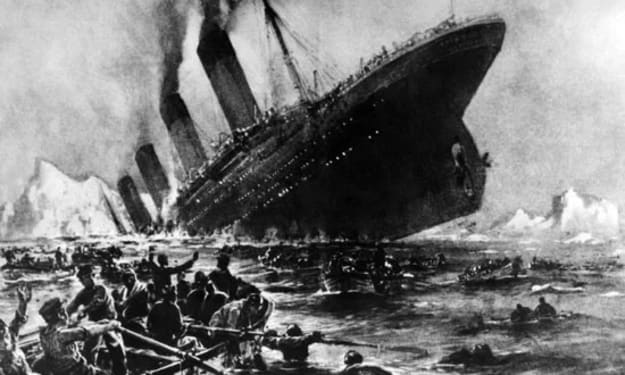
the reasons why the Titanic had insufficient lifeboats chapter 2.
At the time the Titanic was constructed, it was advised that all passenger ships should be able to stay afloat if any two adjacent compartments were flooded.Sam Halpern, an engineer and longtime Titanic researcher, was the subject of a conversation with me. He produced this graphic using information from a 1996 forensic investigation of the Titanic's design. He demonstrated to me how the ship was designed to remain afloat in situations where up to four neighboring compartments flooded. The important thing was to maintain the ship's level so that the waterline wouldn't rise above the bulkheads and flood into the other compartments. These scenarios demonstrate that the ship was shielded from virtually every catastrophe conceivable at the time, including collisions with rocks, other ships, and even icebergs.However, the Titanic missed the iceberg entirely.Instead, it rubbed against its side.Additionally, sonar investigation reveals that the ship was likely breached.Here.This, that, and here.And most importantly, this is the sixth boiler room.I'll hand it over to Victor Garber to discuss this more as the movie actually does a great job at it. Five sections, then. She can maintain buoyancy with the first four compartments breached, but not the fifth.The Titanic will fail.It is unquestionably true mathematically.The design was overwhelmed when the first five sections flooded.Simply put, there were too many for the ship to balance.sea began to flow over the bulkheads and entered the watertight compartments one at a time as the bow dipped deeper into the sea.At 12:15 AM, the Titanic sent its initial wireless distress call. 35 minutes following impact with the iceberg. The messages then got progressively more urgent."We've hit an iceberg"Cannot survive much longer with women and kids in boats," and "We are sinking fast.But the SS Californian, the ship that was closest to the Titanic that night, never received any warnings.The only wireless operator on board that ship had shut off the radio and gone to bed for the evening.Although we're far away, the Titanic's wireless operators were in contact with other ships like the Olympic and the Baltic as they started to sail in the direction of its coordinates. The final communication from the Titanic that our RMS Carpathia received At 1:45 AM, the "engine room was full of boilers.All that remained of the Titanic were its lifeboats in the absence of a rescue vessel. Around 4 AM, when the Carpathia arrived, the ship had already sunk into the water, taking more than 1,500 passengers and crew with it.The 706 passengers who managed to board the Titanic's lifeboats were the only survivors. The catastrophe irrevocably changed how the public perceived the need for lifeboats. When you compare this image of the RMS Olympic, the Titanic's nearly identical twin, from 1911 to this one of the Olympic taken in 1912, right after the Titanic disaster, with twice as many lifeboats lining the top deck, you can see how rapidly things changed. The International,
By Nora Ariana3 years ago in History
the reasons why the Titanic had insufficient lifeboats
When Kate Winslet's Rose discovers something about the lifeboats in James Cameron's 1997 film Titanic, it turns out to be kind of significant.There doesn't appear to be enough for everyone on board.Victor Garber, who played Thomas Andrews, the architect of the Titanic, replies in a perfect Irish accent, "I have built a good ship, strong and true."She is the only lifeboat you require. Given that the audience is already aware of how this story concludes This statement strikes me as either sad conceit or a crude jest. But it's crucial to comprehending both how the Titanic was built and what went wrong.In fact, the Titanic had more lifeboats than were mandated by British law. The Merchant Shipping Act of 1894 mandated that large ships—those that weigh more than 10,000 tons—have a minimum of 16 lifeboats, each of which can accommodate 990 people.From nce, ships just kept growing in size while the minimum remained constant. The Titanic was over 45,000 tons when it set sail in 1911, yet according to the legislation, only 16 lifeboats were required. Titanic had 20, which, if fully occupied, would could accommodate 1,178 individuals in all. Not even close to being large enough to hold the roughly 2,240 passengers and staff who were on board when the ship sank.
By Nora Ariana3 years ago in History
The explanation of Oppenheimer's secret city
"I've turned into death now. "he world-destroying force,"In 1943, P.O. Box 1663 was given as the address for Santa Fe, New Mexico.And over the following few years, it was listed as the site of birth on the birth certificates of roughly 300 newborns.as the true location was unknown.Everything delivered to that PO Box arrived here:At a location sometimes known as P.O. Box 180, Project Y, and Los Alamos, New Mexico, 33 miles from Santa Fe.There had been a hidden city constructed.And a group of scientists called it home."Scientists from various countries."the researchers behind the first nuclear weapon.They were a few hundred kilometers away from the location where their creation would be put to the test."Desert in New Mexico."Trinity.How did J. Robert Oppenheimer, the head of the laboratory, come to create a town and detonate the first nuclear bomb here?This letter was written by
By Nora Ariana3 years ago in History
The purpose of Silicon Valley
These are the prune tree blooms. The Santa Clara Valley in California, which is situated in a geologic trough, was formerly referred to as the Valley of Heart's Delight because of its farmland abundant with flowers and fruit, including prunes.How did a place renowned for its fruits and flowers.. become a center of knowledge? American engineer Vannevar Bush essentially oversaw research and development during World War II.He also wrote an essay titled "Science: The Endless Frontier" and published it in 1945.Bush reported to President Roosevelt that the pioneer spirit is still vigorous within this nation. although partially on issues like the fight against sickness. The report also established the assumption that continued support for science was essential for the general welfare. Only a few years later, Henry Ford and Harry Truman created the National Science Foundation to encourage industrial growth for national security. Because of this support, the San Francisco Bay Area had access to facilities like NASA's Ames, which was formerly known as NACA, and Navy bases close to San Francisco. Along with that, Stanford University was nearby. The university has more land resources than funds.The university had a lot of land because it was built on Leland Stanford's land grant. This early proposal shows how a tiny campus was encircled by countryside.However, Stanford wasn't particularly wealthy. One of Vannevar Bush's former students wanted to tap into the region's enormous untapped potential. Frederick Terman was a renowned figure in radio science and a professor of electrical engineering at Stanford. During World War II, he worked on projects including blocking Nazi radar and authored a book on radio engineering.It had copies sold in the hundreds of thousands.As a professor and dean before being named university provost in 1955, Terman looked for ways to advance the Valley of Heart's Delight. This land use study from the 1950s demonstrates Stanford's intention to use a portion of its land primarily for the campus and residential construction. Stanford built the Stanford Shopping Mall as a means of addressing their lack of funds. The university is still renting it today. Their California Pizza Kitchen is this. More significantly,Terman assisted the university in the creation of Stanford Industrial Park, now known as Stanford Research Park. This is how it appeared in 1953. The park offered tenants reasonable 99-year leases with a rigorous development plan to preserve the Palo Alto Construction identity. They insisted on keeping the grassland that the Valley of Heart's Delight was known for and on low buildings.But it was more than just a construction project on university property.Terman imagined a new cycle right away.Stanford to businesses.Stanford to businesses.Stanford to businesses.repeating and overlapping Stanford to businesses.In an interview celebrating the 75th anniversary of Palo Alto, he stated,"And I would argue universities made a huge contribution. in this development." But after that, the businesses significantly aided in the growth of the university departments that supported these businesses. He promoted this in numerous ways, such as enabling professors to work part-time for corporations and get corporate salaries.and assisting businesses in enrolling staff members as Stanford students. He triumphantly tore out this article about professors who are millionaires. Additionally, he made speeches highlighting Stanford as a source of highly skilled labor for those businesses at a time when such labor is in limited supply.Importantly, neither silicon nor semiconductor businesses were the basis for this cycle.Any tenant who desired to be close to Stanford was welcome to rent space at Stanford Industrial Park.The book publisher Houghton Mifflin staked a claim in the Stanford Industrial Park. There were also spaces there for other high-tech businesses that weren't computer-focused, as this image from 1960 demonstrates.Here is Terman at the opening of a building in Stanford Research Park for SpinCo, a manufacturer of centrifuges and a branch...
By Nora Ariana3 years ago in History
From Garage To Glory
In the heart of Silicon Valley, where innovation and ambition converged, there was a small garage that housed the humble beginnings of what would become a global technological powerhouse. This is the story of Luminova Technologies, a company that defied the odds and transformed from a startup with a dream into a billion-dollar success.
By Afiq Haikal3 years ago in History