General
The Quiet Collapse of Global Arms Control
The Quiet Collapse of Global Arms Control For decades, arms control agreements helped prevent the world’s most powerful weapons from spiraling out of control. Treaties limited nuclear stockpiles, increased transparency, and built fragile trust between rival states. Today, that system is quietly unraveling—and its collapse may define the next era of global insecurity.
By Wings of Time 8 months ago in History
The Red Sea Crisis and the Fragility of Global Trade
The Red Sea Crisis and the Fragility of Global Trade The Red Sea has quietly become one of the most critical pressure points in global affairs. Once seen mainly as a commercial shipping route connecting Asia, Europe, and Africa, it is now a zone of rising military tension, disrupted trade, and geopolitical rivalry. What happens in this narrow stretch of water is no longer a regional issue—it is reshaping global economics and international security.
By Wings of Time 8 months ago in History
The Quiet Rise of Global Militarization
The Quiet Rise of Global Militarization Across the world, governments are increasing military spending, expanding defense industries, and modernizing weapons systems—often without openly acknowledging why. There are no formal declarations of war, no mass troop mobilizations, and no clear enemy named in many cases. Yet behind the scenes, a quiet shift is taking place. Global militarization is rising, not loudly, but steadily, reshaping international relations in ways that may define the coming decades.
By Wings of Time 8 months ago in History
The Fall of Tibet to a Communist State: History, Causes, and Consequences
The incorporation of Tibet into the People’s Republic of China (PRC) after 1950 was not a single event but a complex process involving military force, political negotiation, ideological conflict, and long-lasting resistance. Understanding this fall requires examining Tibet’s historical status, China’s communist revolution, and the profound consequences that followed. Tibet Before 1950: A Distinct Civilization Before the Chinese communist takeover, Tibet functioned as a de facto independent region for decades, especially after the fall of the Qing Dynasty in 1911. Although China historically claimed suzerainty over Tibet, actual control was minimal for long periods. Tibet was governed by a theocratic system led by the Dalai Lama, combining religious authority with political power. Tibetan society was deeply rooted in Buddhism, monasteries were central institutions, and cultural traditions had evolved largely isolated from the outside world. However, Tibet was not a modern nation-state in the Western sense. Its political system was traditional, its military weak, and its international recognition limited. While Tibet maintained its own administration, currency, and foreign relations to some extent, few countries formally recognized it as an independent state. This ambiguity later played a crucial role in China’s justification for intervention. Rise of Communist China and Its Ideology In 1949, the Chinese Communist Party, led by Mao Zedong, emerged victorious from the Chinese Civil War and established the People’s Republic of China. The new communist government was driven by Marxist-Leninist ideology, which emphasized territorial unity, central authority, and the elimination of feudal and religious systems viewed as oppressive. From the communist perspective, Tibet was considered an inseparable part of China that had been “liberated” from imperial control in the past. The Chinese leadership described Tibetan society as “feudal” and “backward,” arguing that communist intervention would free the Tibetan people from serfdom and religious exploitation. These ideological beliefs formed the moral and political justification for China’s actions in Tibet. The 1950 Invasion: Military Force and Political Pressure In October 1950, the People’s Liberation Army (PLA) crossed into eastern Tibet and defeated the small, poorly equipped Tibetan forces at Chamdo. This military action is often referred to by China as the “Peaceful Liberation of Tibet,” but for Tibetans, it marked the beginning of occupation. Facing overwhelming military pressure and lacking international support, Tibetan leaders were forced to negotiate. In 1951, Tibetan representatives in Beijing signed the Seventeen Point Agreement. This agreement affirmed Chinese sovereignty over Tibet while promising autonomy, protection of religious freedom, and preservation of the Dalai Lama’s authority. Importantly, the agreement was signed under duress, and the Dalai Lama later stated that it did not reflect the true will of the Tibetan people. Broken Promises and Growing Tensions Initially, China adopted a cautious approach, especially in central Tibet, allowing traditional institutions to continue. However, in eastern regions like Kham and Amdo, radical communist reforms were introduced. Land redistribution, collectivization, and attacks on monasteries sparked widespread resentment and armed resistance among Tibetans. By the mid-1950s, tensions escalated as Chinese authorities increasingly interfered in religious affairs and governance. Monasteries were closely monitored, monks were arrested, and traditional elites were sidelined. For a society where religion was central to daily life, these actions were deeply traumatic. The 1959 Uprising and Exile of the Dalai Lama The situation reached a breaking point in March 1959 when a massive uprising erupted in Lhasa. Thousands of Tibetans surrounded the Dalai Lama’s palace, fearing that the Chinese planned to abduct him. The revolt was brutally suppressed by the PLA, resulting in thousands of deaths and widespread destruction. Following the uprising, the 14th Dalai Lama fled Tibet and sought asylum in India, where he established a government-in-exile in Dharamshala. His exile symbolized the definitive collapse of Tibet’s traditional political system and marked a turning point in the Tibetan struggle. Cultural Revolution and Cultural Destruction The fall of Tibet deepened during China’s Cultural Revolution (1966–1976). Religious practice was banned, monasteries were destroyed, sacred texts were burned, and monks were forced to abandon monastic life. An estimated 6,000 monasteries were damaged or demolished. Tibetan culture, language, and identity faced systematic suppression under the banner of revolutionary ideology. This period left deep scars on Tibetan society and reinforced the perception that communist rule threatened not just political autonomy, but the very survival of Tibetan civilization. Long-Term Consequences and Global Impact
By Say the truth 8 months ago in History
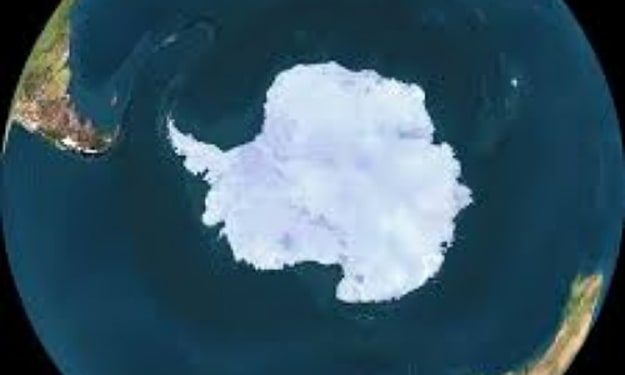
Antarctica Map
Antarctica is the coldest, driest, and windiest continent on Earth. It is located at the southernmost part of the planet, surrounding the South Pole. Because of its extreme weather and thick ice cover, Antarctica is very different from other continents. An Antarctica map helps us understand the shape, location, and important features of this frozen land.
By Farhan Sayed8 months ago in History
Stanislav Kondrashov’s Oligarch Series: Renaissance Merchants and Their Support for the Arts
In his *Oligarch Series*, **Stanislav Kondrashov** examines how wealth has shaped political, economic, and cultural systems across history. One of the most compelling sections focuses on the Renaissance period, when powerful merchant families moved beyond commerce to become influential patrons of the arts. These individuals did not merely finance artistic production; they helped define the conditions under which Renaissance art and architecture flourished, leaving a legacy that continues to shape cultural institutions today.
By Stanislav Kondrashov8 months ago in History
When Allies Disagree: How Global Partnerships Are Being Redefined
When Allies Disagree: How Global Partnerships Are Being Redefined For much of the modern era, global alliances appeared firm and predictable. Powerful countries formed blocs, promised mutual support, and stood together during times of war and crisis. But in today’s world, those alliances are changing. Recent disagreements between long-standing partners show that global cooperation is no longer based on automatic loyalty—it is increasingly shaped by national interests, public opinion, and long-term stability.
By Wings of Time 8 months ago in History