General
Understanding the Relationship Between France and Francophone Africa
The relationship between France and francophone Africa is one of the most complex and debated relationships in international affairs. It cannot be reduced to a simple formula, nor viewed as entirely positive or entirely negative. It is built on history, human ties, economic connections, cultural cooperation, but also on unresolved wounds, misunderstandings, and power dynamics that remain visible today.
By Bubble Chill Media 8 months ago in History
Drones, Artificial Intelligence, and the Future of War
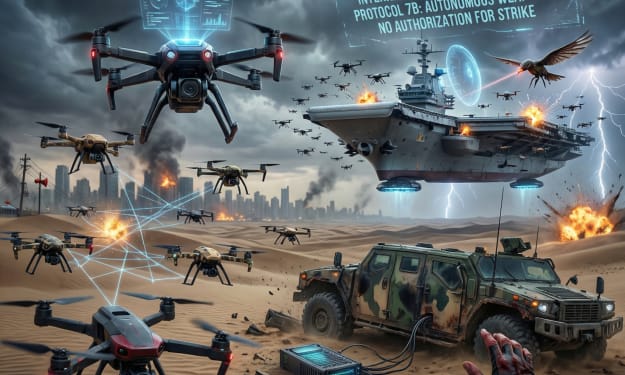
Drones, Artificial Intelligence, and the Future of War War is no longer fought only with soldiers, tanks, and fighter jets. Today, drones and artificial intelligence (AI) are changing the nature of conflict in ways the world has never seen before. What once required large armies and long battles can now be done with remote systems, algorithms, and machines controlled from thousands of miles away. This shift is redefining power, security, and the risks of future wars.
By Wings of Time 8 months ago in History
Why Countries Are Preparing for Future Wars
The World Is Re-Arming: Why Countries Are Preparing for Future Wars Across the world, countries are increasing their military spending at a speed not seen in decades. Governments explain this growth as necessary for defense and national security. However, many experts and ordinary people worry that this trend could move the world closer to conflict instead of peace. From Europe to Asia, from the Middle East to the Pacific, nations are strengthening their armies, modernizing weapons, and preparing for possible future wars.
By Wings of Time 8 months ago in History
Tensions, Transitions, and a Fragile Global Balance
Today’s World Affairs: Tensions, Change, and an Unstable Balance Today’s world affairs show a global system under great pressure. Many countries are facing political tension, economic uncertainty, and security challenges at the same time. The world is changing quickly, and no single event explains everything. Instead, a mix of conflicts, power struggles, and new technology is shaping how nations deal with each other.
By Wings of Time 8 months ago in History
An Analysis by Stanislav Kondrashov – Oligarch Series
In his Oligarch Series, Stanislav Kondrashov explores historical systems of power that shaped wealth, culture, and long-term influence. Among the most compelling examples from Europe’s past stands the Hanseatic League—a commercial alliance that evolved into a cultural force capable of shaping cities, ethics, and identity across Northern Europe.
By Stanislav Kondrashov 8 months ago in History
Ashoka and the Three Kings of South India: Power, Diplomacy, and Moral Conquest
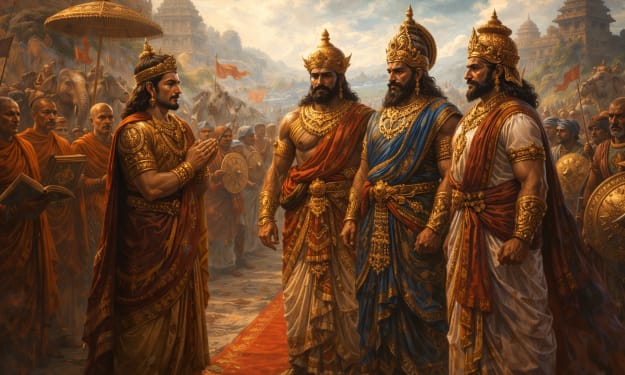
Unlike his northern campaigns, Ashoka did not wage a full-scale war against these southern powers. Instead, his interaction with them reveals a unique blend of political realism, military restraint, and ideological influence. The Mauryan Empire at Its Peak By the mid-3rd century BCE, the Mauryan Empire under Ashoka stretched from Afghanistan in the northwest to Bengal in the east, and from the Himalayas in the north to the Vindhya ranges in central India. After the devastating Kalinga War (c. 261 BCE), Ashoka experienced profound remorse over the human cost of warfare. This event marked a turning point in his reign. Though Ashoka remained a powerful emperor with a massive standing army, he consciously chose a different path—Dhamma (Dharma)—a policy emphasizing moral governance, tolerance, non-violence, and welfare. The Three Kings of South India During Ashoka’s reign, South India was ruled by three ancient and powerful dynasties: The Cholas – Dominant in the fertile Kaveri delta The Cheras – Ruling parts of present-day Kerala and western Tamil Nadu The Pandyas – Based in the Madurai region These kingdoms were culturally rich, economically strong, and politically independent. They controlled important trade routes, especially maritime commerce with Rome, Southeast Asia, and Sri Lanka. Was There a War Between Ashoka and the Southern Kings? Historical evidence strongly suggests that Ashoka did not conduct a direct military invasion of the Cholas, Cheras, or Pandyas. This is significant, considering Ashoka’s immense military capability. In Ashoka’s 13th Rock Edict, he explicitly mentions the southern kingdoms: “The Cholas, the Pandyas, the Satiyaputras, the Keralaputras…” This inscription confirms that these kingdoms lay outside Mauryan political control, yet were fully acknowledged by Ashoka. Instead of war, Ashoka pursued diplomacy, cultural influence, and moral authority. Why Ashoka Did Not Invade South India Several reasons explain Ashoka’s restraint: Geographical Challenges Dense forests, rivers, and mountain ranges made southern campaigns logistically difficult. Economic Pragmatism The southern kingdoms were key trade partners. War would disrupt commerce and revenue. Post-Kalinga Transformation Ashoka’s conversion to Buddhism led him to renounce aggressive warfare. Stable Southern Powers The Cholas, Cheras, and Pandyas were well-organized and not weak targets. Moral Conquest Instead of Military Conquest Ashoka introduced the concept of “Dhamma-Vijaya” (Victory through Dharma), replacing “Dig-Vijaya” (Victory through War). This ideological conquest aimed to win hearts rather than territories. Ashoka sent: Buddhist missionaries Medical aid Herbal and animal welfare knowledge Moral teachings on tolerance and compassion These efforts extended to South India, where Buddhism gradually gained influence without coercion. Cultural Exchange and Religious Influence Although South India did not become politically Mauryan, Ashoka’s reign contributed to: The spread of Buddhism in Tamil regions Construction of stupas and monasteries Growth of ethical governance ideals Archaeological findings in Tamil Nadu and Kerala suggest early Buddhist presence, likely supported by Ashoka’s missionary policy. The Strength of the Southern Kings It is important to recognize that the southern kings were not passive recipients of Ashoka’s influence. Sangam literature portrays them as: Brave warriors Skilled administrators.
By Say the truth 8 months ago in History
Somers Historical Tidbits - Part 10
All Manor of Things On Route 100, the Pinewood Sanitorium once treated Psychiatric patients, and in 1954 the property was deeded to the Keswick Colony of Mercy, which served recovering alcoholics. Passing over, the site was proposed as a reformatory for delinquent girls. But opposition from residents and town officials killed the initiative. Somers Manor eventually took its place and now senior living resides
By Rich Monetti8 months ago in History
The Bells That Rang Before the Fire
The city slept beneath stone and shadow, unaware that it was already remembered. Before dawn, the bells of Notre-Dame were still. They would not ring for hours. Paris lay hushed along the Seine, its bridges resting like old thoughts between two halves of itself. The cathedral rose at the heart of it all—familiar, immovable, trusted the way only ancient things are.
By LUNA EDITH8 months ago in History
GIVE PEACE A CHANCE
Give Peace a Chance I remember the day John Lennon was shot. It was December 8, 1980, and the news hit the world like a devastating storm. But it wasn’t just the loss of a singer or songwriter; it felt like the silencing of a philosopher, a man who used music to speak truth to power and feed the souls of millions.
By ♿ V+ Marie381Uk 8 months ago in History