General
The Song of Achilles
Introduction The Song of Achilles reimagines the legendary friendship and romance between Achilles, the greatest warrior of his age, and Patroclus, an exiled prince with a gentle heart. The novel delves deeply into themes of love, destiny, and the quest for immortality, set against the backdrop of the Trojan War. Written in lyrical prose, Miller's narrative captures the passion, beauty, and tragedy of this epic tale, exploring the complex emotions and events that lead to its inevitable conclusion.
By Ermelita T. Engracio2 years ago in History
The Enigmatic Legacy of Queen Nefertiti
Queen Nefertiti remains one of the most iconic figures in ancient Egyptian history. Her fame is largely due to the striking bust discovered in 1912, which has become a symbol of ancient elegance and mystery. But Nefertiti’s life and legacy go far beyond this single artifact. This post explores her rise to power, her revolutionary role in religion, and the enduring intrigue surrounding her.
By Horace Wasmore2 years ago in History
The Insatiable Hunger
________________________________________ In the grand RPG of life on Earth, humans are the ultimate min-max build. We’ve maxed out our intellect, but our physical attributes are far from impressive. We're not particularly strong, fast, or resilient compared to other animals. Our swimming, climbing, and digging skills are subpar, and we lack any special adaptations like venom or camouflage.
By Horace Wasmore2 years ago in History
Bangladesh
In the heart of the Indian subcontinent, nestled along the lush, fertile plains and the serpentine rivers of Bengal, lies a land of profound beauty and resilience—Bangladesh. The story of its birth is not just a tale of political struggle; it is a saga of a people's undying spirit, a nation's fight for its identity, and the sacrifices of countless souls who dreamed of freedom.
By Aminu Muhammad2 years ago in History
End Bad Government In Nigeria
The cry to end bad governance in Nigeria is not merely a political slogan; it is the heart-wrenching plea of millions yearning for dignity, justice, and a chance at a better life. It is the silent scream of a nation burdened by decades of corruption, inefficiency, and broken promises. It is the collective voice of a people who have endured too much for too long, standing at the precipice of despair yet holding on to the fragile hope of change.
By Aminu Muhammad2 years ago in History
The Pleasant Paradox: A Tale of Truth and Tact
Sinopse: In a quaint English village, an eccentric mix of residents grapple with the eternal conundrum: should one always tell the truth, or is it sometimes better to be tactfully dishonest? Follow the lives of these characters as they navigate the treacherous waters of social niceties and blunt honesty, culminating in a lesson that could change the way we all interact. The Village of Verdant Vale Verdant Vale was a picturesque village where everyone knew each other’s business, and secrets were as rare as a sunny day in January. The villagers prided themselves on their impeccable manners and an unspoken rule of polite conduct. At the heart of the village was the bustling market square, where gossip flowed as freely as the ale at the local pub. Among the eclectic mix of residents was a baker named George, whose bread was as delightful as his disposition, and an elderly woman named Mrs. Pennyworth, whose sharp tongue was matched only by her sharp wit. Their contrasting approaches to communication would soon become the centre of a village-wide debate. George's Golden Rule George believed in the power of positivity and the importance of maintaining harmony. His philosophy was simple: a kind word could brighten anyone’s day. This belief guided his interactions, even if it meant sugar-coating the truth. When Mrs. Haverford’s new hat looked more like a bird’s nest than a fashion statement, George complimented her on her “unique sense of style.” His bakery was a haven for those seeking a smile and a sweet treat, and his sunny disposition made him one of the village’s most beloved figures. However, not everyone appreciated his approach. Mrs. Pennyworth's Sharp Tongue In stark contrast, Mrs. Pennyworth had no patience for what she called “false pleasantries.” She believed in telling it like it is, no matter how uncomfortable the truth might be. Her candidness often left the villagers feeling bruised, but she considered it a necessary evil. When Mr. Thompson asked for her opinion on his newly painted cottage, she didn’t mince words: “It’s an eyesore, dear. Repaint it immediately.” Though her honesty was sometimes harsh, it stemmed from a place of wanting to see her neighbours improve and succeed. Her bluntness made her both feared and respected. The Village Debate The clash of philosophies between George and Mrs. Pennyworth came to a head during the annual Verdant Vale Spring Festival. This year, the village council decided to host a debate on the topic: “Is it better to be truthful or tactful?” The event drew an unusually large crowd, eager to see the verbal sparring match between the two. As George and Mrs. Pennyworth took their places on stage, the air was thick with anticipation. George began by extolling the virtues of kindness and the importance of fostering positive relationships, while Mrs. Pennyworth countered with the value of honesty and the dangers of living in a world of polite lies. The Arguments Unfold George’s argument centred on the idea that small lies, or “white lies,” were essential for social harmony. He cited examples of times when a gentle lie had spared someone’s feelings or averted conflict. Mrs. Pennyworth, however, argued that even the smallest lie could erode trust and that true respect could only be built on a foundation of honesty. She recounted instances where her blunt feedback had led to positive change and personal growth. The villagers listened intently, their opinions swaying back and forth like a pendulum with each compelling point made by the debaters. A Lesson in Balance As the debate raged on, a young girl named Emily stood up from the audience. She was known for her wise-beyond-her-years perspective and often served as the village’s moral compass. “Why can’t we do both?” she asked, her voice clear and confident. “Why can’t we be honest, but also kind in how we deliver the truth?” Her question hung in the air, causing a ripple of thoughtful murmurs among the crowd. Emily’s simple yet profound suggestion struck a chord, and the villagers began to see that perhaps the answer wasn’t a strict adherence to one philosophy or the other, but a balance of both. A Shift in Perspective Inspired by Emily’s words, George and Mrs. Pennyworth decided to combine their approaches. They agreed to try being both honest and kind, ensuring their feedback was constructive and delivered with empathy. George started giving more sincere compliments, ensuring they were genuine, while Mrs. Pennyworth softened her delivery, focusing on encouragement rather than criticism. The village began to thrive under this new paradigm, with relationships growing stronger and a newfound sense of mutual respect blossoming among the residents. The Pleasant Truth By embracing the dual values of honesty and kindness, Verdant Vale found a new harmony. The villagers learned that the truth didn’t have to be harsh and that kindness didn’t have to be dishonest. George and Mrs. Pennyworth’s experiment in balanced communication became a model for neighbouring villages, and soon, the entire region was abuzz with the tale of Verdant Vale’s social renaissance. The village’s newfound equilibrium proved that when it comes to relationships, the most important thing is not choosing between truth and tact but weaving them together to create a tapestry of genuine, heartfelt connections.
By Rafael Fiuza2 years ago in History
The Origin of the Proverb: Unveiling the Tale Behind "Don't Judge a Book by Its Cover"
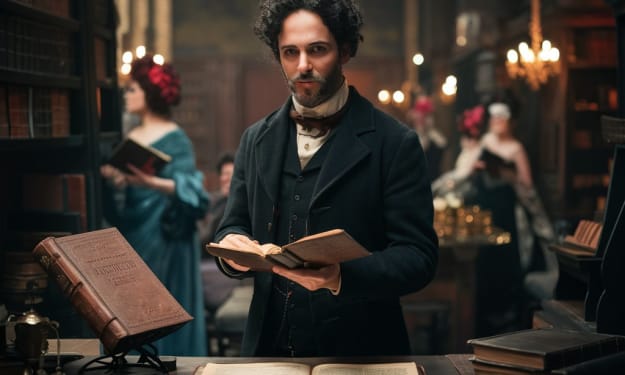
Sinopse: In the bustling heart of Victorian London, amidst the fog and cobblestone streets, a humble bookbinder named Thomas Whittaker crafted an extraordinary tale that would resonate through centuries. This is the story of how a seemingly innocuous saying, "Don't judge a book by its cover," came to life, entwined with secrets, mistaken identities, and a dash of humour. Through unexpected encounters and serendipitous events, Thomas's journey unveils a lesson in the dangers of superficial judgments, leaving an indelible mark on the English language and the way we perceive the world. The Beginning of a Journey: In the year 1845, Thomas Whittaker, a bookbinder of modest means, found himself ensnared in a peculiar predicament. One gloomy afternoon, he stumbled upon an unassuming leather-bound volume left abandoned in his shop. Its cover, worn and faded, revealed nothing of the treasure within. Little did Thomas know, this book was about to alter the course of his life, and eventually, the English language itself. The tale begins with a mix-up, a missing author, and a manuscript that would challenge the conventions of appearance and reality. Thomas's curiosity was piqued, setting him on a path that intertwined with the lives of London's elite, all while uncovering deeper truths about perception and identity. The Unveiling of Secrets: As Thomas delved into the pages of the mysterious book, he uncovered a narrative brimming with intrigue and unexpected twists. The story within told of Lady Beatrice, a noblewoman living a double life as a masked vigilante. Her true identity concealed beneath layers of disguise, Lady Beatrice navigated a world where appearances were often deceptive. Thomas found himself captivated, not only by the tale but by the craftsmanship hidden beneath the book's shabby exterior. This discovery sparked a revelation about the dangers of superficial judgments. He realised that, much like Lady Beatrice, the true essence of things often lay hidden, awaiting those patient enough to look beyond the surface. A Mistaken Identity: One fateful evening, a wealthy patron entered Thomas's shop, mistaking him for a renowned author due to the book in his hands. The patron, Lord Wetherby, insisted on hosting a grand soirée to introduce the "famed writer" to London’s elite. Unable to correct the misunderstanding without causing a scandal, Thomas reluctantly agreed. The soirée was a spectacle of opulence, where the city’s most influential figures gathered to meet the mysterious author. Thomas, amidst the grandeur, realised that his appearance had inadvertently led to a social masquerade. The lavish surroundings and the mistaken identity propelled him into a whirlwind of attention and admiration, all based on the cover of a book and the assumptions it provoked. The Masquerade: At the soirée, Thomas was thrust into a whirlwind of conversation and speculation. The guests, enthralled by his supposed literary prowess, showered him with accolades. Among them was Lady Evelyn, a sharp-witted socialite with a penchant for uncovering secrets. Sensing something amiss, she engaged Thomas in a playful yet probing dialogue. As they sparred with words, Thomas's unease grew, for Lady Evelyn's curiosity was as relentless as her charm. The evening reached its climax when Lady Evelyn, through a series of clever deductions, unveiled the truth about Thomas’s real identity. Her revelation, however, did not provoke scandal but rather a wave of amusement and appreciation for the irony of the situation. The Revelation: Lady Evelyn’s revelation, far from causing outrage, amused the gathered guests. They found the entire charade delightfully ironic and applauded Thomas for his humility and wit. Lord Wetherby, rather than being embarrassed, was fascinated by Thomas’s tale and proposed that the story of the book and its unassuming cover be shared with a wider audience. Thus, the notion that one should not judge a book by its cover began to gain traction, sparked by a series of serendipitous events and misunderstandings. The soirée's success and the whimsical nature of the evening solidified the proverb's place in the social consciousness, making it a talking point throughout London. The Legacy: News of the soirée and the proverb it inspired spread like wildfire across London. Thomas’s story was retold in parlours, inns, and even in the halls of academia. The phrase "Don't judge a book by its cover" became a metaphor for looking beyond superficial appearances, championing depth over veneer. Thomas Whittaker, once a mere bookbinder, found himself celebrated as an unwitting philosopher whose story touched hearts and minds. His modest shop became a beacon for those seeking wisdom, a testament to the idea that true value lies beneath the surface. The legacy of the proverb grew, reaching far beyond the boundaries of his humble beginnings. A Humorous Reflection: Years later, Thomas often chuckled at the absurdity of it all. From a forgotten book to a grand soirée, and from mistaken identity to an enduring proverb, his life had been a comedy of errors that somehow imparted timeless wisdom. He continued his work, always reminding his customers of the book that changed everything. His shop became a symbol of the proverb, attracting those curious about the man who inadvertently shaped a piece of linguistic history. The humour and irony of his experience provided endless amusement, reinforcing the lesson that appearances can indeed be deceiving. An Enduring Wisdom: Today, the phrase "Don't judge a book by its cover" remains a reminder to seek substance over style, to value depth over superficiality. Thomas Whittaker’s story, filled with humour, serendipity, and a touch of Victorian charm, endures as a testament to the power of looking beyond the surface. In an age of quick judgments, it invites us to pause and consider the hidden stories behind the façades we encounter. The enduring wisdom of the proverb continues to resonate, encouraging us to embrace patience and understanding in a world often too quick to judge.
By Rafael Fiuza2 years ago in History
The Genesis of Microsoft:
In the mid-1970s, the world was on the cusp of a technological revolution. A young Bill Gates, a Harvard dropout with a relentless passion for computers, and his childhood friend, Paul Allen, stood at the forefront of this transformation. Their shared dream of a future where computers were accessible to everyone ignited a journey that would change the world forever. In 1975, in a modest Albuquerque motel room, they founded Microsoft, a name that would soon become synonymous with personal computing.
By Aminu Muhammad2 years ago in History
Alaska's Transfer
When discussing significant historical real estate transactions, the sale of Alaska by Russia to the United States stands out as one of the most extraordinary. Completed on March 30, 1867, this deal transferred approximately 600,000 square miles of land from Russia to the U.S. for $7.2 million—a mere 2 cents per acre. At first glance, the deal seemed like a monumental bargain, but the reasons behind this historic transaction are deeply rooted in economic, strategic, and geopolitical considerations.
By Horace Wasmore2 years ago in History