General
The birth of shoes and umbrellas
The sage Jamadagni is shooting arrows, his wife Renuka is collecting them. The sage is thinking that this game is a great pleasure; that is why he does not remember any other work today. He keeps shooting arrows at empty cars. Meanwhile, who cares that it's late in the day, that the sun has cracked my palms, that the fire is burning my feet? The sage felt great shooting arrows today.
By Md Soriful Islam2 years ago in History
Apple Readies Pair of Headsets While Still Looking Ahead to Glasses
Apple Readies Pair of Headsets While Still Looking Ahead to Glasses Apple has been at the forefront of innovation for years, revolutionizing industries with groundbreaking products like the iPhone, iPad, and Apple Watch. The tech giant is preparing for augmented and virtual reality (AR/VR), its next major disruption. Reports suggest Apple is preparing to launch not one, but two high-end headsets, serving as a stepping stone toward its ultimate ambition: sleek, everyday AR glasses.
By Md. Al-Amin2 years ago in History
The Gaza Crisis: Aid Under Fire and the Plight of the Palestinian People
On March 23, 2025, an Israeli military strike on an aid convoy in Gaza resulted in the deaths of 15 humanitarian workers and marked a grim milestone in an already catastrophic conflict. One name emerged from the chaos and bloodshed: Asaad al-Nasasra, a Palestinian medic who vanished shortly after the attack. Al-Nasra is now being held in Israeli custody, according to aid groups, which raises serious concerns about the safety of humanitarian workers and the growing violence in the region. This tragic incident has become emblematic of a broader humanitarian and political crisis that continues to unfold in the occupied Palestinian territories, particularly in Gaza, where the population faces unimaginable suffering, deprivation, and displacement amid the ongoing Israeli-Palestinian conflict.
By Dalil Ahmed Niloy2 years ago in History
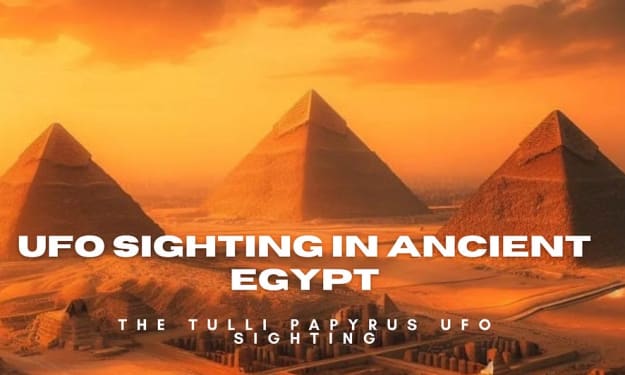
The Tulli Papyrus
The fascination with unidentified flying objects (UFOs) is not a modern phenomenon. Throughout history, numerous accounts of mysterious objects in the sky have been recorded, many of which predate the invention of flight by millennia.
By The Secret History Of The World2 years ago in History
Battle of the Budgets: Pixel 9a vs Galaxy S24 FE vs iPhone 16e – Performance Tested
The competition for the best "budget flagship" has never been fiercer as smartphone prices continue to rise. In 2025, compelling mid-range devices from Apple, Samsung, and Google aimed to provide users with high performance at a price point below four figures. This year, it’s a three-way showdown between the Google Pixel 9a, Samsung Galaxy S24 FE, and the newly introduced iPhone 16e.
By Md. Al-Amin2 years ago in History
Meet Gen Z: The Game-Changers of Today’s World"
Understanding Generation Z: The Digital Natives Shaping the Future Generation Z, often referred to as Gen Z, is the cohort of individuals born roughly between 1997 and 2012. This group is unique in many ways, primarily due to the rapid technological advancements they’ve grown up with. As a result of their seamless integration with the internet, social media, and other digital technologies, Generation Z is frequently referred to as a "digital native." However, what distinguishes Generation Z from previous generations and how are they influencing society, work, and culture in the future? Gen Z's characteristics 1. Tech-Savvy and Digitally Native
By Hridoy Ahmed2 years ago in History
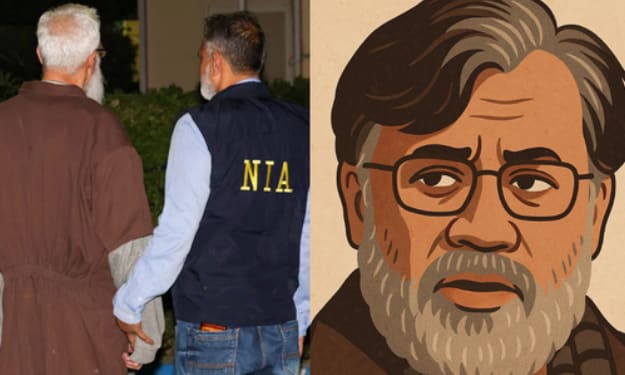
Tahawwur Rana grilled by NIA: What probe agency wants to know from 26/11 Mumbai terror attacks accused
New Delhi: The National Investigation Agency (NIA) recently interrogated Tahawwur Rana, a Canadian businessman of Pakistani descent who was extradited to India, in a significant development in the 26/11 Mumbai terror attacks case. The NIA, which has been relentlessly pursuing leads in the 2008 terror attacks that claimed over 160 lives, sees Rana as a key link in the conspiracy that enabled one of the deadliest attacks on Indian soil.
By Kindless Exe2 years ago in History
Understanding the Origins of the Israel-Palestine Conflict
The conflict between Israelis and Palestinians is one of the most complex and long-standing struggles in modern history. It is a conflict rooted in religion, land, identity, and nationalism, with deep historical roots that go back more than a century. At its core, it revolves around who has the right to live and govern in the land between the Jordan River and the Mediterranean Sea — an area that both Jews and Palestinians consider their homeland. Historical Background In the late 1800s, the region known as Palestine was part of the Ottoman Empire. It was home to a mix of people, including Muslims, Christians, and Jews. Around this time, a political movement called Zionism began in Europe. Zionists were Jews who wanted to create a national homeland for Jewish people, many of whom were facing antisemitism and persecution in Europe. They looked to Palestine, the ancient homeland of the Jewish people, as the place to establish this state. Meanwhile, Palestinian Arabs — who had lived in the land for generations — had their own growing sense of nationalism. They viewed Palestine as their land, and they were concerned about the growing number of Jewish immigrants arriving in the early 1900s. British Rule and the Balfour Declaration After World War I, the Ottoman Empire collapsed, and Britain took control of Palestine under a League of Nations mandate. In 1917, during the war, Britain issued the Balfour Declaration, promising to support the establishment of a "national home for the Jewish people" in Palestine. This alarmed the Arab population, who feared losing control over their land. As Jewish immigration increased, tensions between Jews and Arabs grew. Violent clashes broke out in the 1920s and 1930s. The British struggled to manage the conflicting promises they had made to both Jews and Arabs. Eventually, in 1947, after years of conflict, Britain turned the issue over to the newly formed United Nations. The UN Partition Plan and the Birth of Israel In 1947, the United Nations proposed a Partition Plan to divide Palestine into two states — one Jewish and one Arab — with Jerusalem under international control. Jewish leaders accepted the plan, but Arab leaders rejected it, saying it was unfair because it gave a large portion of land to a smaller Jewish population. In 1948, Jewish leaders declared the State of Israel. Soon after, neighboring Arab countries — including Egypt, Jordan, Syria, and Iraq — invaded in support of the Palestinians. This war is known as the First Arab-Israeli War or the War of Independence to Israelis, and the Nakba (Arabic for “catastrophe”) to Palestinians. Israel won the war and took more land than what was given under the UN plan. More than 700,000 Palestinians fled or were forced from their homes, becoming refugees. The land that was supposed to become a Palestinian state was divided between Israel, Egypt (which took control of Gaza), and Jordan (which took control of the West Bank). The 1967 War and Occupation In 1967, during the Six-Day War, Israel fought Egypt, Jordan, and Syria. As a result, Israel captured even more territory, including the West Bank, Gaza Strip, East Jerusalem, and the Golan Heights. These areas have remained at the heart of the conflict ever since. The occupation of the West Bank and Gaza by Israel became a major source of resentment. Palestinians in these territories lived under Israeli military control. Over time, Israel began building settlements — communities of Jewish Israelis — in the West Bank, which many consider illegal under international law. The Rise of the Palestinian National Movement In the late 1960s, the Palestine Liberation Organization (PLO) emerged, aiming to create a Palestinian state. The PLO carried out attacks against Israel, and Israel responded with military force. Violence continued for decades, often spilling over into neighboring countries like Lebanon. In the 1980s, Palestinians living in the occupied territories began an uprising known as the First Intifada (1987–1993), a mass protest movement that included demonstrations, boycotts, and sometimes violence. This brought global attention to the Palestinian cause. In 1993, the Oslo Accords were signed. These were peace agreements between Israel and the PLO, which led to the creation of the Palestinian Authority, a government that would run parts of the West Bank and Gaza. Hopes were high for peace and a two-state solution, but talks broke down in the years that followed. Continued Conflict and the Gaza Strip In 2000, the Second Intifada broke out, with more violence and suicide bombings. Trust between the two sides broke down further. In 2005, Israel withdrew from Gaza, but soon after, the militant group Hamas took control of the area. Hamas does not recognize Israel and has launched thousands of rockets at Israeli cities. Israel responded with blockades and military operations, creating a humanitarian crisis in Gaza. Since then, there have been repeated wars and escalations between Hamas and Israel, resulting in many deaths, especially among civilians in Gaza. The West Bank remains under partial Israeli control, with growing settlements and frequent clashes between Israeli soldiers and Palestinians. The Situation Today Today, the conflict remains unresolved. There is no peace treaty, and the idea of a two-state solution — with Israel and Palestine living side by side — seems increasingly difficult to achieve. Many Palestinians still live under occupation or in refugee camps. Meanwhile, Israeli citizens continue to face security threats from rocket attacks and violence. The world remains divided on how to solve the conflict. Some support Israel’s right to defend itself, while others call for more support and recognition of Palestinian rights. At its heart, this is a conflict over land, identity, and justice — with deep historical wounds on both sides. Conclusion The Israel-Palestine conflict is not just a political issue but a deeply human one. It involves generations of people who have lived through war, displacement, and loss. Understanding the history behind the conflict is the first step toward finding empathy, awareness, and — one day — perhaps, a path to peace.
By Izaz khan 122 years ago in History
Coffee creamer health risks:
A Comprehensive Look at Coffee Creamers' Dangers to Health Coffee creamers are a staple in many people’s morning routines. Whether it's to add a little creaminess, sweetness, or flavor to a cup of coffee, creamers make the beverage more enjoyable for many. However, there are several health risks associated with both dairy and non-dairy coffee creamers, especially when they’re consumed regularly. In this article, we'll explore the various ingredients commonly found in coffee creamers and their potential impact on health.
By Md Soriful Islam2 years ago in History
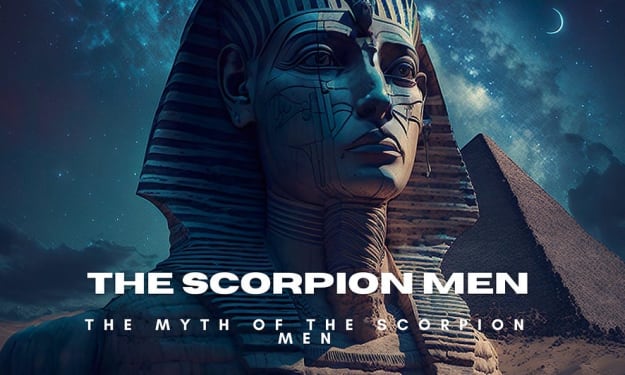
Myth and Reality?
Myth and Reality? Scorpions have captivated the human imagination since immemorial with their enigmatic nature and potent venom. These creatures hold a unique place in Egypt, symbolizing the culture’s divine and demonic aspects. This article delves into the intriguing myth and reality of the scorpion men in Egypt, mythical beings believed to be half-human, half-scorpion, guarding the gates of the afterlife.
By The Secret History Of The World2 years ago in History