General
Kolkata Knight Riders vs Mumbai Indians Timeline
The rivalry between the Kolkata Knight Riders (KKR) and the Mumbai Indians (MI) has been one of the most captivating narratives in the Indian Premier League (IPL) since its inception in 2008. Over the years, these two franchises have engaged in numerous memorable encounters, showcasing intense competition and cricketing excellence.
By Vivek Chaudharyabout a year ago in History
Kaal Sarp Puja in Nashik: A Comprehensive Guide and the Expertise of Pandit Kailash Shastri. AI-Generated.
Why Nashik for Kaal Sarp Puja? Nashik, located in Maharashtra, is home to the Trimbakeshwar Temple, one of the twelve Jyotirlingas dedicated to Lord Shiva. This ancient temple, situated 28 km from Nashik city near the Godavari River, holds immense spiritual significance due to its unique feature of housing a lingam representing Lord Brahma, Vishnu, and Shiva. Trimbakeshwar is considered the most authentic and effective location for performing Kaal Sarp Puja because:
By Kailash Shastriabout a year ago in History
The Holocaust: The Tragic Massacre of the Jews by the Nazis
The Holocaust: The Tragic Massacre of the Jews by the Nazis The Holocaust stands as one of the most horrifying and methodically executed genocides in human history. From 1941 to 1945, the Nazi regime, under the leadership of Adolf Hitler, orchestrated the mass murder of approximately six million Jews across Europe. This atrocity was not merely the result of war or chaos—it was a deliberate, ideologically driven campaign that sought to erase an entire population. But why did it happen? What drove the Nazis to commit such inhuman crimes? Origins of Anti-Semitism in Europe Anti-Semitism—the prejudice against Jews—was not born in the 20th century. Its roots trace back centuries. Throughout medieval Europe, Jews were frequently scapegoated for plagues, economic hardship, and social unrest. They were often barred from owning land, excluded from guilds, and blamed for financial manipulation. These deep-seated prejudices laid a fertile foundation for the rise of Nazi ideology. By the time the 19th and 20th centuries arrived, pseudo-scientific theories of racial superiority had emerged, falsely categorizing Jews as biologically inferior or even parasitic. These ideas percolated into the collective mindset of Europe, becoming more systemic, especially in Germany after its defeat in World War I. The Rise of Hitler and Nazi Ideology After Germany’s loss in World War I, the country suffered immense economic turmoil, hyperinflation, and a national identity crisis. The Treaty of Versailles imposed harsh penalties on Germany, which Hitler and many Germans viewed as humiliating and unjust. In this desperate atmosphere, Hitler’s Nazi Party rose to power by promising a return to national glory, economic recovery, and social unity. A central part of this vision, however, was the exclusion and elimination of Jews. Hitler’s autobiography Mein Kampf openly blamed Jews for Germany’s defeat and portrayed them as enemies of the Aryan race. Nazism’s core belief was racial purity. Jews were portrayed not only as a religious group but as a biological threat. The Nazis used propaganda to dehumanize them—depicting Jews as dirty, greedy, conspiratorial, and dangerous. Implementation of Genocide Once Hitler became Chancellor in 1933, systematic oppression of Jews began. The Nuremberg Laws of 1935 stripped Jews of citizenship, banned them from marrying non-Jews, and excluded them from public life. Anti-Jewish propaganda flooded schools, radio, films, and newspapers. Then, in 1938, the Kristallnacht (“Night of Broken Glass”) marked a turning point. Jewish homes, businesses, and synagogues were attacked across Germany and Austria. Thousands of Jews were arrested, and the path to genocide was set. With the outbreak of World War II in 1939, Nazi policies grew even more brutal. Ghettos were established to segregate Jews in overcrowded, disease-ridden quarters. From there, the Nazis escalated their plans into what they called the “Final Solution”—the mass extermination of all European Jews. Death Camps and Mass Murders Between 1941 and 1945, the Nazis built a network of concentration and extermination camps across occupied Europe. Auschwitz, Treblinka, Sobibor, and Majdanek became death factories. Jews were transported in cattle cars, deprived of food and water, and sent directly to gas chambers. Entire communities were wiped out. Children, women, the elderly—none were spared. Victims were stripped of their belongings, gold teeth were extracted, hair was collected, and even their ashes were used as fertilizer. The Holocaust was not only a genocide—it was an industry of death. Psychological and Political Motivations The Nazis didn’t act alone. Ordinary citizens, police, bureaucrats, and soldiers became complicit. Some believed in Nazi ideology; others participated out of fear, indifference, or gain. Anti-Semitism was normalized to such an extent that moral barriers collapsed. The massacre was also politically motivated. By uniting Germans against a common enemy—the Jews—Hitler maintained control and suppressed dissent. Economic envy played a role too. Jewish wealth was seized and redistributed, benefiting the state and collaborators. Global Impact and Legacy When Allied forces liberated the camps in 1945, the world was horrified by what they found. Piles of corpses, mass graves, survivors reduced to skeletons, and mountains of personal belongings revealed the unimaginable cruelty of the Holocaust. In the post-war period, the Nuremberg Trials sought to bring Nazi leaders to justice. The world vowed “Never Again,” and the United Nations was formed to promote peace and human rights. The Holocaust also led to the establishment of Israel in 1948, as a homeland for the Jewish people who had faced centuries of persecution. Conclusion The Holocaust is a painful reminder of the depths to which humanity can sink when hatred goes unchecked. It was not just a tragedy for the Jewish people—it was a loss for all humanity. Education, remembrance, and resistance to bigotry are essential to ensure that such a massacre never happens again.
By Say the truth about a year ago in History
The Cursed City of the Hittites
A Forgotten Empire's Legacy High in the heart of Anatolia, nestled among the rugged hills of modern-day Turkey, lies the ancient city of Hattusa, a city that once thrived as the capital of the Hittite Empire. Known for its monumental walls, intricate temples, and grand palaces, Hattusa was a vibrant hub of culture, politics, and power. But today, it is a ruin.
By The Secret History Of The Worldabout a year ago in History
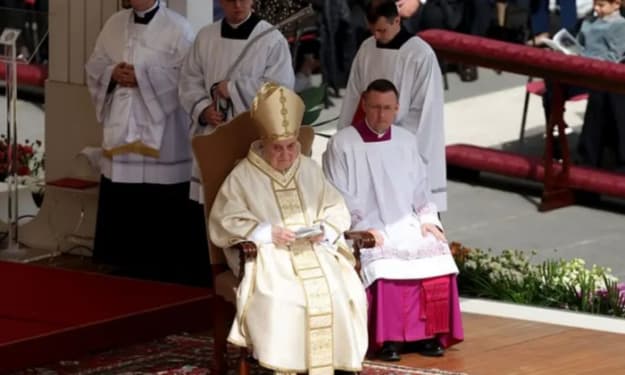
Pope Francis Dies at the Age of 88, World Leaders Pay Tribute. AI-Generated.
Pope Francis was born Jorge Mario Bergoglio on December 17, 1936, in Buenos Aires, Argentina, to Italian immigrant parents. He was the eldest of five children in a deeply religious and hardworking family. Before joining the priesthood, young Jorge studied chemistry and even worked briefly as a chemical technician and nightclub bouncer. A life-changing moment came in his early twenties, when he fell seriously ill with pneumonia. During his recovery, he felt a strong spiritual calling that led him to join the Society of Jesus (Jesuits) in 1958, a Catholic religious order known for its focus on education, missionary work, and social justice. Path to Leadership in the Church Bergoglio was ordained a priest in 1969 and quickly rose through the ranks. He became the Provincial Superior of the Jesuits in Argentina from 1973 to 1979. His leadership during Argentina’s "Dirty War" – a time of political unrest and violence – has drawn both criticism and praise. Some accuse him of not doing enough to protect fellow priests, while others view his actions as careful, behind-the-scenes advocacy. In 1992, he was appointed Auxiliary Bishop of Buenos Aires, and later became Archbishop in 1998. He was known for his simple lifestyle – taking the bus, cooking his own meals, and living in a modest apartment instead of the bishop's palace. Becoming Pope Francis In February 2001, Pope John Paul II elevated him to the rank of Cardinal. Bergoglio gained a reputation for humility, doctrinal conservatism, and a strong concern for the poor. Following the resignation of Pope Benedict XVI in 2013 – the first papal resignation in nearly 600 years – Bergoglio was elected the 266th Pope of the Roman Catholic Church on March 13, 2013. He chose the name Francis in honor of Saint Francis of Assisi, reflecting his vision of a church for the poor, a commitment to peace, and care for creation. Papacy Highlights As Pope, Francis has become a transformative figure in the Catholic Church. His papacy has been marked by: Humility and Simplicity: He declined many traditional papal luxuries, choosing simpler clothing, a modest car, and even washing the feet of prisoners and Muslims during Holy Week. Focus on the Marginalized: He emphasizes helping the poor, refugees, and the forgotten. He often speaks out on economic inequality and the moral crisis of ignoring suffering. Progressive Dialogue: Though maintaining traditional Catholic doctrine, Pope Francis has shown openness on sensitive topics, such as LGBTQ+ rights, climate change, interfaith dialogue, and the role of women in the Church. Climate Advocacy: His 2015 encyclical Laudato si’ called for urgent global action on climate change, making him a key moral voice in the environmental movement. Church Reforms: He has worked to address sexual abuse within the Church, though many believe deeper reforms are still needed. He has also streamlined Vatican bureaucracy and sought to make the Church more transparent. Legacy and Influence Pope Francis continues to lead the Church with a focus on compassion, inclusivity, and global unity. Despite facing criticism from both traditionalists and reformists, he remains one of the world’s most influential spiritual leaders. His legacy may ultimately be defined by his efforts to reconnect the Church with ordinary people, build bridges across divisions, and place love, mercy, and service at the heart of the Catholic faith. ritual leader of over 1.3 billion Catholics, Pope Francis left a lasting impact on the global stage with his message of compassion, humility, and inclusion. His death marks the end of an era that reshaped the papacy and inspired people of all faiths and backgrounds. Born Jorge Mario Bergoglio in Buenos Aires, Argentina, Pope Francis made history in 2013 as the first pope from the Americas, the first Jesuit pope, and the first non-European to lead the Catholic Church in more than 1,200 years. Throughout his papacy, he became known for his simplicity, progressive views, and deep concern for the poor and marginalized. From climate change to social justice, Pope Francis addressed some of the most pressing global issues with boldness and empathy. His encyclicals, particularly Laudato Si’ on the environment and Fratelli Tutti on human fraternity, continue to influence public discourse and policy worldwide. Following the news of his death, tributes poured in from leaders around the world: U.S. President said, “Pope Francis was a voice of hope and healing in a divided world. His legacy of peace and compassion will endure for generations.” Religious leaders from all denominations also expressed their condolences, highlighting Pope Francis’s dedication to interfaith dialogue and unity. Grand Imam Ahmed el-Tayeb of Al-Azhar, with whom Pope Francis signed the historic Document on Human Fraternity in 2019, described him as “a dear brother and a champion of peace.” The Vatican has announced that funeral arrangements will be shared in the coming days. Pilgrims from around the world are expected to flock to Rome to pay their respects to a pope who touched millions of lives through his humility, wisdom, and tireless advocacy for the voiceless. As the bells of St. Peter’s Basilica toll in mourning, the world remembers a man who sought not power, but service. Pope Francis’s passing marks the end of a transformative chapter in the Catholic Church — one defined by love, justice, and mercy.
By Hasan Mahmudabout a year ago in History
Nineteen Eighty-Four
1984 (also written as Nineteen Eighty-Four) is a powerful and chilling novel written by George Orwell. It was published in 1949, just after World War II, but it talks about a future world that feels cold, controlling, and scary. This book is not only a story—it’s a warning about what could happen if governments gain too much power and people lose their freedom.
By Muhammad Hayatabout a year ago in History
The Woman in the Darkness: The Haunting Story of Blanche Monnier. Content Warning.
A Whisper from the Shadows In the heart of 19th-century France, amid cobbled streets and aristocratic elegance, a secret festered behind shuttered windows and thick stone walls. A secret so harrowing, so drenched in silence, that the very air around it seemed to throb with mystery. This is not a tale born from gothic fiction, though it reads like one. This is a true story.
By The Secret History Of The Worldabout a year ago in History
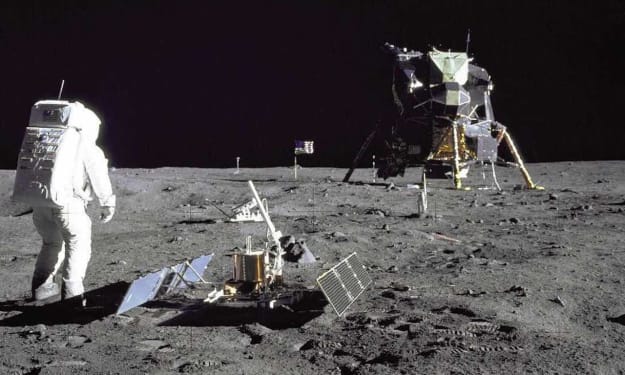
Apollo 11: The Mission That Almost Crashed the Moon Party (And the Wild Details They Never Taught You)
July 20, 1969: 650 million people watched a man step onto the moon, while 400,000 others held their breath, praying a computer glitch wouldn’t kill him live on TV. This is the story of how duct tape, a stolen sandwich, and a 26-year-old saved humanity’s greatest adventure… and why we’re still obsessed 55 years later.
By ChronoCuratorabout a year ago in History
Morning Jogger, Midnight Dreamer
Every morning at exactly six o'clock, Isla pulled her hair back into a ponytail, put on her well-worn sneakers, and went outdoors into the clear morning light. The metropolis was still wiping sleep from its eyelids, and the world was quiet. Running was more than simply exercise; it was a ritual, a haven, and a way to let go.
By MD SHAMIM RANAabout a year ago in History