Fiction
The Throne of Rajaraja Chola: Power and Grandeur of a Tamil Emperor
The Throne of Rajaraja Chola: Authority, Design, and Heritage of a Tamil Sovereign During the illustrious period of South Indian history, the Chola dynasty emerged as a paragon of imperial authority, administrative excellence, and architectural splendor. Central to this empire was Rajaraja Chola Ione of the most prominent emperors of the Chola lineagewhose reign, spanning from 985 to 1014 CE, witnessed remarkable military growth, cultural resurgence, and monumental temple edifices. Among the numerous legacies he bequeathed, the most iconic and lasting is the throne upon which he governed and the grand palace complex from which he presided over one of the most formidable kingdoms in Asia. The Ascendancy of Rajaraja Chola I Originally named Arulmozhi Varman, Rajaraja Chola ascended the throne following a phase of internal conflict and external challenges. He elevated the Chola dynasty from a localized kingdom to a vast empire that extended from the Kaveri Delta to northern Sri Lanka, the Maldives, and portions of Southeast Asia. His throne represented not merely a seat of royal esteemit symbolized divine sovereignty. Influenced by Shaivism, Rajaraja perceived himself as a servant of Lord Shiva. His reign was profoundly spiritual, yet politically astute and strategically adept. The Throne: Emblem of Chola Sovereignty Although no physical remnants of the original throne exist today, inscriptions, temple murals, and copper plate records offer vivid accounts of its splendor. It is thought that the throne was crafted from polished teak wood, intricately carved with lotus petals, and adorned with ivory, pearls, and gemstones. The backrest was designed to resemble a blooming lotus, symbolizing purity and enlightenment. Engraved atop the throne was the royal insigniaa tiger, flanked by a fish and a bowrepresenting the Cholas, Pandyas, and Cheras. This served as a continual reminder of the Chola’s supremacy over the southern dynasties. Rajaraja Chola’s throne was not merely decorative; it was a hallowed object of coronation, a political platform for royal decrees, and a stage from which temple patronage and military directives were proclaimed. The Royal Palace of Rajaraja Chola The royal palace complex of Rajaraja Chola was situated in Thanjavur (Tanjore)the imperial seat of the Cholas. While only the remnants of the subsequent Nayak palace remain today, archaeological investigations, Tamil inscriptions, and accounts from foreign travelers reveal that the original palace was a marvel of Dravidian architecture and urban planning. This palace formed part of a more extensive fortified city characterized by granite walls, grand gateways (gopurams), and a central courtyard. The palace featured numerous audience halls, treasury chambers, and royal living quarters. Most significantly, it was adjacent to the Brihadeeswarar TempleRajaraja’s crowning architectural triumph. The palace and the temple were conceived as a spiritual and administrative continuum, where divine authority and earthly governance coexisted in harmony. Daily rituals at the temple were reflected in royal activities at the palace. The Golden Age of Chola Architecture and Prosperity Rajaraja Chola’s governance is frequently denoted as the “Golden Era of Tamil Nadu,” and justifiably so. The sovereign seat and residence were positioned within a flourishing capital teeming with artists, clergy, warriors, and intellectuals. Inscriptions in temples document contributions of land, gold, silks, and elephantsindicative of the empire’s vast prosperity. The projected worth of the imperial throne and palacereassessed to contemporary standards and accounting for the materials utilized, artisan skills, and their emblematic significancewould exceed $1 billion USD. However, beyond mere material wealth, they embodied a civilizational value: emblems of Tamil pride, imperial strength, and cultural refinement. Legacy and Influence The impact of Rajaraja’s throne reached well beyond his era. His progeny, Rajendra Chola I, further enlarged the empire, even orchestrating naval ventures to Southeast Asia. The notion of divine sovereignty, centralized rule, and a temple-centric economy that Rajaraja honed from his throne persisted as the framework of South Indian governance for centuries. Even presently, in Tamil Nadu’s political landscape, mentions of the Chola throne evoke profound sentiments. Films, literature, and political discourses frequently reference Rajaraja’s reign as a period of exemplary administration, pride, and authority. Conclusion: A Throne Beyond Time The throne of Rajaraja Chola may no longer exist in tangible form, yet its legacy is intricately woven into Indian history. It symbolized the intersection of power, faith, art, and governance, crafted by one of the most visionary sovereigns the subcontinent has ever known. From the resonating corridors of his palace in Thanjavur to the soaring vimana of the Brihadeeswarar Temple, Rajaraja’s vision enduresinscribed in stone, commemorated in ancient Tamil hymns, and cherished through the ages.
By Say the truth 2 years ago in History
A letter from Death 💀
Start Dear Soul, I know my name brings chills to many hearts. I’ve been feared, cursed, misunderstood for as long as time has existed. People run from me, cry at the thought of me, and yet—sooner or later—we all meet. I do not write this to frighten you. I write this to speak the truth, not the one wrapped in horror stories or whispered in hospitals, but the quiet, honest truth you deserve to hear. I am Death. But I am not darkness. I am not cruelty. I do not come with blood or fire. I do not arrive with screams. I come when the world has grown quiet around you, when your breath begins to fade like fog in the morning sun. I come with calm hands and softer steps than you imagine. My arrival is not a storm—it’s a sigh, a gentle closing of the last page in a story that has been long, beautiful, and at times, hard. You’ve seen me before, though you may not have known it. In the fading eyes of a grandparent, in the silence after a funeral prayer, in the final exhale of someone you loved deeply. I was there. Not to take with cruelty, but to carry with care. People fear me because they do not understand me. And I do not blame them. The unknown is frightening. But I promise you this: I am not the end. I am the doorway. I am the release from pain, from burden, from the weight you’ve carried so long. I am not the fall—I am the landing. I do not take joy in sorrow. I do not hunger for lives. That is not my purpose. I am not the one who causes suffering—I am the one who arrives when it’s done. I am the one who lifts you out of it. When your body can no longer carry your soul, when your heart grows tired of fighting, that is when I come. Quietly. Respectfully. I have taken children who left too soon, and I’ve taken warriors who fought long battles. I’ve stood beside those whose hands were held tightly and those who passed in silence. And I’ve mourned every single time, because though I am Death, I understand love. I see it every day. I see it in the way people whisper goodbye, in the tears that fall on pillows, in the prayers that rise after I’ve come. I do not erase love. That is the one thing even I cannot touch. Love follows you beyond the veil. It connects you still, heart to heart, across time and space. Those who love you will remember, speak your name, dream of you, feel you in small moments—and that will be you, reminding them that though your form is gone, your essence remains. I know many ask, “Why now?” or “Why them?” I wish I had answers that would satisfy every broken heart, but the truth is, I do not control time. I do not choose the moment—I only arrive at it. Life gives, and life takes. I simply carry what remains. So please, do not fear me. When your time comes, and it will—just as night follows day—I will be there, not as a terror, but as a friend. You will not be alone. You will not be lost. I will carry your soul like something fragile and sacred. I will guide you gently, so gently, to what lies beyond. Until then, live boldly. Love deeply. Laugh loudly. Use your time well. Not one second is promised, and yet every second is a gift. Make your life a story worth reading, so that when the last line comes, it ends with peace. And when that day comes, when the sun sets for you for the last time, remember—do not be afraid. I am only Death....
By Zaeem Hasan 2 years ago in History
Love like black tea
Love like black tea It was deep at night. Outside the window, a gentle rain was falling silently. Maya was sitting in the dim light inside the room. A cup of black tea in her hand was her favorite, and her love, like that tea, was dark and deep, but not visible to everyone.
By Arshad Ali2 years ago in History
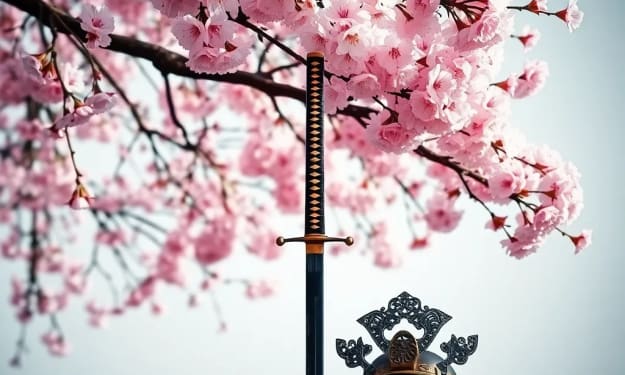
The Last Samurai: The Story of Saigo Takamori
In the annals of Japanese history, few figures have captured the imagination and reverence of the nation quite like Saigo Takamori, often referred to as “The Last Samurai.” A warrior, a visionary, and a tragic hero, Saigo's life embodies the turbulent transformation of Japan from a feudal society to a modern state. His story is one of deep honor, resistance to change, and ultimate sacrifice—a tale that continues to resonate in both historical and cultural discussions around the world.
By Fahad Khan2 years ago in History
Mars Planet live Alien? 5 Unknown Facts That’ll Blow Your Mind
For many years, Mars has captivated humanity with its reddish color and enigmatic landscape. From science fiction movies to NASA’s robot explorations, the Red Planet has become a symbol of our curiosity about life beyond our planet. But does life really exist on Mars? And if it does—could it be … extraterrestrial?
By Mubarak Hossain Akash2 years ago in History
The Conflict Between Israel and Palestine: The Past, the Present, and the Way Forward
Introduction One of the modern era's longest, most emotionally charged, and globally significant conflicts is the Israel-Palestine conflict. Beyond the headlines and political statements, it is a story of two peoples with deep historical connections to the same land, struggling for recognition, dignity, and survival. Over the decades, the conflict has witnessed numerous wars, peace negotiations, uprisings, and immense human suffering. The purpose of this article is to provide a comprehensive comprehension of the conflict by tracing its beginnings, examining its current complexity, and assessing the likelihood of peace. 1. Historical Roots of the Conflict
By Md Shahadat Hossain2 years ago in History
New Museum Examines the History of American Public Housing—and the Stories of Its Residents
Tens of thousands of people were displaced when the Chicago Housing Authority (CHA) started demolishing its own public housing apartments in the early 2000s, despite the agency's assurances that it would soon provide them with new housing and significant community investment.
By moyensefat2 years ago in History
The Golden Cave.
A cave that no one dared approach was high in the misty hills of an old, forgotten village. The elders spoke of it only in whispers, saying it was cursed—guarded by spirits who punished the greedy.But they also said it held something else:gold, more than any man had ever seen.
By Ahmed Karim2 years ago in History
Palestine Rising Death Toll and Humanitarian Crisis
The situation in Palestine, particularly in Gaza, has reached a new level of humanitarian catastrophe, as Israeli military operations continue into April 2025. Israeli forces have intensified their airstrikes and ground offensives over the past few weeks, causing a tragic rise in the number of civilian deaths, the destruction of infrastructure, and an ongoing blockade that has left millions of people in desperate need of essentials.
By Ahmed Karim2 years ago in History
New NASA Sonifications: Listen to the Sound of the Universe.
The universe has always been a place of wonder, mystery, and awe. While telescopes and satellites allow us to observe it, allowing us to "hear" it is one of the most innovative and creative approaches NASA has recently adopted. NASA is converting astronomical data into sound through a process called "sonification," which provides a brand-new method for experiencing the universe. This unique approach to data representation is not only scientifically valuable but also deeply emotional and artistic. As part of its Chandra X-ray Observatory project, NASA released a new set of sonifications that transform some of the most well-known space phenomena into musical compositions that capture the imagination and bring the universe to life in a way that has never been done before. ---
By Ahmed Karim2 years ago in History