Fiction
Reasons for the decline of the Muslim world.
The Muslim world was once a symbol of leadership in the pages of world history—unique in knowledge, science, justice, military might, and spirituality. Baghdad, Cairo, Andalusia, Samarkand, or Delhi—each city was a beacon of civilization. But today that Muslim world is fragmented, weak, oppressed, and confused. The question arises—what is the cause of this decline? Is it primarily the result of external aggression? Or is it the result of internal moral and political weakness?
By Abdul Barikabout a year ago in History
India and Pakistan Escalate Military Attacks on Bases Amid Rising Tensions
In a significant escalation of hostilities, India and Pakistan have launched reciprocal attacks on each other's military bases, marking one of the most severe confrontations between the nuclear-armed neighbors in recent years.
By Abjol Hussain Laskarabout a year ago in History
Rabindranath Tagore Jayanti 2025: 25+ Wishes, Messages, and Inspirational Quotes to Share
On May 9, 2025, we commemorate the 164th birth anniversary of Rabindranath Tagore—India’s Nobel laureate poet, philosopher, and cultural icon. Known as Gurudev, Kabiguru, and the Bard of Bengal, Tagore’s legacy transcends literature, music, and art, leaving an indelible mark on the world. His timeless words continue to inspire generations, making Rabindra Jayanti a day of reflection and celebration.
By Abjol Hussain Laskarabout a year ago in History
The 2002 Godhra train tragedy and the Gujarat riots.
The year 2002 is marked as a bloody and controversial chapter in India's post-independence history. On the morning of February 27 of that year, a terrible incident took place at the Godhra railway station—a fire broke out in the S-6 coach of the Sabarmati Express, killing 59 Kar Sevaks who were returning from Ayodhya. Immediately after this incident, terrible riots spread across the state of Gujarat, in which about 2,000 Muslims were killed, thousands of Muslim women were raped, mosques were destroyed, businesses were ruined, and millions of people were displaced. This riot was not just a communal outrage—behind it was a dazzling political tableau, state silence, and purposeful administrative inaction. The Godhra incident and the subsequent riots are still controversial, questionable, and symbolize the darkest chapter in politics.
By Abdul Barikabout a year ago in History
Delhi Traffic Advisory: Vehicle Restrictions and Alternate Routes Announced Amid Saket Bar Council Elections
The Delhi Traffic Police have issued a comprehensive traffic advisory in light of the ongoing Bar Council elections at the Saket Court Complex. The elections, scheduled from 8:00 AM to 8:00 PM on May 9, 2025, are expected to cause significant traffic congestion in the surrounding areas. To ensure smooth vehicular movement and minimize inconvenience to commuters, specific restrictions and alternative routes have been outlined.
By Abjol Hussain Laskarabout a year ago in History
The Full Flower Moon of 2025: A Magical Night Blooms on May 12
Full 'Flower Moon' 2025 Blooms on May 12: A Celestial Spectacle in the Spring Sky The full moon rises each month with its own name and significance, attracting skywatchers and nature enthusiasts alike. The ethereal light of the Full Flower Moon, which is expected to shine brightest on May 12 in 2025, will once more illuminate the night sky. This full moon has historical, cultural, and seasonal significance in addition to being a beautiful astronomical event. What is the "Flower Moon"? Native American and European customs inspired the name "Flower Moon." May marks the beginning of spring in the Northern Hemisphere. Flowers of all kinds begin to bloom in abundance—blanketing meadows, forests, and gardens with vibrant color and life. The "Flower Moon" was the name given to this full moon by early civilizations who used the lunar cycle to track time. The term gained popularity through the Old Farmer's Almanac, which popularized the traditional names of full moons. According to their records, the Flower Moon was a marker of increasing fertility in the earth, warmer weather, and the end of the planting season. When and How to See It In 2025, the Flower Moon will be at its fullest phase on May 12 at 9:56 PM UTC. This may be visible in the early morning of May 13 or in the evening of May 11, depending on your time zone. Regardless of when you see it, the moon will appear full and radiant for a day or two around the peak. To get the most out of your viewing: Find a dark, open area away from city lights. Beginning your observation at moonrise, which occurs shortly after sunset, If you want to get a closer look at the moon's craters and surface textures, you can do so with binoculars or a small telescope. This year’s Flower Moon will not coincide with a lunar eclipse or any unusual celestial event, but its sheer brilliance and the symbolism it carries make it a worthwhile sight. Cultural and Spiritual Significance Full moons have always played an important role in human culture and spirituality. In particular, the Flower Moon is regarded as a time of development, transformation, and celebration. Just as the earth bursts into color, many people use this time to reflect on their own personal growth. In Pagan and Wiccan traditions, the Flower Moon is a time for rituals related to abundance, love, and fertility. It's a period to plant both literal and metaphorical seeds and watch them grow. Buddhists often celebrate Vesak—the birth, enlightenment, and death of the Buddha—during May’s full moon, although the exact date varies based on the lunar calendar. In modern times, many people see the Flower Moon as a time to connect with nature, meditate under the moonlight, or simply enjoy the serenity that the full moon brings. Astrological Influence From an astrological perspective, May’s full moon in 2025 will fall in the sign of Scorpio, a zodiac known for intensity, emotional depth, and transformation. This combination of fertile spring energy with Scorpio’s powerful emotions may encourage introspection, relationship shifts, and a renewed sense of purpose. People who follow astrology might find this a good time to: Let go of emotional baggage Set intentions for personal healing Embrace change and transformation It’s a good opportunity to ask yourself: What is ready to bloom in your life? The Science Behind the Glow The moon doesn’t produce its own light—it reflects the light of the sun. A full moon occurs when the moon is on the opposite side of Earth from the sun, allowing its face to be fully illuminated from our perspective. Because of this alignment, the full moon can sometimes appear larger or brighter than usual, depending on its orbit and position. In 2025, the Flower Moon will not be a supermoon, meaning it won’t appear unusually large in the sky. Still, its beauty will be no less awe-inspiring. Tips for Photographing the Moon If you’re interested in capturing this moment, here are a few tips: Use a tripod to keep your camera steady. Lower the ISO to reduce grain. Use a zoom lens or smartphone telescope attachment for close-up details. Shoot during moonrise or moonset, when the moon appears lower and more colorful due to the Earth’s atmosphere. Even a simple smartphone can capture stunning images when timed right. Conclusion: Pause, Reflect, and Bloom The Full Flower Moon of May 12, 2025, is more than just a natural occurrence—it’s an invitation. It invites us to slow down, look up at the sky, and remember the rhythm of nature. Just as flowers bloom after a long winter, we too have the opportunity to grow, renew, and radiate our inner light. Whether you watch it with friends, from your rooftop, or in quiet solitude, this year’s Flower Moon promises to be a beautiful reminder of the season’s magic. So mark your calendars, prepare your cameras, and get ready to bask in the light of May’s most enchanting lunar show. --- Would you like a shorter version for social media or a Bangla translation of this article?
By Abraham Lopezabout a year ago in History
Cosmic Catastrophe Captured: NASA Reveals Breathtaking Image of Black Hole Swallowing a Star 600 Million Light-Years Away
NASA Uncovers Black Hole That Consumed a Star 600 Million Light-Years In The Past – Breathtaking Image Revealed NASA Unveils Breathtaking Image of a Black Hole That Devoured a Star 600 Million Light-Years Distant
By Ehsan Tanvirabout a year ago in History
The Phantom Fleet of the Indian Ocean: Lost Ships and Forgotten Fortunes
The Golden Phantom of the Baltic: The Abandoned Wreck of the Vasa Treasure Fleet Beneath the frigid, turbulent waters of the Baltic Sea resides a conundrum that has perplexed scholars and treasure seekers for ages: the destiny of the Vasa Treasure Fleet. Thought to be filled with gold, gems, and invaluable wartime artifacts of the Swedish Empire, the fleet's abrupt vanishing during a tempest ignited tales of a gilded phantom vessel that still roams the depths. This article delves into the origins of the Vasa Fleet, its disastrous final journey, and contemporary endeavors to reveal its elusive richesunfolding a chilling narrative of imperial aspiration, maritime catastrophe, and persistent enigma. Prompt for image generation: "A lifelike depiction of three substantial, wooden three-masted vessels from the 17th century navigating a fierce Baltic Sea storm. The central vessel is embellished with golden carvings, its sails straining against the gales, while ominous thunderclouds swirl above. A faint radiance pierces through the sky, illuminating the waves and the fleet. " Zheng He was an extraordinary admiral. Born as Ma He in Yunnan to a Muslim family, he was seized by the Ming army and subsequently castrated, becoming a eunuch attendant in the imperial palace. His intellect and fidelity garnered the confidence of the Yongle Emperor, who assigned him the command of a naval expedition unprecedented in China’s history. Zheng He’s armada consisted of enormous treasure shipsreferred to as baochuaneach potentially exceeding 120 meters in length, with multiple levels and watertight compartments. They transported commodities such as porcelain, silk, gold, and spices, as well as exotic creatures like giraffes and zebras back to China. His seven voyages extended to Southeast Asia, India, Sri Lanka, the Arabian Peninsula, and even East Africa. Each expedition solidified China’s supremacy on the seas. The final recorded voyage concluded in 1433, after which Zheng He is believed to have perishedpossibly at sea. The Eighth Voyage: Fact or Fiction? Chinese historical documentation makes no reference to an eighth voyage, yet oral traditions from the Malacca Sultanate, Java, and East Africa recount a final armada, larger than any preceding it. According to one such narrative, this ultimate fleet was laden not with tribute but with immense treasuresgold coins, imperial artifacts, jade seals, and celestial mapsmeant to be concealed in secret locations for safekeeping following the emperor's demise. One hypothesis suggests that the fleet departed clandestinely amid the political upheaval after Emperor Yongle's death, intending to conceal or protect the empire’s wealth from internal insurrection. Others assert that the voyage was commissioned by the emperor but was lost at sea, possibly due to a typhoon in the South China Sea or Indian Ocean. Clues from the Ocean Over the years, divers have unearthed ancient Chinese relics along atypical routesMing-era porcelain off the coast of Kenya, and substantial bronze coins near Sumatra and Madagascar. While some discoveries may result from normal trade, others indicate it could be evidence of a route traveled by a treasure convoy that strayed significantly off course.
By Say the truth about a year ago in History
The Golden Ghost of the Baltic: The Lost Wreck of the Vasa Treasure Fleet . AI-Generated.
The Golden Phantom of the Baltic: The Abandoned Wreck of the Vasa Treasure Fleet In the obscure depths of the Baltic Sea rests one of Northern Europe’s most enigmatic maritime legendsa narrative of royal aspiration, national pride, and a submerged fortune. The account of the Vasa treasure fleet and the immense wealth lost beneath the waves illustrates a vivid portrayal of Sweden’s imperial ambitions during the 17th century. This article explores the history of the Vasa warship, the kingdom it served, and the ongoing quest for the elusive riches once intended to finance a Swedish empire. An Ascendant Power in the North In the early 1600s, Sweden emerged as an ascendant power under King Gustavus Adolphus, who aimed to transform his nation into a European empire. Having inherited a relatively modest kingdom, Gustavus Adolphus heavily invested in military advancements and naval expansion. Central to his aspirations was the Vasaan elaborate and heavily armed warship constructed to project Swedish supremacy across the Baltic and beyond.
By Say the truth about a year ago in History
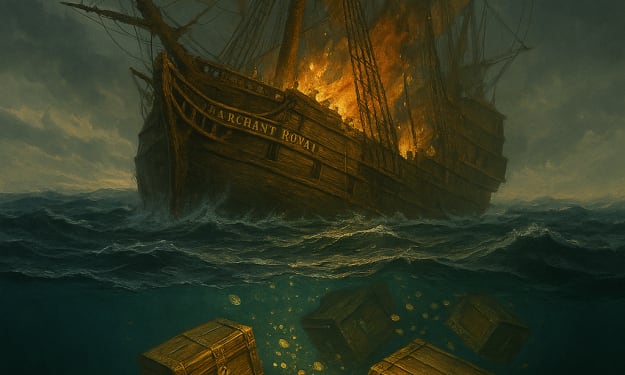
The Vanished Treasure of the Merchant Royal: The Lost Fortune of England’s Sunken Galleon
The Merchant Royal: England’s Treasure Ship In the early 17th century, England’s naval power was growing, but it still lacked the colonial riches of Spain and Portugal. However, one ship—the Merchant Royal—would momentarily carry a fortune that rivaled any Spanish treasure fleet. Built in 1627 in London, the Merchant Royal was a 700-ton galleon owned by English merchants and captained by John Limbrey. The ship primarily sailed between England and the Spanish colonies in the Americas, trading goods for silver and gold. The Merchant Royal became famous not only for its size but for the value of its cargo. By the early 1640s, Spain was struggling to ship its wealth from the Americas back to Europe due to piracy and naval warfare. English ships like the Merchant Royal stepped in to help transport Spanish wealth in exchange for political and financial favors. The Ill-Fated Voyage of 1641 In 1641, after completing a successful trade voyage to the Spanish colonies in Mexico, the Merchant Royal docked at the port of Cadiz. There, she took on an extraordinary cargo of treasure—reportedly including 100,000 pounds of gold, 400 bars of Mexican silver, and countless pieces of jewelry and coinage. This cargo was being transported to Antwerp, Belgium, as payment for Spain’s debts. However, disaster struck. After setting sail from Cadiz toward Falmouth, England, the ship began to leak while traveling through stormy seas. Reports say the pumps failed to keep up with the water pouring in. Off the coast of Cornwall, near the Isles of Scilly, the Merchant Royal sank beneath the waves, dragging its unimaginable wealth to the seafloor. Of the estimated 80 crew members aboard, only around 40 were rescued by a companion ship, the Talbot. The rest, along with the galleon and her priceless cargo, were lost forever. The Value of the Lost Treasure The treasure on board the Merchant Royal was vast. Modern estimates put its worth at over $1.5 billion, which would make it one of the largest lost fortunes at sea. The cargo included: 100,000 pounds of gold (bullion and coins) 400 silver ingots Rubies, emeralds, and other precious stones Gold jewelry and religious artifacts This enormous wealth was insured by Spain and partially backed by English merchants, creating a political and financial scandal after its disappearance. Search and Myth For centuries, treasure hunters, salvagers, and adventurers have tried to locate the wreck of the Merchant Royal, but the ship has never been officially discovered. The waters off Cornwall are treacherous, with strong currents, rocky seabeds, and poor visibility. Many claim to have found pieces of treasure in the area, but no definitive proof has emerged. The legend of the Merchant Royal continues to attract explorers, and every few decades a new wave of interest surges. In 2007, a company called Odyssey Marine Exploration announced the recovery of over 500,000 silver coins from a wreck they nicknamed the “Black Swan.” Initially, many speculated it was the Merchant Royal, but further analysis suggested otherwise. Modern Expeditions and Technology Today’s search for the Merchant Royal has become more sophisticated. Underwater drones, sonar scanning, and deep-sea mapping have replaced traditional diving. In 2019, Royal Navy divers searching for a crashed aircraft off the Cornish coast stumbled upon a shipwreck with 17th-century artifacts—but it was not confirmed to be the Merchant Royal. The British government, salvage firms, and historical societies have debated the legal rights to the treasure. If discovered, the ship’s contents would likely trigger a complex international legal battle involving claimants from Spain, the UK, private salvage companies, and descendants of the original stakeholders. Legacy and Cultural Impact The Merchant Royal is more than a lost treasure; it is a symbol of ambition, maritime risk, and the turbulent economics of colonial Europe. Its story has inspired documentaries, novels, and folklore throughout England. Often referred to as “the El Dorado of the Deep,” the ship’s legend grows stronger with every generation of treasure hunters who search the sea for her glittering prize. Even if the Merchant Royal is never found, its tale remains an enduring chapter in maritime lore—one that stirs dreams of golden fortunes hidden just beneath the waves. Would you like an image showing the sunken galleon beneath the ocean or a depiction of it at sea before it sank?
By Say the truth about a year ago in History
Pope Leo's stance on key issues, from climate change to LGBTQ+ rights to U.S. politics
Your request is inconsistent in some way. Pope Leo XIII held the papal office from 1878 to 1903. During that time, there wasn't much discussion or debate on climate change, LGBTQ+ rights, or the present-day political context of the United States. These issues became institutionalized and came to the forefront of discussion in the late 20th and 21st centuries. Perhaps you wanted to know about the views of the current Pope Francis, as these topics are highly relevant during his pontificate. If so, I am presenting Pope Francis's opinions below. If you genuinely want to know about Pope Leo XIII regarding these specific issues, it must be said that these topics were not even raised during his time. However, Pope Leo XIII is known for his famous encyclical "Rerum Novarum" (1891), where he spoke about workers' rights, fair wages, and social justice. It is regarded as an essential component of Catholic social teaching. These principles can indirectly be relevant to some of today's debates, such as economic inequality or the rights of the poor who are victims of environmental exploitation. Now, if your intention is to know Pope Francis's opinions, his positions are as follows: The Fundamental Values and Position of Pope Francis on Various Topics Since his election in 2013, Pope Francis has been known for his straightforward talk, his empathy for the poor and marginalized, and his bold steps in addressing complex global problems. His thinking is deeply centered on Jesus's mercy, social justice, and the protection of creation.
By Juyel Khan Khanabout a year ago in History
Retro Jeans | From Workwear to Cultural Icon.
The Story Behind the Fabric That Never Fades. A Stitched Legacy: The Birth of Denim The story of jeans began in 1873 when Levi Strauss, a Bavarian immigrant in San Francisco, partnered with tailor Jacob Davis to patent a new kind of durable pants made from denim fabric, reinforced with copper rivets. These were designed specifically for miners and workers during the California Gold Rush.
By Sayed Zewayedabout a year ago in History