Fiction
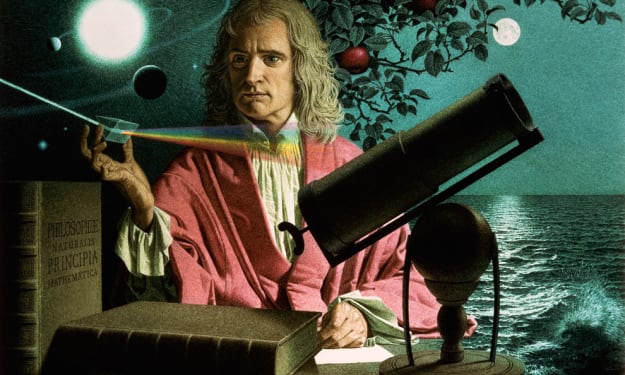
Secrets of Isaac Newton
He disappointed his mother by not pursuing her dream of becoming a farmer. His relationships with others were so complex that he ended up living a solitary life. However, his passion for alchemy led him to become one of the most renowned scientists in history. Yes, I'm referring to Isaac Newton, the famous English physicist and mathematician who revolutionized modern physics. Newton was born in the small village of Wol Thorp in 1643. Unfortunately, he never had the chance to meet his father, who passed away before his birth. Around the same time, another brilliant scientist, Galileo Galilei, took his last breath in Florence. Little did Newton know that he would later build upon Galileo's ideas and make them legendary. From the very beginning, Isaac faced challenges as he was born prematurely and had to fight for survival. He was so tiny that he could fit inside a large mug. His mother remarried shortly after his birth, and he ended up living with his grandmother, separated from his mother for nine years. This solitude had a lasting impact on his life. Years later, when reflecting on his past, he even confessed to having fiery thoughts about his stepfather, such as wanting to burn down the house. On the bright side, his isolation sparked his interest in books on mechanics and technology. He even developed a highly accurate system of sundials. Recognizing his intellectual potential, his uncle and school headmaster encouraged him to pursue his studies instead of tending to the family property. Despite his mother's initial resistance, she eventually gave in, and Newton returned to grammar school. At the age of 18, he was admitted to Trinity College, Cambridge. To support his education, Newton worked and studied, waiting tables and taking care of other students' rooms.
By Angelo Valentino Krause3 years ago in History
Blue-green Like Man
Blue-green is an uncertain variety. Not exactly blue, not exactly green, however in the middle between. Furthermore, it was precisely the way that Kevin was the point at which I originally strolled past him at the extension, eight years after our secondary school graduation.
By Shamsunnaher3 years ago in History
"Resurrection from the Dead".
An Unexpected Encounter My acquaintance with Irina was not deep - we had only been communicating for half a year, mostly at noisy parties and discos. It would be an exaggeration to call us best friends, but we were certainly good acquaintances.
By Ткач Снов и Рассказчик Историй3 years ago in History
How would you love horror story
In the small, isolated town of Ravenswood, nestled deep within the dense woods, an eerie silence hung in the air. As twilight descended, the townsfolk retreated into their homes, unaware of the darkness that lurked beyond their tightly drawn curtains.
By Peculiar Beauty3 years ago in History
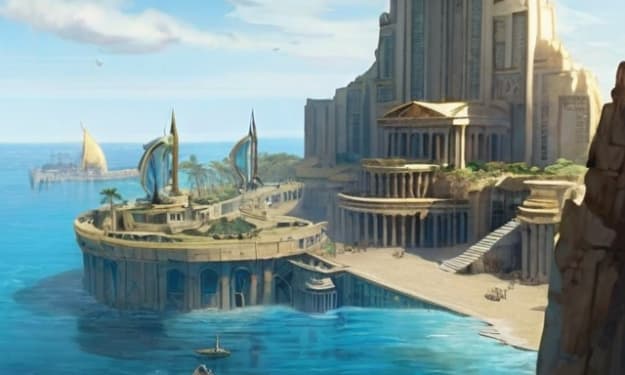
An Excursion into Old Secrets
In the immense woven artwork of mankind's set of experiences, scarcely any mysteries loom as enormous or mix the creative mind as significantly as the legend of Atlantis. Covered in fantasy and secret, this mythical development has charmed personalities for quite a long time, starting vast discussions among history specialists, archeologists, and devotees. Was Atlantis simply an invention of creative mind, a scholarly moral story devised by the old thinker Plato? Or on the other hand does it disguise a more profound truth, a lost progress lowered underneath the waves?
By Christopher Ezeh3 years ago in History
History of two wheeler
The history of two-wheelers, or motorcycles, is a fascinating journey that spans centuries. Here's a brief overview: 1. **Early Concepts (Late 19th Century):** The concept of two-wheelers traces back to the late 19th century. Inventors experimented with various designs, combining a bicycle with a small internal combustion engine. In 1885, Karl Benz developed the Motorwagen, considered the first true automobile, but it wasn't until the late 19th and early 20th centuries that motorized bicycles gained popularity. 2. **Motorized Bicycles (Early 20th Century):** Motorized bicycles emerged as practical transportation options in the early 1900s. Companies like Indian Motorcycle and Harley-Davidson began producing motorcycles with features like engines integrated into the bicycle frame, providing a more comfortable and powerful alternative to traditional bicycles. 3. **Mass Production and Popularization (1920s - 1930s):** The 1920s and 1930s marked the era of mass production and increased popularity of motorcycles. Manufacturers refined designs, introduced new features, and diversified styles, contributing to the widespread use of two-wheelers for commuting and recreation. 4. **World War II Influence (1939 - 1945):** World War II had a significant impact on the motorcycle industry. Military demand for lightweight, versatile vehicles led to the production of motorcycles designed for combat, such as the BMW R75 and the Harley-Davidson WLA. After the war, returning soldiers contributed to the surge in civilian motorcycle ownership. 5. **Post-War Boom and Cultural Impact (1950s - 1960s):** The post-war period saw a motorcycle boom, with iconic models like the Triumph Bonneville and the Honda Super Cub gaining popularity. Motorcycles became associated with youth culture and rebellion, epitomized by the rise of the "biker" image. The concept of cruising on two wheels became a symbol of freedom and rebellion. 6. **Era of Innovation (1970s - 1980s):** The 1970s and 1980s witnessed technological advancements and innovations in motorcycle design. Japanese manufacturers like Honda, Yamaha, Kawasaki, and Suzuki introduced new features, including disc brakes, electric starters, and improved suspension systems. Off-road bikes gained popularity, contributing to the development of motocross as a sport. 7. **Diversification of Styles (1990s - 2000s):** The late 20th century and early 21st century saw the diversification of motorcycle styles. Sport bikes, cruisers, touring bikes, and dual-sport bikes became popular, catering to a wide range of rider preferences. Manufacturers continued to focus on performance, safety, and environmental concerns. 8. **Modern Trends (2010s Onward):** In recent years, electric motorcycles have gained attention as technology advances. Manufacturers are exploring eco-friendly options while continuing to enhance traditional designs. Connectivity features, advanced safety systems, and ergonomic improvements are defining trends in the evolving landscape of two-wheelers. The history of two-wheelers reflects a dynamic evolution, from the early experiments of inventors to the diverse and technologically advanced motorcycles of the present day. The enduring appeal of riding on two wheels continues to shape the culture and industry of motorcycling worldwide.
By J.Balakrishnan3 years ago in History
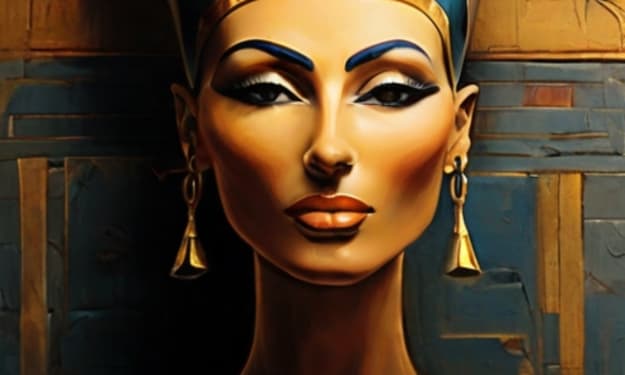
"Nefertiti: Beauty, Power, and Mystery in Ancient Egypt's Amarna Period"
Queen Nefertiti, whose name means "a beautiful woman has come," remains one of ancient Egypt's most enigmatic and celebrated figures. Born around 1370 BCE, little is known about her early life, but her marriage to Pharaoh Akhenaten would propel her into the spotlight, making her a central figure in the Amarna Period.
By Nada soliman3 years ago in History
Ramesses I: Architect of Stability, Religious Revival, and Cultural Continuity in Ancient Egypt". Content Warning.
Ramesses I, also known as Ramesses the Great, rose to prominence in ancient Egypt during a time of political upheaval. Born Paramessu, he began his career as a military leader under Horemheb, the last pharaoh of the Eighteenth Dynasty. However, it was during his own short but impactful reign that Ramesses I left an indelible mark on Egyptian history.
By Nada soliman3 years ago in History
Beneath the Axe: Unraveling the Intriguing Tale of Lizzie Borden's Notorious Infamy
In the annals of true crime, few cases have left an imprint as indelible as that of Lizzie Borden. The story shrouded in whispers of a hatchet and echoes of mystery, remains a captivating enigma that continues to intrigue and perplex to this day.
By Isn't Life A Mystery3 years ago in History