Fiction
"Midnight Ritual: A Midsummer Night of Secrets and Sacrifice"
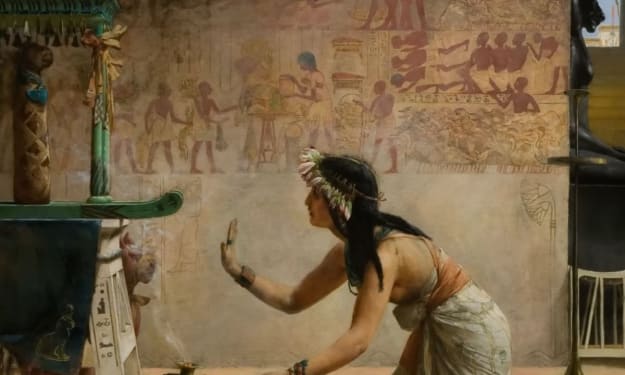
How do we move approximately it? The organization, inclusive of three men and one boy, shifted uneasily around a bonfire that sputtered sparks in the bone-chilling drizzle. A few hefty stones sat amid the flames. They thought about the attempt it took to get the fireplace entering into this weather. Someone sniffed, a person coughed. They all felt cold and uneasy, status at the brink of the fields sprawling in front of them at dusk, with their backs to the dripping birches surrounding the cemetery.
By Nada soliman2 years ago in History
The Forbidden Village: Inside India's Abandoned Ghost Towns That Defy Explanation. AI-Generated.
In India, a strange and spooky phenomenon has caught everyone's eye. It's the abandoned ghost towns that dot the landscape, known as "The Forbidden Village." These places are full of mystery and intrigue. They are hard to explain and grab the attention of those who dare to visit.
By vaibhav palhade2 years ago in History
The Dawn of Tomorrow: A Journey into the Future
In the year 2124, the world was a vastly different place from the one we know today. The streets hummed with the quiet efficiency of electric vehicles, and the skies were dotted with flying drones delivering everything from groceries to medical supplies. Buildings towered higher than ever before, their sleek designs a testament to human ingenuity and technological advancement. Amidst this bustling metropolis, a young girl named Mia stood on the balcony of her family's apartment, gazing out at the city of New Aurora.
By ODS ACADEMY2 years ago in History
The Myth of the Lone Wolf
There's a tempting charm to the possibility of the solitary individual. The picture of a lone figure, depending entirely on their own solidarity and creativity to accomplish significance, has pervaded stories and societies for a really long time. This conviction - that achievement is ensured by going solo - is many times romanticized, yet as a general rule, it's a recipe for seclusion and, as a rule, stagnation.
By Iftikhar Akram2 years ago in History
Gone but evergreen. AI-Generated.
1. Honoring the Legacy In the fast-paced world of technology, trends come and go in the blink of an eye. However, there are certain timeless principles and strategies that remain evergreen, regardless of the latest fads. In this blog, we will explore some of these timeless strategies that have stood the test of time and continue to be relevant in today's dynamic business landscape. Stay tuned to discover how you can implement these strategies to achieve long-lasting success in your professional endeavors.
By Ajayi Olalekan2 years ago in History
The Remarkable Life of Sir Adrian Carton de Wiart
The Remarkable Life of Sir Adrian Carton de Wiart In 2006, the Mexican beer brand Dos Equis launched an ad campaign featuring Jonathan Goldsmith as the "Most Interesting Man in the World." The campaign was wildly successful, transforming Dos Equis into one of the most popular imported beers in the US. Goldsmith claimed he based his character on his friend Fernando Lamas, a famous actor and director who lived an adventurous life. However, the real-life subject of today's story makes even Lamas seem dull in comparison. This is the story of Sir Adrian Carton de Wiart, a man whose life was so extraordinary that it reads like a Hollywood script. Born on May 5, 1880, in Brussels, Belgium, Adrian Carton de Wiart came from a family of Belgian aristocrats. There were even rumors that he might have been the illegitimate son of King Leopold II of Belgium. Adrian’s family moved frequently, eventually settling in Egypt. At 11, Adrian was sent to boarding school in England, where he excelled in sports but showed little interest in academics. Despite his academic struggles, his connections helped him get into Oxford to study law. However, his heart wasn’t in it, and he spent most of his time playing sports and drinking. In 1899, the outbreak of the Second Boer War provided Adrian with an escape from his studies. He dropped out of Oxford and enlisted in the British Army under a false identity, eager to experience the romanticized version of military life. His first taste of combat was brief and painful; he was shot in the groin and stomach, which led to his return to England. Despite his injuries, Adrian realized he loved the thrill of warfare. Adrian's father eventually allowed him to pursue a military career, and he went on to fight in various conflicts. His early years in the military included a stint in India, where he indulged in sports and hunting. In 1907, he became a British citizen and, the following year, married Countess Frederica Fugger, a member of a prominent German banking family. In 1914, when World War I broke out, Adrian was eager to join the action. Initially, he was sent to fight in British Somaliland, where he was shot twice in the face during a raid. Remarkably, he survived but lost his left eye. He returned to England and, within weeks, managed to convince the military board to send him to the Western Front in France. During World War I, Adrian participated in several major battles, including the Somme and Passchendaele. He was shot multiple times, resulting in numerous hospital stays and even the amputation of his left hand. Despite his injuries, Adrian’s bravery and resilience made him a legendary figure among his peers. His love for war was evident in his famous quote, “Frankly, I enjoyed the war.” After the war, Adrian led the British military mission to Poland, helping the newly formed Second Polish Republic. During this period, he survived a plane crash, was imprisoned by Lithuanians, and even got involved in a duel. His time in Poland also saw him working closely with notable figures, including the future Pope Pius XI and the Finnish President Carl Gustaf Emil Mannerheim. In 1923, Adrian retired from the military and chose to settle in Poland. He was offered a house on an island estate by Prince Karol Radziwiłł, a former aide. For the next 15 years, Adrian lived as a Polish nobleman, enjoying hunting, fishing, and social events. Adrian Carton de Wiart's life was a series of incredible adventures and near-death experiences. He was shot multiple times, survived plane crashes, and endured numerous injuries, yet his spirit remained unbroken. His story is a testament to his extraordinary resilience and passion for life. Truly, he was one of the most interesting men to ever walk the earth.
By Rabiul Molla2 years ago in History
The Shadows of Saint-Michel
In the spring of 1942, the small French village of Saint-Michel lay quietly in the shadow of Nazi occupation. Nestled in the rolling hills of the Normandy region, its cobblestone streets and stone cottages seemed worlds away from the raging battles and political turmoil consuming Europe. Yet, even in this tranquil place, the spirit of resistance burned brightly. At the heart of this clandestine effort was a man named Jacques Lambert. A farmer by trade, Jacques was known for his quiet demeanor and steady hands. He tended his fields with care, his blue eyes always scanning the horizon for any sign of the enemy. The German soldiers who patrolled the area considered him harmless, just another peasant going about his daily life. Little did they know that Jacques was the leader of a covert resistance cell known as "Les Ombres" — The Shadows. Les Ombres consisted of a motley crew of villagers: Claire, the baker's daughter who delivered bread and secret messages with equal ease; Henri, the blacksmith who forged weapons and hope; and Marguerite, the schoolteacher whose knowledge of the surrounding forests was invaluable for evading capture. Together, they worked to undermine the German presence, sabotage supply lines, and gather intelligence for the Allied forces. One evening, as the sun dipped below the horizon, Jacques gathered his team in the cellar of the old church. The air was thick with tension and anticipation. He laid out a map of the village and the surrounding area, pointing to a train depot that the Germans had fortified. "This is our target," Jacques said, his voice steady. "Tomorrow night, a shipment of weapons is arriving. If we can intercept it, we can cripple their operations and provide much-needed arms to our allies." The plan was daring, bordering on reckless, but each member of Les Ombres knew what was at stake. They spent the night preparing, checking their equipment and rehearsing their roles. As dawn approached, they dispersed, blending back into their daily routines, their faces masks of normalcy. The following night, cloaked in darkness, Les Ombres moved into position. Claire and Marguerite took up spots on the outskirts of the depot, their eyes sharp and alert. Henri, armed with his custom-made tools, worked quickly to disable the tracks. Jacques, with a small team of trusted fighters, crept towards the main gate. The sound of an approaching train echoed through the night, its whistle a haunting reminder of what was to come. The Germans were well-prepared, their guards stationed strategically around the depot. Jacques signaled his team, and they moved as one, like shadows dancing in the moonlight. Claire slipped past the guards, her lithe form barely making a sound. She reached the main office, where she deftly switched the track signals, sending the train into a side yard instead of the main depot. Henri's handiwork ensured that once the train entered the side yard, it would be trapped, unable to move. As the train screeched to a halt, the guards were thrown into confusion. Jacques and his fighters took advantage of the chaos, launching a surprise attack. Gunfire erupted, the sharp cracks echoing through the night. The villagers fought with a desperation born of necessity, their lives and freedom hanging in the balance. In the midst of the battle, Jacques spotted the German officer in charge. He was a tall, imposing man with a cruel glint in his eye. Jacques knew that taking him out would demoralize the remaining soldiers. With a silent prayer, he moved through the melee, his eyes never leaving his target. The two men met in a clash of wills and steel. Jacques was quick, his movements precise. The officer, for all his arrogance, was unprepared for the ferocity of the farmer-turned-fighter. Within moments, Jacques had the upper hand. With one final, decisive blow, he felled the officer, the man crumpling to the ground. The tide of the battle turned. Without their leader, the German soldiers faltered, and Les Ombres pressed their advantage. One by one, the invaders were subdued. The depot, once a symbol of oppression, now stood as a testament to the indomitable spirit of the villagers. As dawn broke over Saint-Michel, the villagers emerged from their homes, cautiously optimistic. The train, loaded with weapons and supplies, was now in the hands of the resistance. Jacques and his team, though exhausted, stood victorious. They had struck a blow not just for their village, but for all of France. In the days that followed, the weapons were distributed to nearby resistance groups, bolstering the fight against the occupiers. The story of Les Ombres spread, inspiring others to rise up, to resist in whatever ways they could. And while the war was far from over, the people of Saint-Michel had proven that even in the darkest times, hope and courage could light the way to freedom.
By OJI CHIEMELA DIVINE2 years ago in History
Discovering the Fascinating History of Cat Worship at Chicago’s ISAC Museum
Discovering the Rich History of Cat Worship at Chicago’s Institute for the Study of Ancient Cultures Exploring ancient cultures is a fascinating journey, especially when it involves the intriguing history of cat worship in ancient Egypt. One of the best places to embark on this adventure is the Institute for the Study of Ancient Cultures (ISAC) at the University of Chicago. This hidden gem, located on the university's campus, offers a deep dive into the ancient world, with a special focus on the Middle and Near East, including the entire Nile Valley. Unveiling the Museum ISAC, previously known as the Oriental Institute, houses an impressive collection of approximately 350,000 artifacts. Despite only displaying about 2% of its collection, the museum provides a rich experience for visitors. Dr. Marc Maillot, the museum’s chief curator, explains that the museum covers everything from prehistory to the Early Middle Ages, including the newly integrated Islamic collection display. This vast chronological range ensures that visitors can explore an extensive array of historical periods. Highlights of the Collection Among the museum's treasures is a remarkable wooden painted stela from the Third Intermediate Period. This piece features the divine priestess of Amun, Djed-Khonsu Amun, presenting an offering to the god Ra-Horakhty. The artist's skill in creating a sense of transparency in the costume without mastering perspective is particularly noteworthy. This piece, like many others in the museum, helps bridge the gap between ancient and modern worlds, showing that ancient people shared many of the same feelings and experiences we do today. The Fascination with Cats A significant part of ISAC’s collection focuses on the religious and cultural importance of cats in ancient Egypt. Cats were revered not only as pets but also for their religious significance. The ancient Egyptian word for cat was "miu," a term that evokes a sense of affection. There are accounts, such as those by Herodotus, describing how Egyptians would go to great lengths to save cats, even running into burning buildings. Cat Worship in Ancient Egypt Ancient Egyptian religion often intertwined with economic and social practices. Statues of cats, like those depicting the lioness goddess Sekhmet and the gentler goddess Bastet, reveal the dual nature of feline deities. Sekhmet, known for her fierce nature, was believed to protect her father Ra, the sun god. In contrast, Bastet represented a more nurturing aspect. The myths surrounding these goddesses highlight the importance of balance and duality in Egyptian beliefs. The Darker Side of Cat Worship While many cats lived as cherished pets, archaeological evidence shows a more somber side to their story. Temples dedicated to cat deities had large pens where cats were raised. Priests would sometimes cull the herds, taking kittens as young as three or four months old, and mummify them as offerings to the gods. This practice was believed to ensure the gods' favor, which in turn would bring prosperity to Egypt. The Business of Cat Mummies The mummification of cats was a significant industry in ancient Egypt. Cat mummies, often placed in elaborate coffins, were used as offerings to deities. The practice was so widespread that large quantities of cat mummies were found in cat cemeteries, or "catacombs." In the late 1800s, about 180,000 cat mummies from a single site were exported to the UK for use as fertilizer, highlighting the vast scale of this practice. Amulets and Modern Connections The museum also features amulets, small protective charms often worn by people or placed on mummies. These amulets, made from a quartz-based pottery called faience, depict various deities, including feline ones. Today, many people still wear cat-themed jewelry, showing a continued fascination with these mystical animals. Reflecting on the Past ISAC not only preserves ancient artifacts but also engages with the ethical considerations of how these collections were acquired. The museum focuses on partnerships and education to ensure a respectful and collaborative approach to studying ancient cultures. This commitment helps bridge the gap between past and present, making the museum a place of learning and reflection. Conclusion The Institute for the Study of Ancient Cultures is a treasure trove of history, offering insights into the ancient world and its connection to our modern lives. Whether you are a cat lover or a history enthusiast, a visit to this museum promises an enriching experience that highlights the enduring bond between humans and their feline companions.
By Rabiul Molla2 years ago in History