Fiction
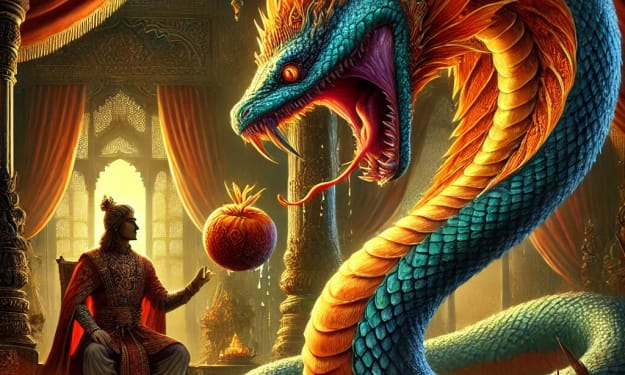
The Birth of VedaVyasa. AI-Generated.
The birth of Vyasa, one of the most revered sages in Indian mythology and the author of the epic Mahabharata, is a tale steeped in mystery, divinity, and destiny. His life, right from the very beginning, was marked by divine intervention, a testament to his unique role in shaping the course of dharma.
By sai Charan2 years ago in History
No Time for Sorrow
Mara was a medical caretaker — a title she'd worn proudly once. Be that as it may, presently, she felt more like a scrounger. Supplies were waning, and she expected to return food and medication once again to the facility. She lacked the opportunity and energy to contemplate the companions she'd lost, or the patients she wasn't ready to save. There was no time for anguish. Consistently spent grieving was a second squandered, and in circumstances such as these, seconds could mean endurance. She rushed through the vacant roads, her heart beating as she dodged into the back streets, staying away from watches. Each corner brought another risk, each shadow could conceal somebody standing by to snare her. Mara's brain was well-honed, working out each move. She didn't permit herself to choose not to move on, to ponder the countenances she'd once known or the recollections she'd appreciated. They were covered now, locked away in some piece of her brain that she was unable to bear to get to. Not at present. As she approached the center, Mara saw a young man, no more seasoned than twelve, sitting by a heap of rubble. His face was smeared with soil, and his eyes were empty, empty such that somebody who had seen a lot of it could be. Mara felt an ache in her chest, a glimmer of sympathy she hadn't permitted herself to feel in weeks. She realized she ought to continue to move — her provisions were required back at the facility — however, something made her interruption. The kid didn't gaze upward as she drew nearer; he was gazing at his hands, which gripped a little, messy toy — a reminder of a day-to-day existence before the conflict. She hunched next to him, delicately putting a hand on his shoulder. "Are you alone?" she asked delicately. The kid gazed upward, and briefly, Mara saw the profundity of his anguish. His lips shuddered, however, he gestured. She didn't have to inquire as to whether he had family. She knew the response as of now; she had seen that look too often. The inclination to help him was overpowering. In any case, Mara's brain was at battle with her heart. She didn't have the assets to take on someone else, particularly not a youngster who might require security. The center was at that point packed, and every patient was barely surviving. She was unable to allow herself to be answerable for another life. Not when so many others were relying upon her. "I… I don't have any place to go," the kid said, his voice scarcely over a murmur. Mara gulped, the contention seething inside her. The consistent piece of her brain shouted that she was unable to take him with her. Yet, something more profound, something more human, overwhelmed that rationale. "Accompany me," she said at last, realizing that this choice could cost her and others. "I'll take you someplace safe." The kid didn't grin or say thanks to her; he essentially gestured, like he'd lost the capacity to expect much else. Together, they advanced back to the center. Mara kept a tight hang on his hand, her faculties increased. She examined the roads, alert for any indication of risk. The facility was concealed in the cellar of an old emergency clinic building. It was dull, cold, and squeezed, yet it was a shelter. Inside, volunteers moved discreetly, keeping an eye on the injured and the debilitated. The space was loaded up with the aroma of germ-killers and the low mumbles of patients. Mara directed the kid to a corner where an improvised bed lay. She gave him a little slice of bread and a taste of water, the main arrangements she could save. As she went to leave, the kid got her hand. "Will… will you return?" Mara faltered, feeling a peculiar feeling of obligation for him. "I'll be here," she guaranteed, however, she couldn't say whether it was a commitment she could keep. In this world, conviction was an extravagance she was unable to bear. The hours obscured into one another. Mara treated injuries, watched out for fevers, and held the hands of those whose time was getting ceaselessly. She lacked the opportunity and energy to think, process, or lament. The essence of the withering tormented her, however she constrained herself to keep on track. Every life was a sign of why she was unable to permit herself to feel. Sorrow would just dial her back, and she was unable to bear the cost of that. Days passed, and the kid remained close by, helping in little ways — getting water, consoling more youthful youngsters, and figuring out how to change basic dressings. Mara could see the versatility working in him, and in some little way, it gave her expectations. Perhaps, she thought, they could endure this together. In any case, she held her feelings under tight restraints, reluctant to allow herself to become connected. Each bond was a potential injury, another misfortune in the works. One night, as Mara was keeping an eye on a patient, she heard a stunning blast close by. The walls shook, dust tumbling from the roof. The patients and volunteers crouched together, dread obvious in their eyes. Mara's heartbeat, and without precedent for months, she felt genuine fear. She looked around, looking for the kid, yet he was no place to be seen. Alarm flooded inside her. Disregarding her security, she darted into the passage, calling out to him. She went through the hallways, her psyche dashing. She had sworn not to mind, not to give anybody access, but rather she understood, at that time, that she had fizzled. She minded profoundly, and the prospect of losing him tore at her heart. At last, she found him close to the entry, assisting a harmed man with limping to somewhere safe and secure. Alleviation washed over her, and she maneuvered him into her arms, holding him firmly. "Never run off that way," she murmured, her voice stifled with feeling. The kid saw her, shock in his eyes. "I thought… I figured you couldn't have cared less." Mara dealt with a powerless grin. "I lack opportunity and willpower to mind," she expressed, attempting to conceal reality, however, the untruth felt empty. The conflict had stripped her of numerous things, however, it hadn't taken her mankind. Not totally. She understood, with a combination of trouble and acknowledgment, that regardless of how enthusiastically she attempted, she was unable to protect herself from pain or love. It was essential for what her identity was, a section she couldn't just stop. The days became hazier, and the difficulties just increased. Yet, Mara and the kid confronted them together, tracking down comfort in one another's presence. They figured out how to track down little snapshots of satisfaction amid the bedlam, and in those minutes, Mara permitted herself to trust. She realized the street ahead would be hard, yet she additionally knew that, as long as they had one another, they would continue to push ahead. There was no time for melancholy, yet maybe, quite possibly, there was the ideal opportunity for trust.
By Hridoy Hasan2 years ago in History
The world's first wooden satellite launched into space
In a groundbreaking move for space exploration and sustainability, the world’s first wooden satellite was successfully launched into space. This remarkable achievement marks a significant milestone in both the field of aerospace engineering and the drive toward greener space technologies. The innovative satellite, known as WISA Woodsat, is a symbol of how sustainable materials can shape the future of space exploration.
By Zinnat ara Begum2 years ago in History
Life before 5000 Years!!!
Around 5,000 years ago, during the late Neolithic period transitioning into the Bronze Age, human life was both challenging and transformative. In many parts of the world, societies began to shift from simple, nomadic hunter-gatherer groups to more settled and complex communities.
By MSK Writes2 years ago in History
Amaran movie review
Amaran movie review Here’s a detailed review of *Amaran*, the Tamil biographical drama directed by Rajkumar Periasamy and starring Sivakarthikeyan and Sai Pallavi. Based on the life of Major Mukund Varadarajan, the film is an emotionally charged tribute to a real-life hero, blending romance, bravery, and duty. Here’s a breakdown of the film’s various elements:
By Mahalakshmi2 years ago in History
The feud between Parikshit and Takshaka. AI-Generated.
The Feud Between Parikshit and Takshaka After the great war of Kurukshetra, the Pandavas ruled Hastinapura, with Yudhishthira as the king. However, their reign was not meant to last forever, and the brothers eventually decided to renounce their throne and set out on a journey to the Himalayas, leaving the kingdom to Arjuna’s grandson, Parikshit. Parikshit, the son of Abhimanyu and the only surviving descendant of the Pandavas, was known for his valor, justice, and devotion to the path of righteousness. His rule marked the beginning of a new era of peace and prosperity in the kingdom.
By sai Charan2 years ago in History
Uncover Hidden Lessons in This Famous Bible Story
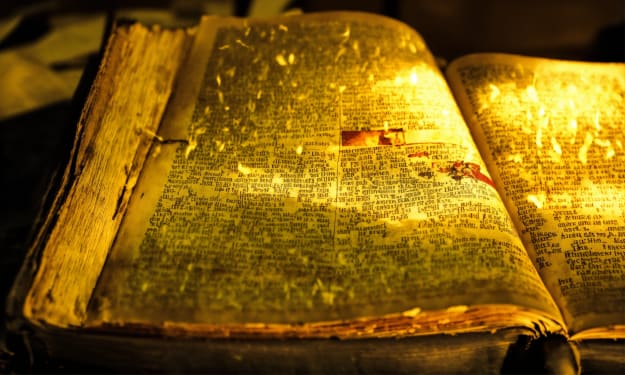
Uncover Hidden Lessons in This Famous Bible Story The Bible is a treasure trove of timeless wisdom and guidance, with countless hidden lessons in Bible stories that transcend generations. Each story, whether well-known or obscure, holds within it deeper insights, ripe for those who wish to dive beneath the surface. One of the most compelling tales is the parable of the Good Samaritan, a famous Bible story that continues to be celebrated for its profound insights on compassion, empathy, and the call to selfless action. In this exploration, we’ll unlock the layers of meaning, dive into the moral teachings in Bible stories, and uncover how spiritual lessons from Bible stories can shape our lives today.
By umn ministry Chennai2 years ago in History
The Keeper of Memories
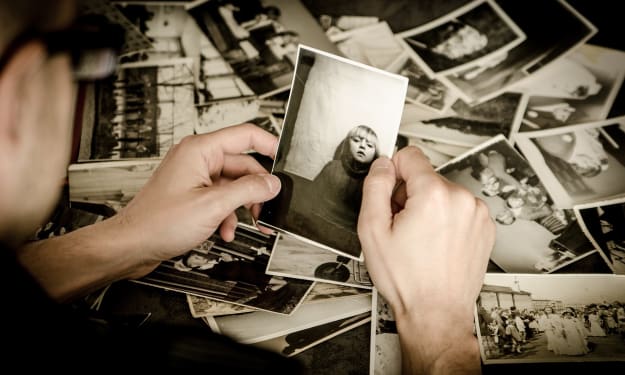
The Keeper of Memories In the small town of Albury, nestled between rolling hills and quiet lakes, lived an elderly man named Thomas. For as long as anyone could remember, Thomas had been the town’s unofficial historian. He was not a historian in the formal sense; he held no degrees, no scholarly titles. But what he did possess was an irreplaceable gift for remembering and storing the memories of people who had once lived, loved, and left their mark on the town. Thomas ran a modest shop called “Keepsakes & Memories.” Inside, every wall, shelf, and drawer was filled with items that held pieces of Albury’s history—worn letters, faded photographs, ticket stubs from a fair long past, tiny trinkets with stories only Thomas seemed to know. The townsfolk would bring him their cherished possessions, knowing they’d be safe with him, held in his careful, gentle hands. But it wasn’t only objects Thomas stored; it was the emotions, the stories, the moments frozen in time. People would often visit the shop not to buy anything, but to listen. They would ask him, “Thomas, tell us about the night of the Great Storm,” or “What was the Winter Ball like in ‘68?” And Thomas would begin, his voice soft and low, weaving tales that pulled at the heart. However, there was one particular story Thomas hadn’t shared with anyone—the story of how he became the keeper of memories. It was a story that lived in his heart, quietly shaping the man he had become. Years ago, when Thomas was a young man, he’d been married to a woman named Eleanor. She was his light, his laughter, his everything. Together, they’d dreamed of traveling the world, of writing their own history in places far and wide. But life, as it often does, had different plans. Eleanor fell ill, a cruel, relentless sickness that no doctor could cure. As her health faded, so did their dreams of distant lands and grand adventures. During her last days, Eleanor asked Thomas to promise her one thing. “Keep our memories, Tom,” she’d whispered, her hand clasped weakly in his. “Promise me you’ll remember all the small things—our picnics by the lake, our late-night talks, that silly dance we made up.” Thomas, choking on his tears, promised her he would. And as Eleanor slipped away, he felt a hollow emptiness settle in his heart, one he feared would never be filled. After Eleanor’s passing, Thomas found himself lost. He wandered through days in a fog of grief, unsure of how to keep the promise he’d made. But then, one afternoon, he stumbled upon an old wooden box Eleanor had kept on her vanity. Inside were tiny treasures—a dried flower from their first date, a ticket stub from their favorite movie, a small, handwritten note that simply read, “Forever yours.” It was in that moment Thomas understood: memories needed a home. They needed a place to rest, to be remembered, to be safe from the winds of time. So he began collecting not just his memories but those of the town, creating a space where moments were preserved, cherished, and kept alive. One evening, as Thomas sat alone in his shop, a young boy entered. He couldn’t have been more than ten, with tousled hair and eyes that held a sadness Thomas recognized all too well. The boy placed a small, battered toy car on the counter. “Can you keep this safe for me?” he asked, his voice barely a whisper. Thomas looked at the boy, understanding without needing to ask. He nodded, gently placing the toy on a special shelf he’d reserved for things of great importance. And as the boy left, Thomas promised himself that the toy car, and the story it held, would always have a place in his collection. From then on, people brought him more than just trinkets; they brought him pieces of their souls. A young widow handed him her husband’s pocket watch, a reminder of every second they’d spent together. An elderly woman entrusted him with a silk scarf, a gift from a love long lost but never forgotten. And each time, Thomas stored not only the objects but the emotions bound to them. As years went by, the shop became known as the heart of Albury. People who had moved away would send packages with letters that read, “For Thomas. Please keep it safe.” Children who had grown up listening to his stories would visit with their own mementos, placing their memories in his care. And Thomas, true to his word, kept each one safe. But Thomas’s time was growing short. His hands, once steady and sure, now trembled as he handled the fragile memories left in his care. One cold winter’s day, as he sat by the window, he realized it was time to pass the legacy on. He looked around the shop, at the countless pieces of love, loss, and laughter he had collected, and wondered who could continue this work. That evening, he called Clara, a young woman who had grown up listening to his stories. Clara had always been drawn to the shop, spending hours there as a child, mesmerized by Thomas’s tales. When she arrived, Thomas took her hand, placing the key to the shop in her palm. “This shop isn’t just a collection of things,” he told her, his voice a soft murmur. “It’s a collection of lives, of memories that need a place to live on. I’ve done my part, but now it’s time for someone else to keep them safe.” Clara, with tears in her eyes, understood the weight of what Thomas was entrusting her with. She nodded, promising to honour his legacy, to keep the memories alive. When Thomas passed away, the entire town mourned. People filled the small shop, leaving behind letters, flowers, and mementos of their own. Clara watched as the town remembered the man who had stored their memories, who had given their lives a place to be remembered, preserved in kindness. Years later, as she sat behind the counter, a young child walked into the shop, clutching a small, worn-out teddy bear. Clara took it gently from him, her heart swelling with the familiar weight of a new story. She smiled, placing the bear on the shelf, knowing that Thomas’s legacy lived on. And so, the little shop in Albury remained—a keeper of memories, a place where stories never faded, where every trinket, photograph, and letter was held in a special space. It was more than a habit of storage; it was a testament to love, to remembrance, and to the quiet, powerful promise of keeping memories alive.
By Dipak Pawar2 years ago in History
Truth About Aliens
In a small, quiet town nestled between mountains and forests, lived a young scientist named Maya. She had always been fascinated by space and had dedicated her career to astrophysics. Recently, Maya had noticed strange readings from one of the nearby observatories. Odd radio signals—irregular, barely detectable, and seemingly coming from deep space. She believed it was nothing more than cosmic noise, but a part of her was curious.
By MSK Writes2 years ago in History
How Smartwatches are Saving Lives
In recent years, wearable technology has shifted from a fashion statement to a critical tool for health and wellness. Today’s smartwatches are stylish and capable of monitoring vital health metrics and alerting users to potential health risks. With innovations like ECG monitors, fall detection, and blood oxygen monitoring, smartwatches are helping save lives in ways we might not have imagined. Here’s a closer look at how smartwatches are changing healthcare and making life-saving impacts.
By Zinnat ara Begum2 years ago in History