Fiction
A Love Beyond Boundaries. AI-Generated.
Letter One: From Nalotuesha to Lemayian Oloibor Soito, my Lemayian, The winds carry my thoughts to you, though you are far beyond the acacia trees, riding with the Moran, proving your strength before the elders. Each dawn, I wake with the sun upon my skin, and I wonder if it also kisses your face in some distant valley. The cattle have grown restless in your absence, as though they, too, know something is missing.
By Ogola Peter2 years ago in History
A collection of love letters from Ayn Rand to Nathaniel Branden
May 13th, 1953 Wonderful Nathaniel, I'm writing with the very best news!My husband, Frank has conceded to the unassailable might of my elevated, rational mind! He has admitted utter congruence with my proposal and has told me directly in no uncertain terms that he willingly condones a sexual relationship between you and I.At first I thought Frank hadn't the mental gifts to follow my line of reason... but it is a testament to my own formidable intellect that even a simple man like Frank could eventually understand my infallible logic. It helps that at his core Frank truly believes in objectivism. Even with his lesser brain, he understands that man's truest, most heroic purpose is to pursue his own happiness! After meeting on the basics, I simply explained that a sexual relationship with you would allow me to more entirely pursue the moral absolute of my own happiness. At first he did not understand. But I explained: as much as I value him for his honesty and his spirited commitment to the moral perfection of objectivism, I have yet to experience the fully impassioned joy of a sexual relationship with someone who truly embodies the virtue of reason! When I told Frank that I have never been physically intimate with one as intellectually gifted as you he nodded. He seemed a little hurt, but there was no way he could argue against my appeal to the facts. I explained it wasn't about him, so his feelings didn't really matter. I explained that this venture was not intended to harm him and that standing in the way of my pursuit of individualist happiness with you would be a moral failing on his part. Frank knows his gifts run out where yours begin. He is honest enough to admit that compared to you he is an intellectual midget, and after making that concession the irrefutable path of reason carries us to this absolute: it would be a wonderfully freeing and a wonderfully objectivist act for you and I to entertain an honest, unabashed sexual relationship. What a brave man my husband! He may not be the cleverest among us, but what he lacks in mental faculties he makes up for in emotional sturdiness. Imagine how formidable he'd be if he were as brilliant as you and I!Well, I know you'll be as pleased by the good news as I am. We may soon commence our sexual union, with the fully willing foreknowledge of my husband! All that remains is to bring your wife onboard. I hope that you have had as much luck with Barbara. Though she is dim like Frank, I will always consider her a friend. I truly hope that she can reach the same conclusion as he did. It might be hard for her, not to feel the impulsiveness of jealousy. But I believe her commitment to objectivism is sincere! If you explain to her your own desire to be physically intimate with someone of my intellectual caliber I believe she will concede as Frank did. Yours in moral truth, -Ayn R
By Sam Spinelli2 years ago in History
The Radiant Love Story of Pierre Curie and Marie Curie. AI-Generated.
In the late 19th century, Paris was a hub of intellectual and artistic activity, attracting some of the most brilliant minds in Europe. It was here that Pierre Curie, a talented French physicist, met and fell in love with Marie Curie, a brilliant Polish mathematician and chemist. Pierre Curie was born in 1859 in Paris, France, to a family of scientists and intellectuals. He was a curious and inventive child, with a passion for science and discovery. Pierre's early research focused on magnetism and piezoelectricity, and he made several important discoveries in these fields. Marie Curie, born Maria Skłodowska in 1867 in Warsaw, Poland, was a brilliant and determined young woman. She was the first woman to win a Nobel Prize, and the first person to win two Nobel Prizes in different fields. Marie's early research focused on radioactivity, and she made several groundbreaking discoveries in this field. Pierre and Marie met in 1894, when Marie arrived in Paris to pursue her research. They were introduced by a mutual friend, and their meeting was a turning point in both of their lives. Pierre was immediately smitten with Marie's intelligence, passion, and beauty, and Marie was drawn to Pierre's kindness, generosity, and scientific expertise. Their courtship was a whirlwind romance, marked by long walks, passionate discussions, and intense scientific collaboration. They were married in 1895, in a civil ceremony in Sceaux, France. Their marriage was a union of love, science, and passion, and it would produce some of the most important scientific discoveries of the 20th century. Together, Pierre and Marie Curie made several groundbreaking discoveries in the field of radioactivity. They discovered two new elements, polonium and radium, and developed a method for isolating and purifying these elements. Their research laid the foundation for the development of nuclear physics, and it paved the way for the discovery of other radioactive elements. Tragically, Pierre's life was cut short in 1906, when he was killed in a street accident in Paris. Marie was devastated by his death, and she spent the rest of her life continuing their research and promoting the legacy of her beloved husband. Marie Curie's later years were marked by personal tragedy and professional triumph. She won a second Nobel Prize in 1911, this time in chemistry, and she continued to make important discoveries in the field of radioactivity. She also founded the Curie Institutes in Warsaw and Paris, which remain major centers of medical research to this day. Marie Curie died in 1934, at the age of 66, from aplastic anemia, a blood disorder likely caused by her prolonged exposure to radioactive materials. Her legacy, however, continues to inspire scientists, researchers, and women around the world. *A Legacy of Love and Science* The love story of Pierre Curie and Marie Curie is a testament to the power of love and science to transform our lives and our world. Their research and discoveries paved the way for some of the most important scientific breakthroughs of the 20th century, and their legacy continues to inspire and motivate scientists and researchers today. Their love story is also a reminder of the importance of collaboration, mutual respect, and support in both personal and professional relationships. Pierre and Marie's partnership was a true union of love and science, and it produced some of the most remarkable discoveries in the history of science. As we reflect on the love story of Pierre Curie and Marie Curie, we are reminded of the enduring power of love and science to transform our lives and our world. Their legacy continues to inspire and motivate us, and their love story remains a timeless tale of passion, science, and tragedy. The love story of Pierre Curie and Marie Curie is a testament to the power of love and science to transform our lives and our world. Their research and discoveries paved the way for some of the most important scientific breakthroughs of the 20th century, and their legacy continues to inspire and motivate scientists and researchers today. Their love story is also a reminder of the importance of collaboration, mutual respect, and support in both personal and professional relationships. Pierre and Marie's partnership was a true union of love and science, and it produced some of the most remarkable discoveries in the history of science. *A Historical Context* The love story of Pierre Curie and Marie Curie took place during a time of great scientific and social change in Europe. The late 19th and early 20th centuries were marked by rapid advances in science and technology, and by significant social and cultural shifts. In this context, Pierre and Marie's love story was a symbol of the changing values and norms of the time. Their marriage was a union of two brilliant minds, and it represented the increasingly important role of women in science and society. *A Lasting Impact on Science and Society* The love story of Pierre Curie and Marie Curie has had a lasting impact on science and society. Their research and discoveries paved the way for some of the most important scientific breakthroughs of the 20th century, including the development of nuclear physics, medicine, and energy. Their legacy also extends beyond the scientific community. Pierre and Marie's love story has inspired generations of scientists, researchers, and women around the world. Their partnership is a testament to the power of collaboration, mutual respect, and support in achieving great things. *A Timeless Tale of Love and Science* The love story of Pierre Curie and Marie Curie is a timeless tale of love and science. Their passion for each other and for their research is an inspiration to us all, and their legacy continues to motivate and inspire scientists and researchers today. As we reflect on the love story of Pierre Curie and Marie Curie, we are reminded of the enduring power of love and science to transform our lives and our world. Their legacy is a testament to the importance of collaboration, mutual respect, and support in achieving great things, and their love story remains a timeless tale of passion, science, and tragedy.*The Radiant Love Story of Pierre Curie and Marie Curie: A Tale of Science, Passion, and Tragedy* In the late 19th century, Paris was a hub of intellectual and artistic activity, attracting some of the most brilliant minds in Europe. It was here that Pierre Curie, a talented French physicist, met and fell in love with Marie Curie, a brilliant Polish mathematician and chemist. Pierre Curie was born in 1859 in Paris, France, to a family of scientists and intellectuals. He was a curious and inventive child, with a passion for science and discovery. Pierre's early research focused on magnetism and piezoelectricity, and he made several important discoveries in these fields. Marie Curie, born Maria Skłodowska in 1867 in Warsaw, Poland, was a brilliant and determined young woman. She was the first woman to win a Nobel Prize, and the first person to win two Nobel Prizes in different fields. Marie's early research focused on radioactivity, and she made several groundbreaking discoveries in this field. Pierre and Marie met in 1894, when Marie arrived in Paris to pursue her research. They were introduced by a mutual friend, and their meeting was a turning point in both of their lives. Pierre was immediately smitten with Marie's intelligence, passion, and beauty, and Marie was drawn to Pierre's kindness, generosity, and scientific expertise. Their courtship was a whirlwind romance, marked by long walks, passionate discussions, and intense scientific collaboration. They were married in 1895, in a civil ceremony in Sceaux, France. Their marriage was a union of love, science, and passion, and it would produce some of the most important scientific discoveries of the 20th century. Together, Pierre and Marie Curie made several groundbreaking discoveries in the field of radioactivity. They discovered two new elements, polonium and radium, and developed a method for isolating and purifying these elements. Their research laid the foundation for the development of nuclear physics, and it paved the way for the discovery of other radioactive elements. Tragically, Pierre's life was cut short in 1906, when he was killed in a street accident in Paris. Marie was devastated by his death, and she spent the rest of her life continuing their research and promoting the legacy of her beloved husband. Marie Curie's later years were marked by personal tragedy and professional triumph. She won a second Nobel Prize in 1911, this time in chemistry, and she continued to make important discoveries in the field of radioactivity. She also founded the Curie Institutes in Warsaw and Paris, which remain major centers of medical research to this day. Marie Curie died in 1934, at the age of 66, from aplastic anemia, a blood disorder likely caused by her prolonged exposure to radioactive materials. Her legacy, however, continues to inspire scientists, researchers, and women around the world.
By Henry Lucy2 years ago in History
Blood for the Freedom
This story occurred during the Second Balkan War in the summer of 1913. My great-grandfather participated in the war. The cause of the war was the dispute among the members of the Balkan League over the distribution of the lands taken from the Ottomans during the First Balkan War. Pirin Macedonia or Bulgarian Macedonia is the third-biggest part of the geographical region of Macedonia, today in southwestern Bulgaria. This region coincides with the borders of the Blagoevgrad Province, where my hometown is situated.
By Mariana Busarova2 years ago in History
The Memories of War
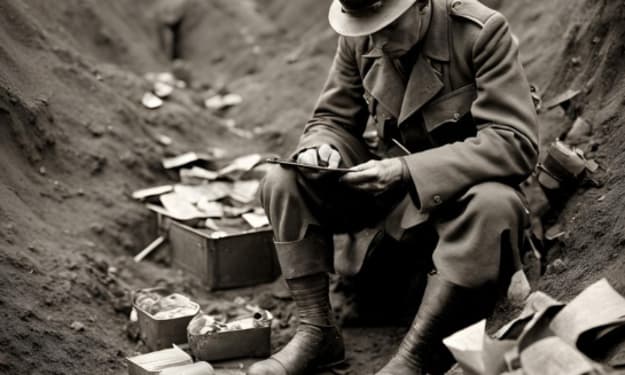
September 13, 1917 My Dearest Irene, As I sit under the dim light of a flickering candle, the cold night air wrapping around me like a shroud, my thoughts are consumed by you. The trenches are a world apart from the life we once knew, and the mud, the noise, and the constant threat of danger seem to fade away when I think of your face. It is your love that keeps me grounded amidst this chaos, your memory that warms my heart even in the darkest of moments.
By G.D. DuPaul2 years ago in History
The River Flows Both Ways. Honorable Mention in Love Letters Through Time Challenge.
CONFIDENTIAL FILE FROM: C.TO: Iris ObscuraDATE: February 24, 2025SUBJECT: Swan & Aster Files Iris, I found this while digging where I shouldn’t have. A love story written in fragments — Swan and Aster, separated by a wall and stitched together with codes.
By Iris Obscura2 years ago in History
The Opulent Heart of Russia – The Kremlin’s Priceless Interior. AI-Generated.
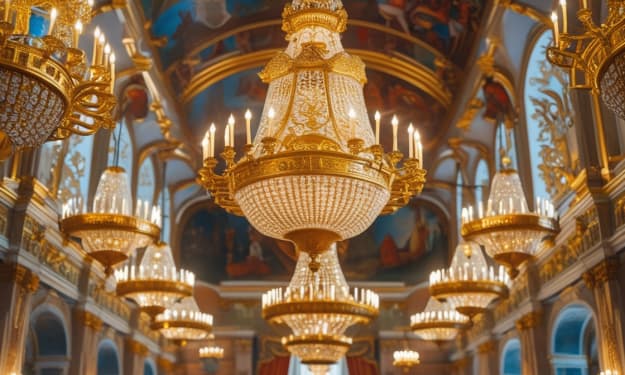
The Kremlin: Net Worth, Construction, and Interior Valuables The Kremlin, an iconic symbol of Russia’s political and cultural history, stands as one of the most valuable structures in the world. Beyond its role as the seat of the Russian government, the Kremlin is a treasure trove of historical artifacts, opulent architecture, and priceless art. Understanding the Kremlin’s net worth, its construction history, and the value of its interior features gives us a clearer picture of its significance. Net Worth of the Kremlin Estimating the net worth of the Kremlin is a challenging task due to its vast historical significance and irreplaceable artifacts. However, various analyses place the Kremlin’s total value at well over $100 billion when considering its real estate, gold reserves, priceless relics, and vast collections of art and antiquities housed within its walls. Factors Contributing to Its Net Worth: Real Estate Value: The Kremlin sits on 68 acres (27.5 hectares) of prime land in central Moscow. Given the city's skyrocketing property prices, the land alone is worth billions. Architectural Value: The Kremlin features historic palaces, cathedrals, and government buildings that are virtually priceless due to their cultural significance. Gold and Jewels: The Kremlin holds vast reserves of gold, diamonds, and other precious materials, particularly within the Kremlin Armory and the Diamond Fund. Art and Antiquities: The complex is home to hundreds of paintings, religious icons, and centuries-old relics, some of which are deemed to be of immeasurable value. Governmental Importance: As the center of Russian power, its strategic and symbolic value cannot be quantified in monetary terms. Construction of the Kremlin The Kremlin has undergone multiple phases of construction and expansion over more than 900 years. The current Kremlin complex is a blend of different architectural styles, reflecting the influence of Russian, Italian, and Byzantine designs. Key Periods of Construction: Early Foundations (1156) – The first wooden fortifications were built under Prince Yuri Dolgoruky, marking the birth of Moscow’s Kremlin. Stone Fortress (1367-1368) – Grand Prince Dmitry Donskoy replaced wooden walls with white limestone, strengthening the Kremlin’s defenses. Grand Renaissance Expansion (1485-1516) – Under Ivan III (the Great), Italian architects rebuilt the Kremlin, introducing red-brick walls and constructing iconic structures like the Cathedral of the Assumption and the Ivan the Great Bell Tower.
By Say the truth 2 years ago in History
Soft thunder
Dear Jane, Did you ever see the evidence of winter start with soft thunder and the sun blooming through the gray, listless clouds? I find the snow eerie. The ice crystals that settle down inside the once lush landscape of green refresh me yet again, I feel a tormenting sensation of nostalgia for something that never existed.
By Melissa Ingoldsby2 years ago in History
Civil Boundaries
Bertram, I's finelee can reeds and writes juss like u. Presdent Leenkun Lincon free us last yeer and plan ta free the hole nashun in due time. bless him tender hart. no mo hidin outs behind dat cow patch when i's git sic of it all. I's can be sic and tyrrd rite where I's wants ta!
By Lamar Wiggins2 years ago in History
Love Letters in Times of War
Dearest Élise, As the echoes of revolution thunder through the streets of Paris, my thoughts are only of you. By candlelight, I pen these words, longing for the day when I shall no longer need ink and parchment to express my love. Your absence is a wound upon my soul, and every moment away from you is an eternity I can hardly endure.
By A.short stories2 years ago in History
A Chief’s Apology – A Love That Defied Tradition
Love is often romanticized as a grand, sweeping force—one that conquers all and triumphs effortlessly. But in reality, love can be complicated, entangled with duty, expectation, and, sometimes, deception. My grandmother knew this well.
By Eunice Kamau2 years ago in History