Events
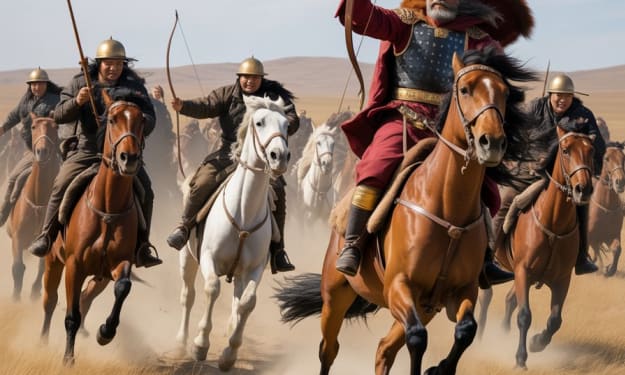
Storm from the Steppe: The Mongol Invasion Chronicles
When the vast, windswept steppes of Central Asia thundered with the galloping hooves of Mongol horsemen in the 13th century, the world would never be the same again. The Mongol Empire, born from the rugged nomadic tribes under the legendary Genghis Khan, unleashed a fury so fierce it shook entire civilizations to their core. What began as a band of tribal warriors soon transformed into the largest contiguous empire in history—stretching from the Pacific Ocean to the heart of Europe. But how did these horsemen from the endless grasslands conquer cities, topple empires, and reshape the medieval world?
By Kamran Zebabout a year ago in History
Heracleion: Egypt's Sunken Secret: The City the Gods Forgot
Beneath the Waves, a City Sleeps Located off the coast of modern-day Alexandria, at the meeting point of the Mediterranean's azure waters and the northern edge of Egypt, lies a forgotten city. Sunken beneath the waves for over a thousand years, Heracleion, known as Thonis by the Egyptians, was once a gleaming jewel of ancient power, wealth, and divine mystery.
By The Secret History Of The Worldabout a year ago in History
USA VS IRAN WAR 2025. Content Warning.
In June 2025, the Middle East witnessed a brief but intense conflict between Iran, Israel, and the United States, marking a significant escalation in long-standing regional tensions. The 12-day war, primarily driven by Israeli and U.S. military actions against Iran’s nuclear facilities, reshaped geopolitical dynamics and raised global concerns about the potential for broader conflict. This article provides an overview of the events, key points, and underlying reasons for the confrontation, drawing on recent developments.
By Abubakar Khanabout a year ago in History
The Civilization of the Ottoman Turks: A Legacy of Courtesy, Wisdom, and Deep Spiritual Values
Throughout history, few civilizations have preserved a legacy as refined and spiritually grounded as that of the Ottoman Turks. Emerging from modest beginnings and growing into one of the most powerful empires the world has ever seen, the Ottomans left behind not just tales of conquest, but also rich traditions rooted in manners, respect, and subtle intelligence. Their daily lives, community practices, and hospitality customs paint a portrait of a people who lived with purpose, imbued with values of dignity, humility, and emotional intelligence. Let us journey into the cultural soul of the Ottomans—a civilization where every gesture had meaning, and every action reflected wisdom. --- Hospitality: A Silent Language of the Heart Hospitality in Ottoman culture wasn’t merely about offering food or drink—it was a deeply symbolic interaction, a respectful dialogue between host and guest without words. When a guest arrived at an Ottoman home, they were offered two simple things: a cup of Turkish coffee (qahwa) and a glass of plain water. If the guest reached for the water, the host would immediately understand that the visitor might be hungry, and without asking or embarrassing the guest, they would begin preparing a meal—often their finest, even if they had little themselves. However, if the guest chose coffee, it was understood they were there just for conversation and did not wish to eat, allowing the host to continue the visit in a lighter, more social tone. This silent understanding showcased not only hospitality but also respect for the dignity and unspoken needs of others. --- Floral Symbols: Messages Without Words Ottomans used flowers as a subtle language outside their homes, offering passersby unspoken but powerful messages. A yellow flower placed outside the home signaled that someone in the house was ill. This gentle indicator advised visitors to speak softly, avoid noise, and, if appropriate, come in to inquire about the patient's health. A red flower suggested that there was a young woman of marriageable age in the home. It was a community-based warning to avoid inappropriate or vulgar language near the house. It was also a welcome signal for those who intended to propose marriage—an invitation to knock respectfully. These flower signs reflect the social responsibility and moral boundaries that governed Ottoman neighborhoods. There was no need for confrontation, no boards or notices—civility was coded into aesthetics. --- The Double Door Hammer: Gender Sensitivity Another beautiful and thoughtful tradition was the use of two hammers or knockers on the doors of Ottoman homes: One was larger and heavier, meant to be used by men. The other was smaller and lighter, designated for women. When a man knocked using the large hammer, a male member of the household would come to answer. If the smaller hammer was used, it signaled a female visitor, prompting a woman from the household to attend the door. Such practices weren’t just cultural quirks—they showed a profound respect for modesty, boundaries, and gender ethics in the public and private spheres of life. --- Charity with Dignity: Anonymous Giving Perhaps one of the most awe-inspiring aspects of Ottoman culture was the way they handled charity. Giving was not for show, recognition, or public praise—it was quiet, respectful, and anonymous. Wealthy individuals would go to local vendors—such as vegetable sellers or grocers—and open anonymous tabs (accounts). These tabs were meant to cover the costs of food or supplies for any poor person who came in need. When a poor person arrived to buy something, the shopkeeper would provide the items free of charge, telling them nothing of the benefactor. The giver never met the receiver. The dignity of the poor was preserved, and the reward was left entirely to Allah. Later, the wealthy individual would return quietly and clear the tab, expecting nothing but the satisfaction of helping a fellow human being. This practice is a testament to the Ottoman spirit of silent service—a value deeply embedded in Islamic teachings. --- Adab with the Prophet (PBUH): A Unique Expression of Love The Ottomans were not just polite—they were spiritually refined. One such example is how they treated the age of the Prophet Muhammad ﷺ. The Prophet (peace be upon him) passed away at the age of 63. Among devout Ottoman Turks, if an elderly person had surpassed this age and was asked how old they were, they would not say “I am 65 or 70.” Instead, they would reply: > “Son, I have crossed the limit.” This was not out of superstition but out of deep reverence and spiritual love for the Prophet ﷺ. They felt it inappropriate or audacious to say they had lived longer than the Messenger of Allah. Such subtleties reveal the depth of Ottoman adab (etiquette)—a love that shaped their language, actions, and worldview. --- The Reason Behind Ottoman Decline: A Loss of Values For centuries, the Ottoman Empire stood as a beacon of Islamic civilization, a model of balanced power, religious freedom, intellectual progress, and moral living. So what led to its fall? According to many historians and cultural observers, the empire did not collapse due to lack of might but due to internal betrayal, loss of spiritual values, and Western conspiracies that targeted the Ottoman identity. As their traditions of generosity, modesty, and spiritual discipline eroded, so did the strength of their unity. Greed, political manipulation, and abandonment of their own cultural wisdom opened the doors for the empire’s eventual fragmentation. --- What We Can Learn Today The lessons from Ottoman civilization are not confined to history books. They remain relevant today in a world that is often rushing, indifferent, and transactional. When we offer a guest water or tea, we can remember their method of listening with the heart, not the ears. When we give in charity, let us give with dignity, not display. When we speak of modesty and social respect, we can adopt symbolic, gentle ways rather than aggressive or legalistic ones. When we reflect on our Prophet ﷺ, we can ask whether we love him with such sensitivity and manners as the Ottomans did. --- Conclusion: A Civilization Built on Wisdom The Ottoman Turks left behind a civilizational blueprint where values were lived, not just preached. Their culture reminds us that true greatness lies not only in power or architecture, but in the way a society treats its guests, respects its women, protects its poor, and honors its prophets. In an age where modern life often celebrates speed, fame, and self-promotion, the Ottoman legacy calls us back to simplicity, meaning, and sincerity—a beautiful tale of literature, love, and light that the world should never forget.
By Ikram Ullahabout a year ago in History
Fossils show how the Caribbean reef ecosystems were drastically altered by humans.
We frequently envision dinosaurs when we think of fossils. However, reefs can also have a long history. In these environments, tiny fish bones and shark scales also turn into fossils, subtly telling the tale of past seas.
By Francis Damiabout a year ago in History
The Day Iceland's Women Brought the Country to a Halt
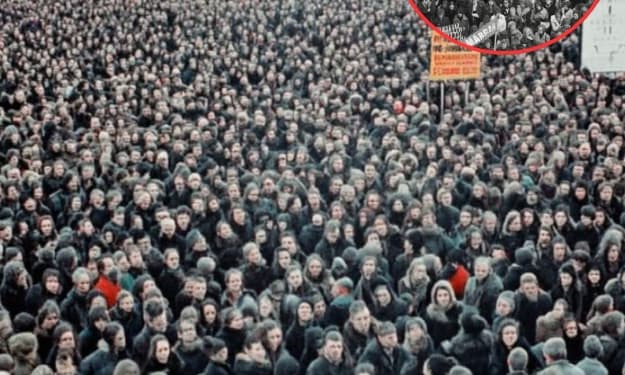
On October 24, 1975, Iceland experienced a day that would go down in history—not just for the nation, but for the global movement for gender equality. In a bold and unprecedented act, 90% of Iceland’s women walked off their jobs, put down their household tools, and refused to care for children. Offices, schools, nurseries, shops, and factories were brought to a near-standstill. Streets filled with women of all ages carrying signs, chanting slogans, and standing shoulder to shoulder in peaceful defiance. This was not just a protest; it was a nation-wide awakening. The event became known as the “Women’s Day Off” (Kvennafrídagurinn in Icelandic), and its impact was immediate and powerful. Organized by a coalition of women's rights groups and supported by grassroots movements, the strike was not just about equal pay. It was about visibility. It was about making the invisible labor of women visible by removing it altogether—for just one day. In 1975, despite Iceland's reputation for being socially progressive, gender inequality remained a deeply rooted issue. Women were paid significantly less than men, had limited representation in politics, and were still expected to carry the full weight of housework and childcare. Though many women worked outside the home, their contributions were undervalued both in the workplace and within the home. The goal of the strike was simple yet profound: show the country what a single day without women looked like. And the country noticed. Airports shut down. Banks closed early. Newspapers couldn’t be printed. Male teachers had to bring their children to school, only to discover they had to return home because there were no female staff to care for the students. Even radio and television programs were disrupted. The burden of unpaid labor—usually shouldered by women—suddenly became very visible to everyone, especially to men who had never considered it before. One of the most remarkable aspects of the strike was its peacefulness and unity. Thousands of women poured into the streets of Reykjavik, with over 25,000 gathering at Arnarhóll hill in the capital city. Considering the country’s population was just around 220,000 at the time, this turnout was monumental. Women from all walks of life—teachers, nurses, shopkeepers, housewives, students—came together in solidarity. Many men supported the cause as well, recognizing that gender equality would benefit the nation as a whole. The strike was so effective that it didn’t just stir public conversation—it sparked legislative and cultural transformation. In the years following, Iceland passed several new laws aimed at improving women’s rights, including stronger protections against workplace discrimination and more support for women in politics and education. But perhaps the most symbolic and lasting effect of that day came five years later. In 1980, Iceland elected Vigdís Finnbogadóttir as its president—the first woman in the world to be democratically elected to lead a country. Her victory wasn’t just a political milestone; it was a direct consequence of the movement that had taken root in 1975. Vigdís herself acknowledged that the Women’s Day Off had made her win possible. The strike had changed public perception, built momentum, and proven that women could lead at the highest level. Her presidency lasted 16 years, making her one of the longest-serving elected female heads of state in history. She became a symbol of progress not only for Iceland but for the world. And her legacy continues to inspire generations of women to take their place in leadership roles. Since then, Iceland has become a global leader in gender equality. It regularly tops the World Economic Forum’s Global Gender Gap Index, and it has implemented forward-thinking policies such as mandatory equal pay certification, generous parental leave for both mothers and fathers, and high representation of women in government and business. October 24 is now commemorated every year in Iceland as Women's Day, reminding the nation of the courage, unity, and power demonstrated on that cold autumn day in 1975. Over the years, women have continued to strike on this day to raise awareness about ongoing gender disparities, showing that the fight is not yet over. The story of the 1975 strike is not just about Icelandic women—it’s about the potential of collective action. It’s about what can happen when people unite around a cause that transcends politics or economics and speaks to the basic human principle of fairness. It proves that when women stop working, the world feels it—and when they stand together, they can change history. What began as a one-day protest became a permanent turning point in the nation’s journey toward equality. It was a moment when women stepped out of the background and into the spotlight—not to ask for change, but to demand it. And they didn’t just demand it—they achieved it.
By DigitalAddiabout a year ago in History
These microscopic organisms significantly contribute to the storage of carbon in the Southern Ocean.
Copepods, krill, and salps are examples of zooplankton that are contributing significantly to the storage of carbon in the Southern Ocean despite their small size.
By Francis Damiabout a year ago in History
Snake on a Plane’ Redux: Stowaway Green Tree Snake Forces Two-Hour Delay on Virgin Australia Flight
It would have sounded like the plot of a low-budget sequel to the 2006 cult thriller Snakes on a Plane—except the incident unfolded in real life at Melbourne Airport early Wednesday morning, 2 July 2025. A 60-centimetre (24-inch) green tree snake wriggled free from a passenger’s checked baggage and vanished behind a panel inside the cargo hold of Virgin Australia Flight VA337, which was preparing to depart for Brisbane with 184 people on board. The discovery triggered an immediate stand-down of ramp operations, pushed the scheduled departure back by two hours, and set off a frantic race against time to keep the reptile from disappearing into the aircraft’s innards. A quiet boarding disrupted by an unexpected passenger Ground handlers first noticed the slender, emerald-hued stowaway while loading the final luggage containers shortly after 07:20 AEST. In the dim light of the Boeing 737-800’s belly, the snake’s markings suggested it might be venomous—no one wanted to gamble on a misidentification six metres above the tarmac. “If it gets past the inner skin we’ll have to pull the jet apart,” one baggage supervisor warned in radio traffic later reviewed by airport operations. Virgin Australia immediately halted boarding and summoned veteran Melbourne-based herpetologist and licensed catcher Mark Pelley, known locally as “The Snake Hunter.” Security delays meant Pelley reached the aircraft nearly 30 minutes after the call. By then, the reptile had slithered half-concealed behind a wiring conduit—any further and engineers feared it could migrate into the pressurised cabin walls. A single-shot capture averts evacuation Armed with a carbon-fibre hook, a torch and a passengers’ patience wearing thin, Pelley squeezed into the cramped hold. “I had one chance,” he recounted. “Miss, and we’d have been evacuating everyone and unbolting half a 737 looking for a snake.” He managed to pin and bag the animal on the first attempt, a manoeuvre that took less than 30 seconds but spared the airline what could have become a multi-hour—and multi-million-dollar—maintenance ordeal. Species confirmed—and a biosecurity wrinkle Back on the ramp, Pelley identified the hitch-hiker as a common green tree snake (Dendrelaphis punctulata), a fast, day-active species widespread across Queensland and classified as non-venomous. Adults typically reach 1–1.5 metres, rely on speed rather than aggression, and defensive behaviour is limited to musk secretion and body inflation. While harmless to humans, the snake posed a different challenge: because it had crossed state lines inside an aircraft, federal quarantine rules bar immediate release. The reptile was transferred to a veterinary facility in Tullamarine for health checks before it is placed with a licensed wildlife carer. How did it get on board? Investigators believe the animal crawled into soft-sided luggage or a gap in a rigid suitcase while it sat open on a veranda or in a long-term car park in Brisbane. The species is notorious for exploring human structures and is commonly found in roof cavities and garden sheds. Once inside the bag—and with hold temperatures a comfortable 20 °C thanks to the aircraft’s environmental control systems—the snake survived the two-hour southbound leg undetected. Airline response Virgin Australia apologised for the inconvenience in a statement that praised ground and cabin crews for “textbook professionalism.” The carrier confirmed Flight VA337 departed at 09:47 AEST—exactly two hours behind schedule—and landed in Brisbane without further incident. A spokesman added that passengers were offered refreshments and updates every 15 minutes and that engineers completed an additional inspection of wiring looms and control-surface cavities before clearing the aircraft for service. The cost of a crawl-on A single reptile can inflate turnaround costs dramatically. According to industry consultancy AirSafe, each hour a narrow-body jet spends on the ground unexpectedly can cost an airline between AU$6,000 and AU$10,000 in crew, fuel burn, and ripple-effect delays. Had Pelley failed on his first attempt and the aircraft required partial disassembly, the direct maintenance bill could have topped AU$100,000—not including passenger compensation. (Those figures are approximate; Virgin did not disclose its internal estimates.) Wildlife and Australian aviation—rare, but not unheard of While bird strikes are an everyday hazard, terrestrial wildlife incidents remain vanishingly rare. Australia has recorded fewer than a dozen “reptile-on-aircraft” events in the past decade, most involving pythons wrapped around landing gear on remote airstrips in the Northern Territory. The last headline-grabbing in-cabin episode occurred in November 2024, when television presenter Andre Rerekura calmly removed a Stimson’s python from a Virgin flight in Broome, causing only a 20-minute delay. Why snakes slip through Dr Caitlin Bishop, an ecologist at the University of Queensland who studies urban herpetofauna, notes that July is mid-winter in Australia, a season when reptiles in southern states seek warmth. “A canvas duffel bag that’s been sitting in sunlight can hit 30 degrees Celsius. For a tree snake looking for refuge, that’s irresistible.” Once loaded onto an air-conditioned jet, the animal can remain torpid and unobserved until cabin-side lights and human commotion provoke it to move. Passenger tales from Gate 25 Several travellers approached by reporters described a mix of amusement and unease. Business-class flyer Danielle Wong admitted she thought airline staff were joking: “I literally said, ‘Are we being punked?’ But when I saw the handler come out with a wriggling bag, reality set in.” For backpacker Liam Sørensen, the episode was “peak Australia—where even your suitcase comes with wildlife.” Lessons learned (and tips for travellers) Airport biosecurity officers offered the following advice to minimise future reptilian ride-alongs: 1. Zip it tight: Keep suitcases closed when outdoors, even briefly. 2. Shake before you pack: A quick visual check can dislodge small animals. 3. Mind the gaps: Repair torn linings; snakes exploit openings as slim as 1 cm. 4. Declare sightings: If you spot wildlife in baggage areas, alert staff immediately—do not attempt your own capture. A story already slithering around the globe By mid-afternoon, video of Pelley’s capture—shot on a ramp worker’s phone—had racked up more than 12 million views on TikTok under the hashtag #SnakeOnAPlane. Aviation analyst Nadira Hussain mused that the viral moment is “the best unpaid marketing Virgin has had all year,” albeit one the airline hopes never to repeat. Closing cabin doors—again In the end, Flight VA337’s brush with serpentine stardom left no injuries, minimal mechanical repercussions, and one displaced but otherwise healthy green tree snake. As Pelley quipped to reporters while loading his catch into a ventilated tub, “He got a free trip to Melbourne, a warm plane ride and a veterinary check-up. Not bad for a little Queensland hitch-hiker.” Passengers, meanwhile, earned bragging rights to a real-life tale that’s stranger than Hollywood fiction—and proof that even 39,000 feet above the Outback,
By yusuf selhoabout a year ago in History
Mastering Marketing in the AI Era: The Must-Know Concepts Every Modern Student Should Learn
In a world of 3-second attention spans and infinite scrolls, teaching marketing has transformed from theory-driven lectures to dynamic, digital-first learning. If you're a student, teacher, or even a business owner trying to grasp the essentials — this guide breaks it all down.
By Waqas Ahmadabout a year ago in History
The Beautiful Game: A Journey Through Football History
Football, or soccer as it's known in some corners of the world, is more than just a game. It is a global language, a passion shared by billions, and a cultural phenomenon that transcends borders, languages, and ideologies. But how did this simple game with a ball and two goals become the most beloved sport on Earth?
By Abdullah khanabout a year ago in History
20 Years After 7/7: What the UK Learned from the London Terror Attacks
On the morning of July 7, 2005, London was brought to its knees. In just under two hours, a coordinated suicide bombing campaign killed 52 people and injured more than 700 others across the city’s public transport system. Three bombs exploded almost simultaneously on the London Underground during rush hour. A fourth was detonated an hour later on a double-decker bus in Tavistock Square.
By Lawrence Leaseabout a year ago in History