Events
The Devil’s Bible: Mystery, Myth, and the Codex Gigas. AI-Generated.
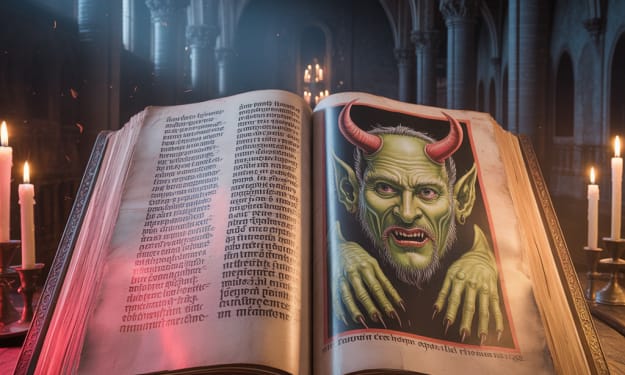
What Is the Codex Gigas? The Codex Gigas was created in the early 13th century, most likely around 1229, in the Kingdom of Bohemia (modern-day Czech Republic). The name Codex Gigas literally means “Giant Book”, and the title is well deserved. The manuscript measures about 92 cm tall, 50 cm wide, and 22 cm thick, weighing nearly 75 kilograms. It takes at least two people to lift it. The manuscript contains 310 parchment pages, made from animal skin—estimated to come from over 100 donkeys or calves. Its sheer physical scale alone sets it apart from any other medieval book. Why Is It Called the Devil’s Bible? The Codex Gigas earned its ominous nickname because of a full-page illustration of the Devil, one of the most striking and unsettling images in medieval manuscripts. The Devil is depicted with claws, horns, greenish skin, and an eerie expression, standing alone on a blank background. Opposite this illustration is a depiction of the Heavenly City, symbolizing the eternal conflict between good and evil. According to legend, the manuscript was created by a single monk who had broken his monastic vows and was sentenced to be walled alive as punishment. To escape this fate, the monk promised to write a book in a single night that would glorify God and contain all human knowledge. As midnight approached and he realized the task was impossible, he allegedly made a pact with the Devil, who helped him complete the book. In gratitude—or submission—the monk included the Devil’s portrait inside the manuscript. While historians dismiss this tale as folklore, the legend has significantly contributed to the Codex Gigas’s dark reputation. Contents of the Devil’s Bible Despite its sinister nickname, the Codex Gigas is largely a religious and scholarly work. Its contents include: The complete Latin Bible (Vulgate) The Rule of St. Benedict, guiding monastic life Historical texts, including works by Josephus Medical treatises on diseases and remedies Calendars and necrologies Exorcism formulas and magical incantations This combination of sacred scripture, medicine, history, and magic reflects the medieval worldview, where religion, science, and superstition often coexisted without clear boundaries. The One-Hand Theory One of the most intriguing aspects of the Codex Gigas is that the entire manuscript appears to be written by a single hand. Paleographic analysis suggests the same handwriting style, ink composition, and formatting throughout the book. This raises an extraordinary question: How could one person create such a massive work? Modern scholars estimate that even if a monk worked nonstop, it would have taken at least 20 to 30 years to complete the manuscript. This fact alone undermines the legend of the book being written in one night, yet it deepens the mystery of the dedication—and isolation—required to produce it. Missing Pages and Dark Speculation Originally, the Codex Gigas had 320 pages, but 10 pages are missing. No one knows exactly what they contained. Some theories suggest they may have held secret rituals, forbidden knowledge, or even names of demons. Others believe the missing pages included the monastery’s internal records, deliberately removed for political or religious reasons. The absence of these pages has fueled speculation that the manuscript once contained dangerous or heretical content, adding another layer to its devilish aura. A History of War and Plunder The Codex Gigas has survived wars, fires, and the fall of empires. In 1648, during the Thirty Years’ War, Swedish forces looted Prague and took the manuscript to Sweden as war booty. Today, it is preserved in the National Library of Sweden in Stockholm, where it remains one of the library’s most valuable treasures. Despite its turbulent history, the manuscript is remarkably well preserved, further contributing to beliefs that it is protected by supernatural forces.
By Say the truth 9 months ago in History
They Built Farms on Ice-Then Disappeared
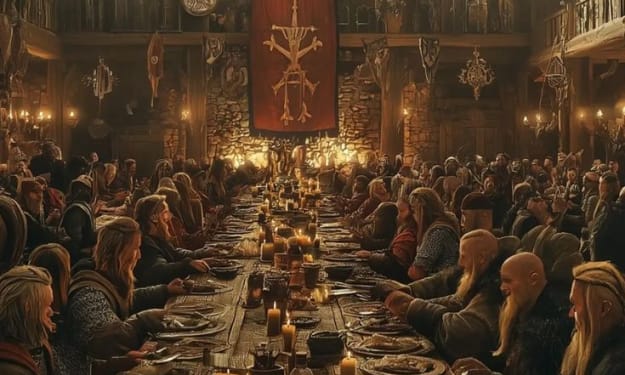
Imagine this: It's a crisp September day in 1408, somewhere on the rugged southwestern coast of Greenland. A small wedding party gathers inside a stone church-simple vows exchanged, a few witnesses scribbling names on a document that somehow survives five centuries. The bride and groom smile (or at least we hope they did), the priest nods solemnly. They sign, they celebrate quietly, and then… nothing. That piece of paper becomes the very last whisper we ever hear from an entire community of Norse people who had carved out a life in one of the most unforgiving places on Earth.
By KWAO LEARNER WINFRED9 months ago in History
The Spanish Donkey: A Dark Instrument of Punishment in European History
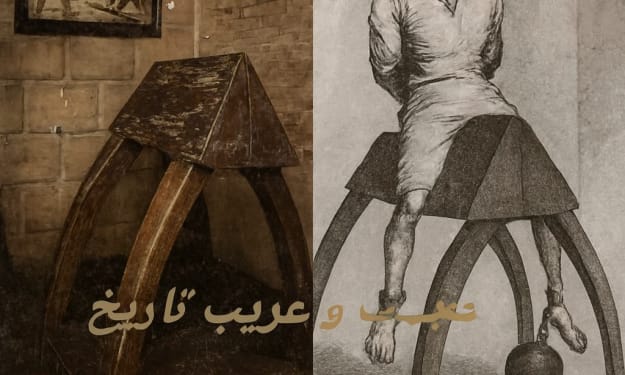
History is often told through kings, wars, and revolutions. But hidden between those grand narratives are quieter, darker stories. Stories of ordinary people, unnamed in records, who experienced history not as progress, but as pain. One such story is tied to an object known as the Spanish Donkey, also called the Wooden Horse, an instrument of punishment used in parts of Europe during the late medieval and early modern periods.
By Salman Writes9 months ago in History
The Biggest Unsolved Mysteries in History That Still Baffle the World
1. The Disappearance of the Indus Valley Script The Indus Valley Civilization, which flourished around 2500 BCE in present-day India and Pakistan, was one of the world’s earliest urban societies. It boasted advanced city planning, sophisticated drainage systems, and standardized brick construction. However, one of its greatest mysteries is its undeciphered script. Thousands of inscriptions have been found on seals, pottery, and tools, yet no one has been able to decode their meaning. Unlike Egyptian hieroglyphs or Mesopotamian cuneiform, the Indus script lacks a bilingual inscription that could serve as a key. Without understanding their language, historians remain uncertain about their political systems, religious beliefs, and even the reasons behind the civilization’s decline. 2. The Lost City of Atlantis First mentioned by the Greek philosopher Plato around 360 BCE, Atlantis was described as a powerful and technologically advanced civilization that sank into the ocean “in a single day and night of misfortune.” Ever since, Atlantis has captured the imagination of scholars, explorers, and conspiracy theorists. Some believe Atlantis was purely allegorical—a moral lesson created by Plato. Others argue it may have been inspired by real events, such as the volcanic destruction of the Minoan civilization on the island of Thera (Santorini). Despite centuries of searching, no definitive archaeological evidence has proven Atlantis existed, leaving it suspended between myth and history. 3. The Construction of the Great Pyramids of Giza The Great Pyramids of Egypt, built over 4,500 years ago, remain among the most astonishing architectural feats in human history. The largest, the Pyramid of Khufu, consists of over two million stone blocks, some weighing more than 80 tons. The mystery lies not in who built them, but in how they were constructed with such precision using ancient tools. How were massive stones transported across vast distances? How were they lifted and placed so accurately? While theories range from ramps to complex pulley systems, no single explanation fully satisfies all the evidence. The pyramids continue to challenge our understanding of ancient engineering capabilities. 4. The Voynich Manuscript Discovered in 1912 by rare book dealer Wilfrid Voynich, the Voynich Manuscript is a handwritten book filled with strange illustrations, unknown symbols, and an indecipherable script. Radiocarbon dating places its creation in the early 15th century. Despite intense analysis by cryptographers, linguists, and even artificial intelligence, the text remains unreadable. Some believe it is a sophisticated code, others think it represents a lost language, while skeptics argue it could be an elaborate hoax. The manuscript’s purpose—whether medical, astronomical, or magical—remains one of the greatest puzzles in literary history. 5. The Amber Room Often referred to as the “Eighth Wonder of the World,” the Amber Room was a chamber decorated with panels made entirely of amber, gold leaf, and precious stones. Created in Prussia in the early 18th century, it was later gifted to Russia and installed in the Catherine Palace. During World War II, Nazi forces dismantled the room and transported it to Königsberg. After the war, it vanished without a trace. Countless searches have failed to locate it, leading to theories that it was destroyed, hidden in underground bunkers, or lost at sea. Its fate remains one of the most enduring art mysteries of modern history. 6. The Identity of Jack the Ripper In 1888, a series of brutal murders terrorized London’s Whitechapel district. The killer, known as Jack the Ripper, murdered at least five women and vanished without being identified. Despite numerous suspects proposed over the years—ranging from doctors and artists to members of the royal family—no conclusive evidence has ever confirmed the killer’s identity. Advances in forensic science, including DNA analysis, have reopened the case multiple times, yet the truth remains elusive, preserving Jack the Ripper as history’s most infamous unidentified criminal. 7. The Nazca Lines Etched into the desert plains of southern Peru, the Nazca Lines are enormous geoglyphs depicting animals, plants, and geometric shapes. Created between 500 BCE and 500 CE, these figures are best seen from the air. The mystery lies in their purpose. Were they astronomical calendars, religious symbols, irrigation markers, or ceremonial pathways? How did the Nazca people design such large-scale drawings without an aerial perspective? While scholars lean toward ritualistic and astronomical explanations, no definitive answer has been found. 8. The Fate of the Roanoke Colony In 1587, English settlers established a colony on Roanoke Island in present-day North Carolina. When supply ships returned three years later, the entire settlement had vanished. The only clue left behind was the word “CROATOAN” carved into a post. There were no signs of violence or struggle. Theories suggest the settlers may have assimilated with Native American tribes, relocated, or perished due to disease or famine. Despite extensive research, the true fate of the “Lost Colony” remains unknown. Why These Mysteries Endure What makes these mysteries so compelling is not just their unanswered questions, but what they reveal about humanity. They highlight the limits of our knowledge and remind us that history is not a complete record, but a fragmented story shaped by time, loss, and interpretation. Even with satellites, artificial intelligence, and advanced archaeology, some truths remain just out of reach. These unsolved mysteries continue to inspire research, debate, and imagination, proving that the past is far from silent—it is waiting for us to listen more closely.
By Say the truth 9 months ago in History
Drones, Aircraft Carriers, and the Shadow of Wo
Drones, Aircraft Carriers, and the Shadow of World War III World War III, once a distant fear, is now discussed more openly by analysts and leaders around the world. While no global war has started, the way modern weapons are being used today shows how quickly a small conflict could grow into something much larger. Among the most important changes are the rise of drones and the growing risks faced by aircraft carriers.
By Wings of Time 9 months ago in History
Drones vs Aircraft Carriers
Drones vs Aircraft Carriers For decades, aircraft carriers have been the strongest symbol of military power. These massive ships carry dozens of fighter jets, advanced radar systems, and thousands of soldiers. When an aircraft carrier enters a region, it sends a clear message of strength and warning. But today, a new challenger is changing the rules of war: drones.
By Wings of Time 9 months ago in History
Rising U.S.–Iran Tensions: Power, Warnings, and the Risk of a Wider Conflict
Rising U.S.–Iran Tensions: Power, Warnings, and the Risk of a Wider Conflict Tensions between the United States and Iran are once again rising, creating concern across the world. Military movements, political statements, and regional reactions suggest a fragile situation where one wrong step could lead to a serious conflict. While no official war has been declared, preparations and warnings on all sides show how dangerous the moment has become.
By Wings of Time 9 months ago in History
The Amber Room: History, Glory, and the Greatest Lost Treasure of Europe
Origins of the Amber Room The story of the Amber Room begins in Prussia (modern-day Germany) in the early 1700s. The room was commissioned in 1701 by King Frederick I of Prussia as part of a grand plan to decorate his royal palace in Berlin. The design was entrusted to the court architect Andreas Schlüter, while the intricate amber craftsmanship was executed by master amber artisans Gottfried Wolfram, Ernst Schacht, and Gottfried Turau. Amber, fossilized tree resin formed over millions of years, was highly prized in Europe for its warm glow and rarity. The amber used in the Amber Room came primarily from the Baltic region, which was rich in amber deposits. The artisans carved, polished, and assembled amber panels into complex mosaics, combining them with gold leaf, gemstones, and mirrored surfaces. The result was a dazzling chamber that appeared to glow from within. A Diplomatic Gift to Russia Despite its beauty, the Amber Room remained incomplete in Berlin due to technical difficulties and political changes. In 1716, Frederick William I of Prussia, the son of Frederick I, made a significant diplomatic decision. Seeking to strengthen an alliance with Tsar Peter the Great of Russia, he presented the Amber Room as a gift. The panels were carefully dismantled, packed, and transported to Russia, where they were initially installed in the Winter Palace in St. Petersburg. Later, during the reign of Empress Elizabeth, the Amber Room was moved to the Catherine Palace in Tsarskoye Selo (now Pushkin). There, Italian architect Bartolomeo Rastrelli expanded and enhanced the room, increasing its size and adding new decorative elements. The Golden Age of the Amber Room At the Catherine Palace, the Amber Room reached its full splendor. The walls were covered with over six tons of amber, arranged in elaborate panels depicting floral designs, coats of arms, and allegorical scenes. Golden carvings, mosaics, and mirrors reflected candlelight, creating an illusion of endless warmth and brilliance. Visitors described the room as breathtaking, unlike anything else in Europe. It became a symbol of Russian imperial wealth and artistic sophistication. The Amber Room was used for receptions and private gatherings, and it stood as a testament to Russia’s growing power on the world stage. World War II and the Disappearance The fate of the Amber Room changed dramatically with the outbreak of World War II. In 1941, Nazi Germany launched Operation Barbarossa, invading the Soviet Union. As German forces advanced toward Leningrad (now St. Petersburg), Soviet curators attempted to evacuate valuable artworks. However, the Amber Room was too fragile to be moved safely. Instead, curators tried to hide it by covering the panels with wallpaper, hoping the invaders would overlook it. The effort failed. German art experts quickly recognized the room’s value. Under orders from Nazi authorities, the Amber Room was dismantled in just 36 hours and transported to Königsberg Castle in East Prussia (now Kaliningrad, Russia). For a time, the Amber Room was reassembled and displayed in Königsberg Castle. Then, in 1944, Allied bombing raids severely damaged the city. After this point, the Amber Room vanished from historical records. Theories About Its Fate Numerous theories attempt to explain what happened to the Amber Room: Destroyed During Bombing – Some historians believe the room was destroyed during Allied air raids or subsequent fires. Hidden in Underground Bunkers – Others suggest it was secretly stored in underground tunnels or mines. Transported and Lost at Sea – A popular theory claims the room was loaded onto ships fleeing East Prussia and sank in the Baltic Sea. Secretly Smuggled – Some believe parts of the Amber Room were smuggled to private collections. Despite extensive searches across Germany, Poland, Russia, and the Baltic region, no definitive evidence has been found.
By Say the truth 9 months ago in History
The Gold of the Inca Empire: Sacred Wealth and the Greatest Lost Treasure of the Andes
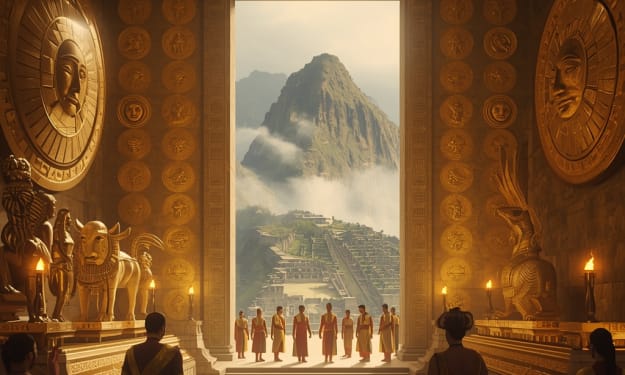
Gold as a Sacred Substance For the Incas, gold was not mere metal; it was sacred. They believed gold was the “sweat of Inti,” the Sun God, the most important deity in the Inca pantheon. Silver was considered the “tears of Mama Quilla,” the Moon Goddess. Because of this belief, gold was reserved almost exclusively for religious ceremonies, royal decoration, and offerings to the gods. Common people rarely possessed gold. It belonged to the gods and the emperor, known as the Sapa Inca, who was believed to be the direct descendant of the Sun God. Wearing gold was a symbol of divine authority, not economic power. Sources of Inca Gold The Andes region was naturally rich in gold deposits. Inca miners extracted gold from riverbeds and mountain veins using surprisingly efficient methods, even without iron tools or wheeled transport. They used stone tools, wooden implements, and water channels to separate gold from sediment. Unlike Europe, the Incas did not mint coins. Gold was shaped into ornamental and ceremonial objects, including: Sun discs Masks and crowns Jewelry such as necklaces and ear spools Life-sized statues of humans, animals, and plants Ritual vessels and weapons These objects were masterpieces of craftsmanship, showcasing advanced metalworking techniques such as alloying, casting, hammering, and polishing. The Golden Temples of the Inca The most famous center of Inca gold was the Coricancha, or Temple of the Sun, in Cusco, the imperial capital. Spanish chroniclers described its walls as being covered with thick sheets of gold, reflecting sunlight so intensely that it appeared to glow. Inside the temple were golden representations of cornfields, animals, and priests—symbolizing abundance and harmony between humans and nature. Other temples across the empire also housed vast quantities of gold, stored as offerings to Inti.
By Say the truth 9 months ago in History