Events
1935 - The Year My Dad And Elvis Were Born
Introduction This is one of a series of posts about years with significant events that coincide with the number of the Vocal story. I am going to miss many, like Jesse Owens at the 1936 Olympics. According to testimonies Hitler did not snum Owens but his own President did. This does not make Hitler a good man.
By Mike Singleton 💜 Mikeydred 3 years ago in History
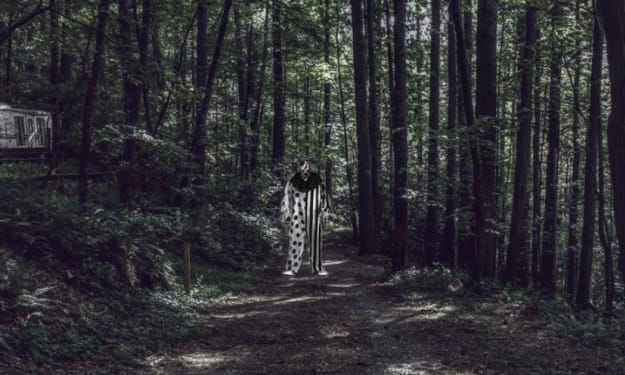
I See Clowns...
I am a millennial. For reference, a millennial is a person born between 1981 and 1996. There are many things that our generation has lived through that generation Z and the current generation (gen X) either do not remember or do not know about. Let's go back to the early 2000s, shall we? It was an interesting time to be alive, cell phone use was on the rise. Apple gave us the iPod and the iPhone and changed how we listened to music. No more did we have to download music from LimeWire or carry our compact disk players in our pockets and walk a certain way so the song wouldn't skip too much. Pagers were on their way out. Only doctors or street pharmacists had them mostly. Caller ID was now a service that came standard instead of having to pay a separate fee for it. So many new technologies and different ways to seemingly improve one's life.
By Latoya Giles 3 years ago in History
Secrets of Isaac Newton
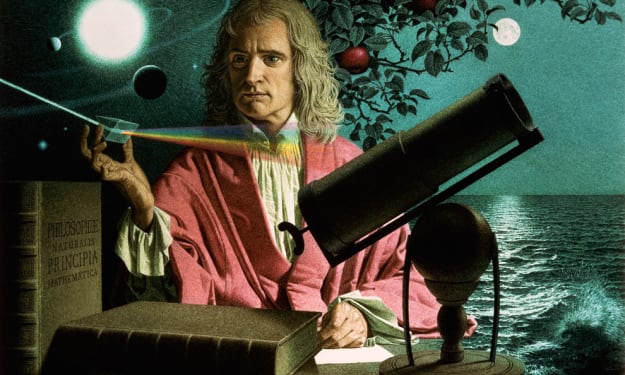
He disappointed his mother by not pursuing her dream of becoming a farmer. His relationships with others were so complex that he ended up living a solitary life. However, his passion for alchemy led him to become one of the most renowned scientists in history. Yes, I'm referring to Isaac Newton, the famous English physicist and mathematician who revolutionized modern physics. Newton was born in the small village of Wol Thorp in 1643. Unfortunately, he never had the chance to meet his father, who passed away before his birth. Around the same time, another brilliant scientist, Galileo Galilei, took his last breath in Florence. Little did Newton know that he would later build upon Galileo's ideas and make them legendary. From the very beginning, Isaac faced challenges as he was born prematurely and had to fight for survival. He was so tiny that he could fit inside a large mug. His mother remarried shortly after his birth, and he ended up living with his grandmother, separated from his mother for nine years. This solitude had a lasting impact on his life. Years later, when reflecting on his past, he even confessed to having fiery thoughts about his stepfather, such as wanting to burn down the house. On the bright side, his isolation sparked his interest in books on mechanics and technology. He even developed a highly accurate system of sundials. Recognizing his intellectual potential, his uncle and school headmaster encouraged him to pursue his studies instead of tending to the family property. Despite his mother's initial resistance, she eventually gave in, and Newton returned to grammar school. At the age of 18, he was admitted to Trinity College, Cambridge. To support his education, Newton worked and studied, waiting tables and taking care of other students' rooms.
By Angelo Valentino Krause3 years ago in History
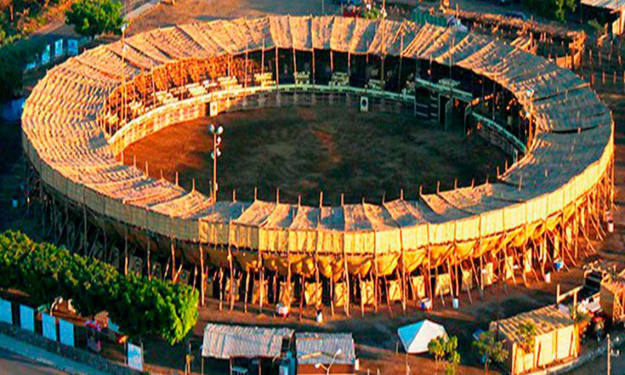
"La Plasa Petatera: Tradition, Culture and Encounter in the Heart of the Community".
Is it really any wonder that the largest handicraft in the world is located in Mexico? And we are talking about a magnificent work registered as a World Heritage Site, which is protected by none other than UNESCO. Find here all the information you need about La Petatera, a unique bullring in the world.
By diego michel3 years ago in History
The Lost Cities of the Amazon
As I delve into the intriguing history of the Amazon rainforest, the focus shifts to the enigmatic explorer Percy Fawcett and his relentless pursuit of a lost city he named "Z." Fawcett vanished in the heart of the Amazon in 1925 during his eighth expedition, leaving behind a mystery that puzzled experts for decades. The prevailing belief was that the rainforest, with its perceived hostility and remoteness, could not have supported cities. However, recent archaeological findings have challenged this notion, unveiling a network of ancient cities concealed within the lush greenery.
By Abdallah Daud3 years ago in History
The Russian Exploration Legacy: Concluding the Age of Discovery
The Age of Discovery, spanning the 15th to the 17th century, witnessed European sailors embarking on daring expeditions to explore, colonize, and conquer new territories globally. Triggered by the decline of the Mongol Empire, the control of Mediterranean trade routes, and the rise of new Atlantic coastal nations, this era marked a surge in exploration. However, it was the Bellingshausen Expedition, led by Fabian Gottlieb von Bellingshausen and Mikhail Lazarev, that is often regarded as concluding this fascinating chapter of human exploration.
By Mohammed Shahidullah-Bin-Anwar 3 years ago in History
An Excursion into Old Secrets
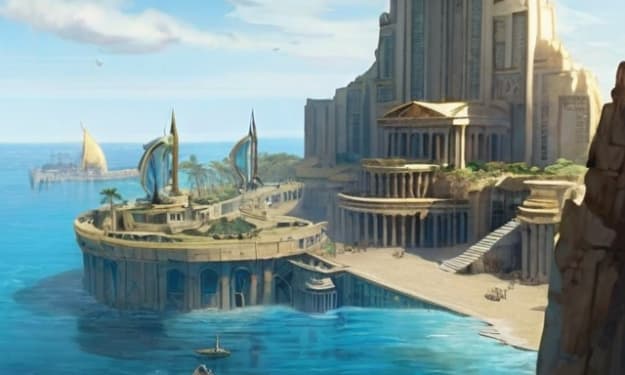
In the immense woven artwork of mankind's set of experiences, scarcely any mysteries loom as enormous or mix the creative mind as significantly as the legend of Atlantis. Covered in fantasy and secret, this mythical development has charmed personalities for quite a long time, starting vast discussions among history specialists, archeologists, and devotees. Was Atlantis simply an invention of creative mind, a scholarly moral story devised by the old thinker Plato? Or on the other hand does it disguise a more profound truth, a lost progress lowered underneath the waves?
By Christopher Ezeh3 years ago in History