Events
The Aftermath of the Hiroshima Nuclear Strike: A Historical Tragedy. AI-Generated.
The Aftermath of the Hiroshima Nuclear Strike: A Historical Tragedy On August 6, 1945, the world witnessed one of the most devastating events in history when the United States dropped an atomic bomb on the Japanese city of Hiroshima. This marked the first use of nuclear weapons in warfare, forever altering the course of history. The bomb, named "Little Boy," unleashed unimaginable destruction and marked the beginning of the end for World War II. However, the impact on Hiroshima and its people was profound, long-lasting, and horrific.
By Say the truth 2 years ago in History
The Nagasaki Nuclear Strike: A Tragic Chapter in History. AI-Generated.
The Nagasaki Nuclear Strike: A Tragic Chapter in History On August 9, 1945, just three days after the bombing of Hiroshima, the United States dropped a second atomic bomb on the Japanese city of Nagasaki. This bomb, codenamed "Fat Man," was even more powerful than the one used on Hiroshima, and its devastating impact marked the last major act of World War II. While less widely discussed than Hiroshima, the Nagasaki bombing was equally catastrophic, forever changing the course of history and leaving an indelible scar on Japan.
By Say the truth 2 years ago in History
I Wish I Could Be a Child Again
As I sit and reflect on the complexities of adult life, I can’t help but wish I could be a child again. There’s something about the simplicity, innocence, and wonder of childhood that I long to experience once more. Life was less about responsibilities and more about exploring the world with curious eyes. In this blog, I want to share my journey of rediscovering the joys of my childhood, a time when life was about living in the moment rather than chasing future ambitions.
By Ƒนʀƙเ ฬʀเτєร2 years ago in History
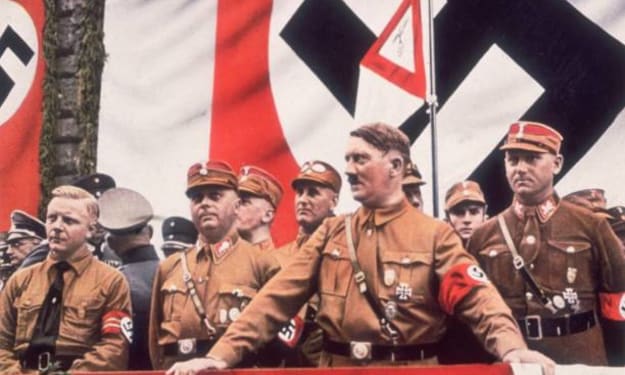
How Did Hitler Rise to Power?
The rise of Adolf Hitler, a dictator responsible for one of the most horrific genocides in history, is a chilling narrative that began in the aftermath of World War I. Germany had fought valiantly, but the successful advance of the Allied forces in1918 made it clear that the war was unwinnable. Consequently, Germany signed an armistice, bringing an end to the fighting. As Germany’s imperial government crumbled, civil unrest and widespread worker strikes erupted throughout the nation.
By DANIEL AKAM OKO2 years ago in History
A Forgotten Era: The Early Days of Electric Vehicles
When people think of electric vehicles (EVs), they often envision them as a modern innovation—a product of the 21st century, driven by the need to combat climate change and reduce dependency on fossil fuels. However, few realize that electric vehicles have a history stretching back more than a century. In fact, electric cars were some of the first automobiles on the road, and by the early 1900s, they were a common sight. At their peak, nearly a third of all cars on the road were powered by electricity. But what happened to these early EVs, and why did they disappear for nearly a century? The answer lies in a fascinating tale of technological advancement, market forces, and the eventual dominance of internal combustion engines. The Birth of Electric Vehicles The first production-standard electric car that was capable of being reproduced and sold to the public was unveiled in 1884. This was a major milestone in automotive history. Before Henry Ford's gasoline-powered Model T revolutionized the car industry, electric vehicles were already making headlines. The appeal of electric cars was obvious—compared to early gasoline-powered cars, they were cleaner, quieter, and easier to operate. Petrol cars at the time were noisy, produced smelly emissions, and required manual cranking to start. In contrast, electric cars offered a smoother ride and could be powered up with the flip of a switch. The 1880s and early 1900s were a golden age for electric vehicles. By 1900, EVs accounted for one-third of all cars on the road. They were particularly popular in urban areas where the limited range wasn’t much of an issue, and charging infrastructure was starting to develop. It wasn’t uncommon to see electric taxis, delivery vehicles, and even some electric buses operating in cities. Ferdinand Porsche and Early EV Innovations One of the most significant figures in the history of electric vehicles is Ferdinand Porsche, the founder of the famous sports car brand. Long before Porsche became synonymous with high-performance gasoline-powered cars, Ferdinand Porsche was already innovating in the electric vehicle space. In 1898, Porsche developed an electric vehicle known as the "P1." This was a remarkable achievement in automotive engineering, and Porsche wasn’t finished. In 1900, Porsche created what is widely regarded as the world’s first hybrid vehicle—the Lohner-Porsche Mixte Hybrid. This groundbreaking car combined an electric motor with a gasoline engine, a concept that is still used in many hybrid vehicles today. The Lohner-Porsche was ahead of its time, featuring electric hub motors that powered the wheels, and was capable of operating either purely on electric power or with the assistance of the gasoline engine. This technology laid the foundation for the hybrids and plug-in hybrids we see today. Mercedes-Benz and Electric Taxis Another major automaker that ventured into the world of early electric vehicles was Mercedes-Benz. In 1906, the company introduced the "Mercedes Mixte," a hybrid vehicle designed to function both as a taxi and a race car. The Mercedes Mixte operated similarly to Porsche’s hybrid, using a combination of electric motors and a gasoline engine to provide power. This vehicle was adopted as a taxi in several cities, showcasing the practicality and reliability of electric vehicles even in the early 1900s. In 1907, the car was also modified into a race car, further demonstrating that electric and hybrid technology could be applied to high-performance vehicles. The success of the Mercedes Mixte in both urban and competitive settings showed that electric vehicles were versatile and capable. Yet, despite their promise, these early innovations were overshadowed by the rapid development of gasoline-powered cars. The Decline of Early Electric Vehicles So why did electric vehicles, which had enjoyed such early success, disappear from the roads? The answer lies largely in the emergence of gasoline-powered cars and the changing landscape of the automobile industry in the early 20th century. Two major factors contributed to the decline of EVs. First was the introduction of the mass-produced, gasoline-powered Model T by Henry Ford in 1908. Ford’s assembly line techniques dramatically lowered the cost of producing cars, making the Model T affordable for middle-class Americans. Gasoline-powered cars, which were cheaper and could travel longer distances than their electric counterparts, quickly gained popularity. Second, the discovery of vast petroleum reserves in Texas in the early 1900s made gasoline widely available and inexpensive. As gas stations began popping up across the country, refueling became easier, addressing one of the key challenges faced by early electric vehicles: range. The limited battery technology of the time meant that electric cars could only travel short distances on a single charge, making them less practical for long journeys outside of urban areas. By the 1920s, electric vehicles had largely disappeared from the roads, replaced by gasoline-powered cars that were faster, cheaper, and more convenient for the expanding American road network. It wasn’t until the latter half of the 20th century that electric vehicle technology began to make a comeback. The Rebirth of Electric Vehicles Fast-forward to the 21st century, and electric vehicles are once again making headlines. With advances in battery technology, increasing concerns about climate change, and a renewed focus on sustainable transportation, EVs are poised to reclaim their place on the roads. In many ways, we are witnessing the reincarnation of old technology—an acknowledgment that electric power, once sidelined, is now at the forefront of automotive innovation. While modern EVs feature state-of-the-art technology, their origins can be traced back to the late 19th and early 20th centuries when pioneers like Ferdinand Porsche and Mercedes-Benz were already exploring electric and hybrid power. The early electric trucks plugged in across the UK in 1917, for example, demonstrate that the idea of electric vehicles is far from new—it’s an old solution that has found new relevance in today’s world. Conclusion The history of electric vehicles is a fascinating journey that stretches back more than a century. From the first production-standard electric car in 1884 to Ferdinand Porsche's hybrid creations and the early electric taxis of Mercedes-Benz, EVs were once at the forefront of automotive innovation. Although they were overtaken by gasoline-powered cars in the 20th century, the resurgence of electric vehicles in recent years reflects a return to a technology that has been with us all along, quietly waiting for the right moment to shine once again.
By Deji Akomolafe2 years ago in History
A Brief History of Alcohol
The fascinating history of alcohol begins with a curious chimpanzee that discovers a bounty of overripe plums. Drawn to the intoxicating aroma of the split fruit, the chimpanzee indulges in these treats and soon experiences some unusual effects. This unwitting creature inadvertently uncovers a natural process that humans would later harness to create beer, wine, and a variety of other alcoholic beverages.
By DANIEL AKAM OKO2 years ago in History
If you want to know the true history of the world, there is no alternative to travel.. Content Warning. AI-Generated.
Want to indulge yourself? Go on a trip now. He who travels more is always ahead of others. If you want to know the true history of the world, there is no alternative to travel. If you are upset, go on a journey, discover yourself and everyone anew. If you don't travel, you will never know how beautiful the world is. Traveling to a completely new place gives a new feeling and enjoyment of life.There is a wonderful combination of beauty in our golden Bengal. The beauty of Bangladesh is unfolding in different ways in different regions. There the beauty of Sylhet is indescribable. Entire Sylhet is surrounded by greenery. Constantly calling tourists. In winter, summer and monsoon seasons, the beauty of nature unfolds in harmony with its beauty. As the winter is severe, during the monsoon, the water of the Surma-Kushiara-Manu river overflows from the hilly slopes of the upstream and all the canals including the Haor Baor of Sunamganj are flooded. In the hot summer sun, the grounds are about to become chowchi.There is no way to understand how stunning the natural beauty of the entire Sylhet can be in monsoons. Howers become full grown adults. There are toitumburs with cool water all around. The beauty of Sunamganj's Haor cannot be said. Many tourism organizations are working with Haor tourism to enjoy the beauty of Haor. So that you can easily enjoy the natural beauty surrounded by Sunamganj. The green leaves of Sylhet's tea gardens develop themselves in monsoons. The green of the tea garden overshadows all the good feelings. Two leaves adorn the beauty of a bud, while the shade trees stand on one leg as if guarding the beauty of the green tea garden. It is like spreading the calmness of nature all over Sylhet. There are these peaceful tea gardens all over Sylhet. Not to mention a few tea gardens, the original genuine Malnichara tea garden, which dates back to 1854, the beautifully landscaped Lakkatura tea garden and numerous tea gardens all over Srimangal. Srimangal also has the only research institute in the country.Ratargul Swamp Forest is the only wetland in the country flooded by monsoon water. He is the name of an eternal peace. There are various tourist spots all over Sylhet hiding love in different colors and styles. Jaflong is as if nature has poured beauty together with its own hands. On one side there is a huge mountain and clear water coming down from the snow-covered mountains. On the way from Sylhet to Jaflong, you can see Tamabile Hills, Jharna tea garden and Bangladesh-India border line. On the way to DB Hawar, numerous gatherings of red bells call out to enjoy its beauty. The scene is incredibly beautiful. And as far as the eye can see huge mountains and narrow springs. Which will make anyone feel good.A boat trip to Bholaganj's Sadapathar, Bichnakandi, Lalakhal will leave anyone enthralled. It's like a moment of embracing nature. Hakaluki Haor located in Fenchuganj of Sylhet and the Haor region spread across Sunamganj seem to increase the natural beauty of greater Sylhet. Madhavkundu is a year-round waterfall located in Baralekha of Moulvibazar district. Tourists come from far and wide to see the beauty of this fountain located in the interior of Bangladesh. Another beauty is the Madhavpur Lake, created in 1965 by damming the hills of the tea garden. Satchari National Park is located at Chunarughat in Habiganj. A unique beautiful place for nature lovers.Built in the 19th century, Ali Amzad's Clock, located near the Keen Bridge at the entrance to Sylhet city, cherishes the heritage of Sylhet. In the same century, the historic Shahi Eidgah of Sylhet was built. Which also shows the history of Sylhet's religious etiquette. Due to the shrines of Hazrat Shahjalal (RA) and Hazrat Shahparan (RA), many people from the country and abroad come to Sylhet to visit. Gauda Govinda was the ruler of the kingdom of Gauda in Sylhet region in the 1300s. He was a devout Hindu. He was strict in his religion. Many Hindus also travel to Sylhet to visit Raja Gaud Gobind Tila. Baul Emperor Shah Abdul Karim was born in Dirai Upazila of Sunamganj District of Greater Sylhet. Many people also come to see the cultural atmosphere of the Baul emperor. Tourists travel to Sylhet easily due to good communication system with Sylhet. Sylhet can be contacted by air, road, railway. From Sylhet city, you can easily travel to various tourist centers of Sylhet. Numerous hotels, motels, resorts have been developed in Sylhet, Srimangal, Habiganj, where there are comfortable and safe accommodation for tourists.
By Mk Moumita2 years ago in History
Food Sovereignty and Bolivarian Resistance: Venezuela at the Forefront of the FAO Summit
Venezuela’s ambassador to the FAO, Marilyn Di Lucca, opened the event by emphasizing how, despite severe unilateral coercive measures imposed by the United States and its allies, Venezuela has turned an economic crisis into an opportunity to reinvent itself. "We are not here just to reflect on the past," the ambassador declared, "but to plan the future of a country that, with initiatives like urban agriculture and sustainable production, is reclaiming its economic and social destiny."
By Maddalena Celano2 years ago in History
The Spooky Ghost Town You’ve Never Heard of
Imagine wandering through the vast wilderness of British Columbia, breathing in the crisp mountain air and soaking in the stunning views of towering forests and rugged fjords. As you venture deeper into this remote land, along the wild Alaskan border, you stumble across something truly unexpected: a quaint little town nestled at the very tip of a massive fjord. At first glance, it seems full of life. The homes are well-maintained, the streets are spotless, and—here’s the kicker—the lights are still on in every building. It’s like a Norman Rockwell painting come to life... except, no one’s home. Welcome to Kitsault, a ghost town frozen in time, with all the lights on but not a soul to be seen.
By Marveline Merab2 years ago in History
Things Britain Took from Added Countries: A Bequeathal of Colonialism and Empire
Things Britain Took from Added Countries: A Bequeathal of Colonialism and Empire** The British Empire, at its height, was the bigger advantage in history, accurate all-embracing territories aloft Asia, Africa, the Americas, and beyond. While Britain contributed to abstract advancements and basement in its colonies, it additionally affianced in great allocation of resources, cultural artifacts, and treasures from these nations. Abounding of the affluence and adeptness of Britain during the empire-building years was complete on the bribery of colonies, about involving addition of absolute goods, cultural symbols, and acclimatized resources.
By Say the truth 2 years ago in History