Events
Ram Navami: Where Faith and Mystery Intertwine
As the first rays of dawn pierce the morning mist on the ninth day of Chaitra, something magical stirs across India. Picture this: streets bursting with golden marigolds, the air humming with the chant of "Jai Shri Ram," and the faint, sweet scent of incense weaving through the breeze. Ram Navami isn’t just a festival—it’s a heartbeat, a moment when millions pause to celebrate a birth that changed the world. But wait—what if there’s more to this day than meets the eye? What hidden threads of mystery and wonder lie beneath the joyous songs and flickering lamps? Buckle up, because we’re about to dive into the captivating, suspenseful, and oh-so-human story of Ram Navami—a tale that’ll leave you smiling and wondering in equal measure.
By Tulsiverseabout a year ago in History
"The Golden Legacy: From Ancient Egypt to Modern Gold Mining"
The World’s Total Gold Resources: History, Wealth, and Estimated Net Worth Gold has fascinated humans for thousands of years. Esteemed as a representation of wealth, authority, and status, gold's shine has ignited conflicts, prompted explorations, and influenced economies. This treasured metal, scarce and extremely precious, ranks among the most coveted natural resources globally. This article explores the chronology of gold, its total worldwide resources, and the astonishing estimated net worth of the gold deposits still residing within the Earth’s crust. A Historical Overview of Gold The narrative of gold extends back more than 6,000 years. Ancient societies in Egypt, Mesopotamia, and the Indus Valley valued gold for its allure and scarcity. The Egyptians, around 3,000 BCE, were some of the earliest to extract and purify gold, utilizing it to create jewelry, coins, and sacred artifacts. Gold also represented divinity and was frequently interred with pharaohs in elaborate tombs. In Greece and Rome, gold was the cornerstone of commerce, and Roman emperors oversaw extensive gold mines. By the Middle Ages, gold emerged as an essential element of the economy in Europe, with kings amassing it to demonstrate their dominance. In the Americas, pre-Columbian societies such as the Aztecs and Incas revered gold as "the sweat of the sun," employing it for rituals, adornments, and tributes to deities. Global Gold Production As of now, the foremost gold-producing nations comprise: China – The planet’s top gold producer, extracting over 380 metric tons yearly. Australia – Renowned for its expansive gold deposits in the Super Pit and Kalgoorlie regions. Russia – Possessor of substantial gold reserves in Siberia. The United States – Gold production is focused in Nevada, which generates over 78% of the nation's total. South Africa – Historically, South Africa’s Witwatersrand Basin yielded more gold than any other area. The World’s Estimated Total Gold Resources Experts estimate that about 197,576 metric tons of gold have been extracted throughout human history, with a significant portion still in circulation. Nevertheless, considerable undiscovered gold reserves remain underground. The U.S. Geological Survey (USGS) approximates that approximately 57,000 metric tons of known gold reserves remain to be mined worldwide, and additional undiscovered resources could considerably augment this number. Net Worth of the World’s Gold To determine the overall net worth of the globe's gold, we must factor in the average price per ounce. As of early 2025, the price of gold fluctuates around $1,900 per ounce. With one metric ton equating to 32,150 troy ounces, we can gauge the value: Total mined gold (197,576 metric tons): 197,576 metric tons × 32,150 ounces × $1,900 = $12.07 trillion.
By Say the truth about a year ago in History
The War That Lasted 335 Years—Without a Single Shot Fired
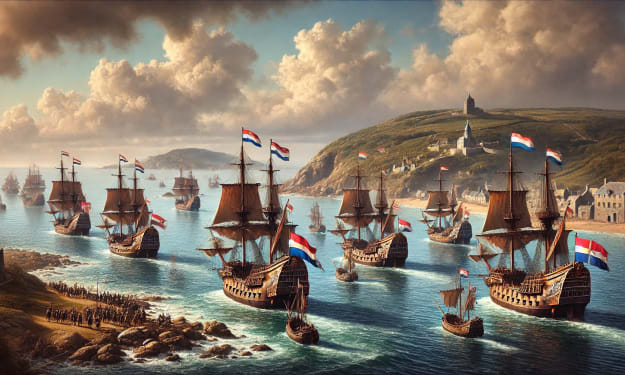
Wars throughout history have been defined by bloodshed, destruction, and political turmoil. But what if I told you there was a war that lasted for 335 years—without a single battle, casualty, or even an exchange of fire? It sounds unbelievable, yet this bizarre and largely forgotten conflict between the Netherlands and the Isles of Scilly is one of history’s strangest diplomatic oddities.
By OWOYELE JEREMIAHabout a year ago in History
The Titanic’s Sister Ship
The Tragedy That History Almost Forgot Everyone knows the story of the Titanic—an “unsinkable” ship that met its tragic fate on April 15, 1912, after striking an iceberg in the North Atlantic. The disaster became one of history’s most infamous maritime tragedies, immortalized in books, films, and documentaries. But what if I told you that Titanic had a sister ship, one that faced its own catastrophe—a disaster that has remained largely overlooked?
By OWOYELE JEREMIAHabout a year ago in History
The Lost City of Zerzura
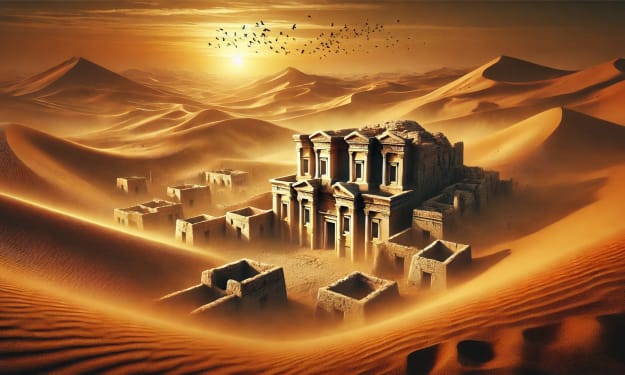
In the heart of the Sahara Desert, hidden beneath centuries of shifting sands, lies a mystery that has baffled historians, explorers, and treasure hunters for generations. The story of Zerzura, a mythical white city rumored to be filled with riches, secret knowledge, and a lost civilization, is one of the most intriguing unsolved enigmas in history. Unlike Atlantis, which exists largely in legend, Zerzura was recorded in ancient texts, mentioned by travelers, and even pursued by archaeologists—yet no one has ever found it. How could an entire city disappear overnight, leaving no trace behind?
By OWOYELE JEREMIAHabout a year ago in History
Why Was Thailand Never Colonized?
Countries across Asia have had quite a complicated relationship when it came to European powers throughout colonial times, with France colonizing what is now Laos, Cambodia, and Vietnam. Britain would control present-day India, Pakistan, Sri Lanka, Bangladesh, Malaysia, Myanmar, Singapore, Hong Kong, and Borneo. The Dutch held Indonesia, and after the Spanish left, the Philippines would become a colony of the United States. But one country would stand out, remaining fully independent during colonial times, the country of Thailand. Known as the Kingdom of Siam until 1939, there were many factors that allowed the country to continue its self-governance. One example is simply due to the geographical location of the kingdom. Situated between French Indochina and British-ruled Burma, Siam would serve as a buffer state by default. Frankly, the Europeans were almost glad to have Siam separate the two colonies, as it helped avoid the trouble of border disputes and allowed Siam to steer clear of direct conflict with the Europeans.
By Jacob Newsonabout a year ago in History
"The Might of Sparta: A Glimpse into the Spartan Army"
The Strength and Wealth of Sparta: Power, People, and Legacy Sparta, a powerful military city-state in ancient Greece, is renowned for its disciplined army, strategic skill, and stoic culture. For centuries, the Spartan civilization made a significant impact on history with its unmatched strength and strict societal hierarchy. This article examines Sparta’s military, its kingdom’s structure, its inhabitants, and the wealth that supported its supremacy. Spartan Army: The Backbone of Sparta’s Power The Spartan army was the most formidable military force in ancient Greece. Unlike other Greek city-states, Sparta placed complete emphasis on military superiority. Every male citizen received training to become a soldier from an early age. Boys entered the agoge, an intense military training program, at the age of seven. They were instructed to endure hardships, survive in the wilderness, and engage in combat with unwavering bravery. The Spartan army was arranged into lochoi (units), commanded by highly skilled leaders. They fought in a phalanx formation—a compact, disciplined square of soldiers equipped with large shields (aspis), spears (dory), and short swords (xiphos). This formation, coupled with their superior training and fearless mindset, rendered them nearly invincible on the battlefield. One of Sparta’s most renowned victories occurred at the Battle of Thermopylae ( 80 BCE), where King Leonidas and 300 Spartans held the immense Persian army at bay. Although they were ultimately defeated, their courage and strategic brilliance became legendary, epitomizing sacrifice and valor. The Spartan Kingdom: A Unique Political Structure Sparta’s political framework was different from other Greek city-states. It operated as an oligarchy with two kings, each from separate royal lineages. These kings commanded the army and performed religious ceremonies. However, they shared authority with the Gerousia (a council of elders), the Ephors (five annually elected officials), and the Apella (an assembly of male citizens). This balanced power system contributed to maintaining order and prevented any single ruler from gaining too much control. Spartan society was categorized into three primary classes: Spartiates: Full citizens who served as soldiers. Perioikoi: Free non-citizens who worked as artisans, traders, and farmers.
By Say the truth about a year ago in History
The Golden Majesty of the Mali Empire: Mansa Musa’s Legacy. AI-Generated.
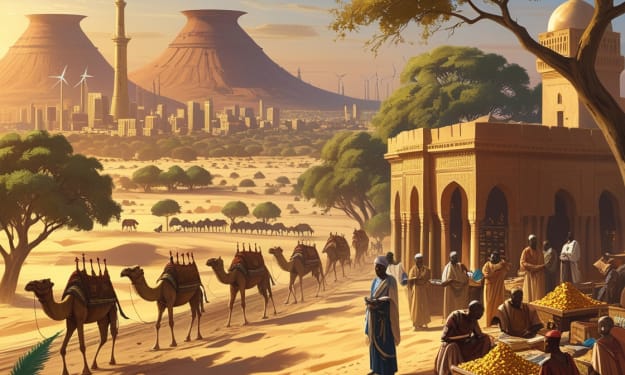
The Rich and Complex History of Africa – Part 3: The Kingdom of Mali and the Wealth of Mansa Musa Africa's past is interwoven with stories of empires that flourished through trade, resources, and culture, with the Kingdom of Mali being particularly famous. At its peak, this medieval West African empire stood as a symbol of prosperity, intellectual achievement, and cultural impact. Central to its narrative is Mansa Musa, frequently regarded as the wealthiest individual in history. The Rise of the Mali Empire The Mali Empire arose in the 13th century, expanding upon the groundwork established by the Ghana Empire. By the mid-1200s, Mali had transformed into a significant trading center, gaining control over gold mines, salt reserves, and trade routes traversing the Sahara Desert. These assets enabled Mali to position itself as a crucial participant in worldwide commerce, attracting traders from Europe, the Middle East, and further. Under King Sundiata Keita's reign, Mali consolidated several smaller kingdoms and broadened its reach. Sundiata implemented foundational advancements in agriculture, trade structures, and military organization, yet it was during Mansa Musa's rule (c. 1312–1337) that the empire attained its peak. The Wealth of Mansa Musa Mansa Musa is predominantly recognized for his fabled wealth, which has frequently been characterized as unmatched in history. His riches were derived from Mali's plentiful natural resources, especially gold and salt. Throughout his reign, Mali accounted for almost half of the world's gold production. In 132 , Mansa Musa set out on a pilgrimage (Hajj) to Mecca, a venture that would solidify his legacy globally. His procession reportedly consisted of 60,000 individuals, 80 camels laden with gold, and many soldiers, attendants, and musicians. During the journey, Mansa Musa distributed gold to those in need, constructed mosques, and generously gifted the rulers he met along the way. His kindness in Cairo triggered a brief economic crisis due to the influx of gold diminishing the local currency's value. This incident not only highlighted Mali's vast wealth but also drew the attention of the broader world. Mansa Musa's Hajj is often referenced as one of the most opulent exhibitions of wealth in history. Intellectual and Cultural Achievements Beyond its material wealth, the Mali Empire also functioned as a center of education and culture. Mansa Musa allocated substantial resources to education, establishing schools, libraries, and mosques. The city of Timbuktu, especially, became a focal point of scholarship, enticing students and academics from various parts of Africa and the Islamic world. The Sankore University in Timbuktu contained thousands of manuscripts covering topics from astronomy and medicine to law and theology. This intellectual flourishing assisted Mali in earning a reputation as a beacon of wisdom and enlightenment. The Decline of the Mali Empire Like numerous great empires, Mali ultimately encountered decline. Internal conflicts, succession issues, and outside pressures undermined its central authority. By the 15th century, the empire had splintered, and its influence diminished. Nevertheless, the heritage of Mali and Mansa Musa persists. The legends of Mansa Musa’s riches, the accomplishments of Timbuktu, and the cultural influence of the Mali Empire still inspire individuals today. The empire's narrative exemplifies Africa’s historical significance as a hub for trade, learning, and culture. Modern Reflections The story of the Mali Empire and Mansa Musa acts as a reminder of Africa’s rich and varied history. It confronts stereotypes about the continent and underscores the contributions of African civilizations to global history. Currently, initiatives are in progress to safeguard and study the manuscripts of Timbuktu and other remnants from Mali’s golden era. These efforts intend to guarantee that future generations can learn from and appreciate this extraordinary period in African history. Conclusion The Mali Empire and the wealth of Mansa Musa represent just a part of Africa's intricate historical fabric. In forthcoming installments of this series, we will examine other significant African civilizations, including the Kingdom of Zimbabwe, the Swahili city-states, and the Songhai Empire, all of which played crucial roles in shaping the continent’s history and legacy. Stay tuned for the next chapter in this exploration of Africa’s past!
By Say the truth about a year ago in History
"Africa's Wealth: From Ancient Empires to Modern Resources". AI-Generated.
The Rich and Complex History of Africa – Part 3: The Kingdom of Mali and the Wealth of Mansa Musa Africa's past is interwoven with stories of empires that flourished through trade, resources, and culture, with the Kingdom of Mali being particularly famous. At its peak, this medieval West African empire stood as a symbol of prosperity, intellectual achievement, and cultural impact. Central to its narrative is Mansa Musa, frequently regarded as the wealthiest individual in history. The Rise of the Mali Empire The Mali Empire arose in the 13th century, expanding upon the groundwork established by the Ghana Empire. By the mid-1200s, Mali had transformed into a significant trading center, gaining control over gold mines, salt reserves, and trade routes traversing the Sahara Desert. These assets enabled Mali to position itself as a crucial participant in worldwide commerce, attracting traders from Europe, the Middle East, and further. Under King Sundiata Keita's reign, Mali consolidated several smaller kingdoms and broadened its reach. Sundiata implemented foundational advancements in agriculture, trade structures, and military organization, yet it was during Mansa Musa's rule (c. 1312–1337) that the empire attained its peak. The Wealth of Mansa Musa Mansa Musa is predominantly recognized for his fabled wealth, which has frequently been characterized as unmatched in history. His riches were derived from Mali's plentiful natural resources, especially gold and salt. Throughout his reign, Mali accounted for almost half of the world's gold production. In 132 , Mansa Musa set out on a pilgrimage (Hajj) to Mecca, a venture that would solidify his legacy globally. His procession reportedly consisted of 60,000 individuals, 80 camels laden with gold, and many soldiers, attendants, and musicians. During the journey, Mansa Musa distributed gold to those in need, constructed mosques, and generously gifted the rulers he met along the way. His kindness in Cairo triggered a brief economic crisis due to the influx of gold diminishing the local currency's value. This incident not only highlighted Mali's vast wealth but also drew the attention of the broader world. Mansa Musa's Hajj is often referenced as one of the most opulent exhibitions of wealth in history. Intellectual and Cultural Achievements Beyond its material wealth, the Mali Empire also functioned as a center of education and culture. Mansa Musa allocated substantial resources to education, establishing schools, libraries, and mosques. The city of Timbuktu, especially, became a focal point of scholarship, enticing students and academics from various parts of Africa and the Islamic world. The Sankore University in Timbuktu contained thousands of manuscripts covering topics from astronomy and medicine to law and theology. This intellectual flourishing assisted Mali in earning a reputation as a beacon of wisdom and enlightenment. The Decline of the Mali Empire Like numerous great empires, Mali ultimately encountered decline. Internal conflicts, succession issues, and outside pressures undermined its central authority. By the 15th century, the empire had splintered, and its influence diminished. Nevertheless, the heritage of Mali and Mansa Musa persists. The legends of Mansa Musa’s riches, the accomplishments of Timbuktu, and the cultural influence of the Mali Empire still inspire individuals today. The empire's narrative exemplifies Africa’s historical significance as a hub for trade, learning, and culture. Modern Reflections The story of the Mali Empire and Mansa Musa acts as a reminder of Africa’s rich and varied history. It confronts stereotypes about the continent and underscores the contributions of African civilizations to global history. Currently, initiatives are in progress to safeguard and study the manuscripts of Timbuktu and other remnants from Mali’s golden era. These efforts intend to guarantee that future generations can learn from and appreciate this extraordinary period in African history.
By Say the truth about a year ago in History