Events
🪖Top 7 Submachine Guns of World War II
🪖Top 7 Submachine Guns of World War II MP40 — The Backbone of German Firepower The **MP40**, known as the Maschinenpistole 40, became one of the most iconic and widely used submachine guns of Nazi Germany during World War II. It was developed as a successor to the MP38, streamlining the design for mass production using stamped steel and bakelite, which made it cheaper and faster to manufacture. The MP40 was chambered in 9x19mm Parabellum and had a relatively low rate of fire at approximately 500–550 rounds per minute, allowing for better control in full-auto fire. It featured an open-bolt blowback action and a 32-round magazine, though the magazine was prone to jamming if not handled carefully.
By History Seekerabout a year ago in History
Perhaps the first concrete evidence that Neanderthals created art has been discovered by archaeologists.
Recently, archaeologists discovered a stone that seems to contain the earliest known complete human fingerprint. According to their research, it was created by Neanderthals, who would have shaped what appears to be an artistic representation of a facial figure from about 43,000 years ago using a red pigment on a rock.
By Francis Damiabout a year ago in History
Two worldwide ocean bands are warming at historic rates, according to scientists.
More heat is being absorbed by the oceans than ever before. These seas have warmed at a never-before-seen rate, according to researchers, and this change has an impact on marine life and weather patterns. Researchers have compared worldwide measures from 2000 to 2023 to those from the early 2000s.
By Francis Damiabout a year ago in History
The Girl Who Pointed
They no longer speak my name aloud in the village, not in the way they once did when the court echoed with my words, when they said I was brave and pure, a child with the clarity of angels. Back then, it rang: "Jennet Device, stand forward. Tell the truth, for the Lord watches and the guilty must not escape judgment." And so I stood. I was nine years old. I stood, I spoke, and I told them everything they wanted to hear. God forgive me, I gave them exactly that.
By Diane Fosterabout a year ago in History
The Wali of Swat's Financial Support to Pakistan: A Legacy of Generosity. AI-Generated.
Introduction: A Time of Challenge and Hope When Pakistan emerged as an independent state in August 1947, it faced enormous challenges. The partition of British India had created a new nation almost overnight, with limited resources, infrastructure, and financial reserves. The early days of Pakistan were marked by political instability, mass migrations, and conflicts, including the first Indo-Pak war over Kashmir.
By Zain Ul Abidin Khanabout a year ago in History
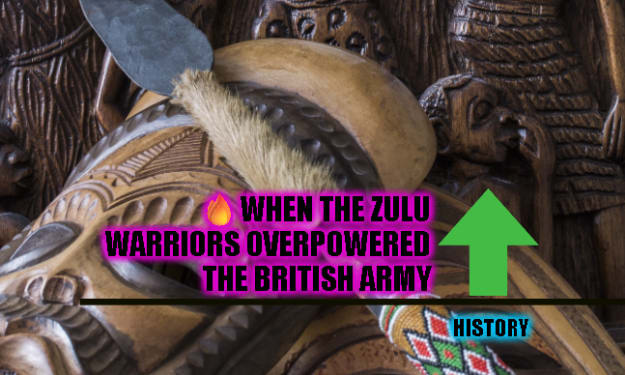
🏹🔥When the Zulu warriors overpowered the British army
🏹🔥 The Battle of Isandlwana (1879): The Zulu Triumph Over Empire 🌍 The British Invasion of Zululand In the late 19th century, the British Empire stood at the zenith of its global power. With colonies stretching across every inhabited continent, it pursued a relentless policy of expansionism underpinned by economic interest, racial ideology, and the belief in a “civilizing mission.” Southern Africa, rich in minerals and strategically located, became a key target in Britain’s imperial vision, particularly the drive to unite its various colonies—like the Cape Colony and Natal—into a single political confederation under British rule.
By History Seekerabout a year ago in History
Nana Sir: The Forgotten Prince Who Dared to Defy an Empire. AI-Generated.
I. The Adopted Heir of a Lost Throne Born in 1824 as Dhondu Pant, Nana Sahib was the adopted son of Peshwa Baji Rao II, the last official ruler of the Maratha Confederacy. When the British defeated the Marathas in the early 19th century, Baji Rao II was exiled to Bithoor, near Kanpur, with a generous pension from the East India Company.
By uzair hadiabout a year ago in History
Ukraine says at least 40 Russian warplanes hit in massive drone strikes
**Ukraine asserts that over 40 Russian warplanes were hit by massive drone strikes** Ukraine has claimed responsibility for a massive drone strike that allegedly damaged or destroyed more than 40 Russian warplanes across several key airbases, escalating its military campaign dramatically. Officials in Ukraine say that the attack, which took place in the early morning hours of June 1, 2025, was one of the largest and most successful drone operations since the war with Russia began. The operation, codenamed "Spider Web," targeted several Russian airfields, including Olenya in Murmansk Oblast, Diaghilevo in Ryazan Oblast, Belaya in Irkutsk Oblast, and Ivanovo Severny in Ivanovo Oblast, according to Ukraine's Security Service (SBU). Strategic bombers like the Tu-95 and Tu-22M3 as well as the A-50 airborne early warning aircraft are known to be housed at these bases. Ukrainian sources shared footage that showed several aircraft clearly engulfed in flames as thick black smoke rose from some of the affected bases. While Russia has acknowledged that drone attacks have occurred in specific locations, the country has yet to provide an official count of the damage. Access restrictions and ongoing military activity limit independent verification. The fact that this operation was the result of more than a year of planning and development has been emphasized by the Ukrainian government. In order to circumvent radar detection and air defenses, the reportedly used drones were launched from concealed mobile platforms inside Russian territory. Considering the disparity in long-range missile capabilities between the two nations, this strategy represents a significant shift in Ukraine's military tactics. According to Ukrainian officials, the operation involved the simultaneous deployment of more than 70 drones. demonstrating Kyiv's growing reliance on domestically produced weapons, many of these were indigenously developed systems. This, according to analysts, is a direct response to Ukraine's urgent need to expand its strategic reach and restrictions on Western weapons deliveries. Russia used more than 470 drones and a number of missiles to launch its own massive assault on Ukrainian territory in response to the drone attack. A Ukrainian military training facility was hit by one of these missiles, killing at least 12 soldiers and injuring more than 60 others. The tit-for-tat strikes are a significant step up in drone warfare, a strategy that is increasingly defining this contemporary conflict. The drone operation is viewed as a strategic and symbolic success by the Ukrainian government. Ukraine intends to challenge the concept of safe havens far from the front lines and hinder Russia's ability to launch aerial attacks against Ukrainian infrastructure by striking deeply into Russian territory. In the near future, Russia's capacity for coordinated missile strikes and aerial intelligence gathering may be diminished by damaging strategic bombers and surveillance aircraft. In contrast, the strikes by drones occur just a few days prior to the planned international peace talks in Istanbul. The international community is keeping a close eye on the negotiations because Ukraine has confirmed its participation. The timing of such a well-publicized attack raises concerns regarding its potential to influence diplomatic discussions or international perceptions of Ukraine's military resolve. Experts warn that while the attack demonstrates Ukraine's inventiveness and tenacity, it may also elicit harsh Russian retaliation. Nevertheless, the operation highlights a significant shift in contemporary warfare, in which battlefield dynamics are increasingly altered by drones and asymmetric strategies. The skies over Ukraine and Russia may become even more tense as both nations invest in unmanned aerial capabilities. Long-range drone strike technologies could continue to advance, not just in Ukraine but around the world, if the operation in Ukraine is successful. Drone warfare may now be the central battleground in a war that has already reshaped the geopolitical landscape of Eastern Europe with no end in sight and both sides indicating firm military resolve.
By GLOBAL NEWSabout a year ago in History
About NASA
Over the past six decades, NASA has pioneered the final frontier. Since its inception in 1958, the National Aeronautics and Space Administration, better known as NASA, has been at the forefront of human space exploration, scientific discovery, and technological innovation. From sending the first humans to the Moon to deploying telescopes that peer deep into the cosmos, NASA’s contributions have fundamentally transformed our understanding of the universe and our place within it.
By Joni Voktaabout a year ago in History