Discoveries
Tesla and Samsung Sign $16.5 Billion Deal to Produce Advanced AI Chips.
What the Deal Involves This $16.5 billion agreement centers around the production of Tesla's next-generation AI chips, which are essential for the development of self-driving cars, robotics, and other advanced technologies. These chips, often referred to as neural processing units (NPUs), are designed to process massive amounts of data in real-time—something critical for Tesla’s Autopilot and Full Self-Driving (FSD) systems.
By Active USA about a year ago in History
Japan’s Three Great Shrines You Must Visit: Ise, Izumo, and Sumiyoshi
🏯 What Are Japan’s “Three Great Shrines”? In Shinto belief, certain places are considered especially sacred—so much so that they’re said to house the very presence of deities. Among thousands of shrines across Japan, three stand above the rest in spiritual importance and mythological grandeur:
By Takashi Nagayaabout a year ago in History
"The War Australia Lost to Giant Birds – You Won’t Believe This!"
In the vast open landscapes of prehistoric Australia, long before Wi-Fi, lattes, and reality TV, a different kind of drama unfolded—one that would be laughed off today if it weren’t terrifyingly true. Imagine this: You’re a human, just trying to survive—hunting, gathering, minding your own Stone Age business—and out of nowhere, a three-meter-tall bird with thunder thighs and rage in its eyes comes charging at you. Not exactly a peaceful walk in the bush, right? 😳 --- This wasn’t Jurassic Park, but it sure felt like it. The creature was called Genyornis newtoni, a now-extinct, giant flightless bird. Weighing over 500 pounds and faster than your neighborhood scooter boy, Genyornis was not something you’d want to challenge to a race… or a fight. For years, scientists believed these birds vanished naturally. But surprise, surprise... 🕵️♂️ New evidence showed something different. --- Burned eggshells—yes, eggshells—discovered in the sand dunes of Australia told a deliciously dark tale. Turns out, our early ancestors had a taste for omelets the size of pizza boxes 🍳. Stone Age humans started raiding Genyornis nests for their massive eggs, cracking them open, roasting them, and probably saying, “Yum! This’ll feed the tribe for a week!” One can only imagine a caveman, proudly holding an egg larger than his head, yelling, “Breakfast is served!” --- But here’s the plot twist... Genyornis wasn’t having it. At some point, the birds retaliated. The peaceful foragers turned aggressive defenders. It wasn’t just a meal anymore—it was a war. Claws scratched. Beaks jabbed. And humans? They bled. A lot. 💀 It’s said that the battle between man and bird got so fierce, early tribes may have started fearing the sight of feathers. Imagine explaining that to your caveman therapist: "I have trauma… from eggs." --- Over time, though, humans had one powerful weapon: fire. Not just for cooking, but for driving the birds out. The aggressive foraging, the nest raiding, the torch-wielding attacks—it all piled up. And eventually… Genyornis went extinct. 🕊️❌ --- Now pause. Let that sink in. We made a bird—basically a murder ostrich—go extinct... all for some prehistoric scrambled eggs. Even chickens today are probably whispering, “Don’t mess with humans—they wiped out our cousins over brunch.” --- But here’s what makes it even more fascinating (and hilarious): We now know more about these events from burnt eggshells than ancient scrolls or cave art. Somewhere out there, a Genyornis mother probably saw her nest gone, screamed in bird language, “Again?! These bipeds are savages!” --- The big takeaway? Humans have always been food-driven. 🍗 And birds? Well… they’ve always been judging us from the trees. So the next time you see a chicken giving you side-eye 👀, just know—its ancestors may have once chased your ancestors across the Outback. --- History is weird. Feathery. Furious. And sometimes, fried. 🍳🔥 --- The End.When Giant Birds Ruled… and Lost to Breakfast 🥚🔥 --- Long ago in Australia—way before selfies and social media—humans found themselves up against a giant feathery enemy: Genyornis newtoni. This wasn’t your average bird. This beast stood 3 meters tall, weighed more than a motorbike, and looked like an angry ostrich on steroids. 💪🐦 At first, humans didn’t mess with them. But one day, someone spotted a giant egg, cracked it open, and made the world’s most legendary omelet. 🍳 And just like that, the war began. --- The birds weren’t happy. Imagine waking up to find someone stealing your unborn kids and cooking them over a fire 😤🔥 That’s basically what happened. Genyornis started attacking, defending their nests like feathered warriors. Humans fought back—with fire, spears, and appetite. Because let's be honest—if an egg can feed a whole family, you're not walking away from it hungry. 😂 --- Scientists today found burnt eggshells in the sand, proving the humans weren’t just taking eggs—they were roasting them. Eggshells told a story more dramatic than Netflix. Slowly but surely, humans won. And Genyornis? Wiped off the map. --- So next time you bite into a boiled egg, remember: There was once a bird that tried to fight back—and lost. All for breakfast. ☕🍞🥚 --- The End. Or should we say... the last cluck. 🐣💀
By Leya kirsan official about a year ago in History
Top 6 Most Beautiful Places for Tour in the World.
1. Santorini, Greece Santorini is one of the most iconic travel destinations in the world. Located in the Aegean Sea, this Greek island is famous for its white-washed houses with blue domes, stunning sunsets, and clear blue waters. The town of Oia offers romantic views, luxury hotels, and delicious Mediterranean cuisine. Tourists can also visit ancient ruins, go sailing, or relax on volcanic sand beaches. Santorini is perfect for couples, honeymooners, and photographers who love beautiful landscapes.
By Active USA about a year ago in History
Power, Pride, and Pop Stardom: Inside Drake’s Decade-Long Feuds with The Weeknd and Kendrick Lamar
Written by: Mack Welch When Abel Tesfaye, better known as The Weeknd, first emerged in Toronto’s underground music scene, he quickly became a mystery with mass appeal. His early tracks circulated without a face, and yet they generated intense industry buzz. Everyone wanted to know: Who was this elusive artist redefining R&B?
By Lynn Myersabout a year ago in History
Donald Trump, A Controversial and Influential Figure in American Politics.
Donald John Trump is one of the most well-known, controversial, and influential figures in modern American history. Born on June 14, 1946, in Queens, New York City, Trump became famous long before he entered politics. He made his mark in real estate, business, entertainment, and later shocked the world by becoming the 45th President of the United States.
By Tariq jamilabout a year ago in History
Bertha Benz: The Woman Who Drove the Future
In the tapestry of history woven with inventions and revolutions, some stories shine brighter not because of loud triumphs, but due to quiet courage. One such tale is that of Bertha Benz, the woman who, in 1888, dared to do the unimaginable: she drove a car over 100 kilometers at a time when people barely understood what a car was. This is the story of determination, intelligence, and a woman whose name deserves to stand beside the great pioneers of the world. --- The Birth of a Dream Bertha Benz was born Bertha Cäcilie Ringer on May 3, 1849, in Pforzheim, Germany. She grew up in a well-educated and financially stable family, something not common for women of that time. Her curiosity for the world, combined with her keen intellect, set her apart from many young women of her generation. In 1872, she married Carl Benz, a passionate engineer obsessed with machines, engines, and most of all—creating a horseless carriage. At a time when most women had no say in technical or business matters, Bertha not only supported Carl emotionally but also financially. In fact, it was her dowry that funded Carl Benz's work on the Motorwagen, the world’s first automobile. But while Carl was a genius engineer, he lacked confidence in promoting his invention. The Motorwagen was a revolutionary creation, but it remained hidden in their workshop, away from public eyes. Bertha knew it needed more than nuts, bolts, and engines—it needed proof that it could work in the real world. And so, one quiet summer morning, without telling her husband, Bertha decided to show the world what this "horseless carriage" could truly do. --- The Journey That Changed Everything On August 5, 1888, Bertha, then 39 years old, set out on a daring mission. Accompanied by her two teenage sons, Eugen and Richard, she left her home in Mannheim and headed toward her mother’s house in Pforzheim—a journey of about 106 kilometers (66 miles). But this was no ordinary journey. There were no gas stations, no repair shops, no maps, and no paved roads. The vehicle—the Benz Patent-Motorwagen—was experimental, prone to breakdowns, and completely unfamiliar to anyone who saw it. Most people had never even heard of a car, let alone seen one in action. Bertha’s goal was simple yet revolutionary: to prove the Motorwagen could be trusted, driven, and used by everyday people. --- Overcoming Obstacles, One Turn at a Time From the moment the journey began, challenges followed. Fuel for the car—called ligroin, a type of petroleum—wasn't sold in stores. It was only available in pharmacies. The first “refueling station” in automotive history? A pharmacy in the town of Wiesloch, where Bertha stopped and bought ligroin, making Wiesloch the world’s first gas station. The car faced mechanical issues. When a fuel pipe clogged, Bertha used a hairpin to clear it. When insulation on a wire broke, she fixed it using her garter. When the car’s brakes wore down, she visited a blacksmith and had leather brake pads made—introducing the first brake lining in automotive history. People in villages stared in awe. Some were frightened. Rumors of a “devil’s chariot” spread, as the loud, smoke-puffing machine passed through cobbled streets. But Bertha pressed on. What kept her going? A clear vision. She knew that the world was standing at the edge of a new era, and someone had to take the first step. She wasn’t just driving a car—she was driving change. --- A Triumph of Innovation and Grit After more than 12 hours on the road, Bertha and her sons finally arrived in Pforzheim. The message was clear: the automobile worked, and it could go long distances. This was no longer a prototype—it was a real, functioning mode of transportation. Carl Benz was shocked—and proud. Bertha’s journey gave him the confidence he needed to move forward. He refined the Motorwagen, adding new improvements based on her feedback from the road. The event brought massive attention. People began to believe in the concept of the automobile. Orders followed, and the Benz company laid the foundation for what would become Mercedes-Benz, one of the most iconic car manufacturers in the world. --- A Legacy Too Long Overlooked For decades, Carl Benz was celebrated as the inventor of the car. But the role Bertha played was rarely mentioned in history books. Only recently has the world begun to recognize her as a true pioneer of mobility. Her journey is now commemorated through the Bertha Benz Memorial Route, a scenic route through southwestern Germany that traces her historic path. It reminds us that while Carl invented the car, Bertha proved its worth. In 2011, she was finally honored in the German Industrial Hall of Fame. Today, she’s considered a symbol of vision, bravery, and the transformative power of belief in one’s dreams. --- Why Bertha Benz Still Matters Today Bertha’s story is not just about cars or mechanics—it’s about challenging norms. In a time when women weren’t even allowed to vote, she drove through towns, handled mechanical breakdowns, and proved her intellect without permission or applause. She is a role model for entrepreneurs, engineers, dreamers, and especially women around the world who are told “you can’t” or “you shouldn’t.” Her story is also a reminder that great inventions need not only creators—but champions. People who believe in an idea, nurture it, and push it into the light, even when the world isn’t ready. --- Final Thoughts: Driving into the Future with the Past When Bertha Benz took her secret journey in 1888, she probably had no idea she was making history. She simply believed in her husband, her family, and the machine they had built. She didn’t wait for permission. She didn’t wait for the “right time.” She just started the engine and went. And in doing so, she didn’t just change her family’s destiny—she helped create an industry that would transform the modern world. The next time you step into a car, remember the woman who took the wheel before anyone else dared. Her name was Bertha Benz, and she drove the future.
By Hasbanullahabout a year ago in History
"Pyramids of Egypt: Greatness Hidden in the Sand"
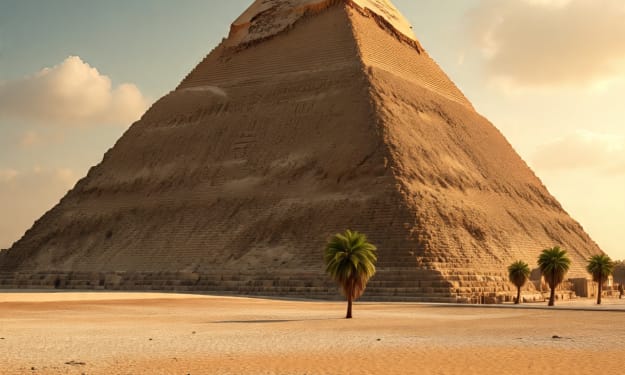
There are some places in the world that hold centuries of stories, mysteries, and wonders within them. The Pyramids of Egypt are among those remarkable sites. These are not just buildings; they are symbols of human history, intellect, knowledge, and faith that have always fascinated and inspired the world.
By NIAZ Muhammadabout a year ago in History
The Anunnaki and the Dawn of Humanity: A Cosmic Origin Story
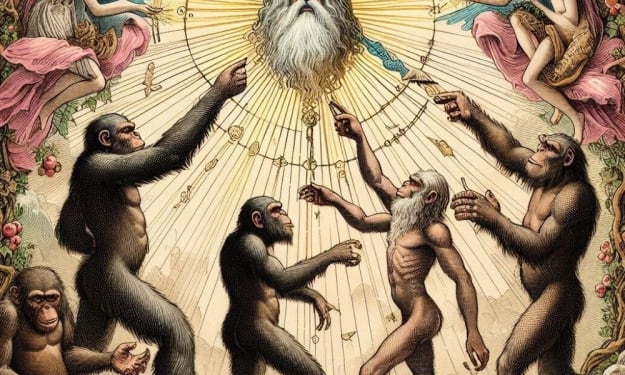
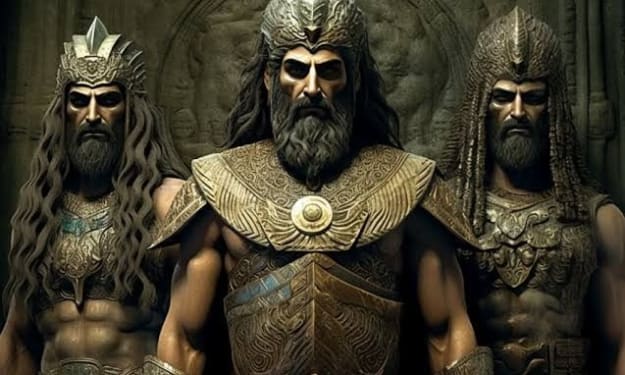
You know those moments when you stumble across something so wild it makes your head spin? Last night, I was flipping through The Epic of Humanity-yeah, that book you and Matt Lroy poured your souls into-and I couldn’t put it down. It’s like a cosmic puzzle that keeps you up past midnight, piecing together clues from ancient tablets and star systems. The way you broke down the Anunnaki’s story? Mind-blowing. It’s not just history; it’s a saga that feels like it’s whispering secrets from the edge of the universe. So, let’s dive into this, because the idea that gods, demigods, and humans all got tangled up in a 450,000-year-old drama? That’s the kind of thing that makes you wonder what else we’ve forgotten about our own story.
By KWAO LEARNER WINFREDabout a year ago in History