Discoveries
Ancient Origins
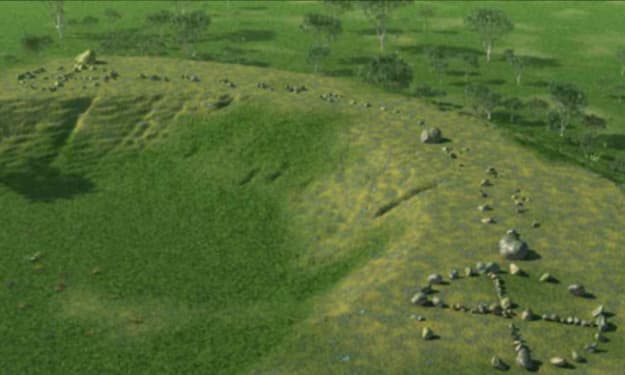
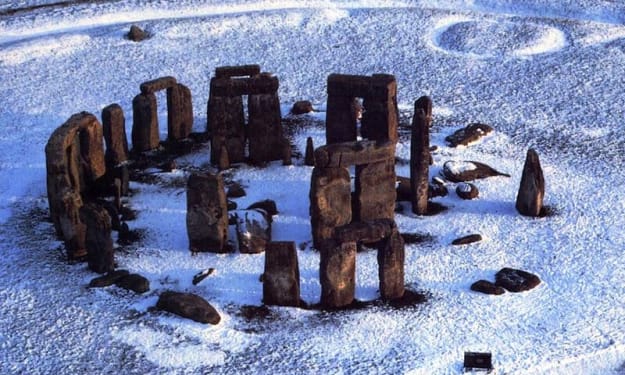
According to Frederic Slater, who was the President of the Australian Archaeological and Education Research Society, an Original stone arrangement he and a colleague were investigating throughout 1939, since assumed to be lost for the last 63 years, is “the Stonehenge of Australia.” As impressive as this complex of stone arrangements was, and will be again, it is much more than a collection of rocks, signs and symbols positioned on a mound. According to Slater, “the mound is one of the oldest; I should say the oldest, forms of temples in the world and dates back to the … advent of first man.” Not only was the mound the first temple, the narrative and wisdom chronicled is as profound as it is sublime, so much so that Slater claimed it formed “the basis of all knowledge, all science, all history and all forms of writing.”
By Kamusiime Comrade3 years ago in History
Abbas bin Firnas: The Father of Medieval Aviation
In the annals of history, there are those whose names are forever etched in the fabric of human achievement. Among them is Abbas bin Firnas, a visionary inventor, and daring pioneer. Born in the city of Ronda, Spain, during the 9th century, Abbas bin Firnas possessed an insatiable curiosity and a relentless desire to push the boundaries of human potential.
By Akbar Denali3 years ago in History
Unsolved Mysteries of the World and the Universe That Defy Explanation...
Welcome back to another adventure as we explore ten fascinating mysteries of the world and the universe. Get ready to be amazed and enthralled as we learn the answers to questions that have perplexed historians, scientists, and astronomers alike. These are some of our favourite topics to discuss, and if you have any requests for future ones, just let us know in the comments below.
By Francis Dami3 years ago in History
Rediscovering the Legacy: A Contemporary Review of the Sokoto Caliphate
Introduction: The Sokoto Caliphate, established by Usman dan Fodio in the early 19th century, holds immense historical significance in West Africa. Its profound impact on politics, culture, and Islam in the region cannot be overstated. This review aims to explore the rich history of the Sokoto Caliphate while offering a fresh perspective on its relevance in the modern era.
By Delightful Bliss3 years ago in History
The Giant of Africa
Nigeria has a rich and diverse history, shaped by various civilizations, kingdoms, and colonial influences. Nigerian culture reflects this diversity, with over 250 ethnic groups and more than 500 languages spoken in the country. Let's explore the history of Nigeria and Nigerian life and culture. Ancient Civilizations: Nigeria's history dates back to ancient times. The Nok civilization, which flourished around 1500 BCE to 200 CE, is one of the earliest known complex societies in West Africa. They are famous for their intricate terracotta sculptures. Kingdoms and Empires: From the 9th to the 19th centuries, several powerful kingdoms and empires emerged in different parts of Nigeria. Notable among them were the Kanem-Bornu Empire in the northeast, the Hausa kingdoms in the north, the Benin Empire in the south, and the Oyo Empire in the southwest. These kingdoms thrived in trade, agriculture, and artistic achievements. Transatlantic Slave Trade: Nigeria, like many other African nations, was affected by the transatlantic slave trade, which lasted from the 16th to the 19th century. Millions of Africans, including Nigerians, were captured, sold, and forcibly transported across the Atlantic to work as slaves in the Americas. Colonial Era: In the late 19th century, Nigeria came under the influence of European powers. The British established control over different regions and gradually extended their authority over the entire territory. In 1914, Nigeria was amalgamated into one colony called the "Colony and Protectorate of Nigeria." Independence and Post-Colonial Era: Nigeria gained independence from British colonial rule on October 1, 1960. The country adopted a federal system with three regions—Northern, Western, and Eastern Nigeria—and later expanded to include additional states. However, Nigeria has experienced periods of political instability, military coups, and a civil war (1967-1970) during which the breakaway state of Biafra fought for independence. Contemporary Nigeria: Today, Nigeria is Africa's most populous country and one of its largest economies. It is known for its rich cultural heritage, diverse music and arts scene, and vibrant film industry, commonly referred to as Nollywood. Nigeria is also a significant producer of oil and plays a significant role in the African Union and other international organizations. Nigerian Life and Culture: Nigerian culture is characterized by its ethnic and linguistic diversity. The country's major ethnic groups include the Hausa, Yoruba, Igbo, and numerous smaller tribes. Each group has its own unique customs, traditions, languages, and cuisines. Nigerian cuisine is diverse and often includes staple foods like rice, yam, cassava, and plantains, along with various soups, stews, and sauces. Popular dishes include jollof rice, pounded yam, egusi soup, and suya (spiced grilled meat). Music and dance play a significant role in Nigerian culture. The country has produced internationally recognized musicians in various genres, including Afrobeat (popularized by Fela Kuti), highlife, juju, gospel, hip hop, and more. Nigerian fashion, literature, and visual arts also contribute to the vibrant cultural landscape. Religion in Nigeria is diverse, with Islam and Christianity being the two dominant faiths. Traditional African religions are also practiced, particularly in rural areas. Nigerian society places great importance on family and community, with extended family networks playing a crucial role in social life. Despite the challenges Nigeria faces, such as poverty, corruption, and security concerns, Nigerians are known for their resilience, entrepreneurial spirit, and vibrant cultural expressions, making Nigeria a dynamic and culturally rich nation.
By RAPHAEL AKINNUSI3 years ago in History
Significant NASCAR Chicago street closures take effect as race nears
Title: Significant Street Closures in Chicago as NASCAR Race Nears Introduction: As the anticipation builds for the highly-anticipated NASCAR race in Chicago, the city is gearing up to host this thrilling event. With thousands of race enthusiasts expected to flock to the Windy City, significant street closures have been implemented to ensure a smooth and safe experience for both participants and spectators. In this article, we will explore the key street closures that will affect the city and its residents as the race nears.
By Sunita Patel3 years ago in History
Black man’s freedom . Content Warning.
In a small town called Libertyville, there lived a determined young man named Marcus. Marcus was a black man who grew up in a time when racial segregation was still prevalent, and opportunities for people of color were limited. Despite the challenges he faced, Marcus had a burning desire for freedom and equality.
By Precious Kenneth3 years ago in History
Modern America: Tracing the Legacy of the Boston Tea Party
Presentation: The Boston Casual get-together, which occurred on December 16, 1773, was a vital turning point in American history. It represented the pilgrims' discontent with English rule and their battle for freedom. Throughout the long term, the soul of the Boston Casual get-together has been summoned and associated with different occasions and developments in present day America. In this exposition, we will investigate the manners by which present day America connects with the Boston Casual get-together, featuring its persevering through impact and the proceeded with reverberation of its beliefs.
By Prasanta Mohanty3 years ago in History
Madam C. J. Walker
Madam C. J. Walker (1867-1919) was “the first Black woman millionaire in America” and made her fortune thanks to her homemade line of hair care products for Black women. Born Sarah Breedlove to parents who had been enslaved, she was inspired to create her hair products after an experience with hair loss, which led to the creation of the “Walker system” of hair care.
By Precious Kenneth3 years ago in History