Discoveries
The Great History of Time: From Cosmic Mysteries to Precise Measurement
Introduction Time, the mysterious force that governs our existence, has been a subject of fascination and contemplation for humanity throughout history. From the early philosophical musings of ancient civilizations to the cutting-edge scientific advancements of the modern era, the concept of time has evolved, shaping cultures, religions, and scientific theories. This journey through the great history of time takes us on a captivating voyage, exploring how our understanding of time has transformed over the centuries and the pivotal discoveries that have propelled us forward.
By Atharul Islam Iram3 years ago in History
Elon Musk: The Visionary Entrepreneur Revolutionizing the World
Introduction: Elon Musk, a name synonymous with innovation and audacity, has emerged as one of the most influential figures of the 21st century. This comprehensive SEO content provides an insightful biography of Elon Musk, delving into his early life, groundbreaking ventures, and remarkable achievements. From co-founding PayPal to spearheading Tesla and SpaceX, Musk's visionary approach has transformed multiple industries, leaving an indelible mark on the world.
By Santhoshkumar3 years ago in History
Revealing the Secrets of Giant Planet Formation
A breathtaking new image of a young star named V960 Mon, captured by European Southern Observatory (ESO) telescopes in northern Chile, has provided groundbreaking insights into the formation of massive planets like Jupiter. Situated more than 5,000 light-years away in the Monoceros constellation, V960 Mon is seen at the center of the image, surrounded by dusty material with the potential to form planets. This discovery marks a significant milestone in our understanding of planet formation and offers tantalizing clues about the birth of gas giant planets like Jupiter. The aim of this article is to delve into the details of this awe-inspiring revelation, exploring how the dusty clumps were found, the significance of the discovery, and the mechanisms by which giant planets are believed to form.
By Random Things 3 years ago in History
The Apollo 11 mission
On July 20, 1969, astronauts Neil Armstrong and Edwin "Buzz" Aldrin entered the surface of the moon aboard the Apollo 11 mission, a historic event that left the world in awe and awe. The Apollo 11 mission was the culmination of a decade of intense effort, rivalry, and technological advancement between the United States and the Soviet Union in the race to space. In this article, we'll examine Apollo 11's exciting journey to the moon, identify key players and challenges, and explore the legacy of this extraordinary historical event.
By Senne Wauters3 years ago in History
The Heart of Sheriff Shepherd
Once upon a time, in the small town of Harmony Ville, lived a dedicated lawman named Sheriff Jack Shepherd. He was a pillar of the community, known for his unwavering sense of justice and compassion. Under his watchful eye, the town remained safe and harmonious, and the people revered him as a guardian angel.
By ogbondeminu temidayo3 years ago in History
THE TRUTH ABOUT TITANIC SINKING HAS BEEN REVEALED
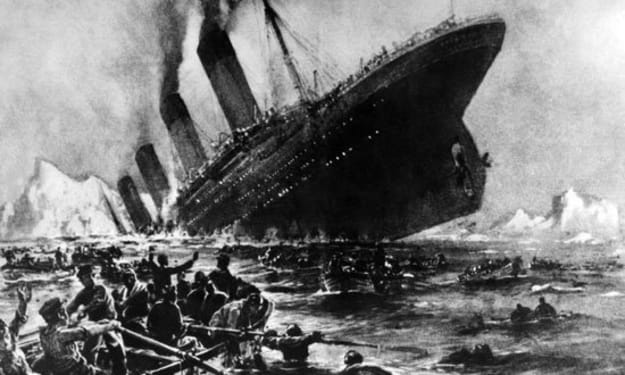
The Titanic Sinking's real cause is ultimately revealed by scientists. RMS Titanic suffered a horrific disaster on April 14, 1912, at 11:40 p.m. Three hours later, at 2:20 a.m. on April 15, the largest ship of its era had totally vanished beneath the ice-cold surface of the Atlantic Ocean. More than two-thirds of those aboard the Titanic perished along with it as it sank to the bottom of the ocean. The theory that an iceberg the ship collided with was to blame for this terrible disaster and the high death toll has been refuted by scientists in light of their most recent findings. I'll give you the complete narrative in this one, which is 882 feet 9 inches long, 92 feet broad, and 175 feet tall, with a usable volume of 46,000 328 tons. It has been buried for more than 100 years. People could go for miles along the Titanic's numerous corridors and decks, and the ship's officers took more than two weeks to learn how to navigate this enormous structure. The Titanic appeared to be invincible. The Titanic's four enormous smokestacks, each weighing 60 tons and rising 81.5 feet above the deck, were necessary to prevent the passengers from being covered in the daily 100 tons of soot that were blown off. The smokestacks were positioned at a 30-degree angle to make them appear even more astounding and imposing. The ship's construction cost 7.5 million dollars, which, when adjusted for inflation and modern exchange rates, works out to 166 million dollars in 2016. This is surprisingly less than the $200 million that was spent on making the Titanic movie in 1997. 3,000 men were hired by Harland and Wolff shipyard to construct the ship, but even with a massive labor force working six days a week beginning at 6:00 a.m., it still took 26 months to finish the enormous task. It was a difficult and hazardous job to imagine working at the top of a 20-story building without safety ropes, but these people needed money to support their families. The builders made 2 pounds per week, which may not sound like much now, but it was a competitive wage back then. Unfortunately, 8 people died and 246 were injured during the building process, so it's really difficult to imagine that such a complicated mechanism with all the work, effort, and money spent on its creation could possibly exist. Well, recent discoveries lead us to assume that fire, not ice, was the catastrophe's primary cause. Journalist Sonam Maloney has been studying the fate of the Titanic for more than 30 years. It was him who discovered a huge 30-feet long black spot on the hull of the ship; he noticed it after examining a photo taken before Titanic's departure. The journalist got hold of an album of previously unpublished photographs that showed the construction of the ship and the preparations for her first and last journey. The fire had to have been burning for three weeks at a very high temperature before somebody noticed it. Metallurgy experts are sure that such conditions could have easily weakened the metal reducing its strength by as much as 75 percen, that's why the iceberg didn't have any problems tearing a hole in the side of the ship if not for the fire it would have been impossible but the fact that the iceberg hit exactly the spot with the compromised metal is one of the incredible links in the chain of the Titanic's tragic. What-ifs the management of the project knew about the fire, and the fact that the ship shouldn't have set off on that fateful voyage, but it would have meant bankruptcy for the ship's owners the thing is that at the time miners all over the country were on strike so there was no coal to sustain the Titanic, but the tickets had already been sold out and other ships had been cancelled since everybody wanted to be the first to sail on the largest ship known to mankind, that's why the owners of the Titanic bought all the coal they could find and even the call from other ships canceling the trip seemed out of the question. So, to conceal the truth, the ship was turned in such a way that the marks from the fire faced away from the docks toward the sea therefore the passengers couldn't see them thus the journey began the interior of the Titanic was based on that at the Ritz Hotel in London, the grand staircase went down seven out of the ten decks on the ship. It was decorated with paintings bronze cherubs and oak paneling, the facilities for the first-class passengers included a swimming pool with heated water, a Turkish bath, a gym, a squash court and a beauty salon, ladies could even order a stylist to help them get ready for dinner. They had an onboard newspaper called the Atlantic daily bulletin, there was even a special place for first-class passenger's dogs and pets were fed and taken for walks and could even be trained during the voyage. The meals for the first class included 13 courses each with its own wine there, were a big occasion lasting about five hours, there were one and a half thousand bottles of wine 20,000 bottles of beer and 8,000 cigars yet there were no binoculars, why is this fact worth mentioning because having binoculars could have saved the Titanic. Here is another tragic coincidence in the chain of unfortunate events there were no sonar systems in those times so to detect threats ahead of a liner, there are special people kept to watch using binoculars but the binoculars on the Titanic had been locked away in a special compartment the only person with the key to the locker is the second officer "David Blair" who was replaced at the last minute. He was in such a hurry to leave the ship that he forgot to hand the key over to his replacement this fateful forgetfulness was discovered only three days later when the ship was already at sea if the crew had gotten the binoculars they would have noticed the iceberg earlier and would have just enough time to avoid the crash, perhaps they could have also avoided the crash if the ship hadn't been breaking the speed limit they were falling behind schedule and this was unacceptable as it could ruin the Titanic's reputation that's why the ship was moving at a speed much higher than it was designed for. Another criminal negligence was connected with the lifeboats in order to contain all the people on board, the Titanic needed about sixty lifeboats. The chief designer "Alexander Carlyle" planned to equip the ship with only 48 boats but eventually the number was reduced even more to 20, this was done purely for cosmetic reasons since the deck looked too cluttered with 48 these 20 boats could seat only 1/3 of all the people on the ship. Surprisingly such a hugely insufficient amount of lifeboats was technically legal, because according to the laws of that time, the number of boats depended not on the number of passengers but on the tonnage of a ship. What's more at the time of the Titanic's construction lifeboat drills were standard practice on ocean liners, this way the crew could prepare passengers for an emergency should it occur but this type of drill never took place on the Titanic Captain Edward John Smith canceled the drill scheduled on the morning of the day the Titanic sank, nobody knows the reasons for his decision especially considering the fact that other ships had been passing on warnings about ice in the water in that vicinity, perhaps this is why it took the crew over a half an hour to launch the lifeboats instead of the standard 10 minutes, some people also blame captain Smith for allowing the first batch of lifeboats to leave half empty the first boat with 65 seats contained just 27 passengers why weren't they packed full, in the beginning people were reluctant to leave the ship and didn't realize that they were in great danger. In 2012 researchers found out that Captain Smith had failed his first exam in navigation eventually he passed but who knows maybe this too played its own role in the disaster. As the Titanic was sinking the crew sent several distress signals however a ship sailing near by the California ignored the emergency flare shot in the sky, the captain of the Californian later lost his job after this fact came out but modern researchers have managed to prove his innocence. Well, better late than never, the reason nobody noticed the signals from the Titanic could be due to the phenomenon of light refraction when layers of cold air are positioned below layers of warmer air, it causes thermal inversion thermal inversion in turn leads to the light refracting abnormally, in short, all this creates mirages and such mirages had been recorded by several other ships sailing in that area. Historian Tim Moulton is also convinced that light refraction that night could be the reason why the lookouts missed the iceberg. Completely criminal negligence tragic and unfortunate chain of coincidences, fire or ice, whatever it was it took the lives of hundreds of people and still keeps the minds of scientists busy to this day. What theory about the catastrophe do you believe. share your opinion in the comments below and subscribe to my page for free. If I have opened your eyes to one of the mysteries you've been puzzling over, give the story a like. If this story gets 1,000 likes, I will tell you about the mystery of the Mariana Trench. To see more mind-boggling stories and in a more interestingly readable way make sure to subscribe and cling to my page thanks.
By Moses Chukwuma3 years ago in History
5 greatest scientific discoveries
Unquestionably, the past ten years have been among the most productive in terms of scientific discovery ever. Scholars from all fields have examined theories, discovered evidence, and traveled to locations that have caused us to reconsider how well we understand not only our own planets but also the entire universe. It was also the decade in which we began to comprehend one of the biggest problems that humanity has ever faced. Pluto despite having been unceremoniously downgraded from being a fully fledged planet in 2006 that year also saw the launch of the New Horizons spacecraft that was destined to travel to the farthest reaches of our solar system to study the dwarf planet it finally reached its destination in July of 2015 in the images and data that were sent back were astonishing far from being the boring frozen rock that some had expected it was found to have moving glaciers floating ice mountains and a huge frozen sea made of solid nitrogen the ice is constantly moving Arbit at a slow rates because it is warmed by the pressure above it which in turn causes it to rise the constant replenishment of the top layer of ice creates a surface structures that no one had expected and that has given a new introduction and understanding to what happens on the mysterious dwarf planets at the edge of our solar system number four the Higgs bosons it took the construction of the world's largest machine at a cost of just under five billion dollars but in 2012 it was finally announced that the mysterious Higgs a Bolton also known as the god particle have been discovered at the Large Hadron Collider in CERN Switzerland the particle had first been theorized in 1964 and is one of the most influential pieces of the subatomic world the reason that it's so important is that the standard model of physics which includes familiar particles like electrons and protons and um from such as muons and quarks doesn't actually explain why objects have mass the elusive Higgs boson particle, which exists in the Higgs field and is responsible for mass owing to its interaction with other particles, is the solution, His finding confirmed the last piece of the standard model of physics, and now researchers may use the LHC to start looking into even crazier phenomena number three. The first Kepler probe was launched in 2009 and was used to study distant stars and measure the amount of light they emit flu. For thousands of years, people have gazed up at the sky wondering what's up there. As astronomical instruments were developed, we learned that there are countless stars in the universe and that there are other planets in our own solar system. However, it was impossible to learn how common it is for planets to orbit stars. number three the world's climates throughout the Earth's history the climate has changed drastically there have been periods of extreme heat and extreme cold and there's no doubt that things are noticeably changing again during our lifetimes what's different this time though is that the changes are largely due to human behavior something that became clearer than ever in the last decade and we've begun to understand the extent to how it's affecting the planet in 2012 400 billion tons of ice was lost from Greenland and more than 250 two billion tons of ice has been lost from Antarctica every year throughout the decade this is an increase of almost six times the amount being lost just thirty years earlier and at the current rate the world's sea levels are expected to rise by 3 feet by the year 2100 this would directly affect the homes and lives of at least 630 million people but the consequences are far further reaching human activity has meant that 40% of all amphibian species more than 33% of marine mammals and 10% of insect species are endangered and things continues to get worse while the last decade was the time where the extent of the problem was beginning to be fully realized let's hope that the next decade is when the solution is finally found lastly, the top black holes Black holes have long been among the universe's most enigmatic things, but owing to experts who have devoted their time to researching the phenomenon, we now know a lot more about them and they are really a lot more fascinating than you may imagine. Black holes are normally created when massive stars die and all of the material collapses in on itself to produce a very tight structure. Because of their enormous gravity, black holes cause some extremely strange things to occur in 2016 - The discovery of black hole collisions supported Einstein's 1916 prediction that they would produce gravitational waves, which are ripples in space-time. This incredible discovery wasn't the biggest black hole discovery of the past ten years, but it was still significant because a team using the event horizon telescope was able to take the first-ever picture of a single black hole. This black hole is located at the center of the Messier 87 galaxy, which is 54 million light-years away from Earth. Its mass is enormous, equal to 6.5 billion of our Suns. Black holes like those are believed to be at the center of every galaxy, and their existence. Thank you all so much for reading; see you next time. 2010 was a fantastic year for scientific discoveries, and we've learnt so much about the world and cosmos around us. I, for one, am eager to see what happens next.
By Omotayo Obasanjo3 years ago in History
Industries Flourishing During War and Thriving in the Post-War Era: A Tale of Two Economies
Introduction War, with its devastating consequences, has a profound impact on economies worldwide. While some industries benefit during times of conflict, others find opportunities to rebuild and thrive in the post-war era. In this article, we'll explore the top 10 industries that flourish during the war and those that strive to benefit in the aftermath, supported by real-life examples from previous conflicts. Additionally, we'll highlight the top five countries that have historically benefited from war-driven economic growth.
By Benny Bhali3 years ago in History
The Infamous Iceberg that Sank the Titanic
At the beginning of 1912, a momentous event took place in the frigid waters of Southwest Greenland. A colossal chunk of ice broke off a glacier, composed of snow that had fallen approximately 100,000 years before, during the time of roaming mammoths. This iceberg, aptly named "The Traveler," embarked on a remarkable journey that would ultimately lead to one of the most infamous maritime disasters in history - the sinking of the Titanic.
By GRACE OKEDIJI3 years ago in History