Discoveries
How cruise ships got so big
Cruise ships have undergone a remarkable transformation over the years, evolving from floating resorts to massive behemoths that can carry thousands of passengers. But how did these vessels become so big? In this article, we will explore the factors that have contributed to the exponential growth of cruise ship sizes.
By usama younas3 years ago in History
HOW CRUISE SHIPS GOT SO BIG
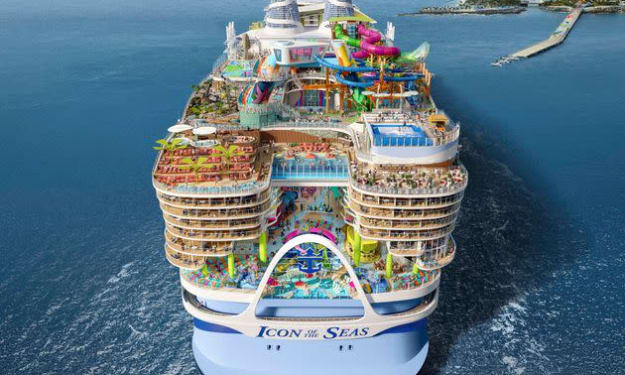
In the realm of watercraft, there exist small and large boats, and then there are the truly massive vessels, such as the MSC Meraviglia. This cruise ship was constructed in Saint-Nazaire, France in 2017 and was christened by Sophia Loren. It is the largest cruise ship to have ever docked in New York City, boasting an impressive array of amenities, including a water park, rope course, spa, mall, arcade, bowling alley, casino, gym, two theaters, five pools, nine restaurants, 23 bars, and 19 floors, with enough space to accommodate 5,655 passengers and 1,536 crew members. Cruise ships are the largest passenger vessels ever built, capable of transporting an entire small town's worth of people in a single vehicle. However, their appearance differs greatly from the transatlantic ships of a century ago.
By Austine Ochieng 3 years ago in History
Exploring the Ancient Alien Theory
When delving into the annals of history and the significant events that have shaped our world, we often find ourselves relying on the interpretations of great writers, scholars, and archaeologists to uncover the truths behind pivotal moments. However, as the digital age transforms our access to information, the certainty of historical accounts becomes increasingly vulnerable to reinterpretation.
By BossFactor3 years ago in History
Why Titanic didn't had enough lifeboats?
In James Cameron's 1997 blockbuster film, Titanic, there's a memorable moment where Rose, played by Kate Winslet, realizes a critical fact about the lifeboats: "It seems that there are not enough for everyone aboard." The response from Victor Garber's character, Titanic's architect Thomas Andrews, is both confident and poignant: "I have built a good ship, strong and true. She's all the lifeboat you need." Given the foreknowledge of the tragic outcome, this line takes on a bitter irony, embodying the essence of how the Titanic was designed and the fateful errors that unfolded. Interestingly, the Titanic was equipped with more lifeboats than mandated by British law. The Merchant Shipping Act of 1894 stipulated that vessels weighing over 10,000 tons should have at least 16 lifeboats capable of accommodating 990 people. Despite the Titanic's massive size, weighing over 45,000 tons at launch in 1911, it was legally required to carry only 16 lifeboats. Surprisingly, the Titanic had 20 lifeboats, with the potential to hold up to 1,178 individuals at full capacity. Tragically, this fell far short of the approximately 2,240 passengers and crew on board during the ship's ill-fated voyage. From a design perspective, the Titanic's builders believed they had crafted an unparalleled example of maritime safety. The Titanic was intentionally designed to remain afloat even after sustaining significant damage. The ship's lower section was divided into 16 compartments through bulkheads—partitions that could be sealed off using watertight doors in case of a breach. This design aimed to prevent flooding in unaffected sections, ensuring that the Titanic would remain a stable platform for passengers while lifeboats were used to evacuate to rescue vessels. This concept of relying on both bulkheads and lifeboats had been successfully demonstrated before. A few years prior, the RMS Republic had collided with another ship, causing considerable damage and flooding. However, the crew's strategic use of watertight compartments and the newly introduced Marconi Wireless Telegraph system allowed them to send distress signals, leading to a successful evacuation and saving nearly all onboard. The early success of wireless communication and careful ship design fostered optimism that disasters at sea could be minimized. A 1909 news article boldly declared that "the passenger on a well-equipped transatlantic liner is safer than anywhere else in the world." This sentiment prevailed until the ill-fated events of the Titanic altered this perception. However, despite the Titanic's robust design, a sequence of unfortunate events led to its demise. While regulations originally stated that ships should remain afloat with any two adjacent compartments flooded, the Titanic was designed to withstand even more severe damage. Engineer and Titanic researcher Sam Halpern's analysis revealed that the ship could stay afloat even with three or four adjacent compartments flooded. The key was to maintain a level ship to prevent water from spilling over the bulkheads. Tragically, the Titanic's collision with an iceberg deviated from these anticipated scenarios. The ship's side scrape along the iceberg breached multiple compartments, with Boiler Room six being a critical breach point. Flooding of the first five compartments overwhelmed the design's resilience, causing the ship to become increasingly unstable as water flowed over the bulkheads. This eventuality contradicted the Titanic's initial premise of safety through compartmentalization. The Titanic's wireless distress signals were sent out, but the closest ship, SS Californian, failed to receive them due to the radio operator's inactivity. As time passed, the Titanic's desperate messages revealed the dire situation onboard. Without a rescue ship, the only remaining option was to rely on lifeboats. When the RMS Carpathia eventually arrived, the Titanic had already succumbed to the ocean, resulting in the tragic loss of over 1,500 lives. The disaster left an indelible mark on maritime safety regulations. A stark visual comparison between RMS Olympic and her twin Titanic in 1911 and 1912 respectively, highlights the immediate change in lifeboat provisions following the tragedy. The disaster prompted the establishment of the International Convention for the Safety of Life at Sea (SOLAS) in 1914. This international treaty mandated continuous wireless telegraph communication and increased the required number of lifeboats to accommodate everyone on board. In modern times, SOLAS regulations stipulate that cruise ships must have lifeboats capable of accommodating 125% of the ship's capacity in emergencies. The Titanic catastrophe, therefore, precipitated a profound transformation in maritime safety practices and regulations. Ultimately, the Titanic disaster wasn't solely the result of a design flaw, but rather a convergence of circumstances involving early wireless communication, an unforeseen collision scenario, and an overconfidence in the ship's resilience. The iconic "She's all the lifeboat you need" line, whether fictional or not, encapsulates the misguided optimism that surrounded the Titanic's ill-fated journey. The tragedy serves as a somber reminder of the delicate balance between innovation, preparation, and the unpredictable forces of nature.
By Shubham Bajaj3 years ago in History
Why queen Elizabeth 2nd was the queen of 15 countries!?
On November 30th, 2021, history was made as Barbados proudly emerged as the world's newest republic. With a resounding declaration, the transformation was solidified: "From this day and forever, declare Barbados a parliamentary republic." This pivotal moment marked the culmination of a journey that saw Barbados unfurl its own flag, symbolizing the end of a colonial era spanning over 350 years and dissolving its ties to the British royal family. What added an intriguing layer to the event was the presence of none other than Prince Charles, who acknowledged, "It was important that I should join you to reaffirm those things which do not change." Prince Charles's words held a deeper significance, encompassing the essence of the transition. Although Barbados had stepped away from being a realm of the British Crown, it chose to maintain its membership in the Commonwealth—a conglomerate of nations primarily composed of former British colonies. A moment of transformation was unfolding, one that required a closer look at the intricate relationship between the British Empire and the Commonwealth of Nations. Travel back to 1926, the year Queen Elizabeth II entered the world stage. At that time, the British Empire exerted dominion over nearly a quarter of the global population through its sprawling colonies. This immense reach was built upon refined systems designed to control and exploit wealth and resources across the colonies. Consider the case of Barbados, where descendants of those kidnapped from Africa were exploited on sugar plantations, or delve into South Africa, where a wealth of diamonds was extracted from local mines. The early 20th century witnessed the initial ripples of change in the colossal British Empire. Countries such as Australia and Canada transformed into British dominions, relinquishing direct rule by Britain while maintaining symbolic allegiance to the Crown—a concept termed the British Commonwealth. This new form would later serve as the blueprint for the empire's evolution. As Queen Elizabeth ascended the throne in the 1950s, the world was in flux. Post-World War II, Britain's economy faltered, and independence movements surged across the empire. Struggles for sovereignty unfolded in places like India, where leaders fought for self-governance, and in Kenya, where millions resisted British rule, even enduring internment camps. Recognizing the inevitability of decolonization, the monarchy shifted its focus toward relevance. While Queen Elizabeth did not personally attend the lowering of the British flag, her family did. Prince Philip participated in ceremonies marking the independence of former colonies, including Kenya. Other royals, such as Lord Mountbatten, were also part of this symbolic transition, as seen in India. India's trajectory took an intriguing turn as it chose to become a republic and sever ties with the monarchy. In response, the British Commonwealth underwent a transformation of its own, rebranding itself as the Commonwealth of Nations. This evolution allowed countries to join as members even if they were no longer under the queen's rule. Meanwhile, newly independent nations opted to retain the queen as their ceremonial head of state, establishing a diverse mix of monarchies and republics, all presided over by the queen. In this intricate landscape, the monarchy adapted and thrived, expanding its reach through royal tours that echoed the imperial tradition. As the British empire decolonized, the monarchy remained a global entity. Fast-forward to today, where approximately a third of the world's population resides in a Commonwealth nation. This intriguing alliance extends beyond former British colonies, as countries find value in the political platform it offers, connecting them to influential diplomatic players like the UK, India, Canada, and even the Crown itself. The transition to the next head of the Commonwealth, King Charles III, carries a hint of irony. While the British empire gave birth to the Commonwealth, the future leadership of the organization is not bound by colonial origins. Anyone has the potential to lead, indicating that the Commonwealth's evolution may be guided by those very colonies it was designed to unify. The recent passing of Queen Elizabeth II triggered periods of mourning across Commonwealth nations. Her remarkable ability to unite diverse nations provided a buffer against the darker chapters of British history, such as slavery. However, the monarchy can no longer evade these discussions, as the collective reckoning with colonial legacies prompts introspection on the monarchy's role within the Commonwealth. These conversations underscore a pivotal shift in power dynamics. Former British colonies now hold considerable influence within the Commonwealth. The question that looms large is the collective vision of these nations. What aspirations and goals will guide the future of this diverse union? The journey from colonialism to republics within the Commonwealth is a complex narrative, one that reflects not just a shift in political landscapes, but also the aspirations of nations bound by shared histories.
By Shubham Bajaj3 years ago in History
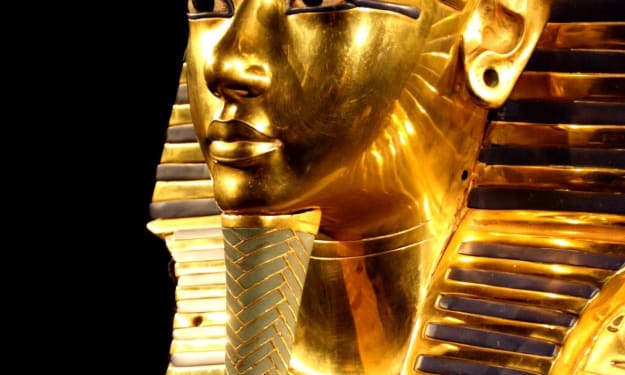
The Remarkable Discovery of the Lost Tombs of the Pharaohs
In the heart of the scorching Egyptian desert, an international team of archaeologists embarked on an audacious expedition to unravel one of history's greatest mysteries: the elusive tombs of the Pharaohs that had eluded discovery for centuries. Armed with cutting-edge technology and unwavering determination, they set out on a journey that would rewrite history books and capture the world's imagination.
By mostafa ali3 years ago in History
How the 'lost cities' of amazon were finally found
Meet Percy Fawcett, the intrepid British explorer whose journey into the heart of the Amazon rainforest in 1925 marked the last known communication from him. This was his eighth expedition into the Amazon, driven by a singular objective: the pursuit of a fabled lost city, dubbed "Z". This quest was fueled by age-old rumors that whispered of sprawling cities nestled deep within the dense rainforest, a notion that captured Fawcett's imagination. Yet, despite his unwavering determination, Fawcett's search for "Z" and other mythical cities remained unfruitful, leaving many to believe that the Amazon's untamed wilds were incompatible with the existence of urban centers. Recently, however, groundbreaking discoveries have altered our perception of the Amazon's past. Inconspicuous ditches and mounds, scattered across the rainforest, have piqued the interest of archaeologists. These seemingly natural formations have been unmasked as evidence of human engineering. These revelations spark a renewed understanding of an ancient enigma: the whereabouts of the long-lost cities of the Amazon. Travel back to the 16th century, a time when European colonizers surged into the territories of Central and South America, accompanied by soldiers, diseases, and visions of conquest. As they encountered diverse indigenous groups, they stumbled upon remarkable cities, like Tenochtitlan, founded by the Mexica people around 1325 AD, and Cusco, established by the Incas around 1200 AD. These urban centers boasted intricate stone structures, well-planned streets, and bustling neighborhoods. However, the European dominion over these cities masked their potential to hold yet another marvel. The colonizers, amidst tales of "A great Lord... covered in gold dust" and the allure of the legendary El Dorado, failed in their quests to find the fabled city of gold. While their expeditions resulted in hardship and disillusionment, they bore witness to signs that hinted at the existence of thriving civilizations. Accounts from Spanish explorers spoke of gleaming cities, abundant crops, and significant towns that seemed to defy the rainforest's perceived hostility. Over two centuries, these explorations took place, yet the legend of El Dorado was eventually relegated to the realm of myth by the 19th century. Fast forward to the early 20th century, when Percy Fawcett rekindled the search for these elusive cities. His relentless efforts spanned decades, targeting two Amazonian regions: the western reaches of Bolivia and the southern expanses of Brazil. Fawcett encountered indigenous communities, described as living in modest groups within simple villages. The absence of stone ruins seemed to bolster the consensus among experts that the rainforest was inherently unsuited for supporting intricate societies, let alone cities. Experts of the time leaned toward the belief that the indigenous people lacked the sophistication to construct cities, attributing their livelihoods to the rainforest's limited fertility. In the face of skepticism, Fawcett clung to his conviction, penning a final letter to his wife assuring her, "You need have no fear of any failure." His departure from camp marked his vanishing, plunging him into the realm of mystery. Decades passed, and the Amazon continued to be seen as a realm of emptiness. Yet, Fawcett had been on the right trail, albeit chasing the wrong quarry. The crucial clue that had eluded him lay within the soil itself. In the 1960s, scientists stumbled upon pockets of extraordinarily fertile earth, named terra preta or black earth. This rich soil, enriched by human waste or controlled forest fires, hinted at the possibility of large-scale agriculture within the rainforest. The 1990s then brought another revelation, as archaeologists studying the Xingu river region discovered intricate ditches, remnants of carefully designed settlements. These ditches marked out walls, a central plaza, and interconnected roads, revealing a network of settlements that could have harbored up to 50,000 people between 1250 and 1650 AD. These settlements followed a sustainable blueprint, making the most of the rainforest's resources without exhausting them. Orchards and gardens were carefully demarcated, while the forested areas remained sanctuaries for animals and medicinal plants. These, it seems, were the hidden cities that had captivated Fawcett's imagination. As time passed, evidence of these lost cities burgeoned, revealing a complex tapestry of settlements across the Amazon. Trench networks that date back to 200 - 1200 AD suggested a population of up to 60,000 people, rivalling many European cities of the era. Satellite technology even uncovered U-shaped structures atop 22-meter pyramids in Bolivia, fueling the consensus that these Amazonian cities once played host to millions. Fawcett's failure to encounter these lost cities can be attributed to a multitude of factors. The devastating impact of diseases brought by European colonizers had already decimated an estimated 80-95% of the indigenous population, particularly from smallpox and measles. Furthermore, the construction materials used by Amazonian indigenous people, primarily wood and earth, led to the gradual decay of their architectural achievements, leaving little behind but dense vegetation and seemingly untouched soil. The revelation of these lost cities shatters our preconceptions and unveils an ancient harmony between humans and the rainforest. The intricate relationships between settlements, their inhabitants, and the bounties of nature paint a picture of a civilization that once thrived amidst the dense foliage. These discoveries propel us toward a deeper comprehension of the intricate dance that humans and the rainforest shared, an enduring partnership that is only beginning to unravel before our eyes.
By Shubham Bajaj3 years ago in History
The Evolution of Anesthesia in Medical History
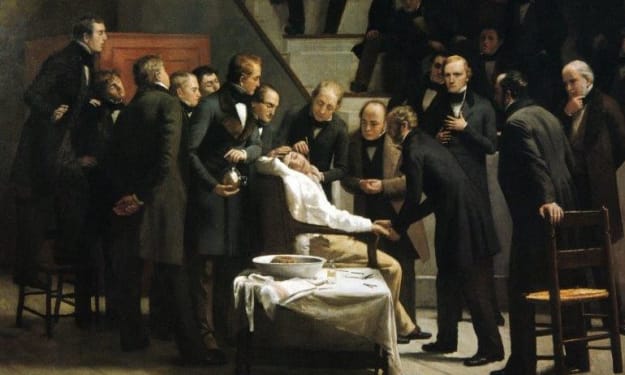
Imagine a time when medical procedures were performed without the comfort of numbing or unconsciousness. It was a time of great suffering, as patients had to endure excruciating pain while doctors hurried to complete their work. In the 1830s, a notable example was Scottish surgeon Robert Liston, celebrated for his incredible speed in the operating room. Picture this: a patient lying on the table, medical students holding them down, and curious onlookers awaiting the surgeon's skilled hands. With swift and precise movements, Liston cut through flesh, sawed through bones, and within mere minutes, an amputation was done. This scene captures the harsh reality of pre-anaesthesia surgeries. Patients had to remain fully conscious throughout the procedure, experiencing every sensation, every cut, and every stitch.
By Anita Nelima3 years ago in History
Coca-Cola: A Journey of Bubbles and Beyond
Introduction: Bubbles of Curiosity The history of Coca-Cola is one of the few stories that, in a world where innovation surges up like a vibrant torrent, truly captures the spirit of human endeavor. The story of this fizzy elixir spans time, culture, and business, from its humble beginnings as a medical tonic to its current significance as a universal symbol. Join us as we embark on a storytelling journey through the history of Coca-Cola and step inside a world where magical fizz and caramel hues mix.
By Ahsan Bashir3 years ago in History
The Hidden Alliance
Long ago, in the ancient land of Egypt, a majestic civilization flourished. Among their many remarkable achievements, the Egyptian pyramids stood as a testament to their extraordinary architectural prowess. These colossal structures, shrouded in mystery and wonder, were believed to be the final resting places of the pharaohs. But what if there was more to their creation than meets the eye?
By Alhassan Iddrisu3 years ago in History