Discoveries
Thee ancient city of Teotihuacan in Mexico
Thee ancient city of Teotihuacan in Mexico: Nestled in the highlands of central Mexico lies the ancient city of Teotihuacan, a place where gods once walked among mortals and where pyramids touched the heavens. Often referred to as the "City of the Gods," Teotihuacan is one of the most remarkable archaeological sites in the world, a testament to the power and grandeur of an ancient civilization that flourished over a thousand years ago. Teotihuacan's origins are shrouded in mystery, and its true creators remain unknown. It is believed to have been established around 200 BCE, but the people who built it, known as the Teotihuacanos, left behind no written records to tell their story. The city's name itself is of Nahuatl origin, the language of the Aztecs who later inhabited the region, and means "The Place Where the Gods Were Created." This name reflects the profound sense of reverence and awe that Teotihuacan has evoked for centuries. At the heart of Teotihuacan's urban layout are two massive pyramids—the Pyramid of the Sun and the Pyramid of the Moon. The Pyramid of the Sun, the largest of the two, rises nearly 216 feet (66 meters) above the surrounding landscape. Ascending its steep steps, one is met with breathtaking panoramic views of the city's sprawling layout, and it's impossible not to be captivated by the sense of awe that must have gripped the ancient pilgrims who climbed these very steps. The Pyramid of the Moon, although smaller in scale, holds equal importance in the city's cosmology. It stands at the northern end of the Avenue of the Dead, a broad boulevard that runs through the heart of Teotihuacan. This avenue, flanked by smaller pyramids and impressive ceremonial structures, is thought to have served as a processional route for rituals and celebrations, a testament to the city's vibrant religious life. While the pyramids are the most iconic features of Teotihuacan, the city is a vast archaeological treasure trove that encompasses residential areas, marketplaces, workshops, and temples. The remains of multistory apartment complexes, known as "apartment compounds," hint at a highly organized and densely populated city. Archaeological evidence suggests that Teotihuacan was home to a diverse population, with people from various cultural backgrounds living and working together. One of the city's most intriguing aspects is the layout and alignment of its buildings. Teotihuacan's urban plan reflects a deep understanding of astronomy and a close relationship with the natural world. The city's layout is thought to be aligned with the movements of celestial bodies, with the pyramids and other major structures oriented to important astronomical events, such as the equinoxes and solstices. This cosmic connection reinforces the belief that Teotihuacan was not just a city but a sacred space where earthly and celestial forces converged. The artistry of the Teotihuacanos is on full display in their intricate murals and carvings. These artworks provide glimpses into the daily life, rituals, and beliefs of the city's inhabitants. One of the most famous examples is the mural found in the Tepantitla compound, which depicts a richly detailed and vibrant tableau of religious ceremonies and mythological figures. The intricate feathered serpent, often identified as the deity Quetzalcoatl, graces many of these murals, further emphasizing the city's spiritual significance. The Teotihuacanos were skilled artisans, known for their production of obsidian blades, pottery, and intricate jewelry. Their influence extended far beyond their city's walls, as Teotihuacan served as a central hub for trade networks that stretched throughout Mesoamerica. The city's prosperity was fueled by the production and exchange of valuable goods, such as obsidian tools and textiles, which were traded with distant regions. Despite its grandeur and influence, the decline of Teotihuacan remains a subject of debate among scholars. Around the 7th or 8th century CE, the city began to experience a gradual decline, marked by the abandonment of some residential areas and the erosion of its once-powerful influence. The reasons behind this decline are still unclear, with theories ranging from internal unrest and social upheaval to environmental factors such as droughts. Today, Teotihuacan stands as a UNESCO World Heritage Site and a symbol of Mexico's rich cultural heritage. It continues to inspire wonder and admiration, drawing visitors from around the world who come to explore its ancient streets and climb the pyramids that reach for the sky. The spirit of the Teotihuacanos lives on in the breathtaking architecture, vibrant artistry, and profound cosmic connections that define this extraordinary city. As we stand beneath the towering pyramids and walk the ancient streets of Teotihuacan, we are transported to a time when gods and mortals coexisted in harmony, when a civilization flourished in awe-inspiring splendor. Teotihuacan reminds us of the enduring power of human creativity, the quest to understand the cosmos, and the enduring legacy of those who built a city of gods in the heart of Mexico.
By Raymark Marcos3 years ago in History
The e cave paintings of Chauvet-Pont-d'Arc, France
The e cave paintings of Chauvet-Pont-d'Arc, France Nestled within the limestone cliffs of the Ardèche region in southern France, the Chauvet-Pont-d'Arc Cave houses an ancient masterpiece that defies the constraints of time. Its walls, adorned with magnificent cave paintings, transport us back in time to an era when early humans sought to capture the essence of their world through art. The story of Chauvet-Pont-d'Arc began in 1994 when three spelunkers—Jean-Marie Chauvet, Eliette Brunel, and Christian Hillaire—stumbled upon the cave's entrance. What they discovered within was nothing short of extraordinary: a pristine time capsule of prehistoric art dating back approximately 36,000 years. These incredible artworks predate even the famous Lascaux cave paintings by several millennia. The cave paintings of Chauvet-Pont-d'Arc are a testament to the creative spirit of our distant ancestors. The artists used the contours of the cave walls and natural rock formations to breathe life into their subjects. What they left behind is a gallery of animals, rendered with astonishing skill and accuracy. Lions, rhinoceroses, bears, mammoths, and horses, among other creatures, leap from the walls with an energy and dynamism that belies their age. The precision and technique displayed in these artworks are awe-inspiring. The artists utilized a combination of charcoal and various ochre pigments to create their masterpieces. They employed a variety of methods to apply the pigments, from finger painting to the use of rudimentary brushes made from twigs or animal hair. The attention to detail in the fur, musculature, and expression of the depicted animals reveal a profound understanding of the natural world. One of the most striking features of the Chauvet-Pont-d'Arc paintings is the use of movement and perspective. These prehistoric artists understood how to capture the essence of a creature in motion, whether it's the galloping horses or the stalking predators. The use of the cave's contours and relief added an extra dimension to the paintings, making them appear almost three-dimensional when illuminated by torchlight. The artists didn't limit themselves to animals. They also depicted human figures in the form of handprints and stencil outlines, as well as a few enigmatic partial figures. These human representations offer tantalizing glimpses into the spiritual and cultural life of our ancient ancestors. Were these depictions symbolic, shamanistic, or simply artistic expressions of their surroundings and experiences? The significance of the Chauvet-Pont-d'Arc Cave goes beyond its artistic value. It provides a rare window into the lives of Paleolithic humans, offering clues about their hunting practices, beliefs, and daily existence. The presence of so many predators in the cave paintings hints at a close relationship between early humans and the natural world, perhaps even a form of reverence or spiritual connection. The conservation and preservation of the Chauvet-Pont-d'Arc Cave have been paramount since its discovery. In order to protect the fragile environment and the priceless artworks, access to the original cave is highly restricted. Researchers and scientists can only enter under strict conditions to minimize human impact. However, efforts have been made to share this remarkable treasure with the world. In 2015, a replica of the Chauvet-Pont-d'Arc Cave, known as the Chauvet 2 Cave, was opened to the public near the original site. This replica painstakingly recreates the cave's interior, allowing visitors to experience the awe and wonder of the prehistoric paintings while preserving the fragile original. It's a testament to the importance of both conservation and education. The Chauvet-Pont-d'Arc Cave paintings are a testament to the enduring power of art and its ability to transcend time and space. These ancient artworks, created in the depths of a dark and hidden cave, have emerged into the light of modern understanding, offering a glimpse into the minds and hearts of our ancestors. They remind us that the impulse to create, to express, and to connect with the world around us is a fundamental and timeless part of the human experience. As we stand in the presence of these ancient masterpieces, we are humbled by the shared creative spirit that has persisted throughout human history. The Chauvet-Pont-d'Arc Cave paintings are not just a glimpse into the past; they are a testament to the enduring power of human imagination and our deep-seated need to leave our mark on the world, even if that mark is hidden away in the depths of time.
By Raymark Marcos3 years ago in History
The Homo Naledi fossils in South Africa. Content Warning.
Homo Naledi fossils in South Africa: In the cradle of humanity, deep within the Rising Star Cave system in South Africa, a remarkable discovery rewrote the history of human evolution. It was here that the enigmatic Homo naledi fossils were unearthed, shedding light on our ancient past and challenging conventional notions of our ancestors. The story begins in 2013 when two local cavers, Steven Tucker and Rick Hunter, stumbled upon an entrance to a previously unexplored chamber within the Rising Star Cave. Little did they know that this seemingly ordinary cave would lead to an extraordinary scientific revelation. They reached out to Lee Berger, a paleoanthropologist and National Geographic Explorer-in-Residence, who organized an expedition to investigate further. What the team encountered in the chamber was nothing short of astonishing. The floor was littered with ancient bones, clearly belonging to a previously unknown species of hominin. The chamber was challenging to access, with a narrow, jagged pathway leading to it, and the fossilized remains were remarkably well-preserved despite their age, estimated to be around 250,000 to 300,000 years old. The name "Homo naledi" derives from the Sesotho word "naledi," which means "star." It's a fitting name for a species discovered in the Rising Star Cave. The initial discovery consisted of a partial skeleton, but as further expeditions were organized, more remains were found. In total, the team recovered the remains of at least 15 individuals, including adults, adolescents, and infants. What makes Homo naledi particularly intriguing is its blend of primitive and modern traits. The hominins had a small brain, similar in size to some of our earliest ancestors, like Homo habilis. However, their hands and wrists exhibited adaptations for tool use and complex manipulation, reminiscent of later hominins. Their feet, on the other hand, were remarkably human-like, suggesting they were capable of walking efficiently on two legs. The presence of Homo naledi in the same time frame as more modern Homo sapiens raises questions about our understanding of human evolution. How did this species fit into the complex tapestry of early humans, and what role did it play in our ancestral tree? The discovery challenges the linear progression model of human evolution, suggesting that multiple hominin species may have coexisted and interacted in Africa. One of the most astonishing aspects of the Homo naledi discovery was the deliberate disposal of their dead. The fossils were found in a remote chamber, far from the cave's entrance, raising the intriguing possibility that these hominins practiced burial rituals. This behavior hints at a level of cultural sophistication previously not attributed to hominins with such small brains. The Rising Star Cave system has since become known as the "Dinaledi Chamber," or "Chamber of Stars," in honor of this groundbreaking discovery. The exploration of this chamber required a team of skilled scientists and cavers who could squeeze through the narrow openings to reach the fossils. The challenging conditions made the discovery all the more remarkable. The Homo naledi fossils have sparked intense scientific interest and debate. Researchers have worked tirelessly to analyze and date the remains, using a variety of dating methods. The results have confirmed their age and provided insights into their place in the evolutionary timeline. While the exact relationship between Homo naledi and other hominin species remains a subject of ongoing research and discussion, one thing is clear: this discovery has expanded our understanding of human evolution. It has shown that the story of our species is far more complex and intertwined than previously imagined. The discovery of Homo naledi serves as a reminder of the importance of exploration and scientific curiosity. In a remote cave chamber, deep beneath the South African landscape, a window into our past was opened, revealing a previously unknown chapter in the epic saga of human evolution. The courage and dedication of those who ventured into the darkness, both in the past and in modern times, have allowed us to glimpse the mysterious and extraordinary world of our ancient ancestors. As we continue to explore and uncover the secrets of our past, the story of Homo naledi stands as a testament to the enduring human spirit of discovery and the unquenchable thirst for knowledge that drives us to seek out the mysteries of our origins, no matter how deep they may be buried. Homo naledi reminds us that our history is a puzzle with many missing pieces, waiting to be unearthed and assembled to reveal the fascinating mosaic of our shared ancestry.
By Raymark Marcos3 years ago in History
The Ancient City of Machu Picchu, Peru
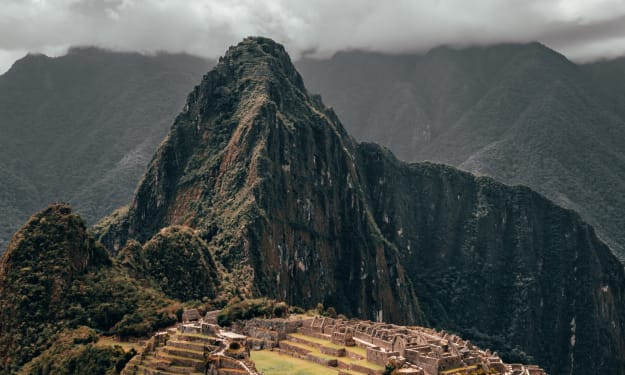
the Ancient City of Machu Picchu, Peru: Hidden amidst the breathtaking peaks of the Andes Mountains in Peru lies the mystical and awe-inspiring Ancient City of Machu Picchu. This UNESCO World Heritage Site is not just an archaeological wonder but also a testament to the architectural genius of the Inca civilization, shrouded in mystery and intrigue. Perched at an altitude of over 2,400 meters above sea level, Machu Picchu is often referred to as the "Lost City of the Incas." It was built during the 15th century under the reign of the Inca Emperor Pachacuti. The city was constructed using massive stone blocks, carefully fitted together without the use of mortar, a testament to the engineering prowess of the Inca people. Machu Picchu's purpose remains a subject of debate among historians and archaeologists. Some believe it was a royal estate or a retreat for Inca nobility, while others suggest it might have had religious significance. Regardless of its original purpose, its remote location and remarkable construction have made it a symbol of Inca achievement and a pilgrimage site for travelers seeking to connect with the past. To reach Machu Picchu, one must embark on a journey through the Sacred Valley of the Incas, a lush and picturesque region that was once the heartland of the Inca Empire. The journey itself is an adventure, winding through dramatic landscapes and ancient ruins before arriving at the base of the mountain where the city is situated. The final leg of the journey involves ascending the steep slopes of Machu Picchu Mountain or Huayna Picchu for a more panoramic view. As you climb the stone steps, a sense of anticipation builds, and the reward is nothing short of awe-inspiring. The first sight of Machu Picchu from above is an unforgettable moment, as the city emerges from the mist like a mirage, surrounded by lush green terraces and cradled by towering peaks. Walking through the intricate network of stone buildings, plazas, and terraces, one can't help but marvel at the ingenuity of the Inca architects. The precision with which the stones were cut and placed, the advanced drainage systems, and the alignment of buildings with astronomical phenomena are all indicative of a highly sophisticated society. One of the most iconic structures at Machu Picchu is the Intihuatana stone, often referred to as the "Hitching Post of the Sun." It is believed to have served as an astronomical and ritualistic device, connecting the Inca civilization with the celestial world. Standing beside it, you can't help but feel a connection to the past and a sense of wonder about the knowledge and beliefs of the people who once inhabited this city. As you explore the city, the Temple of the Sun with its curved stone walls and the Room of the Three Windows with its breathtaking view of the surrounding landscape stand out as testaments to Inca craftsmanship. The agricultural terraces that cascade down the slopes of the mountain showcase their mastery of farming techniques in a challenging environment. Machu Picchu also offers a glimpse into the spiritual world of the Inca people. The presence of temples, shrines, and ritualistic stones hints at the importance of religion in their lives. The whole city seems to be designed in harmony with the natural environment, with the mountain peaks and the Urubamba River forming a sacred backdrop. Perhaps one of the most enchanting aspects of Machu Picchu is the resident llamas that roam freely among the ruins. These gentle creatures add a touch of charm to the already magical setting, and watching them graze in this ancient city creates a unique and endearing experience. While Machu Picchu has been a site of wonder for centuries, it was largely unknown to the outside world until its rediscovery by American historian and explorer Hiram Bingham in 1911. Since then, it has become one of the most visited and revered archaeological sites on the planet, drawing travelers and scholars alike to unravel its secrets and bask in its beauty. In recent years, efforts have been made to preserve and protect Machu Picchu from the impacts of tourism and environmental factors. Visitor numbers are controlled, and strict regulations are in place to ensure the site's sustainability for future generations. In conclusion, the Ancient City of Machu Picchu is a place of wonder, a testament to human achievement, and a window into the rich history of the Inca civilization. Its breathtaking beauty, intricate architecture, and mystical aura continue to captivate all who have the privilege to set foot in this remote and enchanting corner of the world. As you stand amidst the ruins and gaze upon the majestic peaks of the Andes, you can't help but feel a profound connection to the past and a deep appreciation for the enduring legacy of the Inca people. Machu Picchu truly is a treasure of human history and a marvel of the ancient world.
By Raymark Marcos3 years ago in History
WHY BANANAS ARE BANNED FROM FISHING BOATS
Superstitions such as a horseshoe hanging over a door, a black cat crossing the street, bananas on a ship, and others may appear to be pointless, yet they continue to be believed by many individuals. However, understanding the origins of these superstitions can provide clarity. In this regard, we will examine the top 11 superstitions. Individuals who are anxious to succeed in important events such as exams, business project presentations, or football games often knock on wood to prevent disappointment. This tradition has been kept alive for over two thousand years in Europe and the United States. It is believed to have originated with peasants who pounded on tree trunks to frighten away evil spirits that intended to ruin people's lives. The superstition that walking under a leaning ladder can cause failure first appeared in ancient Egypt about 5,000 years ago. The pyramids were triangular because the Egyptians considered this form sacred. A leaning ladder also has a triangle shape, so walking under it felt like defiling a sacred symbol. In other cultures, such a ladder represented evil. However, if you ask individuals why such families are like this, they may not be able to provide an answer. Broken mirrors are among the most well-known warning indicators. It is believed that seeing oneself in its shards can result in failure for the ensuing seven years. Many individuals are terrified to stare at the reflection in broken glass because it appears to be ominous even visually. However, historically, this dread first appeared in ancient Greece when many people visited specialized mystics who had the ability to foresee the future using a mirror image. The Romans added the detail about the seven years of misfortune to the superstition in the first century CE because they believed that human health changed every seven years, so looking at a distorted reflection specifically signified this period. The Romans also believed that mirrors reflected particles and that if someone's reflection was distorted, trouble would befall that person.
By Gadisa Melkamu3 years ago in History
From Ancient Rituals to Modern Expression
Marilyn Monroe once said, "Put on some red lipstick and live a little." She knew that lipstick could make people feel confident and powerful. Have you ever wondered how this small tube of color became such a symbol of confidence? Let's go back in time and explore the history of lipstick.
By Ines Lozina3 years ago in History
Titanic Love Story
"We've lived together for many years" – Ida Strauss spoke these words to her husband. She was one of the wealthiest women on the Titanic, but she chose not to board a lifeboat with her husband, Isadore. Just before this, she gave her maid a valuable gift that likely saved her life.
By Ines Lozina3 years ago in History
Gravitational Waves!!!
Gravitational Waves: Ripples in the Fabric of Spacetime In the grand theater of the cosmos, where celestial bodies dance to the tune of gravity, there exists a phenomenon so profound that it reverberates through the very fabric of spacetime itself. This phenomenon is known as gravitational waves—ripples in the cosmic ocean—whose discovery in the 21st century transformed our understanding of the universe and offered a new way to explore the cosmos. The story of gravitational waves begins with a brilliant insight by none other than Albert Einstein. In 1915, Einstein, armed with his theory of general relativity, predicted the existence of gravitational waves. He proposed that massive objects, like planets and stars, could warp spacetime around them as they moved through the cosmos, causing ripples—gravitational waves—that would propagate outward at the speed of light. For decades, gravitational waves remained a theoretical concept, tantalizing but unproven. The search for these cosmic ripples was fraught with challenges because their effects were minuscule, requiring extraordinarily sensitive instruments to detect. It wasn't until the turn of the 21st century that the hunt for gravitational waves gained momentum. In 2015, the Laser Interferometer Gravitational-Wave Observatory (LIGO) made history by detecting gravitational waves for the first time. The waves had been generated by the collision of two massive black holes more than a billion years ago, and their detection was a testament to human ingenuity and perseverance. The discovery of gravitational waves opened a new era of astronomy—the era of "multi-messenger" astronomy. For the first time, scientists could observe the universe not only through electromagnetic waves (such as light and radio waves) but also through gravitational waves. This breakthrough allowed astronomers to explore cosmic phenomena that had been invisible to traditional telescopes. Gravitational waves have since revealed a wealth of cosmic phenomena, from the collision and merger of black holes and neutron stars to the oscillations of cosmic strings, hypothetical cosmic structures. Each detection has provided a unique glimpse into the most extreme and energetic events in the universe. One of the most groundbreaking moments in the study of gravitational waves came with the detection of the first neutron star merger in 2017. This event, observed by both LIGO and the Virgo interferometer, not only produced gravitational waves but also a burst of electromagnetic radiation, including gamma-ray bursts. It marked the first time a cosmic event had been observed through multiple messengers, confirming the profound synergy between gravitational wave and traditional astronomy. Gravitational waves have also allowed scientists to test Einstein's theory of general relativity with unprecedented precision. Every detection provides a new opportunity to explore the nature of gravity itself, to examine the properties of black holes and neutron stars, and to delve into the heart of cosmic mysteries. As we continue to detect and study gravitational waves, we stand on the precipice of transformative discoveries. The cosmos has become an orchestra, and gravitational waves are the cosmic symphony—a symphony that tells the story of the universe's most dramatic and energetic events. The story of gravitational waves is a testament to human curiosity and the indomitable spirit of exploration. It reminds us that the universe is not silent but filled with the vibrations of spacetime itself. Gravitational waves beckon us to venture further into the cosmos, to listen to the cosmic symphony, and to uncover the secrets of the universe hidden in the ripples of spacetime.
By Raymark Marcos3 years ago in History
Cosmic Shadow!!!
Dark Matter and Dark Energy: Unveiling the Cosmic Shadows In the vast cosmic tapestry that envelops our universe, there exists a profound enigma—an enigma of shadowy proportions that has captivated the minds of scientists and astronomers for decades. This enigma goes by two names: dark matter and dark energy. Together, they comprise the vast majority of the cosmos, yet their true nature remains shrouded in mystery, challenging the very foundations of our understanding of the universe. The story of dark matter and dark energy begins with a quest to comprehend the gravitational forces at play in the cosmos. As early as the 1930s, astronomers observed the movement of galaxies within galaxy clusters, and something perplexing emerged. The visible matter, the stars, gas, and dust we could detect with telescopes, couldn't account for the gravitational forces needed to hold these galaxies together within their clusters. It was as if something invisible was at work—an unseen cosmic hand guiding the fate of galaxies. The term "dark matter" was coined in the 1970s to describe this mysterious, invisible substance that was affecting the dynamics of galaxies and galaxy clusters. Dark matter doesn't interact with light or electromagnetic forces, rendering it virtually undetectable by traditional observational methods. Yet, it exerts a gravitational pull, holding galaxies together and sculpting the cosmic web of the universe. The discovery of dark energy, however, added another layer to the cosmic puzzle. In the late 1990s, astronomers studying distant supernovae made an astonishing revelation—the universe's expansion wasn't slowing down as previously thought; it was accelerating. This unexpected cosmic acceleration was attributed to "dark energy," a mysterious force that opposes gravity and appears to be driving the universe apart at an ever-increasing rate. The implications of dark matter and dark energy are profound. Dark matter acts as the cosmic scaffolding, underpinning the formation of galaxies and galaxy clusters. Without it, the universe as we know it would look drastically different. Dark energy, on the other hand, defies gravity, challenging our understanding of the fundamental forces that govern the cosmos. The quest to unravel the nature of dark matter and dark energy has spawned a host of ambitious experiments and missions. Particle physicists search for elusive dark matter particles deep underground, hoping to catch a glimpse of these ghostly entities. Meanwhile, astronomers employ a multitude of observational tools, from cosmic microwave background measurements to large-scale galaxy surveys, to probe the cosmic expansion driven by dark energy. Yet, despite decades of research and groundbreaking discoveries, the true nature of dark matter and dark energy remains elusive. The search for dark matter particles continues, and alternative theories of gravity have been proposed to explain the cosmic acceleration attributed to dark energy. The enigma persists, inviting scientists to explore the frontiers of physics and cosmology. The mysteries of dark matter and dark energy are not merely scientific puzzles; they are cosmic questions that touch the essence of our universe's existence. Understanding these enigmas could redefine our understanding of the universe's fate, from its birth in the Big Bang to its eventual destiny. The story of dark matter and dark energy is a testament to the boundless curiosity of humanity and our relentless quest to understand the cosmos. As we peer deeper into the shadows of the universe, we are confronted with profound questions that challenge our most fundamental beliefs about the nature of space, time, and the very fabric of reality. The enigma of dark matter and dark energy reminds us that the universe is far more mysterious and complex than we can fathom. It beckons us to venture further into the unknown, to explore the cosmic shadows, and to seek answers to the most profound questions that lie at the heart of our existence.
By Raymark Marcos3 years ago in History