Discoveries
Ever Ace: Navigating the Seas as the World's Largest Cargo Vessel"
Ever Ace: Navigating the Seas as the World's Largest Cargo Vessel" Amidst the boundless expanse of the open sea, the Ever Ace sails, a vessel like no other. Its massive hull effortlessly cuts through the waves, leaving a wake that extends four miles. A true marvel of modern engineering, this legendary ship dominates the high seas. In this article, we delve into the captivating world of container ships, with a spotlight on the unique features of the Ever Ace.
By Okoh Emmanuel Ozoemena3 years ago in History
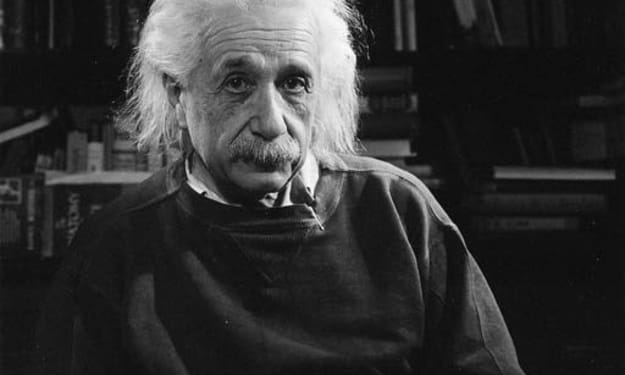
How Einstein's unique brain made him smarter
In spite of the fact that Albert Einstein's knowledge far surpassed the normal, his cerebrum was, intriguingly, more modest than the typical man's. A regular grown-up male mind weighs around 3 pounds (1,400 g) Einstein's weighed 2.64 pounds (1,197 g) While more modest by and large, a critical segment of his cerebrum was 15% more extensive than normal. The second rate parietal curve is the area of the mind related with visual and spatial thinking. This cerebrum region would have been essential to concocting Einstein's popular hypothesis of general relativity, which portrays how a huge item can twist space-time around it, similar as how planets move in a bended way around the sun. In 1999, a group at Canada's McMaster College drove by neuroscientist Sandra Witelson found his parietal curve was more extensive than typical in light of the fact that it coming up short on groove tracked down in ordinary cerebrums. The Sylvian crevice, otherwise called the parallel sulcus, ordinarily isolates the front facing and parietal curves from the fleeting curve. Nonetheless, in Einstein's cerebrum, this enormous hole was generally missing; the backside was more limited or shortened. It didn't reach out as far into the parietal curve as it in all actuality does in a great many people's minds. This extended Einstein's parietal curve, making it more extensive than ordinary. At the point when Einstein kicked the bucket in 1955 at Another Jersey medical clinic, the pathologist who played out the dissection eliminated his cerebrum and saved it for himself. Dr. Thomas Harvey later persuaded Einstein's child to permit him to save it for research. These names were added by Harvey. He cut Einstein's mind into 240 blocks and put away them in a cardboard box in his office in a bricklayer container and in a treat container saved in thick material. Dr. Harvey procrastinated and never really distributed any exploration. He made 2,400 slides containing slight segments of Einstein's mind tissue to be inspected under a magnifying instrument and sent them off to different researchers who uncovered captivating experiences. In 2001, Dr. Dahlia Zaidel of the College of California, Los Angeles, analyzed two cuts of Einstein's cerebrum containing the hippocampus, which assumes a pivotal part in learning and memory. She observed that the neurons on the left half of Einstein's hippocampus were bigger than those on the right. The left side of the equator is essentially liable for consistent reasoning, scientific handling, and numerical capacities. Bigger neurons in the left hippocampus proposed more grounded nerve cell associations between the hippocampus and the neocortex, which is the war room of the cerebrum engaged with significant level reasoning. Notwithstanding the imbalance in Einstein's hippocampus, analysts additionally found that the heap of nerve strands associating the two halves of the globe of his mind called the corpus callosum was thicker than normal. In 2013, specialists from China and the US found that Einstein's corpus callosum, signified in red, was thicker than those in the benchmark group of old men signified in blue, and furthermore thicker than the vast majority of those in the more youthful benchmark group of men 24 to 30 years of age, meant in green. This expanded thickness probably worked with better correspondence between the left and right halves of the globe, adding to Einstein's excellent mental capacities. It tends to be compared to a more extensive scaffold between two urban communities, empowering quicker transportation of individuals and products and worked on by and large network. Dr. Harvey likewise shipped off four cuts of Einstein's mind in a mayonnaise container to neuroscientist Marian Precious stone of the College of California Berkeley Her review, distributed in 1985, reasoned that Einstein's cerebrum had a lot of help cells. These red and blue designs are called glial cells - appropriately named from the Greek word 'happiness ull', signifying 'stick'. They assume a basic part in supporting and safeguarding the neurons. Extra assurance could have permitted his neurons to work all the more actually. Astoundingly, Einstein's mind gave no indications of maturing. Indeed, even at 76 years old, his mind had no hints of lipofuscin, the fine yellow-earthy colored shade granules related with "mileage" in the human cerebrum, like how an old vehicle could aggregate rust after some time. It's accepted Einstein was conceived this way as opposed to being affected by ecological elements. Be that as it may, it doesn't mean our cerebrums can't change. Dr. Precious stone was quick to demonstrate the way that the cerebrum can change and improve at whatever stage in life. Her work with rodents showed that the people who played with labyrinths, stepping stools, wheels, and their sidekicks had bigger synapses and a more prominent measure of glial cells contrasted with rodents that were kept confined with no toys. The ramifications is that all creatures, including people, benefit from an improved climate, and ruined conditions can bring down the ability to learn. This is presently called pliancy of the mind. Furthermore, it has strong ramifications for what we're fit for accomplishing. As per Einstein's desires, his body was incinerated, and his remains were dispersed in a mystery spot by the Delaware Waterway. He didn't maintain that his body should be adored. However, Einstein's biographer
By David Petargue3 years ago in History
The pharaohs in Egypt
The pharaohs in Ancient Egypt The pharaohs were the ancient rulers of Egypt. They were considered to be the living embodiment of the god Horus, and their power was absolute. The pharaohs were responsible for all aspects of Egyptian society, from religion to the military. They were also the chief builders of Egypt's most famous monuments, including the pyramids and the Sphinx. The Role of the Pharaoh The pharaoh was the head of the Egyptian government and the commander-in-chief of the military. He was also the highest religious authority in the land. The pharaoh was responsible for maintaining order and justice in Egypt, and he was also responsible for the country's economic prosperity. The pharaoh was believed to be the earthly representative of the gods, and he was treated as a living god. He was addressed as "Your Majesty" and "Lord of the Two Lands" (Upper and Lower Egypt). The pharaoh's body was considered sacred, and he was embalmed after death and buried in a tomb. The Rise and Fall of the Pharaohs The first pharaohs were believed to be descended from the god Horus. They ruled Egypt for over 3,000 years, from the time of Menes (c. 3100 BC) to the death of Cleopatra VII in 30 BC. The pharaohs reached the height of their power during the New Kingdom (1550-1070 BC). During this time, Egypt conquered much of the Middle East and North Africa. The pharaohs also built some of Egypt's most famous monuments, including the pyramids of Giza and the Karnak Temple Complex. The power of the pharaohs began to decline after the New Kingdom. Egypt was invaded by foreign powers, and the pharaohs lost much of their land and wealth. The final pharaoh, Cleopatra VII, was killed by the Romans in 30 BC. The Legacy of the Pharaohs The pharaohs left a lasting legacy on Egypt and the world. They built some of the most impressive monuments in history, and they created a rich culture that has fascinated people for centuries. The pharaohs also made important contributions to science, mathematics, and engineering. The pharaohs are a reminder of the power and glory of ancient Egypt. They were great builders, great leaders, and great patrons of the arts. Their legacy continues to inspire people today. The Pyramids The pyramids are one of the most famous landmarks in the world. They were built by the pharaohs as tombs to house their bodies and possessions. The pyramids are located in Giza, on the outskirts of Cairo, Egypt. The largest pyramid is the Great Pyramid of Giza. It was built by the pharaoh Khufu (Cheops) and took over 20 years to complete. The Great Pyramid is made of over 2 million stone blocks, and it weighs over 6 million tons. The pyramids are a testament to the power and wealth of the pharaohs. They are also a reminder of the ingenuity and engineering skill of the ancient Egyptians. The Sphinx The Sphinx is a giant statue with the body of a lion and the head of a human. It is located on the Giza Plateau, next to the Great Pyramid. The Sphinx is over 24 meters long and 20 meters high. The Sphinx is believed to have been built by the pharaoh Khafre (Chephren). It is thought to represent the pharaoh as the god Horus, who protected the people of Egypt. The Sphinx is one of the most mysterious and iconic landmarks in the world. It has been featured in countless movies, books, and works of art. It continues to fascinate people today. The Mummies The mummies are the preserved bodies of ancient Egyptians. They were mummified using a complex process that involved removing the organs, drying the body, and wrapping it in linen bandages. The mummies were buried in tombs with their possessions. They were believed to be the physical link between the deceased person and the afterlife. The mummies have been a source of fascination for centuries. They have been studied by scientists, archaeologists, and historians. They have also been featured in countless movies, books, and works of art. The Hieroglyphs The hieroglyphs are the writing system of ancient Egypt. They are made up of pictures that represent words, sounds, or ideas. The hieroglyphs were used to write on a variety of materials, including stone, wood, and papyrus. The hieroglyphs were deciphered in the early 19th century by Jean-François Champollion. This discovery allowed scholars to read the ancient Egyptian texts and learn more about their history
By Mo. Khalid 3 years ago in History
A Plane's Roof Blew Off at 24,000 Feet. Here's What Happened Next..!!
A Terrifying Flight: The Extraordinary Story of Salud Carriers Flight 243 Many individuals view flying on a plane as a restless encounter, yet imagine a scenario in which the airplane out of the blue different into a convertible while in midair. In 1988, that horrendous speculative circumstance appeared for the tenants of Salaam Aircrafts Flight 243. Working among Hilo and Honolulu in Hawaii, the flight took an unfortunate turn when the Boeing 737's rooftop fell at 24,000 feet.
By Abdur Rahman 3 years ago in History
Miracle at the Etihad
Manchester City Football Club, commonly known as Man City, is an English professional football club based in Manchester. Founded in 1880 as St. Mark's (West Gorton), they became Ardwick in 1887 and Manchester City in 1894. The club compete in the Premier League, the top division of English football, and have won the league title seven times, including four Premier League titles in 2011–12, 2013–14, 2017–18 and 2018–19.
By Mohamed Mahmoud3 years ago in History
Whispers of Justice, Roaring for Change: The Enduring Legacy of Marian Wright Edelman
The melody danced out of the dusty record player, a haunting blend of blues and storytelling. In its heart, the voice of Marian Wright Edelman resonated, weaving tales of struggle and resilience, of hope and unwavering commitment. This voice, a constant companion in my childhood home, became one of the first women's voices that truly inspired me.
By A Peaceful Mind3 years ago in History