Discoveries
The Unreadable Diary
Imagine stumbling upon a dusty attic, filled with forgotten relics of the past. Among the cobwebs and forgotten trinkets, you find an old, weathered diary. Its pages are yellowed with age, and its ink has faded into obscurity. As you flip through the pages, you realize that the diary is filled with cryptic writings, its secrets hidden beneath layers of indecipherable text.
By Sagar Karn2 years ago in History
A Tale of Divine Discontent. Content Warning.
In the realm of theological discourse and spiritual contemplation, few subjects evoke as much curiosity and intrigue as the enigmatic phenomenon of falling angels. Often depicted in religious texts, mythologies, and literary works, these celestial beings have captured the imagination of humans for centuries, shrouded in a veil of mystery and uncertainty. But what exactly are falling angels, and what compels these ethereal entities to forsake their heavenly abode? Let us embark on a journey of exploration into the depths of angelic lore, seeking to unravel the secrets of these celestial beings and the forces that drive them to descent.
By Samson E. Gifted2 years ago in History
The Journey of Amina
The Journey of Amina Amina was born in a small village near the banks of the River Niger. Her people, the Mandinka, had lived in harmony with the land for generations. They were farmers and artisans, known for their rich culture and skilled craftsmanship. Amina, with her bright eyes and quick smile, was a beloved child in her community. She learned the traditions of her people from her elders and spent her days playing under the vast African sky.
By Bright Murphy2 years ago in History
The Art and Science of Technological Prognostication
In a world increasingly defined by technological advancements, the ability to predict the future of technology has become both a fascinating pursuit and a crucial endeavor. From the rise of artificial intelligence to the proliferation of renewable energy, technological predictions shape industries, economies, and societies. But how do we forecast the trajectory of innovation, and what are the challenges inherent in such prognostications?
By Samson E. Gifted2 years ago in History
Through Eleanor's Emerald Eyes
Olivia, with her signature emerald green glasses perched on her nose, squinted through the dusty attic window. Rain lashed against the panes, a perfect accompaniment to the unsettling discovery she'd just made. Nestled amongst moth-eaten shawls and chipped teacups lay a leather-bound journal, its clasp partially undone. The delicate script on the flyleaf sent shivers down her spine – "Eleanor Davies, 1922."
By ANNA CORAL2 years ago in History
Lady Sparrow
The year was 1888, London. Evelyn perched precariously on the rain-slicked rooftop, the wind whipping her hair into a frenzy. Below, the gaslights cast an eerie glow on the labyrinthine streets, a stark contrast to the inky blackness of the night sky. A shiver ran down her spine, a tremor that wasn't entirely from the cold. Evelyn wasn't supposed to be here. A lady of refined breeding, especially one poised to marry a prominent solicitor, did not frequent rooftops.
By ANNA CORAL2 years ago in History
Iceland: Tales from the Land of Elves and Trolls
Emma thought she was ready for anything when she made the decision to live in Iceland for a year. She had also taken a few language classes, watched documentaries, and read travel guides. However, nothing could have prepared her for the bizarre practices and customs she would observe in this land of fire and ice.
By Mike Taylor2 years ago in History
A Canadian in the Netherlands
Mark thought he knew what to expect when he first moved to the Netherlands from his quiet, polite hometown in Canada. He had gone through each and every guidebook and article online. However, nothing could have prepared him for the vibrant and occasionally perplexing culture in which he was about to become immersed.
By Mike Taylor2 years ago in History
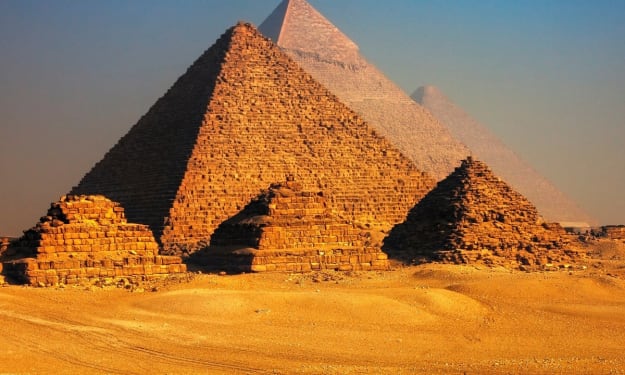
Pyramids mystery. Content Warning. AI-Generated.
**Discovery of Ancient Nile River Branch Sheds Light on Pyramid Construction** A team of researchers from the University of North Carolina Wilmington has made an incredible discovery: a long-lost 64-kilometre-long branch of the Nile River. Buried for thousands of years beneath desert sands and farmlands, this ancient river branch has now been mapped using advanced radar satellite imagery. This finding not only unravels a significant piece of Egypt’s ancient landscape but also provides a clearer understanding of how the magnificent pyramids were constructed. ### Unveiling the Hidden River Professor Eman Ghoneim, an earth and ocean sciences expert at the University of North Carolina Wilmington, led the study that brought this hidden river to light. By utilizing radar satellite technology, the team could penetrate the surface of the sand, revealing buried features that had long been concealed. This technological breakthrough enabled the creation of detailed images of the ancient riverbed, offering a glimpse into a time when the landscape was vastly different. ### The Role of the River in Pyramid Construction The newly discovered river branch once flowed alongside 31 pyramids in Egypt, a fact that significantly enhances our understanding of ancient Egyptian engineering and logistics. According to the study, this river was a crucial transportation route, used to ferry giant stone blocks needed for building the pyramids. For years, scholars have speculated about the methods used by the ancient Egyptians to move these massive stones. The discovery of the Ahramat branch of the Nile provides tangible evidence supporting the theory that waterways were used extensively in the construction process. The study notes that many pyramids had causeways that ended at the riverbanks, suggesting that the river was integral in transporting materials from quarries to construction sites. ### Connecting the Past to the Present Professor Ghoneim shared his excitement about the discovery, highlighting its significance in understanding ancient Egypt. "Many of us who are interested in ancient Egypt are aware that the Egyptians must have used a waterway to build their enormous monuments, like the pyramids and valley temples, but nobody was certain of the location, the shape, the size, or proximity of this mega waterway to the actual pyramids site," he explained. "Our research offers the first map of one of the main ancient branches of the Nile at such a large scale and links it with the largest pyramid fields of Egypt." This discovery helps fill in the gaps about the logistical challenges faced by the builders of the pyramids. It explains how they could transport enormous stone blocks over long distances without the modern conveniences we take for granted today. ### The Impact of the Discovery The implications of this finding are profound. Not only does it provide a clearer picture of how the ancient Egyptians managed to construct such colossal structures, but it also offers insight into the environmental and geographical conditions of the time. Understanding the ancient river systems can shed light on how the Egyptians adapted to and managed their environment, ensuring their survival and prosperity. The discovery also underscores the importance of modern technology in uncovering historical truths. Radar satellite imagery has proven to be a game-changer in archaeological research, allowing scientists to explore beneath the surface without invasive digging. This non-invasive method preserves the integrity of archaeological sites while providing valuable data. ### Future Research and Exploration With the discovery of the Ahramat branch, new questions arise. Researchers are now eager to explore further, mapping other potential river branches and water systems that might have played a role in ancient Egyptian civilization. Each new discovery brings us closer to fully understanding the ingenuity and resilience of one of history’s most fascinating cultures. The University of North Carolina Wilmington's study not only enriches our knowledge of ancient Egypt but also inspires a new generation of researchers to continue exploring our planet's hidden past. As technology advances, who knows what other secrets lie buried, waiting to be uncovered by curious minds and innovative tools? In conclusion, the unearthing of this ancient river branch is more than just a remarkable archaeological find. It is a testament to the enduring human spirit of exploration and the relentless quest for knowledge. This discovery not only illuminates the past but also connects us to the ingenious minds of ancient Egyptians who harnessed the power of nature to create some of the most awe-inspiring monuments the world has ever seen.
By DARSHAN PAL SARASWAT2 years ago in History
What is the largest dinosaur?
Weighing about 136 tons and over 30 meters long, the largest mammal on Earth is the blue whale (Balaenoptera musculus). But what is the largest land animal? Today it is the elephant that holds this title, but if we take a look at the past, we will find creatures of greater size. Many of the dinosaurs were larger and bigger than modern elephants, hippos and rhinos. Some of the largest dinosaurs were the sauropods, a group of saurischian, exclusively herbivorous dinosaurs that lived between the Upper Triassic and Upper Cretaceous, with long necks, small heads and very long tails. Specimens belonging to the group of sauropods known as Titanosauria were truly giant, weighing close to 100 tons.
By Alexander Llontop2 years ago in History
The Real Origin of Cleopatra Queen of Egypt
Cleopatra, one of ancient history’s greatest rulers, is the embodiment of global fury that has been building up over the past few months, with the debate turning viral and being widely discussed in mainstream media. The recent case that six scholars filed against Netflix for distorting the life of Cleopatra is one of the standout moments of the media war. To approach this thorny debate effectively we will analyze the persona of Cleopatra and briefly sketch her life from the very beginnings to better arm you with unassailable weapon: The Truth.
By Amine Oubih2 years ago in History
Insane Rule That Allows British Spies To Commit Murder
The sun descending into a far-flung and barren spot in Syria is casting long shadows across the decaying city and the dusty streets. This now-forgotten corner of the Middle East is where a high-stakes show is happening with the CIA and the British MI6 in charge of the orchestra. Both organizations have merged their resources for several months and are decided to break the terrorist plan of colossal scale. After scouring the globe for the perpetrators, the MI6 operatives have finally cornered their quarry: four youths, blazing with their ideals, ready to give up their lives for the sake of their beliefs. The organization is founded and headed by a seasoned and calculating figure who strives to completely destroy the UK.
By Amine Oubih2 years ago in History