Discoveries
Rise TV Show Discovers First Etruscan Pyramids of Italy
Major Key Points:- Archaeologists from the U.S. and Italy discovered the first Etruscan pyramid beneath a wine cellar in Orvieto, Italy.The subterranean structures were carved into the Tufa plateau rock, with only the topmost modern layer visible.Initial observations revealed antique stairs indicating Etruscan construction and a system of tunnels beneath the wine cellar.The excavation uncovered various historical layers with artefacts like Attic ceramics and Etruscan pottery.The deepest level excavated dates back to the mid-5th century B.C., with an underground passage leading to another pyramidal structure.The Etruscans, flourishing around 900 B.C. and absorbed by the Roman Empire between 300 and 100 B.C., were influential in various cultural aspects.The Orvieto pyramids, unique in Italy, could provide unprecedented insights into Etruscan civilization.There are at least five Etruscan pyramids beneath Orvieto, with three yet to be excavated.
By Gutavo Martini2 years ago in History
The Mystery of Noah's Ark: Unraveling Ancient Flood Legends
In 1959, Army Captain Ilhan Durupınar flew an aerial reconnaissance mission for NATO to map a remote area in the Turkish Highlands, altered by recent earthquakes. During this routine flight, he spotted an unusual formation among the rocks, which he photographed. Upon developing the film, he was surprised to see what appeared to be the remains of a large ship far inland, 6,500 feet above sea level. This unexpected discovery stirred speculation that he might have stumbled upon a great biblical mystery: Noah's Ark.
By Benjie Maybuena2 years ago in History
The Philippines: A Journey Through Millennia
The history of the Philippines is rich and complex, beginning with the arrival of its first human inhabitants around 60,000 years ago. These early settlers likely used rafts or boats, gradually forming diverse groups that expanded into larger settlements. Over thousands of years, these groups evolved into early states. From around 4000 BC, Austronesians and speakers of Malayo-Polynesian languages began arriving in waves, bringing new cultures and technologies.
By Benjie Maybuena2 years ago in History
The Enigmatic Holy Grail: History, Legend, and the Quest for Immortality
In Jerusalem, 33 AD, as described in the Gospels, Jesus gathers his 12 disciples for a final meal, known today as the Last Supper. Central to this event is an ordinary cup, believed by many to possess extraordinary power—the Holy Grail. This vessel, used by one of the most famous individuals in history during a significant meal, has become legendary. The Last Supper is thought to have occurred during the Jewish holiday of Passover. According to the Gospel of Matthew, Jesus blesses the meal, distributing bread and wine, which he refers to as his body and blood, instructing his followers to do this in remembrance of him. The cup, mentioned in the Gospels of Matthew, Mark, Luke, and First Corinthians, becomes a focal point of Christian tradition and mythology.
By Benjie Maybuena2 years ago in History
Juneteenth Day. Content Warning.
Juneteenth: A Celebration of Freedom's Long Road Juneteenth, otherwise called Celebration Day, Liberation Day, or Opportunity Day, is an occasion noticed yearly on June nineteenth in the US. It celebrates the appearance of Association Significant General Gordon Granger in Galveston, Texas, on June 19, 1865, with news that the oppressed individuals in the Confederate states were at long last free. This undeniable the finish of bondage in the US, north of more than two years after the Liberation Decree was given by President Abraham Lincoln. This paper dives into the rich history and meaning of Juneteenth, investigating its foundations, customs, and continuous pertinence in the battle for racial equity. **The Getting through Tradition of Slavery** To comprehend Juneteenth, we should initially go up against the merciless tradition of subjection in America. Oppressed Africans were gotten to the provinces the sixteenth hundred years and compelled to work under a framework that dehumanized them for a really long time. This framework turned into the groundwork of the Southern economy, with cotton estates depending intensely on subjugated individuals' neglected work. The battle against subjugation was long and burdensome. Abolitionist developments arose in the North, supporting for a finish to the training. Be that as it may, the profound financial and social divisions between the North and South eventually prompted the Nationwide conflict (1861-1865). **The Liberation Declaration and its Deferred Impact** In January 1863, President Lincoln gave the Liberation Decree, pronouncing oppressed individuals in Confederate states to be free. This was a critical defining moment, however it didn't quickly end bondage. It simply applied to states in resistance, not the line expresses that stayed faithful to the Association. Also, requirement was troublesome in regions still under Confederate control. **The Appearance of Opportunity in Texas: Juneteenth** The significant delay for opportunity at last finished for subjugated individuals in Texas on June 19, 1865. Significant General Gordon Granger showed up in Galveston, Texas, with north of 2,000 Association troops to declare the finish of the Nationwide conflict and, all the more critically, the freedom of oppressed individuals in the state. This news, postponed by the distant area and slow correspondence of the time, denoted another part in American history. **From Subjugation to Liberation: The Introduction of Juneteenth Traditions** Juneteenth festivities started promptly following the declaration in Galveston. Previous slaves, excited by their freshly discovered opportunity, held social affairs loaded up with music, supplication, and thanksgiving. These early festivals established the groundwork for the customs that proceed right up to the present day. **Juneteenth Customs: A Festival of Resilience** Juneteenth customs fluctuate across the US, yet a few normal topics arise: * **Food and Feasts:** Juneteenth festivities are much of the time revolved around common dinners. Customary dishes incorporate red velvet cake (emblematic of spilled blood), grill, seared chicken, and watermelon. * **Music and Dance:** Juneteenth is a glad event, and exuberant music assumes an indispensable part. Gospel, blues, and jazz frequently consume the space, joined by cheerful moving. * **Rodeos and Parades:** Rodeos and marches are a typical sight in numerous Juneteenth festivities. These occasions exhibit African American culture and equestrian ability. * **Instructive Programs:** Juneteenth is likewise a period for learning and reflection. Instructive projects and verifiable reenactments feature the historical backdrop of subjection and the battle for opportunity. **Past Festival: Juneteenth's Getting through Relevance** While Juneteenth is an euphoric event, it fills in as a sign of the drawn out, difficult experience towards racial equity in America. Regardless of liberation, African Americans confronted colossal difficulties in the fallout of servitude. Reproduction, the period following the Nationwide conflict, saw endeavors to incorporate African Americans into society. Nonetheless, these endeavors were hampered by white opposition, prompting the ascent of Jim Crow regulations and isolation that persevered for a large part of the twentieth 100 years. **Juneteenth and the Continuous Battle for Racial Justice** Juneteenth keeps on holding enormous importance in the battle for racial equity. It fills in as a sign of the continuous battle for equivalent privileges and valuable open doors for African Americans in the US. * **A Call for Unity:** Juneteenth brings individuals of all races together to celebrate opportunity and recognize the common history of the US. It is a call for solidarity and understanding. * **Civil rights Movements:** Juneteenth rouses proceeded with endeavors to address racial imbalances in regions like schooling, lodging, and law enforcement. The occasion energizes the battle for civil rights and makes a space for discourse about a more evenhanded future. * **Protecting Dark History:** Juneteenth fills in as an essential sign of the commitments of African Americans to American history and culture. It urges endeavors to protect Dark history and guarantee that the voices and accounts of African Americans are heard. **Juneteenth in the 21st Century**
By Bikash Purkait2 years ago in History
Flag Day. Content Warning.
A Tapestry Woven Red, White, and Blue: A Exploration of Flag Day Flag Day, an apparently straightforward public recognition held every year on June fourteenth in the US, conveys a load far more prominent than its solitary day on the schedule. It's daily to spread out the public standard, the Stars and Stripes, a lively embroidery woven with strings of history, imagery, and public character. In any case, to really comprehend Flag Day, we should dive further, investigating the banner's starting points, its importance as a bringing together image, and the customs that have developed around this public occasion. A Birth Story Sewed in Stripes and Stars The American Flag, formally named the "Stars and Stripes" or the "Star-Radiant Flag," flaunts a rich history entwined with the country's own. Its story starts in the juvenile long stretches of the American Upheaval. In 1775, the Second Mainland Congress requested that a panel plan a banner to address the recently framed settlements. This panel, including George Washington himself, chose a plan highlighting thirteen exchanging red and white stripes, representing the thirteen unique settlements, and an association banner of Extraordinary England in the canton (upper left corner). This banner, known as the "Mainland Tones," filled in as the principal official banner of the US. Be that as it may, as the battle for freedom escalated, the longing for a particular public image developed. In 1777, the Second Mainland Congress passed the Flag Goal, authoritatively embracing the plan we perceive today. The goal indicated thirteen red and white stripes, a blue canton enhanced with thirteen white stars addressing the heavenly body of new states, and a changed extent of the actual Flag. This plan, brought into the world from the pot of upheaval, turned into the image of a country fashioning its own way. An Image of Solidarity Woven with Strings of Significance The American banner rises above simple texture. It goes about as a strong image, a visual portrayal of the country's fundamental beliefs and goals. The actual varieties are pervaded with importance. Red connotes boldness and penance, the blood spilled by the people who battled for opportunity. White addresses immaculateness, harmony, and the beliefs whereupon the country was established. Blue typifies carefulness, equity, and steadiness, the characteristics expected to keep a free republic. The thirteen stripes represent the first provinces, a consistent indication of the country's solidarity brought into the world from variety. The stars, once addressing the first thirteen states, have developed with the country, each new star connoting the expansion of another state to the association. Together, these components make a strong image of solidarity, helping Americans to remember their common history and normal fate. Flag Day is a chance to ponder these images and their importance. It's daily to commend the standards of freedom, equity, and equity revered in the American examination. The Flag turns into a mobilizing point, helping residents to remember their common objectives and obligations as a country. An Embroidery of Customs: Observing Banner Day The country over Banner Day is set apart by various practices across the US. Public structures gladly fly the banner, a noticeable presentation of public pride. Schools hold gatherings for understudies, showing them the banner's set of experiences and appropriate showcase decorum. Marches and local meetings frequently highlight the Stars and Stripes conspicuously, encouraging a feeling of shared personality. Numerous Americans decide to fly the banner external their homes, an individual articulation of nationalism and an image of welcome. Veterans' associations frequently hold banner commitment functions, respecting the people who have served and forfeited for the country. These customs, both excellent and cozy, wind around together an embroidery of public pride, helping Americans to remember the importance behind the image. **Past Nationalism: A Conversation on Developing Symbolism** The American banner is certainly not a static image. Its significance has developed after some time, mirroring the country's changing social and political scene. Conversations and discussions about the banner's portrayal and inclusivity have turned into a significant piece of Flag Day. As far as some might be concerned, the banner addresses a defective past, a sign of battles for racial correspondence and civil rights. These conversations empower a more profound comprehension of the country's set of experiences and the continuous journey to satisfy its goals. Flag Day gives a stage to open discourse about the beliefs the banner addresses. It's daily to recognize the country's blemishes while committing once again to the quest for a more wonderful association. Looking Forward: A Heritage Woven in the Stars and Stripes Flag Day, however a solitary day on the schedule, fills in as a strong sign of the American story. It's daily to commend the country's beliefs, consider its set of experiences, and recognize the continuous mission for a more wonderful association. The Stars and Stripes are not only a piece of material; they are a living image, continually developing close by the country it addresses. As the country pushes ahead, Flag Day gives an amazing chance to commit once again to the beliefs of freedom, equity, and correspondence. By grasping the Flag'
By Bikash Purkait2 years ago in History
Leonardo da Vinci: Beyond the Renaissance Genius
# Leonardo da Vinci: Genius, Time Traveler, or Extraterrestrial Envoy? The north Apennines of Italy, just outside Florence, served as a natural classroom for a young Leonardo da Vinci, who, despite being excluded from prestigious academies due to his illegitimate birth, immersed himself in the study of nature. While his contemporaries were confined to classrooms, Leonardo's self-directed exploration of the natural world laid the foundation for his unparalleled contributions to art and science.
By Benjie Maybuena2 years ago in History
Einstein's Theories: Bridging Time and Space
Albert Einstein's legacy, which includes over 300 scientific papers, continues to influence the world more than half a century since his death. While Einstein redefined our understanding of the universe, his theories may hold the key to another extraordinary possibility: time travel.
By Benjie Maybuena2 years ago in History
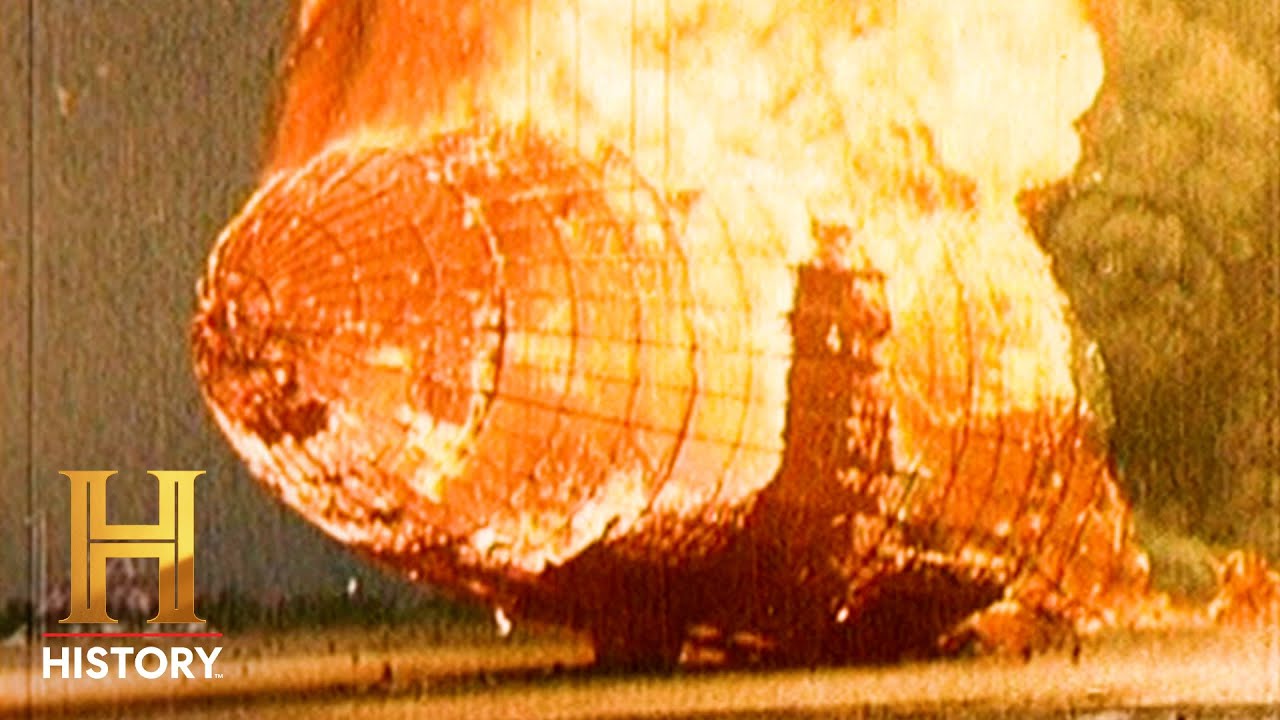
The Tragic Flight of the Hindenburg
On May 3, 1937, in Frankfurt, Germany, the Hindenburg, the world’s largest aircraft, prepared for its 11th transatlantic flight to New Jersey. Fueled by hydrogen and nitrogen, this dirigible offered a luxurious three-day passage across the Atlantic. The Hindenburg, notable for its immense size, rivaled the Titanic in grandeur and was built with a rigid metal frame filled with hydrogen cells, allowing it to float without wings. Its exterior was coated in aluminum powder varnish to reflect sunlight, preventing the hydrogen from overheating and ensuring the gas didn't inflate and burst.
By Benjie Maybuena2 years ago in History
HISTORICAL HISTORY . Content Warning. AI-Generated.
HISTORY ON ANCIENT & ANTIQUES Once upon a time, in a land far away, there existed a civilization that marveled at the beauty and intricacy of ancient artifacts and antiques. These objects held within them the stories of generations past, each one representing a piece of history that had been preserved and passed down through the ages. The people of this civilization were avid collectors of such relics, with each artifact holding a special significance and value to them. They would spend hours poring over ancient texts and scrolls, trying to decipher the mysteries hidden within these precious items.
By FinPetrol7772 years ago in History