Discoveries
Five Unsolved Mysteries of Ancient China that are being glossed over
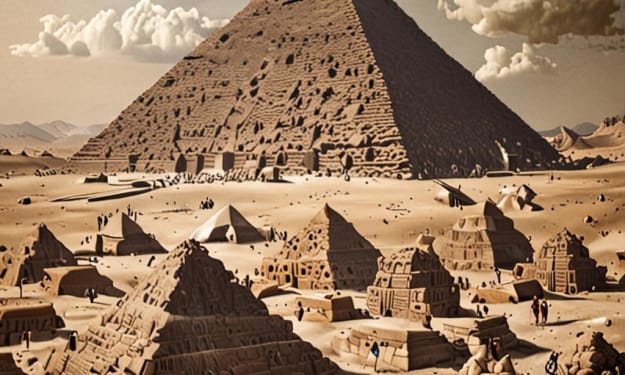
Perhaps the most mysterious legacy of past civilizations on Earth is rightfully considered to be the pyramids, which can be found in different parts of the world. In one of my videos, I already told you about many questions that the pyramids of Egypt pose to specialists, but at least as many questions are raised by the pyramids built in China. While the Egyptian pyramids are more or less accessible for research, the Chinese ones remain closed to the general public to this day.
By Vitalii Petrov2 years ago in History
Discovering the Fascinating History of Cat Worship at Chicago’s ISAC Museum
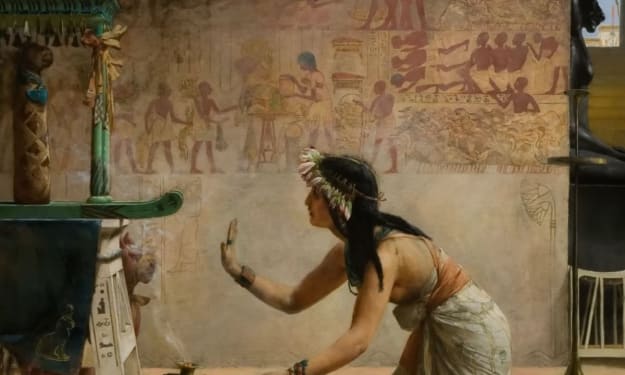
Discovering the Rich History of Cat Worship at Chicago’s Institute for the Study of Ancient Cultures Exploring ancient cultures is a fascinating journey, especially when it involves the intriguing history of cat worship in ancient Egypt. One of the best places to embark on this adventure is the Institute for the Study of Ancient Cultures (ISAC) at the University of Chicago. This hidden gem, located on the university's campus, offers a deep dive into the ancient world, with a special focus on the Middle and Near East, including the entire Nile Valley. Unveiling the Museum ISAC, previously known as the Oriental Institute, houses an impressive collection of approximately 350,000 artifacts. Despite only displaying about 2% of its collection, the museum provides a rich experience for visitors. Dr. Marc Maillot, the museum’s chief curator, explains that the museum covers everything from prehistory to the Early Middle Ages, including the newly integrated Islamic collection display. This vast chronological range ensures that visitors can explore an extensive array of historical periods. Highlights of the Collection Among the museum's treasures is a remarkable wooden painted stela from the Third Intermediate Period. This piece features the divine priestess of Amun, Djed-Khonsu Amun, presenting an offering to the god Ra-Horakhty. The artist's skill in creating a sense of transparency in the costume without mastering perspective is particularly noteworthy. This piece, like many others in the museum, helps bridge the gap between ancient and modern worlds, showing that ancient people shared many of the same feelings and experiences we do today. The Fascination with Cats A significant part of ISAC’s collection focuses on the religious and cultural importance of cats in ancient Egypt. Cats were revered not only as pets but also for their religious significance. The ancient Egyptian word for cat was "miu," a term that evokes a sense of affection. There are accounts, such as those by Herodotus, describing how Egyptians would go to great lengths to save cats, even running into burning buildings. Cat Worship in Ancient Egypt Ancient Egyptian religion often intertwined with economic and social practices. Statues of cats, like those depicting the lioness goddess Sekhmet and the gentler goddess Bastet, reveal the dual nature of feline deities. Sekhmet, known for her fierce nature, was believed to protect her father Ra, the sun god. In contrast, Bastet represented a more nurturing aspect. The myths surrounding these goddesses highlight the importance of balance and duality in Egyptian beliefs. The Darker Side of Cat Worship While many cats lived as cherished pets, archaeological evidence shows a more somber side to their story. Temples dedicated to cat deities had large pens where cats were raised. Priests would sometimes cull the herds, taking kittens as young as three or four months old, and mummify them as offerings to the gods. This practice was believed to ensure the gods' favor, which in turn would bring prosperity to Egypt. The Business of Cat Mummies The mummification of cats was a significant industry in ancient Egypt. Cat mummies, often placed in elaborate coffins, were used as offerings to deities. The practice was so widespread that large quantities of cat mummies were found in cat cemeteries, or "catacombs." In the late 1800s, about 180,000 cat mummies from a single site were exported to the UK for use as fertilizer, highlighting the vast scale of this practice. Amulets and Modern Connections The museum also features amulets, small protective charms often worn by people or placed on mummies. These amulets, made from a quartz-based pottery called faience, depict various deities, including feline ones. Today, many people still wear cat-themed jewelry, showing a continued fascination with these mystical animals. Reflecting on the Past ISAC not only preserves ancient artifacts but also engages with the ethical considerations of how these collections were acquired. The museum focuses on partnerships and education to ensure a respectful and collaborative approach to studying ancient cultures. This commitment helps bridge the gap between past and present, making the museum a place of learning and reflection. Conclusion The Institute for the Study of Ancient Cultures is a treasure trove of history, offering insights into the ancient world and its connection to our modern lives. Whether you are a cat lover or a history enthusiast, a visit to this museum promises an enriching experience that highlights the enduring bond between humans and their feline companions.
By Rabiul Molla2 years ago in History
Why Dubai's Islands May Be a Sinking Venture
Why Dubai's Islands May Be a Sinking Venture Dubai, a city inseparable from aggressive design projects and rich ways of life, has caught worldwide consideration with its man-made islands. From the famous Palm Jumeirah to the aggressive The World, these counterfeit archipelagos stand as images of Dubai's fast turn of events and its craving to set up a good foundation for itself as a head extravagance objective. Nonetheless, regardless of their underlying charm, there are developing worries that Dubai's islands may be a sinking speculation. Here's the reason:
By robail shahzadi2 years ago in History
That's Why People Don't Fly to the Moon! What Astronauts and Scientists Are Silent About
The public has yet to receive clear explanations as to why people stopped flying to the Moon. The lunar programs developed by both the Americans and the Soviet Union were closed in the early 1970s. While the Soviet Union, after the successful flight of the American spacecraft Apollo 11 to the Moon, simply admitted its defeat in this critical race, the Americans unexpectedly and sharply abandoned further flights, brushing off questions with a rather primitive response, claiming they saw no significant scientific value in Moon missions to justify the enormous budget expenditure. But then why do people not even plan to go to the Moon now? After all, technology has advanced so much that Elon Musk, with his MCT program, plans a manned mission to Mars with a surface landing as early as 2025.
By Vitalii Petrov2 years ago in History
The Beauty of Tradition
I experienced it myself a long time ago, when I was little. They wanted me to be more beautiful and attractive to men. You know... here thin women... aren’t considered the same as fat women. This is one of the last remaining places that carries on a very ancient tradition, that of forcing women to eat against their will to become fat. Beauty is a gift from God. Some have it, some don't.
By Jeanette M2 years ago in History
The Enigma of Dali Koumbé
It was God's will. Centuries ago, an ancestor of mine dreamt of an entity from another world. This entity announced that she would give birth to the most virtuous man, but without eyes. Since then, every descendant of hers has been born blind. We are embarking on a journey to the village of Dali Koumbé, a unique community where one in two people is blind. The mystery behind this condition is still unresolved, whether it's due to water or genetics. However, the community has managed to create a stable and unified society, and we want to understand what happiness means for them.
By Jeanette M2 years ago in History
Life in the Coldest City
What is it like to raise a family in the world's coldest city, where winter temperatures plummet to -64 degrees Celsius? Today, we explore the daily life of the largest family in Yakutsk, a family of 22 children who call this extreme place home.
By Jeanette M2 years ago in History
The High Stakes of Guiding on Everest
A small shift on a precarious ladder on Everest can turn catastrophic in a matter of seconds. Navigating the treacherous paths of the world's tallest mountain safely is the responsibility of Everest climbing guides, many of whom are ethnic Sherpas. These guides earn between $4,000 and $10,000 per climb, but usually, they can only count on one expedition per year. The job, one of the most dangerous in the world, saw a record number of climbers in 2023, along with a record number of deaths. Over the last century, 332 people have been lost on Everest, with over a third of them being mountain guides.
By Jeanette M2 years ago in History
Who hid from us the secret of building the pyramids . . .
The Japanese came to Egypt in 1977 to try to simulate the small pyramid with the same style and tools as the Pharaohs, and they stopped immediately and returned to Without Raid because the experiment failed resoundingly from the first moment, not because they were unable to lift the stones or even move them or just rinse and trim them, but because they were not They could not even cut it from the mountains surrounding the Mokattam area, using the same tools of the Pharaohs that the researchers assumed !!!! Your eyes may see what your consciousness does not see, and just as you do not see what is very small and your consciousness does not notice it, you also do not see what is very large and your consciousness will not notice it . The pyramid is a geometric-shaped building that has always caused mystery around it and made all Egyptologists, astronomers, engineers, and geologists salivate because of the wondrous secrets it contains, and pyramids are found in almost all civilizations of the ancient world, such as the Mayans, Incas, China, and even Japan, which has a pyramid sunk under the sea. Egypt alone has 118 pyramids, not just three or four as most people think . The three great pyramids in Egypt were always there, and it is recognized that they are tombs for the three kings of the pharaohs of ancient Egypt who told us that they were among the seven miracles of the ancient world and that the Great Pyramid was the first of those miracles . But what is the source of this information taught in schools and in Egyptology ? The source of all this information is some English paleontologists in the eighteenth century when they saw the pyramids and could not explain their existence, so they assumed that they were tombs because there was no other reason for their existence, and they assumed that they were from the era of the Fourth Pharaonic Dynasty, because they found antiquities close to them of the Fourth Dynasty, and they also assumed that Its age is the same as the surrounding ruins ، Scientists measure the age of antiquities using radiocarbon dating and measuring the half-life period, and because stones do not contain carbon, their age cannot be measured, so they rely on measuring the age of the antiquities around them, and they assume that they are from the same era ! The age of the pyramids was assumed to be 3000 years BC, according to the age of the monuments around them . These are all assumptions and theories said by a few people in the eighteenth century, and if everyone kept repeating what others said, no one would discover anything new, but in the subject of the antiquities of ancient civilizations specifically, what was written a hundred or two hundred years ago is considered a correct and recognized rule, and others are included in the interpretation of Dementia and astray. Some facts about the pyramids : The Great Pyramid, called the Pyramid of King Khufu, consists of two million and three hundred thousand stones whose weight ranges between two and a half and forty tons per stone . These millions of stones are assumed by these scientists to have been cut with primitive copper tools ! These scientists also told us that the pyramid was built in 20 years, if the number of these stones was calculated on 7 days a week, 10 hours a day for 365 days a year, then they must place a stone every two minutes ! But let us wait a moment, the ancient Egyptians were farmers, so they worked in agriculture all year round except for three months, which was the time of the flood, and they decided to build the pyramid during this holiday, so a stone must be placed every two seconds, a stone weighing at least two tons every two seconds ، Therefore, there were no bricks that workers threw at each other from bottom to top, as happens today, unless the ancient Egyptian could throw a two-ton stone 147 meters high so that his colleague at the top could pick it up and simply place it on the building . How was the pyramid built ? These English thought and made more assumptions: they said that the ancient Egyptians, who had not yet invented the wheel, must have used tree trunks to transport stones - regardless of the time used - which they must have imported from Europe, because if the pyramids had not been noticed, they would have been built in the middle of the desert There is not a single piece of evidence for all of these assumptions to occur, but they were considered axioms and a fact that is studied to this day. More puzzles : - There are more than a million hieroglyphic walls in Egypt and millions of papyri, telling everything about the lives of the ancient Egyptians, how they lived, grew, and married, and there is not a single wall on which even a single sentence is written, such as: "And by the way, we built the pyramids ! ". With the Egyptians’ intense love for writing on walls and recording all the details of their lives, there is not a single hieroglyphic wall inside the pyramids that explains or refers to their construction . There are some texts and papyri that talk about a great building, but they say that those who built it were "the sun gods Sun Gods ". These sun gods were talked about by the Egyptians, Japanese, Chinese, Inca and Maya civilizations, and every civilization had pyramids . - Not a single mummy was found in any of the pyramids, and I am not talking here about the pyramids of Egypt only, but all the pyramids in the whole world did not bury a single human being in them . When the Great Pyramid was discovered, it was closed on all sides, so the Arabs were forced to throw a catapult, stones, and vinegar at it so that they could open it. What did they find ? Inside the burial chamber is this strange coffin carved from a single piece of stone that was not found in Egypt, and its size is larger than the size of the corridors leading to it and the entrance to the room. It was tightly closed with a piece of tile weighing forty tons, and when this coffin was opened, there was no There is nothing inside it . How did paleontologists explain this ? They said the thieves stole it ! Thieves penetrated the closed walls and lifted a forty-ton stone, then stole everything and returned the stone, then penetrated the walls again and fled!! Geographical and astronomical secrets of the Pyramids of Giza : The shape shaded in red is the Great Pyramid, the site in which it was built, making its edges indicate the boundaries of the two branches of the Nile Delta. Indeed, if a thread had been extended from each end to the end of the northern border of Egypt, the two threads would have contained all the branches of the Nile between them, and the only way to achieve this is to see the site. From the sky ! - The Great Pyramid is located exactly at longitude 31 west and latitude 31 north (coincidentally ? ) Ten thousand years BC, there was what was called the one great continent of planet Earth, in fact the pyramid was located in the center of the dry land at that time . The pyramid, with its four sides, points to the original four sides, north, south, east, and west, and with amazing accuracy, it points to the true north of planet Earth, not magnetic north The three pyramids, with their construction proportions and distances between them, represent with amazing accuracy the star cluster called "The Three Kings" located in the Orion Belt, as we see in these two images attached to the leaflet . To be precise, these stars were not in those positions in relation to the pyramids in the period in which the pyramids were supposed to be built, 3000 years BC. Rather, they were in these locations with absolute accuracy since 10 thousand years BC, before any recorded date of the existence of humans on Earth . Indeed, the internal geometric structure of the Great Pyramid matches the celestial signs and stars to contain more secrets of the universe and space . - There is a giant statue called the Sphenx Sphinx next to the pyramids with the body of a lion and the face of a human . In fact, this statue is found in other places in the world in different sizes, but it still retains the face of a lion. This statue was not built in reality, but was carved from a single piece of stone and was the face of a lion before the face was re-sculpted to represent Pharaoh Ramesses II (in Most theories) In addition to its giant size, there is something strange about this statue, which has factors of erosion due to water that did not exist In this region only 10 thousand years BC and after that it turned into a desert . Rather, it represented the sign of Leo, which is the period Era, which existed 10 thousand years BC according to astronomy . Engineering facts : - If you take the circumference of the base of the pyramid and divide it by twice its height, you will get the number 3.41459, which is called the number Pi, with great accuracy until the fifteenth decimal point, which humanity could not calculate until the sixth century AD and for the fourth decimal point only ! The height of the Great Pyramid is 147 meters, representing one billionth of the distance between the Earth and the Sun . The length of each side at the base of the pyramid is 230.4 meters, yet its base continues to represent a right-angled square with amazing accuracy . Other facts : The temperature inside the pyramid is the average Earth temperature of 20 degrees Celsius at all times . - The meat and milk inside the pyramid do not spoil, and if you put a knife and left it overnight, you would find it sharp the next day . The pyramids were covered with a layer of shiny stones used in building Cairo when the Arabs entered it. This layer reflected the rays of the sun and stars and collected cosmic rays inside the pyramid . Sun gods in all civilizations : All ancient civilizations (which have pyramids) talk about the sun gods, and the Pharaonic myth tells about the so-called beginning of time when the sun gods came in boats from the sky to teach humans construction, agriculture, and laws, and the Pharaonic myths tell about the blue-eyed sun gods with Golden hair, big heads, and great wisdom, but this was the ancients’ interpretation of the wonders they saw. Is this our interpretation as well ? What do Isis and Osiris carry ? What are these strange-headed creatures ? Among the pictures there is a picture with which I will conclude this topic, which is of an ancient skull found in the Inca civilization, this skull, which they interpreted as saying that the Inca people used to wear heavy helmets to change the shape of the skull in this way to imitate the shape of the sun gods in their perception . But is it possible to also increase the size of the brain to three times its normal size to fill this void ? Years ago, films and family cartoon series were released whose head sizes mimic the size of this skull. The question remains: Who built these pyramids all over the globe 10,2015 years ago and who hid this secret from us?
By Mosap Homa2 years ago in History
Exploring the world of Tom Sawyer. Content Warning.
Title: Exploring the World of Tom Sawyer In the sleepy town of St. Petersburg, Missouri, a mischievous young boy named Tom Sawyer embarked on a series of thrilling adventures that would capture the hearts and imaginations of readers for generations to come. Mark Twain's classic novel, "The Adventures of Tom Sawyer," invites us into a world of childhood wonder, friendship, and excitement.
By Books Keeper2 years ago in History