Discoveries
HISTORICAL FACTS ABOUT CARS
Cars have become an integral part of modern life, evolving from simple mechanical contraptions into sophisticated machines that embody cutting-edge technology and design. Their history spans more than a century, reflecting remarkable advancements in engineering, safety, and environmental consciousness.
By Ezekiel Adewale Ogunleye2 years ago in History
A Comprehensive Guide to the Personalities of the Rat, Ox, Tiger, and Rabbit Zodiacs
We will embark on a journey to understand the first 4 Chinese Zodiac signs and their profound meanings, shedding light on the unique characteristics and symbolism associated with each sign.
By Trần Nguyên Quý2 years ago in History
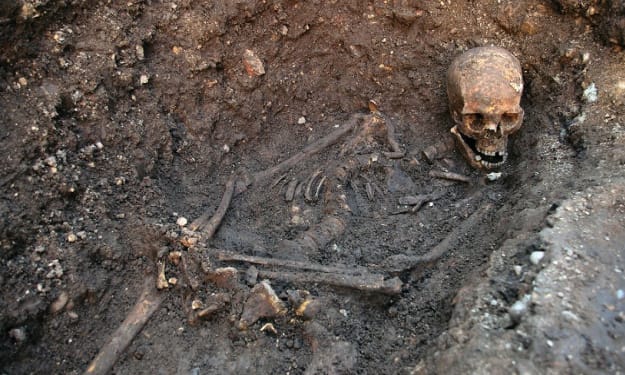
Richard III: The Rediscovery and Reburial of England’s Last Plantagenet King
The story of Richard III, the last monarch of the Plantagenet dynasty, is one of historical intrigue, political machinations, and a dramatic rediscovery. Richard's death on August 22, 1485, at the Battle of Bosworth Field marked the end of the Wars of the Roses, a series of dynastic conflicts that shaped medieval England. His body was transported to Greyfriars, Leicester, and unceremoniously buried, eventually being lost to history. Remarkably, over five centuries later, in 2012, his grave was discovered beneath a parking lot in Leicester. This rediscovery, spearheaded by Philippa Langley and the Looking for Richard project, and the subsequent reburial of Richard III at Leicester Cathedral on March 26, 2015, captivated the world and provided a new chapter in the story of this enigmatic king. The Battle of Bosworth Field and Richard's Death The Battle of Bosworth Field was a pivotal moment in English history. Richard III, who had become king in 1483, faced the forces of Henry Tudor, later Henry VII. The battle, fought on August 22, 1485, resulted in a decisive victory for Henry Tudor. Richard's death in this battle marked the end of the Plantagenet dynasty and the beginning of the Tudor era. Accounts of Richard's death describe a chaotic and brutal end. Examination of his skeleton in 2012 revealed that he likely met his demise either from a massive blow to the back of the skull with a halberd or a sword thrust that penetrated through his brain. These injuries align with contemporary accounts of his death, suggesting he was killed in the thick of battle, possibly after being unhorsed and fighting valiantly to the end. The Historical Context and Richard’s Burial Following his death, Richard III's body was taken to Leicester. Historical records indicate that he was buried at the Church of the Greyfriars, a Franciscan friary in the city. However, over time, the exact location of his grave was forgotten, especially after the dissolution of the monasteries in the 16th century when many religious sites were destroyed or repurposed. The site of the friary was built over, and Richard's grave was lost to history. The mystery of Richard's final resting place lingered for centuries, becoming a subject of fascination for historians and enthusiasts of English history. Despite numerous theories, no concrete evidence of his burial site emerged until the early 21st century. The Search and Discovery The search for Richard III's remains began in earnest in August 2012, led by Philippa Langley and the Looking for Richard project. This endeavor was supported by the Richard III Society, an organization dedicated to the study of Richard's life and times. The archaeological excavation was spearheaded by the University of Leicester's Archaeological Services, bringing together a team of experts in various fields. The project began with a seemingly improbable hypothesis: that Richard's remains might lie beneath a modern-day parking lot in Leicester, the site of the former Greyfriars friary. Initial ground-penetrating radar surveys indicated the presence of structures consistent with the layout of the friary, prompting a full-scale excavation. On September 5, 2012, the team uncovered a skeleton with spinal abnormalities and significant battle injuries. These initial findings suggested the remains could indeed belong to Richard III. Further analysis, including comprehensive anthropological and genetic testing, confirmed the identity of the skeleton. DNA analysis matched the remains to known descendants of Richard’s sister, Anne of York, providing definitive proof. Anthropological and Genetic Analysis The examination of Richard III's remains provided a wealth of information about the king's life, death, and physical condition. The skeleton revealed that Richard suffered from scoliosis, a curvature of the spine that would have made one shoulder higher than the other. This physical condition might have contributed to the historical portrayal of Richard as a hunchbacked villain, although contemporary accounts and his own contemporaries likely exaggerated his deformities for political reasons. The battle injuries were extensive and gruesome. The most significant were two fatal injuries to the skull, consistent with a massive blow from a halberd and a penetrating sword wound. Additional injuries included cuts to the ribs and pelvis, indicating a violent and chaotic death. The analysis also showed that Richard had lived with these deformities for many years, suggesting a high tolerance for pain and discomfort. The Reburial at Leicester Cathedral Following the confirmation of the skeleton's identity, plans were made to give Richard III a burial befitting a king. On March 26, 2015, Richard III was reburied at Leicester Cathedral in a solemn and dignified ceremony. The reburial was attended by numerous dignitaries and descendants, including representatives of the British royal family. The ceremony was marked by a series of events celebrating Richard's life and legacy, including a procession through the streets of Leicester and services at various historical sites associated with his life and death. The reinterment site in Leicester Cathedral is now a place of pilgrimage and reflection, attracting visitors from around the world who come to pay their respects to England’s last Plantagenet king. The Legacy of Richard III The rediscovery and reburial of Richard III have sparked renewed interest in his life and reign. Traditionally portrayed as a ruthless and power-hungry villain, modern historians have re-evaluated Richard's legacy, suggesting he may have been a more complex and capable ruler than previously thought. The popular image of Richard III owes much to William Shakespeare's play, which depicted him as a malevolent hunchback responsible for numerous crimes, including the murder of his nephews, the Princes in the Tower. The scientific analysis of his remains and the historical reassessment have contributed to a more nuanced understanding of Richard III. While he remains a controversial figure, his rediscovery has provided a unique opportunity to explore the realities of his life and reign, separate from the myths and propaganda that have long surrounded him. Conclusion: A Remarkable Chapter in English History The rediscovery of Richard III’s remains is a story of historical intrigue, scientific discovery, and human resilience. From the bloody fields of Bosworth to a forgotten grave beneath a parking lot, and finally to a dignified reburial in Leicester Cathedral, Richard's journey is a testament to the enduring fascination with England’s tumultuous past. His story reminds us that history is not just about dates and events but also about the people who lived through them and the enduring legacy they leave behind.
By Deji Akomolafe2 years ago in History
Emily's Metamorphosis
There once was a young woman named Emily who lived in a tiny town. Emily has always battled with her weight, going through ups and downs with various fitness fads and diets. Before she made the decision to tackle weight loss in a more sustainable and balanced manner, her road toward a healthy lifestyle seemed to be an unending struggle.
By weight-loss2 years ago in History
The Adam and Eve Story: A Controversial Theory of Cyclical Cataclysms
In 1966, a book was published that would spark decades of controversy and speculation about the fate of our planet. Titled "The Adam and Eve Story," it was written by Dr. Chauncey Powers Thomas, a former McDonnell Douglas engineer. The book presented a startling theory: that Earth undergoes regular, catastrophic pole shifts that wipe out most of humanity and reset civilization.
By KWAO LEARNER WINFRED2 years ago in History
Unveiling the Forgotten Past
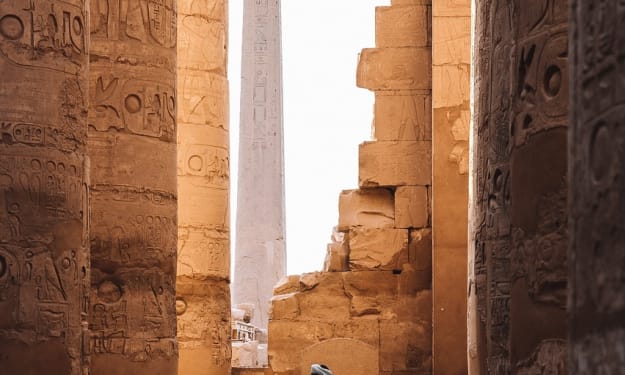
Introduction to the Buried Ancient Egyptian Port In the heart of Egypt's ancient landscape, a remarkable discovery has unearthed a hidden chapter of the past, shedding light on the intricate web of connections that once linked distant civilizations. Buried beneath the sands of time, an ancient Egyptian port has emerged, revealing a trove of artifacts and insights that challenge our understanding of the ancient world.
By Kevin MacELwee2 years ago in History
The Great Pyramid of Giza: Ancient Power Plant or Royal Tomb?
For centuries, the Great Pyramid of Giza has captivated the imagination of people around the world. Traditionally viewed as a tomb for the Pharaoh Khufu, recent theories suggest this ancient wonder may have served a far more advanced purpose. Could the Great Pyramid have actually been an enormous power plant, harnessing energy in ways we're only beginning to understand?
By KWAO LEARNER WINFRED2 years ago in History
How this boarder came into subcontinent. Content Warning. AI-Generated.
This is the Golden Temple. People come here from all over the world to bathe in its waters, to look at the Holy Book that is inside of this middle Golden Temple and to just experience the holiness of this place. This place is the epicenter of Sikhism. It sits right here in northern India in a city called Amritsar. Close by there's another important Sikh site called Kartarpur. It was established by the founder of Sikhism more than 500 years ago. It's the place where he spent the last years of his life and it is the second holiest place in Sikhism. For centuries, Sikhs have been able to make pilgrimage between these two sites to move freely throughout their heartland. But in 1947 a British lawyer drew a border here turning what had been British India into two new countries, India and Pakistan. I could only call it one of the most bizarre lines, which were ever drawn across a map It went right here with the Golden Temple on one side and Katarpur on the other. Thanks to this border Sikhs in India are now cut off from their holy site. So many come here to a platform that the Border Patrol set up. The platform looks across the border where with the help of telescopes, Sikhs can look at their holy place just three or four kilometers away. In addition to cutting off communities from their sacred sites, this border separated families, cut across rivers, forests, farms, railroad tracks. Today this border is heavily fortified with nearly all 3,000, plus kilometers fenced. It's lit so well that you can see it from space and barely anything or anyone crosses over it When we talk about the drawing of the line, what was the most painful was the division of families which took place and that is a very big reality. This is the story of a violent separation. One of the most traumatic events of the 20th century It's the story of how a hastily drawn line on a map separated one people into two. This is a horror story. What we saw was a town soaked with the stench of death. In the train of murder and arson, come the refugees. Their suffering is the new tragedy of India. Many will never reach their new land. These are the things that are setting the heart burning on either side of the line. The sun is setting and I'm walking along one of the oldest roads in Asia One that used to connect this region but today a border runs through it and instead of connection and trade what you see here is this: There's barbed wire, there's fences, there are officers everywhere and yet, there's also ice-cream and popcorn and paraphernalia. This feels like a sporting event. You can buy keychains of machine guns. Thousands of spectators file in, filling this stadium that looks down on the border. On the other side Pakistanis are doing the same. Then, both sides start their different show. Two hours of chanting and dancing Then the finale, a face-off between the two sides. They strut back and forth in this coordinated choreography and it all ends with the lowering of each flag and the closing of this gate. This bizarre border show plays out every evening. But this ceremony, this fence, this intense nationalism If you rewind just a little in time, none of this existed. The British controlled parts of India for nearly 200 years but by 1947, a strong movement of independence was swelling across the subcontinent
By Timothy Mwiti2 years ago in History
Uncovering the Mystery of Alaska's Dark Pyramid
Deep in the heart of Alaska's wilderness, a story persists of a covert underground facility housing an ancient, enigmatic structure known as the "Dark Pyramid." This tale, blending elements of military secrecy, advanced technology, and potential extra-terrestrial involvement, has captivated conspiracy theorists and UFO enthusiasts for decades. But what evidence exists to support these claims, and how much of it is merely speculation?
By KWAO LEARNER WINFRED2 years ago in History
Ancient civilization
The world of art is a vast and fascinating one, with countless masterpieces that have captivated and inspired people throughout the ages. From the intricate sculptures of ancient civilizations to the vibrant paintings of the Renaissance, each era has left its mark on the artistic landscape. But have you ever wondered what the oldest known painting in the world is? What stories and secrets does it hold, and what can it tell us about the early days of human creativity?
By AKANJI ABDULAFEEZ2 years ago in History