Discoveries
Discovering the Magic of New Orleans
New Orleans, often referred to as the "Big Easy," is a city like no other. Nestled in southeastern Louisiana, this vibrant metropolis is renowned for its rich history, diverse culture, and unique blend of traditions. Whether you’re drawn to its lively music scene, historic architecture, or mouthwatering cuisine, New Orleans promises an unforgettable experience for every visitor. Let’s explore the wonders of this iconic city.
By Flip teche2 years ago in History
Why Did the Fish Run Away in the Sea of Mumbai?
Mumbai, India’s vibrant metropolis, has long been celebrated for its bustling cityscape and its lifeline: the Arabian Sea. Beyond its aesthetic allure, the sea has historically been a cradle of biodiversity and a vital source of livelihood for millions. However, over recent years, an alarming trend has surfaced—the noticeable decline in fish populations near Mumbai’s coastline. Fisherfolk, marine biologists, and environmentalists are increasingly asking the same poignant question: Why are the fish running away?
By Kamran Sunan2 years ago in History
Would We Even Exist Without Wool? A Chilling Truth. AI-Generated.
The Baa-rilliant History of Wool: A Sheep-Shaped Saga of Survival The history of humanity is intricately woven with the woolly tale of sheep. From the frigid grip of the Ice Age to the bustling factories of the Industrial Revolution, sheep have provided us with more than just a delicious Sunday roast. Their fleece, a miraculous gift of nature, has been our steadfast companion in the eternal struggle against the cold, shaping our lives, our cultures, and even our very destinies. Imagine a world without the comforting warmth of a woolen sweater on a crisp autumn day. A world where shivering through winter was the norm, and fashion was limited to crude animal skins. This chilling reality could have been our fate had it not been for the ingenuity of our ancestors, who recognized the potential of sheep's fleece and harnessed its power to transform human existence. In the primordial dawn of humanity, when our ancestors huddled around flickering fires in ice-age caves, wool offered a lifeline against the unforgiving cold. Crudely fashioned into cloaks and rudimentary garments, it provided a crucial layer of insulation, allowing our species to venture further from the warmth of the hearth and explore the vast, icy landscapes. This newfound mobility opened up new hunting grounds, expanded our territories, and ultimately paved the way for the development of early civilizations. One can only imagine the struggles of our early ancestors without wool. Imagine trying to hunt woolly mammoths while wearing nothing but a fig leaf (or perhaps a particularly enthusiastic attempt at leaf-stitching). The sheer volume of shivering would have likely deterred even the most determined hunter. And let's not forget the social implications. Dating would have been a frigid affair, with courtship rituals consisting mostly of desperate attempts to huddle closer to the fire. As human societies evolved, so too did our appreciation for wool. In the Bronze Age, when artisans first mastered the art of metalworking, wool became a symbol of wealth and status. Sumptuous woolen robes, intricately woven with gold and silver threads, adorned the shoulders of kings and queens, while the common folk made do with coarser, less fashionable garments. Wool, once a simple necessity, had become a marker of social distinction, a testament to one's place in the hierarchical order of society. One can only imagine the fashion faux pas of the Bronze Age without wool. Imagine kings and queens shivering in their loincloths, trying to maintain their regal bearing while battling the elements. The concept of "royal chills" would have become a serious public health concern, leading to a booming market for "royal-sized" fur pelts (though the environmental impact would have been catastrophic). The Middle Ages, a period of knights and chivalry, saw wool take on a new role – that of a warrior's armor. Beneath the gleaming plate of a knight's armor, layers of woolen undergarments provided vital protection against the cold, damp conditions of the battlefield. These garments, often infused with herbs and spices to ward off infection, helped countless warriors survive the rigors of medieval warfare, ensuring the continuity of dynasties and the preservation of kingdoms. Without wool, medieval warfare would have been a truly miserable affair. Knights would have spent more time shivering than jousting, and battles would have been decided not by bravery but by who could find the warmest rock to huddle behind. The phrase "braving the cold" would have taken on a whole new, more literal meaning, and the concept of "chivalry" might have been redefined to include "finding the warmest spot on the battlefield." The Industrial Revolution ushered in a new era of prosperity, and with it, a revolution in the production of wool. The advent of mechanized looms and spinning machines transformed the wool industry, making woolen garments more affordable and accessible to the masses. For the first time, ordinary people could enjoy the comfort and warmth of woolen clothing, from sturdy workwear to cozy Sunday best. This democratization of wool not only improved the quality of life for millions but also fueled the growth of a thriving textile industry, creating jobs and driving economic progress. Imagine a world without cozy woolen socks on a cold winter's day. A world where your feet were perpetually frozen, and the joy of snuggling up in a warm blanket was a distant, unattainable dream. It's a chilling thought, indeed. Today, in the 21st century, wool continues to hold a place of honor in our lives. From the high-fashion runways of Milan and Paris to the cozy corners of our homes, wool remains a cherished material, prized for its natural beauty, exceptional warmth, and remarkable versatility. Whether it's a luxurious cashmere scarf, a handcrafted woolen rug, or a finely tailored suit, wool adds a touch of elegance and sophistication to our lives. But the story of wool is more than just a tale of fashion and comfort. It is a testament to the enduring power of nature, a reminder of our deep connection to the natural world, and a celebration of human ingenuity. By harnessing the gifts of nature, we have not only survived but thrived, transforming ourselves from nomadic hunter-gatherers into a global civilization. And at the heart of this remarkable journey lies the humble sheep, a creature whose fleece has warmed us, clothed us, and ultimately shaped the course of human history. So the next time you snuggle up in a warm woolen sweater, take a moment to appreciate the remarkable journey of this incredible material. And remember, without the humble sheep, humanity might still be shivering in caves, trying to invent a more efficient way to rub two sticks together.
By Vishnu venugopal 2 years ago in History
"Unveiling Africa's Untold History: Myths, Secrets, and Legendary Heroes!"
Unveiling the Rich Tapestry of African History A Continent of Untold Stories The captivating mystery of the Sphinx, the ancient pyramids, and the vibrant cultures of Africa have intrigued the world for centuries. But the true story of Africa is far richer and more complex than most realize. This article explores the multifaceted history of Africa, covering its diverse civilizations, important events, and lasting legacies. From ancient kingdoms to struggles for independence and beyond, understanding African history is crucial to grasping the world today. Ancient Africa: The Cradle of Civilization The Dawn of Humanity Africa is often called the birthplace of humankind. Fossils and tools found in places like Ethiopia and Tanzania suggest that early hominids existed there millions of years ago. Archaeologists have discovered: Over 1.5 million years old tools in Tanzania. Fossils of early humans dating back over 200,000 years. These findings highlight Africa’s central role in human evolution. Rise of Powerful Kingdoms Several ancient kingdoms flourished across Africa, showcasing remarkable achievements: Ancient Egypt: Known for its pyramids and hieroglyphs, this civilization made strides in architecture and medicine. Kush: Located to the south of Egypt, Kush was famous for its pyramids and iron smelting technology. Axum: This civilization established trade routes and was one of the first to adopt Christianity. Great Zimbabwe: Renowned for its impressive stone structures and trading hubs, it illustrates the economic power of its time. Each kingdom had its architectural and societal breakthroughs. Trade and Cultural Exchange The trans-Saharan trade routes were vital for Africa's development. Traders exchanged goods like gold, salt, and textiles. This trade led to: Cultural diffusion among various regions. The spread of languages and religions. Economic growth that shaped societies. The Transatlantic Slave Trade: A Stain on Humanity The Brutal Reality The transatlantic slave trade had a devastating effect on Africa. It is estimated that 12 million Africans were forcibly taken to the Americas. The economic consequences included: Disruption of local economies. Loss of population, particularly in youth demographics. Breakdown of social structures. Resistance and Resilience Despite the horrors of slavery, many Africans resisted. Some notable examples include: The Amistad Rebellion: Enslaved Africans rebelled aboard a ship, fighting for their freedom. Resistance in Africa: Various uprisings occurred, with people uniting to fight back against enslavers. These stories of rebellion highlight the resilience of the African spirit. Long-Lasting Consequences The impacts of the slave trade continue to resonate today. Experts agree that it left: Deep social and economic scars. A legacy of racial inequality and discrimination. Routes of diaspora that shaped cultures worldwide. Colonialism and its Aftermath The Scramble for Africa In the late 19th century, European powers divided Africa during the Berlin Conference. This led to the creation of artificial borders, often ignoring ethnic and cultural lines. Maps from that period show: European countries claiming vast territories. A lack of regard for indigenous peoples’ rights. Resistance Movements Several African nations fought against colonial rule. Notable examples include: Maji Maji Rebellion: A revolt in German East Africa against oppressive colonial taxation. Algerian War of Independence: A fierce struggle that lasted for eight years, fighting French colonial rule. These movements display the determination and unity among African peoples. Legacy of Colonialism Colonialism left a complicated legacy. Many African nations still face: Economic challenges due to exploitative practices. Political instability stemming from imposed government structures. Social issues caused by historical divisions. The Struggle for Independence and Nation-Building The Fight for Freedom Mid-20th century Africa saw numerous independence movements. Key leaders like Nelson Mandela and Kwame Nkrumah played significant roles in their countries' liberation. Strategies included: Peaceful protests and negotiations. Armed resistance in some cases, particularly in Mozambique and Angola. Challenges of Nation-Building After gaining independence, countries faced several hurdles: Political instability and coups. Economic hardship due to reliance on colonial structures. Ethnic conflicts arising from colonial-era divisions. Some nations succeeded in building viable governments, while others struggled. Pan-Africanism Pan-Africanism emerged as a movement encouraging unity among African nations. It emphasized shared identity and purpose. Influential figures like Marcus Garvey advocated for self-determination and cultural pride. Their ideas continue to inspire movements today. Modern Africa: Challenges and Opportunities Economic Development Today's Africa presents both challenges and opportunities. Some statistics reveal: Several countries boast rising GDPs, indicating growth. However, about 40% of the population still lives on less than $1.90 a day. Growing sectors include technology and renewable energy. Political Landscape Africa's political scene is diverse. Some nations have made strides toward democracy, while others still experience authoritarian rule. Key developments include: Increased voter participation in several countries. Ongoing struggles against corruption and human rights abuses. Social Progress Modern Africa shows progress in various social areas: Improved literacy rates across many nations. Advancements in healthcare access and gender equality. These advances represent significant steps toward a brighter future. Conclusion: A Continent on the Rise Understanding African history reveals a rich and intricate narrative. Key takeaways include the continent's profound contributions to human civilization, the struggles against colonialism, and ongoing growth in the modern era. Looking ahead, Africa holds immense potential. Despite its challenges, the spirit of resilience and unity continues to shape its future. To truly appreciate this complexity, readers are encouraged to delve deeper into African history, promoting engagement and understanding of this dynamic continent.
By Story silver book 2 years ago in History
The Story of the Battle of al-Qadisiyyah: The Beginning of the Conquest of Persia
The Story of the Battle of al-Qadisiyyah: The Beginning of the Conquest of Persia Introduction The Battle of al-Qadisiyyah is one of the greatest battles in Islamic history, and represents a significant turning point in the Islamic conquests. This battle took place between the Muslims led by Saad ibn Abi Waqqas and the army of the Persian Sassanid Empire in 636 AD (15 AH). It ended with a crushing victory for the Muslims and paved the way for the complete conquest of Persia. In this article, we will review the details of the Battle of al-Qadisiyyah, its causes, events, results, and lessons learned from it.
By 💓 Pulse of Stories 💓2 years ago in History
Basus War: The Story of the Longest Tribal Conflict in Arab History
Basus War: The Story of the Longest Tribal Conflict in Arab History Introduction The Basus War is one of the most prominent tribal wars witnessed by ancient Arab history. This war lasted for more than forty years between the Taghlib and Bakr tribes in the Arabian Peninsula, and left a great impact on Arab culture and history. In this article, we will discuss the story of this war in detail, its causes, its most prominent events, and its lessons.
By 💓 Pulse of Stories 💓2 years ago in History
Battle of Stalingrad: The Turning Point of World War II
Battle of Stalingrad: The Turning Point of World War II Introduction The Battle of Stalingrad is one of the most important battles in modern history, and was a decisive turning point in World War II. This battle took place between the German army and the Soviet forces over a period of six months from 1942 to 1943. This battle witnessed massive human losses and events that changed the course of the war. In this article, we will review the background of the battle, its details, and its great impact on the course of history.
By 💓 Pulse of Stories 💓2 years ago in History
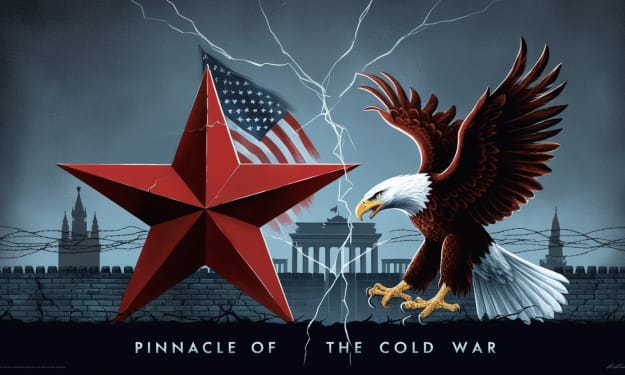
The Cold War: The Superpower Clash of the 20th Century
The Cold War: The Superpower Clash of the 20th Century Introduction The Cold War was one of the most influential periods in modern history. It lasted from the end of World War II in 1945 until the dissolution of the Soviet Union in 1991. This non-military conflict between the United States and the Soviet Union left a lasting impact on global politics, economics, and culture. In this article, we will delve into the details of this conflict that shaped the world as we know it today.
By 💓 Pulse of Stories 💓2 years ago in History