Discoveries
The Mystery of the Japanese Plane "Kagoshima 505" (1980): An Unsolved Enigma
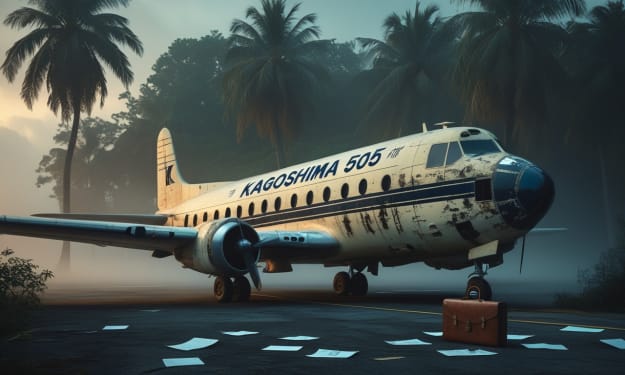
The Mystery of the Japanese Plane "Kagoshima 505" (1980): An Unsolved Enigma In 1980, one of the most mysterious and debated incidents in Japanese aviation history occurred: the disappearance of the Japanese passenger plane, "Kagoshima 505." This aircraft, operating as a domestic flight, vanished under puzzling circumstances during its journey between Kagoshima and Okinawa. The incident has sparked numerous questions and theories, yet no definitive answers have been found, making it a lingering mystery in aviation history. The Fateful Flight On the morning of June 15, 1980, the Japanese aircraft "Kagoshima 505," a Douglas DC-9, took off from Kagoshima International Airport en route to Naha Airport in Okinawa. The plane carried 45 passengers and 5 crew members, most of whom were local travelers and tourists. Initially, the flight progressed without issues. The pilots reported to air traffic control that the weather was clear and all systems were functioning normally. However, approximately 40 minutes after takeoff, the plane suddenly disappeared from radar screens. Air traffic controllers were unable to reestablish contact, leaving them and the families of those on board in shock and confusion. The Search for the Missing Plane Following the disappearance, Japanese authorities launched one of the largest search-and-rescue operations in the country’s history. Naval and air force teams, along with local fishing vessels, scoured the East China Sea for signs of the aircraft. The search efforts focused on the area believed to be the plane’s last known position. Despite weeks of extensive operations using advanced sonar and underwater search equipment, no wreckage or debris was found. The complete lack of evidence only deepened the mystery surrounding the flight. Theories Surrounding the Disappearance The absence of any physical evidence has led to a variety of theories attempting to explain the mysterious fate of "Kagoshima 505." Below are the most prominent explanations: 1. Mechanical or Structural Failure One widely accepted theory is that the plane experienced a sudden mechanical failure that caused it to crash into the sea. This could have been due to an engine malfunction, a structural issue, or a fuel problem. However, the pilots did not report any signs of trouble before the plane vanished, and no debris was ever recovered to support this theory. 2. Hijacking or Human Intervention Some speculate that the plane was hijacked. During the 1980s, hijackings were not uncommon, often motivated by political or personal agendas. However, no claims or demands were ever made, and no group took responsibility for such an act, making this explanation less likely. 3. Natural Phenomenon Another theory is that the plane encountered a rare and catastrophic natural event. Possibilities include encountering a severe air vortex, sudden turbulence, or an underwater volcanic eruption. While plausible, there were no reports of unusual weather or seismic activity in the area at the time, leaving this theory without concrete evidence. 4. Supernatural or Extraterrestrial Intervention As with many aviation mysteries, there are those who believe that something paranormal was at play. Some suggest the plane may have entered a "dimensional rift" or been abducted by extraterrestrials. While these ideas capture the imagination, they lack scientific basis and remain speculative. 5. Military Involvement or Accidental Shootdown A more controversial theory is that the plane was accidentally shot down during military exercises. The East China Sea is a region with significant military activity, and it’s possible that a training mishap led to the aircraft's destruction. However, no military organization has ever admitted to such an incident, and no evidence has surfaced to support this claim. Impact on Japanese Society The disappearance of "Kagoshima 505" had a profound impact on Japanese society, leaving families devastated and the public deeply unsettled. The lack of closure made the tragedy even harder to bear for the loved ones of the passengers and crew. The incident also prompted a reassessment of safety protocols and search-and-rescue procedures in Japan. Enhanced radar systems, better tracking technologies, and improved communication protocols were implemented to prevent a similar occurrence. Subsequent Developments Despite the passage of over four decades, the fate of "Kagoshima 505" remains unknown. In 1995, a small piece of debris washed up on the shores of a nearby island, and some speculated that it belonged to the missing plane. However, this was never conclusively verified. In recent years, independent researchers have used advanced technologies such as AI and underwater drones to search in previously unexplored areas. Yet, these efforts have yielded no breakthroughs. Conclusion The disappearance of the Japanese plane "Kagoshima 505" remains one of aviation’s most enduring mysteries. Whether it was due to mechanical failure, human intervention, or an unexplainable phenomenon, the truth continues to elude investigators. This incident serves as a reminder of the unpredictable nature of air travel and the many unknowns that still exist in our world. As long as the mystery remains unsolved, "Kagoshima 505" will continue to captivate the imagination of those fascinated by unsolved mysteries and the enigmatic stories of the skies.
By 💓 Pulse of Stories 💓2 years ago in History
The Shimmering Sands of Eldoria
The Shimmering Sands of Eldoria The blazing sun bore down on the endless golden dunes of the Sahara Desert, painting the horizon with mirages that wavered like ghostly promises. Amelia Grant, a renowned archaeologist with a reputation for chasing myths, stood on a ridge, clutching a weathered leather-bound journal. Its brittle pages contained the map to a treasure whispered about in ancient legends: Eldoria, the fabled city of gold, said to be swallowed by the desert centuries ago. Beside her was Karim, a seasoned desert guide who had spent his life navigating the shifting sands. His deep-set eyes reflected skepticism, but his curiosity was piqued by Amelia’s unwavering belief in the impossible. “Are you sure this is the place?” Karim asked, his voice tinged with doubt. Amelia nodded, pointing to the markings on the map. “The journal speaks of a constellation that aligns with this location. We’re close, Karim. I can feel it.” They trudged down the dune, their camels laden with supplies. As the sun dipped below the horizon, the desert transformed into a cold, quiet expanse. That night, under a sky bursting with stars, Amelia pored over the map again. Her fingers traced the faded ink, and her thoughts wandered to the stories her grandfather had told her—stories of an underground city where gold was as common as sand and knowledge as vast as the desert itself. The next morning, armed with determination, they set out again. The dunes seemed to stretch endlessly, each one a mirror of the last. Days turned into weeks, their supplies dwindling. Just as doubt began to creep into Amelia’s mind, Karim called out. “Look! There’s something over there!” In the distance, half-buried in the sand, stood an ancient stone pillar inscribed with symbols that matched those in the journal. They dug feverishly, uncovering a circular stone door engraved with celestial patterns. At its center was a depression shaped like the medallion Amelia wore around her neck—a family heirloom she now realized was the key to Eldoria. With trembling hands, she placed the medallion into the slot. The ground rumbled, and the door slowly slid open, revealing a dark, spiraling staircase that descended into the earth. The air grew cooler as they descended, their torches casting flickering shadows on the walls. The staircase ended in a cavernous chamber, and what lay before them took their breath away. Eldoria was real. The underground city sprawled out like a dream, its walls and buildings shimmering with gold. Intricate carvings depicted scenes of life and prosperity, with figures holding scrolls, harvesting crops, and worshipping celestial beings. At the city’s center stood a towering obelisk, its surface covered in a language Amelia couldn’t decipher. “This… this is beyond anything I’ve ever imagined,” Amelia whispered. Karim, usually stoic, was visibly awestruck. “It’s beautiful. But it feels… guarded.” As if in response to his words, a low hum filled the chamber. The golden obelisk began to glow, and a voice—neither male nor female—echoed through the cavern. “Who dares disturb the sanctuary of Eldoria?” Amelia stepped forward, her voice steady despite her racing heart. “We come seeking knowledge, not destruction.” The hum ceased, and a path lit up, leading to the obelisk. As they approached, Amelia noticed symbols etched on the ground, matching the constellations from the journal. “Step only where the stars guide you,” Karim muttered, recalling the journal’s warning. They carefully navigated the path, avoiding the unlit spaces. Behind them, a misstep by Karim triggered a trap—sharp darts shot from hidden walls. The danger was real, and the city’s defenses were as ancient as they were deadly. At the base of the obelisk, Amelia placed her hand on its surface. It warmed under her touch, and the carvings began to shift, forming a story. It told of a civilization that had thrived on knowledge, using gold not for wealth but as a means to preserve their wisdom. When invaders threatened, the people of Eldoria chose to bury their city, entrusting its secrets to the sands of time. Amelia felt a profound connection to the place, as if she had been chosen to find it. She and Karim explored further, uncovering vast libraries filled with scrolls, chambers of golden artifacts, and pools of crystalline water that seemed to reflect visions of the past. But their discovery was not without consequence. As they prepared to leave, the obelisk began to dim, and the city trembled. “It’s collapsing!” Karim shouted. Amelia’s mind raced. She realized Eldoria’s magic was tied to its secrecy. By exposing it, they had disrupted its balance. She made a choice. “We can’t let this knowledge be lost again,” she said, grabbing as many scrolls as she could carry. Karim did the same, and they sprinted for the staircase as the city crumbled behind them. Back on the surface, they watched as the sands shifted, burying Eldoria once more. “Do you think anyone will believe us?” Karim asked. Amelia held up a golden scroll, its surface gleaming in the sunlight. “They don’t need to. The proof is here, and its story will be told.” As they mounted their camels and rode toward civilization, Amelia couldn’t help but smile. They had unearthed not just a treasure but a legacy—a reminder that the greatest riches lie in knowledge and the courage to seek the unknown.
By Say the truth 2 years ago in History
Thalassia: The Forgotten Underwater Kingdom
The Forgotten Kingdom of Thalassia Centuries later, an ambitious marine archaeologist, Dr. Elina Torres, uncovers an ancient artifact on the coast of Madagascar—a shard engraved with coordinates leading deep into the ocean. Intrigued, she assembles a crew, including her rival, Dr. Ryan Caldwell, and sets off on a high-stakes expedition. As they dive into the abyss, strange occurrences start to unfold. Bioluminescent creatures gather around their vessel, currents seem to shift unnaturally, and whispers echo through their communication systems. The team eventually discovers a shimmering dome of energy protecting the sunken ruins of Thalassia. Upon entering, they are greeted by the remnants of the once-great city: towering coral-encrusted spires, glowing murals of an ancient aquatic race, and the Heart of Thalassia itself. However, their presence awakens the long-dormant guardians of the gem—colossal sea serpents and sentient whirlpools. The story unfolds into a thrilling adventure as Elina and Ryan must navigate traps, decipher ancient inscriptions, and face their own personal demons. As they near the gem, it becomes clear that its power is too great for any one person to possess. In an emotional climax, Elina sacrifices her chance at glory, returning the gem to its rightful place in the heart of the city to restore balance. The expedition ends with the team escaping by the skin of their teeth, leaving the lost city hidden for future generations. The story is a blend of heart-pounding action, tender moments of human connection, and the allure of uncovering the unknown. Thalassia, a name whispered among historians and marine archaeologists, had long been dismissed as a mere myth. It was a tale of an underwater kingdom said to have thrived thousands of years ago, a utopia that had sunk beneath the waves after a catastrophic event. The legend claimed that its people were technologically advanced, far beyond their time, and that their downfall was tied to a mysterious artifact known as the "Heart of Thalassia." This artifact, a jewel said to possess immeasurable power, was believed to be the kingdom’s lifeline—and its curse. For years, the story captivated divers and treasure hunters, but no one found concrete evidence of Thalassia. That was until marine biologist Dr. Elena Monroe and treasure hunter Jack Ryland teamed up. Elena, driven by a lifelong fascination with the ocean, had stumbled upon a series of peculiar underwater magnetic anomalies near the Bermuda Triangle. Jack, on the other hand, saw this as the adventure of a lifetime—a chance to cement his name in history. Equipped with cutting-edge diving technology and a small submersible, the two set out on their mission. As they descended into the ocean’s depths, the sunlight above grew faint, and the world turned into a realm of shadows and bioluminescence. The deeper they went, the more otherworldly it became. Strange, glowing plants waved gently in the current, and fish with translucent bodies darted past them. Finally, their sonar picked up a structure—a massive one. The ruins came into view slowly, shrouded in darkness and marine life. It was unlike anything Elena had ever seen. Towering spires of coral-encrusted stone rose from the ocean floor, resembling the skeletal remains of a once-thriving city. Ornate carvings were still visible on the walls, depicting scenes of daily life and reverence toward a large, glowing sphere. “This is it,” Elena whispered, her voice trembling through the comms. “Jack, we’ve found it.” The duo swam cautiously through the ruins, their flashlights illuminating what the ocean had kept hidden for millennia. They passed massive gates adorned with the intricate carvings of sea creatures and humans, as if the two had coexisted harmoniously. Statues of regal figures with flowing robes and crowns stood in silent vigil, their eyes fixed on the heart of the city. At the center of it all lay the Temple of the Heart, a grand structure that had somehow resisted the ravages of time. Its domed roof was cracked but intact, and its entrance was guarded by two massive statues of aquatic deities. Inside, the water felt strangely warm, and an unnatural light emanated from a pedestal in the center. Elena and Jack approached cautiously, their hearts pounding. There, suspended within a protective field of energy, was the Heart of Thalassia. The artifact was breathtaking—a massive sapphire, the size of a human Diary underwater kingdom of Thalassia. At its core lies the "Heart of Thalassia," a massive sapphire of immense power. As they approach the artifact, they unravel the mystery of a civilization lost to time, but the discovery comes with dangers they could never have anticipated. The story blends adventure, history, and fantasy, diving deep into the wonders and perils of the unknown.
By Say the truth 2 years ago in History
Fascinating Tales from the Past: History's Hidden Gems.
1919's Great Molasses Flood Envision a sticky catastrophe of monumental scale! A huge tank of molasses in Boston exploded, unleashing a 15-foot tsunami that raced through the streets at 35 miles per hour. Out of 150 persons injured, 21 died in this strange disaster. It took weeks to clean up, and for decades thereafter, many said they could still smell molasses on hot days.
By Neli Ivanova2 years ago in History
See the future today"Leonardo da Vinci
Bill Gates bought a book in 1994.And the price of this book was given to Bill Gates at that time.Had paid 30 million dollars.After all, what was in this book? Was Bill Gates crazy? No, no friends, nothing like that happened.Actually, this was a book of the future. The name of this book is Codex Leicester, which was written by the greatest genius of history, Leonardo da Vinci. This book was written between the year 1506 and the year 1510.And 500 years ago, at that time, Leonardo da Vinci had drawn pictures of future technology in this book, in which he had also mentioned the events that would happen in the future, and all this was done not with the help of any astrology but in a scientific manner. had gone In this book, those things about science education and technology were written that were going to be realized after 500 years in the future. Bill Gates had also used many pages of this book in the Mirror Page of Windows 95.And a small digital version of it was published for the whole world. This person is considered one of the greatest human beings to come into this world because this man was truly a genius.What do you think, friends? How many subjects can a person master? Two, four, six, brother, if a person can master even two, then it is not too much, but Leonardo da Vinci had mastery in so many subjects. Maybe even today it is not taught in schools.
By Abu Obaida2 years ago in History
A Slice of History: The Preserved Loaf of Herculaneum
Among the many fascinating artifacts unearthed from the ruins of Herculaneum—a city buried alongside Pompeii during the catastrophic eruption of Mount Vesuvius in 79 AD—one particularly extraordinary find stands out: a loaf of bread. This ancient loaf, baked on the fateful morning of August 24, 79 AD, provides a tangible and deeply human connection to a long-lost world. Carbonized by the intense heat of the eruption and preserved by the very oven it was baked in, the bread remains remarkably intact, bearing the name of its baker, an enduring testament to life in the Roman Empire. --- The Discovery of the Loaf Unearthed in 1930 during excavations in Herculaneum, this sourdough loaf was discovered in a baker’s oven, where it had been left to cool before the eruption struck. The catastrophic force of Mount Vesuvius's pyroclastic flows buried the city in a mixture of ash, pumice, and volcanic gases, preserving everyday objects in astonishing detail. The loaf of bread, blackened but unmistakably intact, is one such relic. Its round shape and carefully marked segments resemble modern-day bread, and an inscription stamped on its surface reveals the name of its maker, offering an intimate glimpse into Roman baking and commerce. --- Bread in Ancient Rome Bread was a dietary staple for the Roman population, consumed by all social classes. For the wealthy, bread might accompany lavish meals, while for the poor, it was often their primary source of sustenance. The bread of the time varied in quality and type, ranging from coarse, dark loaves made from barley or spelt to finer white breads crafted from wheat. The bread found in Herculaneum is believed to have been sourdough, a method of fermentation that naturally leavens the dough. Roman bakers were skilled artisans, and their bread-making techniques reflected the importance of this food in daily life. Stamped with a Baker’s Identity One of the most fascinating aspects of the Herculaneum loaf is the stamped imprint on its surface. Roman bakers often marked their bread with seals indicating the baker’s name, the bakery’s location, or even the bread’s intended recipient. This practice served both as branding for commercial purposes and as a means of ensuring fair distribution when bread was provided by the government. The stamp on the Herculaneum loaf reads the name of its baker, likely someone who owned or worked in the bakery. This small detail transforms the artifact from a mere object into a personal story, connecting us to the life of an individual who lived nearly two millennia ago. --- The Morning of August 24, 79 AD The day the bread was baked began like any other in Herculaneum, a thriving seaside town known for its affluent population, luxurious villas, and bustling markets. The baker would have risen early to prepare the dough, ferment it, and bake it in the oven, perhaps unaware of the ominous signs of the nearby volcano’s impending eruption. By midday, Mount Vesuvius erupted with catastrophic force, sending plumes of ash and molten rock high into the air. The people of Herculaneum had little time to react as pyroclastic surges raced down the mountainside, burying the town in a superheated wave of volcanic material. The intense heat carbonized organic matter, including food, furniture, and even entire buildings, preserving them in a state that allows modern archaeologists to study them today. --- What the Loaf Tells Us The preservation of this loaf is not just a scientific marvel; it is a profound reminder of the humanity of the people who lived in Herculaneum. This simple loaf of bread connects us to the rhythm of their daily lives, from the baker kneading the dough to the family who might have enjoyed it at their table. The loaf also sheds light on the advanced level of organization in Roman society. The practice of stamping bread with the baker’s name speaks to the commercial and social structures of the time, reflecting a system that valued accountability and traceability in food production. --- Preservation and Legacy Today, the carbonized loaf is housed in the National Archaeological Museum of Naples, where it continues to captivate visitors with its story. Alongside other artifacts from Herculaneum and Pompeii, the bread serves as a poignant reminder of the fragility of life and the enduring legacy of human culture. Efforts to preserve such artifacts are ongoing, as researchers use advanced techniques to analyze their composition and learn more about ancient diets and lifestyles. Studies of the Herculaneum bread, for example, have revealed insights into Roman baking techniques, the types of grains used, and even the nutritional content of the bread. --- A Taste of the Past The story of the Herculaneum loaf has inspired modern bakers and historians alike to recreate Roman bread using ancient recipes. These experiments offer a sensory experience of the past, allowing people to taste bread similar to what was eaten nearly 2,000 years ago. While we may never know the full story of the baker who made the loaf or the family who might have enjoyed it, this simple yet extraordinary artifact invites us to imagine their lives and reflect on the shared human experiences that transcend time. --- Conclusion The carbonized loaf of bread from Herculaneum is far more than a charred relic; it is a story frozen in time. Through its preservation, we catch a glimpse of daily life in the Roman Empire, from the bustling activity of a bakery to the tragic events of Vesuvius’s eruption. As we gaze upon this humble loaf, we are reminded of the enduring power of food to connect us to history, culture, and one another. It is a symbol of resilience, survival, and the intricate threads that bind humanity across the ages.
By Deji Akomolafe2 years ago in History
"The Curse of the Black Sapphire"
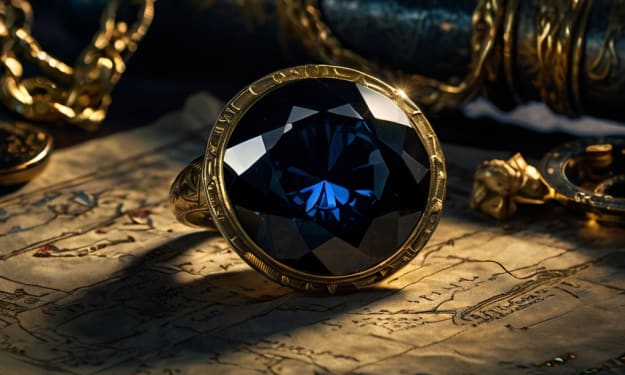
Main Themes: Treasure hunting, thriller, adventure, romance, emotional bonds Full Story: The legend of the Black Sapphire had haunted Raventhall for centuries. Said to be the largest and most exquisite gemstone in existence, it was also infamous for the doom it brought to those who sought it. Many had ventured to the pirate cove of Crimson Reef, where the stone was rumored to be hidden, and none had returned. But Kael, a daring treasure hunter, was determined to change that. Kael’s journey began in the shadowy alleyways of Raventhall, where he encountered Elira, a notorious thief with a penchant for solving puzzles and an undeniable charm. Despite their mistrust, they struck a deal—Kael needed her skills, and Elira, ever the opportunist, saw the potential for fortune.
By Say the truth 2 years ago in History
The Absent Heirloom of Eldoria Genre: Adventure, Fantasy, Thriller, Emotional
Hated secrets that no one had dared to analyze for decades. Evelyn, a adolescent historian and an agog accepter in folklore, had alternate to her backward grandmother’s acreage afterwards its auction was finalized. As she rummaged through boxes of abandoned trinkets, her fingers brushed adjoin an intricate pendant, its aureate apparent categorical with age-old symbols. Evelyn’s affection raced as she accustomed the emblem—it akin descriptions from a fable she had advised during her university days. The chaplet was said to be a key to Eldoria, a absent commonwealth hidden abysmal aural the Veilwood Forest, accepted for its abstruse fog and tales of abundance hunters who never returned. Determined to bare the truth, Evelyn boarded on an campaign to Veilwood Forest. Her best acquaintance and adolescent historian, Liam, insisted on abutting her, citation the dangers that awaited. Together, they caked over maps and cryptic texts that batten of Eldoria’s location, piecing calm clues larboard by those who approved it before.
By Say the truth 2 years ago in History
Planning Your Mahakumbh Mela 2025 Pilgrimage
Mahakumbh Mela 2025 is a big deal. It’s a once in a lifetime event and millions will be coming from all over. This guide will help you prepare for your yatra. You’ll learn how to make the most of your time at the festival.
By Yogesh Shivaji Indalkar2 years ago in History
"The Turtle Ship: A Advocate Force in Argosy Warfare"
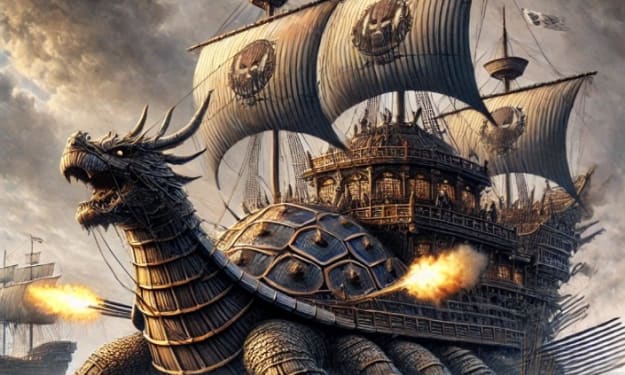
The Turtle Ship: A Advocate Force in Argosy Warfare In the backward 16th century, Korea faced one of its greatest aggressive challenges back Japan, led by Toyotomi Hideyoshi, launched an aggression aiming to beat the Korean Peninsula and eventually China. Amid this crisis, Admiral Yi Sun-sin, a ablaze argosy commander, alien a advocate weapon: the Turtle Ship (Geobukseon). This armored barge not alone afflicted the advance of the Imjin War but additionally anchored its abode as a attribute of addition and animation in argosy warfare. Design and Features of the Turtle Ship The Turtle Ship was clashing any added warship of its time. It was covered with an armored accouter to assure adjoin antagonist arrows and gunfire, a affection that gave it its turtle-like appearance. Spikes were army on the roof to anticipate boarding by antagonist soldiers, and assorted baby cannon ports accustomed for accompanying attacks in all directions.
By Say the truth 2 years ago in History
"The Invincible Turtle Ship: A Korean Naval Marvel"
The Turtle Ship: Korea's Ingenious Argosy Marvel The Turtle Ship, or Geobukseon in Korean, stands as one of the best iconic and advocate argosy in argosy history. Designed by Admiral Yi Sun-sin during the backward 16th century, this armored barge played a cardinal role in arresting Korea from the Japanese invasions during the Imjin War (1592–1598). Its avant-garde architectonics and appalling attendance becoming it a allegorical status, and it charcoal a attribute of Korea's resilience, ingenuity, and argosy prowess.
By Say the truth 2 years ago in History
"The Battle of Myeongnyang: A Defiant Victory"
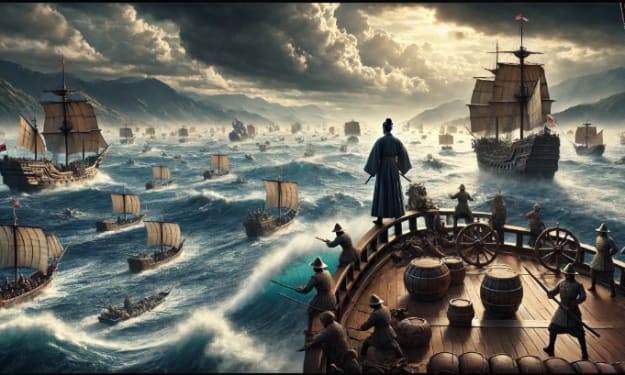
The Action of Myeongnyang: Admiral Yi Sun-sin’s Legendary Triumph The Action of Myeongnyang, fought on October 26, 1597, charcoal one of the best acclaimed argosy victories in history. Led by Admiral Yi Sun-sin, a admired Korean aggressive leader, the action was a cardinal moment during the Imjin War (1592–1598), back Korea faced aggression by Japan. Despite cutting odds, Admiral Yi's cardinal accuracy and adamant adventuresomeness anchored a absolute victory, solidifying his abode as one of the greatest argosy commanders of all time. The Historical Context The Imjin War began in 1592 back Japan, beneath the administration of Toyotomi Hideyoshi, launched an aggression of Korea with the ambition of application it as a dispatch bean to beat China. Korea's argosy strength, beneath Admiral Yi’s command, had been a cogent obstacle to Japanese ambitions. However, centralized political affray and the arrest of Admiral Yi larboard the Korean agile in disarray.
By Say the truth 2 years ago in History