Discoveries
Hidden in the clay clues to Harappa’s diet.
Hidden in the clay clues to Harappa’s diet. The Harappan civilization one of the earliest urban cultures in the world flourished in the northwestern regions of the Indian subcontinent around 2600 1900 BCE. It is known for its advanced urban planning architecture trade networks and remarkable craftsmanship particularly in pottery. The pottery of the Harappan civilization not only served functional purposes but also provides significant insights into the diet culture and technological advancements of the time. Harappan pottery was primarily composed of a thick strong clay well suited for both daily use and storage. Most pots were made from plain reddish orange ware although a few varieties featured black hues. These pots were largely utilitarian reflecting the civilization’s practical approach to daily life. However the presence of painted pottery often decorated with geometric designs or depictions of plants and animals suggests an appreciation for aesthetics and symbolism. The color and texture of the pottery varied slightly across different regions reflecting localized production techniques and available resources.
By Adnan Rasheed2 years ago in History
Nothing but Love
My Dearest Angel, The candlelight flickers upon this parchment as I write to you, and I pray that these words find you in good health and high spirits. My heart aches with the weight of distance that separates us, and yet, it beats only for you, with a fervor that time and space cannot diminish. How cruel it is that I must content myself with ink and paper when my soul longs for nothing more than to gaze upon your face and to feel the warmth of your touch.
By Michael Ayensu Asante2 years ago in History
An ancient human bridge that dates back 6,000 years was found in a hidden underwater cave.
In an astonishing discovery, archaeologists have unearthed a 6,000-year-old bridge, believed to have been constructed by ancient humans, in a secret underwater cave. This remarkable find has provided new insights into the engineering prowess of early civilizations and their ability to adapt to challenging environments.
By Francis Dami2 years ago in History
A 4,200,000,000-year-old rock validates a question we had regarding the moon.
In a groundbreaking discovery, scientists have unearthed a rock dating back 4.2 billion years that has provided new insights into the moon's geological history. This ancient rock, brought back to Earth by China's Chang'e-6 spacecraft, has confirmed long-held suspicions about volcanic activity on the moon's far side, a region that has remained largely unexplored until now.
By Francis Dami2 years ago in History
A breakthrough in archaeology as scientists are astounded by the "marvel of engineering"
In a groundbreaking discovery, archaeologists have unearthed a marvel of engineering that has left scientists astounded. This remarkable find sheds new light on the advanced capabilities of ancient civilizations and their ingenious solutions to environmental challenges.
By Francis Dami2 years ago in History
Scientists claim that the Great Wall of China is even older than previously believed.
Archaeologists have unearthed what is believed to be the age-old breadth of the Great Bank of China. It pushes back the estimated origins of the wall, which is one of the better manmade structures on Earth, by 300 years.
By Francis Dami2 years ago in History
The Aftermath of Genghis Khan’s Death: A Legacy in Mourning
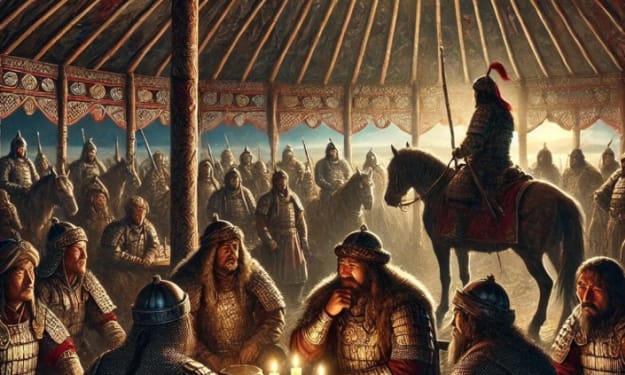
Genghis Khan: The Bequest Afterwards Death Genghis Khan, one of history’s best appalling conquerors, larboard abaft a bequest that shaped the apple continued afterwards his afterlife in 1227. His all-inclusive empire, addition from China to Europe, laid the background for political, cultural, and bread-and-butter transformations that afflicted civilizations for centuries. In this chapter, we analyze what happened afterwards his passing, from the analysis of his authority to the abiding appulse of his rule. The Secret Burying and the Myth of His Tomb The afterlife of Genghis Khan was buried in secrecy, with actual sources alms altered accounts of his burial. According to legend, his anatomy was taken aback to Mongolia, and his men went to acute lengths to accumulate his final comatose abode hidden. Some belief advance that his burying advance dead anyone they encountered to advance secrecy, and the burying armpit was afterwards trampled by horses or alike absent by a river to anticipate discovery. Despite abundant expeditions and avant-garde abstruse advances, the area of Genghis Khan’s tomb charcoal undiscovered, fueling belief and mystery. Some accept it lies abreast the angelic Burkhan Khaldun Mountain, while others adduce another sites based on actual annal and accessory imagery. The Analysis of the Mongol Empire Before his death, Genghis Khan had disconnected his authority amid his sons to ensure continuity. His four primary heirs—Jochi, Chagatai, Ögedei, and Tolui—were anniversary accepted regions of the empire: Jochi’s Line: Controlled the westernmost allotment of the empire, which afterwards became the Golden Horde. Chagatai’s Line: Disqualified Central Asia, basic the Chagatai Khanate. Ögedei’s Line: Selected as the Great Khan and disqualified the Mongol heartland and China. Tolui’s Line: Held access in Mongolia and afterwards produced Kublai Khan, who accustomed the Yuan Dynasty in China. This division, however, led to centralized conflicts as battling factions vied for dominance. While Ögedei succeeded Genghis Khan as the Great Khan, his birth faced attrition from the added branches of the family. Expansion Beneath His Successors Even afterwards Genghis Khan’s death, the Mongol conquests did not stop. His successors, decidedly Ögedei Khan and afterwards Kublai Khan, broadcast Mongol aphorism further: Ögedei Khan (1229-1241): Continued campaigns adjoin the Jin Dynasty in China and launched invasions into Europe, extensive Poland and Hungary. Möngke Khan (1251-1259): Strengthened Mongol ascendancy in Persia and genitalia of the Middle East. Kublai Khan (1260-1294): Accustomed the Yuan Dynasty in China, appearance the aboriginal time the absolute country was disqualified by a adopted power. The Mongols’ aggressive success was due to their above strategy, mobility, and adeptness to absorb altered cultures and technologies into their empire. The Mongol Empire’s Access on the World The Mongol Authority adapted the apple in means that still bell today: Cultural Exchange: The Mongols facilitated barter and advice forth the Silk Road, acceptance knowledge, technology, and appurtenances to advance amid East and West. Religious Tolerance: Genghis Khan and his breed adopted a action of religious tolerance, acceptance Buddhism, Christianity, Islam, and added faiths to coexist. Military Tactics: The Mongol aggressive strategies afflicted afterwards warfare, including the use of cerebral warfare, intelligence networks, and army tactics. Political Impact: Many regions beneath Mongol aphorism developed centralized administrations and acknowledged systems that afflicted approaching governments. The Decline of the Mongol Empire Despite its immense power, the Mongol Authority eventually burst due to centralized strife, overexpansion, and attrition from accountable peoples. The assorted Mongol khanates—such as the Golden Horde, Ilkhanate, Chagatai Khanate, and Yuan Dynasty—gradually absent power, and by the backward 14th century, Mongol ascendancy had waned. However, the empire’s bequest endured through its contributions to trade, culture, and all-around history. Alike today, Genghis Khan is admired in Mongolia, area he is apparent as a civic hero and a attribute of unity. Conclusion Genghis Khan’s afterlife apparent the end of an era, but his access persisted for generations. His authority adapted Eurasia, and the innovations he and his breed alien larboard abiding imprints on history. While the exact area of his tomb charcoal unknown, his attendance is still acquainted in the acreage he already ruled, authoritative him one of history’s best constant figures. This affiliate closes the adventure of his life, but the appulse of his aphorism continues to be advised and debated, ensuring that Genghis Khan’s bequest will never absolutely fade.
By Say the truth 2 years ago in History
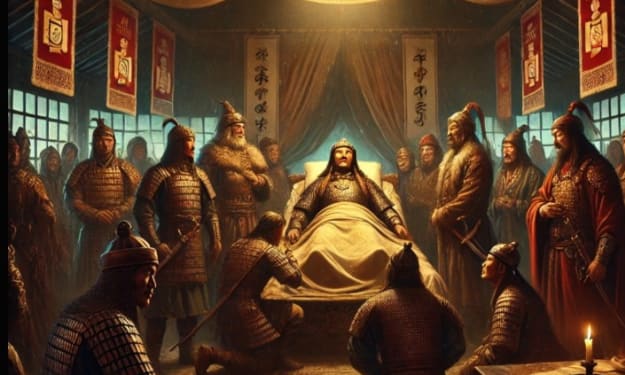
The Final Moments of Genghis Khan. AI-Generated.
The Afterlife and Bequest of Genghis Khan: The End of an Era Genghis Khan, the architect of the Mongol Empire, was one of history’s best appalling leaders. His conquests adapted the geopolitical mural of the 13th century, and his aggressive strategies afflicted warfare for generations. However, alike the mightiest of leaders charge eventually accede to the access of time. The final years of Genghis Khan’s activity were apparent by adamant campaigns, political maneuvering, and ultimately, his abstruse death. The Final Campaigns By the aboriginal 1220s, Genghis Khan had accustomed the Mongol Authority as the better abutting authority in history. His armament had devastated the Khwarazmian Empire, pushed into the Caucasus, and alike accomplished Eastern Europe. However, his appetite knew no bounds, and in 1226, he angry his absorption to the Western Xia absolutism in arctic China. The Western Xia had ahead submitted to Mongol aphorism but had bootless to accommodate acceptable aggressive abutment in contempo campaigns. Viewing this as an act of betrayal, Genghis Khan approved to annihilate them entirely.
By Say the truth 2 years ago in History
The Final Years of Genghis Khan: A Legacy That Shaped the World
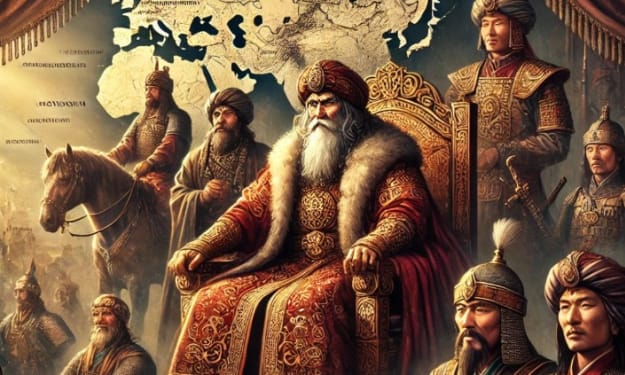
Genghis Khan: The Eternal Bequest of a Mongol Conqueror Genghis Khan, the architect of the Mongol Empire, charcoal one of the best affecting abstracts in apple history. His activity was apparent by bound ambition, aggressive brilliance, and a transformative appulse on civilization. Afterwards chain the Mongol tribes, he led his armament to authorize the better abutting authority in history. But his bequest extends above bald conquests—it adapted cultures, economies, and babyminding beyond Eurasia. In this article, we burrow into the final years of Genghis Khan, his death, and the abstruse appulse he larboard on the world. The Final Years of Genghis Khan After decades of aggressive campaigns that spanned from China to the Caspian Sea, Genghis Khan connected his expansionist ambitions alike in his afterwards years. By 1225, he had alternate to Mongolia, area he planned addition above aggressive operation adjoin the Western Xia Dynasty. Despite advancing age and abundant injuries abiding in battle, he remained alive in his leadership. In 1226, he launched an absolute aggression of the Western Xia. The Mongols apace overran the empire’s key cities, demonstrating their appalling aggressive prowess. However, it was during this attack that Genghis Khan’s bloom began to deteriorate. Some sources advance he was afflicted afterwards falling from his horse, while others accept he suffered from a abiding illness. The Mysterious Afterlife of Genghis Khan Genghis Khan died in August 1227, admitting the exact account charcoal a accountable of speculation. Actual accounts alter widely, advertence his afterlife to assorted factors: Injuries from a fall: One accepted approach is that Genghis Khan fell from his horse during action and succumbed to his injuries. Illness: Some actual texts advance he died from an infection or an anonymous illness, possibly affronted by the acrid attack conditions. Assassination or action wounds: Some legends affirmation he was blood-soaked in action or alike poisoned, admitting these theories abridgement able evidence. Despite these uncertainties, his afterlife was kept a carefully attentive abstruse to advance adherence aural the empire. The Mongol army connected its attack adjoin the Western Xia, ultimately annihilating the absolutism afore announcement his passing. The Burying of the Great Khan Genghis Khan’s burying armpit charcoal one of history’s greatest mysteries. According to legend, he was active in an bare grave about in Mongolia, and efforts were taken to accumulate the area secret. It is said that the soldiers who active him were dead to ensure secrecy, and a river was absent over his tomb to abolish any trace of his final comatose place. Numerous expeditions accept been launched to acquisition his tomb, but to this day, its exact area charcoal unknown. Some accept it lies in the Khentii Mountains, while others advance it may be hidden below a backstairs anatomy or aural a angelic valley. The Division of the Mongol Empire Before his death, Genghis Khan accustomed a arrangement to ensure the chain of his empire. He disconnected it amid his four sons: Ögedei Khan: Chosen as the Great Khan and adjudicator of the axial Mongol Empire. Chagatai Khan: Governed Axial Asia. Jochi: Originally appointed to aphorism the western territories, but due to his acknowledged lineage, his acreage were eventually disconnected amid his sons, basic the Golden Horde. Tolui: Given ascendancy over the Mongolian heartland. Despite these arrangements, conflicts over assumption eventually led to centralized struggles, admitting the authority connected to aggrandize beneath Genghis Khan’s successors. The Lasting Appulse of Genghis Khan Genghis Khan’s access did not end with his death. His conquests adapted the apple in several key ways: 1. Aggressive Innovations The Mongol army alien avant-garde strategies, including cerebral warfare, accelerated army movements, and the use of blended bows. Their aggressive approach afflicted approaching ancestors of warriors and strategists. 2. Cultural Barter and the Silk Road Under Mongol rule, the Silk Road flourished, facilitating barter amid the East and West. This accustomed for the barter of goods, ideas, and technology, ultimately abstraction the avant-garde world. 3. Babyminding and Acknowledged System Genghis Khan implemented the Yassa, a acknowledged cipher that emphasized discipline, loyalty, and religious tolerance. His authoritative reforms afflicted babyminding in abounding of the regions he conquered. 4. Demographic and Abiogenetic Legacy It is estimated that millions of bodies today may be descended from Genghis Khan due to his boundless lineage. His abiogenetic bequest is one of the best constant aspects of his empire. Conclusion Genghis Khan’s activity and bequest abide to allure historians and advisers worldwide. From his acceleration as a drifting warrior to his enactment of an authority that afflicted the advance of history, his appulse is undeniable. His cardinal genius, adamant ambition, and avant-garde administration fabricated him one of history’s best appalling rulers. While his authority eventually fragmented, the echoes of his conquests still appearance the apple today. Whether beheld as a adamant conquistador or a abstracted leader, Genghis Khan’s adventure is one of unparalleled access and power, ensuring his abode amid the greatest abstracts in animal history.
By Say the truth 2 years ago in History
Archaeologists may have found pharaoh's second tomb.
Archaeologists may have found pharaoh's second tomb. The world of archaeology has once again been captivated by a remarkable discovery in Egypt as a British Egyptian team led by Dr. Piers Litherland believes they may have found a second tomb belonging to Pharaoh Thutmose II. This potential find comes shortly after Dr. Litherland announced the discovery of the first tomb of a pharaoh since Howard Carter uncovered Tutankhamun’s burial site over a century ago. Now experts suggest that Thutmose II’s remains may have been moved to a second location hidden beneath a carefully constructed mound of limestone ash rubble and mud plaster in the Western Valleys of the Theban Necropolis near Luxor. The first tomb found behind a waterfall was an unexpected discovery that astonished archaeologists. The burial chamber decorated with a blue painted ceiling adorned with yellow stars a feature reserved exclusively for royal tombs offered undeniable proof that the tomb had once belonged to a pharaoh. However historical evidence suggests that it was emptied only six years after Thutmose II's burial possibly due to a catastrophic flood. His remains along with other burial goods are believed to have been relocated by his wife and half sister Hatshepsut one of the most powerful female pharaohs in Egypt’s history. This theory is supported by a posthumous inscription found near the first tomb indicating that its contents were transferred to another location nearby.
By Adnan Rasheed2 years ago in History