Discoveries
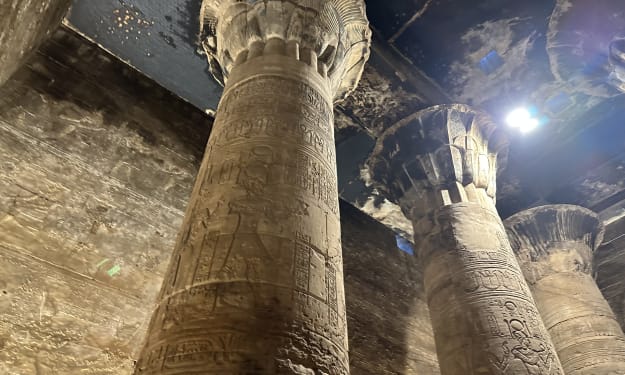
Illuminating Spaces: The Interplay of Light and Shadow in Architecture
Throughout history, ancient architects harnessed the interplay of light and shadow to create structures that were not only functional but also imbued with aesthetic beauty and spiritual significance. By aligning buildings with celestial events, selecting materials that interacted with sunlight, and employing architectural techniques to manipulate illumination, these builders crafted dynamic spaces that continue to captivate us today.
By Siboli Mukherjee2 years ago in History
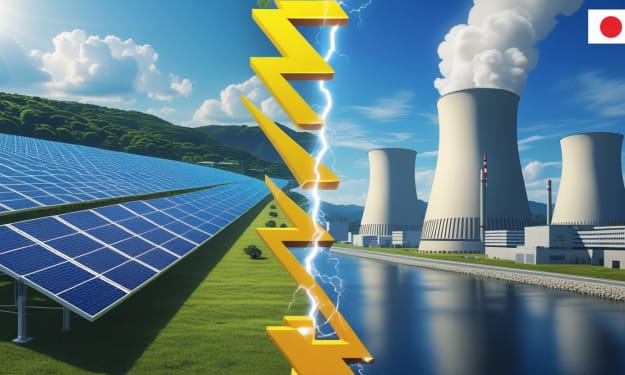
Japan’s Energy Revolution: Balancing Solar and Nuclear Power for a Sustainable Future
Japan’s Energy Revolution: Balancing Solar and Nuclear Power for a Sustainable FutureJapan, a global leader in technology and innovation, is undergoing a significant energy transformation. As the world shifts towards sustainability, Japan is making strategic moves to reduce its dependence on fossil fuels. But how is the country balancing its energy needs between solar power and nuclear energy?In this video, we explore Japan’s ambitious energy revolution—the rise of solar power, the revival of nuclear energy, and what it means for the future of clean energy.Japan’s Energy Crisis and Policy ShiftFor decades, Japan relied heavily on imported fossil fuels, fueling its rapid industrial growth. However, the 2011 Fukushima Daiichi nuclear disaster forced the nation to rethink its energy strategy.Before Fukushima, nuclear power supplied 30% of Japan’s electricity.In the aftermath, all nuclear reactors were shut down for safety inspections.This led to a 50% increase in fossil fuel imports, driving up energy costs.Rising electricity prices and growing climate concerns pushed the government to seek alternatives. Japan introduced aggressive policies promoting renewable energy, particularly solar power, with subsidies and feed-in tariffs to encourage investment.As a result, Japan became one of the world’s top five solar energy producers. However, despite this progress, challenges remained. Solar power’s dependence on weather conditions and the high cost of fossil fuel imports made energy stability a pressing issue. This led policymakers to reconsider nuclear energy as part of Japan’s long-term energy strategy.The Rise of Solar Power in JapanJapan’s commitment to solar energy is evident in its large-scale adoption across cities, rural areas, and even on floating solar farms.Key Developments in Japan’s Solar Energy:• Floating Solar Farms: Given Japan’s limited land availability, floating solar farms on reservoirs and lakes maximize energy production while minimizing land-use conflicts.• Residential Solar Panels: Government incentives have encouraged millions of households to install solar panels, reducing reliance on the national grid.• Advanced Solar Technology: Companies like Sharp and Panasonic have developed high-efficiency solar panels capable of generating power even in low sunlight.Challenges of Solar Energy in Japan:• Intermittency Issue: Solar power is weather-dependent, making energy storage crucial.• High Initial Costs: While subsidies help, installing solar panels still requires significant investment.• Grid Stability: The national grid struggles to manage large fluctuations in solar energy production.Despite these challenges, Japan continues to innovate with battery storage and smart grid technologies, ensuring a more reliable solar energy system.Japan’s Nuclear Power RevivalFollowing the Fukushima disaster, Japan shut down all 54 nuclear reactors, leading to strong public opposition. However, over time, the government has implemented some of the world’s strictest nuclear safety regulations and gradually restarted several reactors under enhanced security measures.Why is Japan Reviving Nuclear Power?🔹 Energy Security: Unlike solar and wind, nuclear energy provides a stable and continuous power supply.🔹 Lower Carbon Emissions: Nuclear power is carbon-free, helping Japan achieve its climate goals.🔹 Economic Stability: Restarting reactors reduces dependence on costly fossil fuel imports.How Safe Are Japan’s Nuclear Reactors Today?• New Safety Standards: Post-Fukushima, Japan has introduced some of the strictest nuclear regulations in the world.• Advanced Reactor Technology: Development of Small Modular Reactors (SMRs) and next-generation nuclear plants enhances safety.• Improved Cooling Systems: Modern reactors now feature passive cooling mechanisms to prevent meltdowns.However, nuclear power remains a controversial topic. Surveys indicate that over 50% of the Japanese population still opposes nuclear energy, citing safety concerns. Despite this, economic and environmental pressures continue to drive the government’s nuclear policies.Balancing Solar and Nuclear for a Sustainable FutureJapan’s energy transition isn’t about choosing between solar and nuclear—it’s about finding the right balance. The government’s energy roadmap includes:🔹 Expanding solar capacity while investing in advanced energy storage solutions like lithium-ion and hydrogen batteries.🔹 Using nuclear power as a stable backup to ensure energy security.🔹 Developing other renewables, including offshore wind farms and hydrogen energy.By integrating multiple energy sources, Japan aims to build a resilient, stable, and low-carbon energy future.Japan’s Energy Goals for 2050To become carbon neutral by 2050, Japan has set ambitious targets:• 50-60% renewable energy (solar, wind, hydro).• 20-25% nuclear energy as a stable backup.• Minimal fossil fuel use, primarily for emergency reserves.To achieve these goals, Japan is investing in AI-driven smart grids, energy-efficient infrastructure, and next-generation nuclear technology.ConclusionJapan’s energy transformation is a testament to resilience, innovation, and sustainability. The country is proving that solar and nuclear power can coexist, creating a cleaner and greener future.But what do you think? Should Japan rely more on solar energy, or is nuclear power essential for energy stability?Share your thoughts in the comments!👉 Don’t forget to like, share, and subscribe for more in-depth content on global innovations!
By MystiTech Hub2 years ago in History
Cox's Bazaar: The Unparalleled Beauty of the World's Longest Sea Beach
In the southeast of Bangladesh is the coastal town of Cox's Bazaar. It boasts the longest natural sandy sea beach in the world, measuring approximately 120 kilometers long. Known for its scenic beauty, golden sands, blue waters, and captivating natural views, Cox's Bazaar is a popular tourist destination.
By MD Alhaz Hossen2 years ago in History
Why History Matters How It Influences Our Future
What if I told you that your smartphone's existence was influenced by a war that happened over 70 years ago? The technological advances from World War II laid the groundwork for many modern innovations we take for granted today. This is just one example of how the past
By Ravi Patel2 years ago in History
“100 Must-Visit Tourist Attractions in the Arab World: A Journey Through History, Culture, and Natural Wonders”
Top 20 Tourist Attractions in Each Arab Country The Arab world is filled with breathtaking destinations, rich in history, culture, and natural beauty. Below is a detailed list of the top 20 tourist attractions in each of the most popular Arab countries.
By Nagham Ali2 years ago in History
The Unbelievable Saga of Grigori Rasputin
History is littered with characters whose lives teeter on the edge of myth and reality—think of Sparta’s Leonidas or the gold-obsessed King Midas. These were real people, no doubt, but their stories have been stretched and spun into legends over centuries. Most only achieved global fame long after their deaths, their tales polished by time. Yet, every so often, someone strides onto the stage of history with a life so wild, so jaw-dropping, that they become a legend while still breathing. Meet Grigori Rasputin, a man whose existence was as improbable as it was influential—a peasant-turned-powerbroker whose antics shook Russia to its core. His story is a rollercoaster of miracles, debauchery, and sheer stubborn survival, culminating in a legacy that’s equal parts bizarre and unforgettable.
By KWAO LEARNER WINFRED2 years ago in History
Chasing Giants: The Essex’s Deadly Dance with a Whale
In the annals of exploration, the 19th and 20th centuries brim with stories of bold adventurers racing to conquer uncharted territories. For every triumph, though, there was a disaster waiting in the shadows—think of Mungo Park’s deadly African trek or Robert Falcon Scott’s icy demise in Antarctica. Yet few tales grip the imagination quite like the harrowing saga of the whaling ship Essex, a tragedy that unfolded in the early 1800s and left an indelible mark on history.
By KWAO LEARNER WINFRED2 years ago in History
Jamestown: The crucible of America’s Beginnings
Jamestown: The Birthplace of a Nation Forged in Hardship Long before skyscrapers pierced the New York horizon, neon lights dazzled Las Vegas, or luxury defined Beverly Hills, a modest settlement took root along Virginia’s James River. In 1607, Jamestown emerged as the first enduring English colony in the New World-a fragile outpost that weathered unimaginable trials to lay the groundwork for what would become the United States. This wasn’t the first human footprint on the continent; Native American societies had thrived here for 15,000 years. Nor was it Europe’s initial venture across the Atlantic-Spanish explorers had staked claims in Florida nearly a century earlier, starting in 1513. Yet Jamestown holds a unique chapter in history: a tale of ambition, desperation, and resilience that echoes through time.
By KWAO LEARNER WINFRED2 years ago in History
Two Elderly Japanese Men Emerge from Philippine Jungle, Unaware WWII Ended
In 2005, a remarkable tale unfolded on the lush, untamed island of Mindanao in the Philippines. Two elderly Japanese men, frail and disoriented, staggered out of the dense jungle. Identifying themselves as Yoshio Yamakawa, 87, and Suzuki Nakauchi, 85, they posed a startling question to bewildered onlookers: “Is the war over?” Astonishingly, they weren’t referring to a recent conflict but to World War II—a war that had ended 60 years earlier. The men claimed they had been hiding in the wilderness since the war’s final days, cut off from the world and oblivious to its conclusion.
By KWAO LEARNER WINFRED2 years ago in History
The Unlikely Hero: Wojtek the Soldier Bear
Throughout history, animals have played remarkable roles in warfare, from Hannibal’s African elephants crossing the Alps to carrier pigeons delivering life-saving messages during World War I. These creatures, often unsung heroes, have shared the burdens of battle alongside human soldiers. Among these extraordinary tales, one stands out: the story of Wojtek, a Syrian brown bear who became a celebrated soldier during World War II.
By KWAO LEARNER WINFRED2 years ago in History
The Enigmatic Life and Mysterious Death of Harry Houdini
This week, we’re diving into the captivating tale of Harry Houdini, a name synonymous with magic, daring escapes, and an aura of mystery that still lingers nearly a century after his death. Born Erik Weisz in Hungary in 1874, Houdini’s journey from a humble immigrant to the world’s most celebrated escape artist is as spellbinding as his performances. But it’s the shadowy circumstances surrounding his demise that continue to intrigue historians, fans, and skeptics alike. What really happened to the man who seemed invincible? Let’s unravel the story.
By KWAO LEARNER WINFRED2 years ago in History