Discoveries
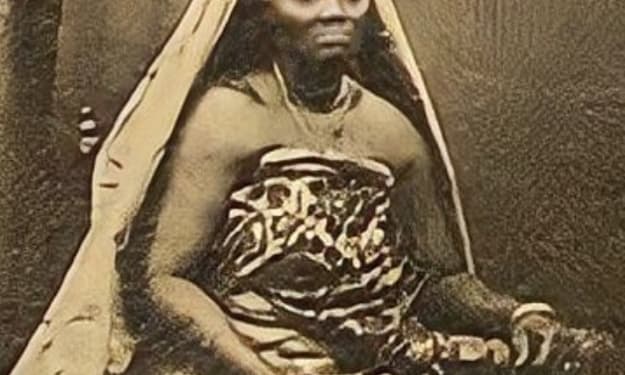
Madame Tinubu: The Trailblazing Woman Who Shaped 19th-Century Lagos
In the vibrant, bustling city of Lagos during the 19th century, one woman rose above societal constraints to wield unparalleled influence over commerce, politics, and power. Madame Tinubu, a formidable businesswoman and political strategist, defied the male-dominated norms of her era, leaving an indelible mark on the history of pre-colonial and colonial Lagos. Her story is one of resilience, ambition, and cunning, as she navigated complex dynamics to become a celebrated yet controversial icon whose legacy endures.
By KWAO LEARNER WINFREDabout a year ago in History
The Fall of the Cholas: How the Pandyas Rose and Reclaimed a Golden Throne". AI-Generated.
"The Fall of the Cholas: Twilight of a Golden Empire and the Rise of the Pandyas" Summary: This article examines the dramatic decline of the Chola Dynasty, once a dominant force in South India, Southeast Asia, and the Indian Ocean trade. It explores the internal weaknesses, political missteps, and external pressures that led to their downfall. A key focus is the Pandya resurgence, particularly under Maravarman Sundara Pandyan, and the massive wealth transfer that occurred when the Pandyas looted Chola territories—including temples, treasuries, and ports. Historical estimates, adjusted for modern valuation, suggest looted assets could equate to billions in today’s currency. The article also highlights how the shift in power reshaped the socio-political fabric of Tamilakam and left a lasting imprint on the region’s heritage. Article: The Fall of the Cholas: Twilight of a Golden Empire and the Rise of the Pandyas The Chola Dynasty, one of the longest-ruling dynasties in world history, was at its zenith between the 9th and 13th centuries. From the reign of Raja Raja Chola I to Rajendra Chola I, the empire expanded its influence across South India, Sri Lanka, the Maldives, and parts of Southeast Asia. Their naval prowess, architectural achievements, and administrative systems were unparalleled in their time. However, even mighty empires fall. The decline of the Cholas was a gradual yet complex unraveling of power, weakened by succession disputes, overextended military campaigns, and a resurgent Pandya Dynasty ready to reclaim its place in history. Seeds of Decline The first signs of decay within the Chola empire emerged after the reign of Kulothunga Chola III (1178–1218 CE). His successors failed to assert strong leadership or maintain the vast network of vassals and allied states. Rebellions in the outer provinces—like Vengi and Karnataka—strained resources and diverted attention from southern threats. Economic mismanagement and frequent wars depleted the royal treasury. The powerful merchant guilds that had once supported Chola expansion began to operate more independently, undermining centralized control. Meanwhile, their age-old rivals—the Pandyas—were steadily regaining power from their capital at Madurai. The Rise of the Pandyas Under Maravarman Sundara Pandyan I (r. 1216–1238 CE), the Pandya Dynasty launched a series of aggressive military campaigns aimed at breaking Chola supremacy. The Chola capital of Gangaikonda Cholapuram, once a beacon of wealth and power, became a prime target. In 1216 CE, the Pandyas decisively defeated the Chola army at the Battle of Kannanur, forcing Chola king Rajaraja Chola III to flee. The Pandyas marched on the capital, looting temples, royal treasuries, and grain reserves. Chola administration collapsed across the empire, with many provinces switching allegiance or falling into chaos. The Looting of Chola Wealth: An Estimated Net Worth The Pandyas, with a clear strategy to consolidate power and showcase dominance, systematically dismantled Chola influence. Temples such as the Brihadeeswarar Temple in Thanjavur—an architectural wonder and religious heart of the Chola empire—were plundered for gold, jewels, and sacred relics. What exactly was looted? Temple treasures: Massive quantities of gold, silver, bronze, and gemstones. Trade goods: Spices, textiles (notably fine cotton and silk), ivory, and pearls stockpiled in ports like Nagapattinam. War booty: Elephants, weapons, chariots, and ornaments from the royal palace. While ancient sources do not provide precise figures, historians estimate that the combined looted assets (if valued today) would easily exceed $3–5 billion USD, considering temple donations over centuries, international trade tax revenues, and hidden royal reserves. The sheer scale of temple endowments alone—recorded in inscriptions—suggests an opulence rarely matched in medieval South Asia. Cultural and Political Impact The Chola dynasty continued in name for several more decades, but without real power. The Pandyas, flush with wealth and reinvigorated by their victory, reestablished themselves as the cultural and economic superpower of the Tamil region. They sponsored new temple constructions, revived trade with Southeast Asia, and patronized literature in Tamil. However, their rule, too, was eventually challenged—by the Delhi Sultanate, the rise of the Vijayanagara Empire, and other regional powers. But for a brief, resplendent moment, the Pandyas stood at the pinnacle, basking in both inherited and seized glory. Legacy The fall of the Cholas marked the end of a classical age in Tamil history. It was a twilight brought on not just by Pandya aggression, but also by internal decline and changing political tides. Yet, the grand temples, inscriptions, and administrative innovations left behind endure to this day. The looting by the Pandyas, while devastating to the Cholas, was part of the cyclical nature of history—where power shifts hands, and wealth becomes both the prize and the burden of empires. Would you like a picture or wallpaper-style illustration to match this article?
By Say the truth about a year ago in History
Madheena: The Sacred City of Light – A Timeless Legacy of Faith and Civilization. AI-Generated.
Madinah al-Munawwarah: The Enlightened City of Prophets and Tranquility Madinah, one of the most revered cities in Islam, possesses an enduring heritage that extends back millennia. Referred to as "The City of the Prophet," it became the epicenter of the Islamic realm following the Hijrah (migration) of Prophet Muhammad (PBUH). This article examines the ancient origins of Madinah, its evolution throughout Islamic history, and its spiritual and historical significance. The Ancient Origins of Madinah Prior to being known as Madinah al-Munawwarah (The Radiant City), the locality was known as Yathrib, an ancient settlement situated in the nucleus of the Arabian Peninsula. Archaeological findings and Arab traditions suggest that Yathrib existed centuries prior to the advent of Islam. It was inhabited by various Arab tribes, including the Aws and Khazraj, along with Jewish tribes such as Banu Qaynuqa, Banu Nadir, and Banu Qurayza, who had relocated to the area following the destruction of the Second Temple in Jerusalem. The fertile soil, enriched by oases, rendered Yathrib a vital agricultural and trade nexus. Date palms thrived here, and the city evolved into a confluence of cultures and faiths, with both Jews and idolaters cohabiting. The Turning Point: The Hijrah of the Prophet Muhammad (PBUH) The substantial transition of Yathrib commenced in 622 CE, when Prophet Muhammad (PBUH) migrated from Makkah to evade oppression. This occurrence, recognized as the Hijrah, signifies the commencement of the Islamic lunar calendar. The inhabitants of Yathrib welcomed the Prophet and pledged their allegiance during the Pledges of Aqabah. Upon his arrival, the city was rebranded as Madinat an-Nabi (The City of the Prophet) or simply Al-Madinah. One of the Prophet's initial actions was to establish the Masjid an-Nabawi (The Prophet's Mosque), which became the religious, political, and communal nucleus of the Islamic community. The mosque also contained the Prophet’s abode and ultimately became his interment site. The Constitution of Madinah: A Paradigm of Unity To foster harmony among the diverse tribes and religious factions, the Prophet formulated the Constitution of Madinah, regarded as one of the earliest written constitutions in history. It delineated the rights and duties of all citizens and underscored religious tolerance, fairness, and collaboration. This document is a foundational aspect of political ideology, advocating mutual defense, shared resources, and governance based on consultation (shura). It unified Muslims and Jews under a singular political framework for the first time. The Battles and Expansion of Islam Madinah functioned as the operational hub for the nascent Muslim community. Significant events that influenced the Islamic world transpired here: Battle of Badr (624 CE): A pivotal triumph for the Muslims. Battle of Uhud (625 CE): A trial of perseverance and belief. Battle of the Trench (627 CE): A defensive approach led to a successful repulsion of the Quraysh forces. Despite the adversities, Madinah prospered as a spiritual and military stronghold. The number of converts to Islam surged rapidly, and delegations from across Arabia began to converge. Legacy of the Prophet and the Rashidun Caliphs Following the Prophet's demise in 632 CE, Madinah emerged as the capital of the Rashidun Caliphatethe illustrious era of Islamic governance. The initial four caliphsAbu Bakr, Umar, Uthman, and Aliadministered from Madinah, disseminating Islam beyond the Arabian Peninsula to Persia, Egypt, the Levant, and North Africa. Caliph Umar ibn al-Khattab greatly augmented the administrative framework of the city by constructing roads, organizing public finances, and launching social welfare initiatives. Caliph Uthman directed the standardization of the Qur’an from Madinah. Religious and Historical Significance Madinah holds the second position after Makkah in religious importance. Millions of Muslims travel to the city annually to offer prayers at the Masjid an-Nabawi, particularly to pay respects to the Prophet Muhammad at his burial site. Additional significant locations include: Quba Mosque – The inaugural mosque established in Islam. Uhud Mountain – The location of the Battle of Uhud. Al-Baqi Cemetery – The burial site for numerous companions and family members of the Prophet. Madinah Today Currently, Madinah is a flourishing modern metropolis under the stewardship of the Kingdom of Saudi Arabia, featuring substantial development while safeguarding its sacred sites. It remains a center of learning, tranquility, and devotion, housing Islamic scholars and educational institutions. Despite its expansion, Madinah has retained its serenity and spiritual environment, providing comfort to pilgrims and history enthusiasts alike. It exists not merely as a city, but as a representation of Islam’s origins and its worldwide legacy. Conclusion Madinah's history encapsulates more than just a narrative of a city’s transformation; it represents the chronicle of a civilization’s ascent. From its ancient origins as Yathrib to its esteemed recognition as the City of Light, Madinah occupies a pivotal position in the hearts of over a billion Muslims. Its legacy continues to radiate as a beacon of peace, unity, and faith for the global community.
By Say the truth about a year ago in History
"The Great Plunder: History's Largest Looted Treasure Between Kingdoms". AI-Generated.
"The Pillage of Civilizations: The Most Significant Wealth Ever Stolen in History" This article explores one of the most remarkable and sorrowful narratives of plundered fortune in human historythe Persian wealth taken by Alexander the Great from the Achaemenid Empire. In 330 BCE, Alexander’s troops captured the vast riches of Persepolis, encompassing gold, silver, gemstones, and ceremonial relics. Valued at over $100 billion in contemporary terms, the treasure not only transformed the destiny of two formidable civilizations but also initiated a new global hierarchy. Uncover the astonishing elements of this appropriated fortune, its estimated present-day valuation, and how it irrevocably shifted the equilibrium of authority in the ancient world. Article: The Pillage of Civilizations – History’s Most Extensive Stolen Treasure Introduction: Throughout the records of history, conflicts have frequently been fought not merely for territory or influence, but for wealthcolossal, unimaginable riches concealed within the vaults of powerful empires. Among all these historical occurrences, one particular event stands out as arguably the most significant looting operation ever performed: the subjugation of the Achaemenid Persian Empire by Alexander the Great, especially the plundering of Persepolis, its capital. The Kingdoms Participating: The Looted: The Achaemenid Empire, led by Darius III, was one of the richest empires in ancient history. For over two centuries, it had amassed immense treasures through taxation, tributes, and conquests. The Looters: Alexander the Great and his Macedonian army, in a rapid campaign through Asia, aimed to dismantle Persian authority and claim its wealth. The Treasure of Persepolis: In 330 BCE, following the Battle of Gaugamela and Darius’s withdrawal, Alexander advanced toward the Persian capital. Upon arriving at Persepolis, the epicenter of Persian affluence and culture, Alexander’s forces raided its treasury. The collection was vast: 180,000 talents of silver and gold (1 talent ≈ 33 kg), totaling nearly 6,000 metric tons of precious metals. Priceless relics, ceremonial insignia, golden thrones, embellished jewelry, and sacred artifacts. Opulent textiles, ivory, and incenseemblems of Persian royal grandeur. Records and scrolls from the Great Royal Library, many of which were destroyed or lost in the conflagrations. Estimated Net Worth Today: To comprehend the magnitude, let’s approximate its current valuation: Gold (at $65,000/kg): If even one-third of the treasure was gold (~2,000 tons), its value alone today would surpass $130 billion USD. Silver (at $800/kg): The remaining silver would total $3. 2 billion. Gemstones, thrones, artifacts: Invaluable due to their historical importance, but conservatively appraised at $10–20 billion. Total Estimate: In excess of $150 billion USD in contemporary currency. The Cultural and Political Consequence: The looting of Persepolis represented not merely a triumph of one realm over another, but the demise of an epoch. Persia, once an unassailable giant, lost not only its capital but its essence. The appropriated wealth enabled Alexander to: Finance his ongoing conquest across India. Compensate his soldiers and commanders. Establish new cities, such as Alexandria, utilizing wealth acquired from Persia. Disseminate Hellenistic culture throughout Asia, supplanting Persian supremacy. A Heritage of Flames: In a contentious decision, Alexander commanded the incineration of Persepolis, potentially as retribution for Xerxes’ incineration of Athens a century prior. Some historians contend it was symbolic; others perceive it as a drunken blunder. Regardless, the devastation guaranteed that a substantial portion of Persia’s splendor was irrevocably lost, apart from the riches transported back to Macedonia. Comparison to Other Historical Pillages: While other plunderssuch as the British Empire's exploitation of India, the Spanish subjugation of the Aztecs and Incas, or the Nazi appropriation of artwere considerable, none rival the concentration and immediacy of worth that Persepolis provided. Conclusion: The plundering of Persepolis stands as a monumental illustration of how the destiny of civilizations can hinge upon wealth and avarice. Alexander’s conquest redefined not merely geography but the distribution of global riches. The treasures of Persepolis, dispersed throughout the ancient world, established cities, financed wars, and inspired myths. Today, they act as a poignant reminder of the substantial price of conquest and the transient nature of empires.
By Say the truth about a year ago in History
Pompeii’s Last Breath: The Day Vesuvius Turned a City to Stone
Imagine waking up to a perfect morning—the sun warming the cobbled streets, the scent of freshly baked bread drifting from the marketplace, and the distant laughter of children playing near the forum. This was Pompeii on August 24, 79 AD. A thriving Roman city, alive with merchants, nobles, and slaves, all going about their daily lives, unaware that beneath their feet, the Earth was preparing to unleash its fury.
By Morsalin Russellabout a year ago in History
Amazing Discoveries Made In The World's Most Mysterious Tombs
In a world filled with tales of the unknown and chilling legends that have stood the test of time, there are stories so strange they can send shivers down your spine. Today, we delve into an eerie chapter of history, exploring some of the most mysterious and downright spooky tombs from around the globe. From a mysterious window that peers into the supernatural to a peculiar 20-foot boulder used as an unyielding tomb, these crypts hold secrets that challenge the boundaries between life and death.
By The Unique Penabout a year ago in History
Dream-making farmer. AI-Generated.
“Dream-making farmer” Evening has fallen in a small village in West Bengal—Sonarpur. A middle-aged man is walking along the rice fields, a look of deep thought on his face. His name is Raghunath Mandal. He is over fifty, his complexion is like ripe soil, and his eyes are filled with dreams. Raghunath is a farmer by birth. His father and grandfather also worked in agriculture. But with the passage of time, farming has become a dirty job for many in the village. Young people have gone to the city in search of jobs. But Raghunath believed, “If farming is done with heart, it can earn more respect than in the city.” The beginning of the struggle However, Raghunath had to pay a high price for this belief. When he was young, their family was fairly prosperous. But about ten years ago, all the land was submerged in a terrible flood. The crops were damaged, and the debt burden increased. The family members also started saying, “Farming is useless, now sell the land.” But Raghunath did not give up. He wanted to save his ancestral land with tears in his eyes. He said, “My father sweated on this land. If I can, I will start anew. If I can’t, I will end here.” In search of a new path Over the next few years, Raghunath started learning a lot. He would watch YouTube videos on his mobile phone—‘How to do organic farming’, ‘Benefits of diversified farming’, ‘Farming with compost’. He understood that cultivating rice alone would not work anymore. One type of crop means one type of income, one type of risk. So he focused on mixed farming. In addition to rice, he started cultivating potatoes, mustard, lentils, and even chili. He also started drip irrigation by conserving rainwater. He reduced costs by making natural fertilizers. Social barriers Initially, the villagers laughed. Some would say, “These are all urban kids’ businesses. These things don’t work in our village.” Some would say, “I think he’s become a scientist now!” But Raghunath continued on his own path. He would say, “Today you are smiling, tomorrow you will come to my land to learn.” His wife Malti Devi was his greatest strength. Every morning before going to the land, he would say, “The soil loves you Raghu, you too love the soil. The fruits will come.” Fruits began to bear The very next year, his land yielded exceptionally well. Paddy was also good, and he made a good profit from potato and pulse cultivation. He started making a profit from his losses. He took a loan from the bank to buy his own tractor and started large-scale farming. At this time, he decided to make other farmers aware. He set up a “Farmer Support Center” in a small room next to his house, where discussions were held once a week—about soil testing, fertilizer management, and government agricultural subsidies. Waves of change Slowly, the face of Sonarpur village began to change. Farmers who had once given up returned to the pull of the soil. “Sabuj Saathi Krishak Sangh” was formed under the leadership of Raghunath. They now farm in groups, sell their crops in the wholesale market, and share the profits. Raghunath sent his daughter to study at an agricultural college. He said, “My father gave me land, I give you knowledge, and my daughter will give you a future.” Honors and Recognition One day, Raghunath received a call from the District Agriculture Department—“You will be awarded the ‘Best Innovative Farmer’ award.” At first, he couldn’t believe it. When he got on stage and gave his speech, his voice was shaking. He said, “I am neither a scientist nor a big man. I am a farmer, and that is my pride.” Conclusion: Inspiration from Raghunath The life of Raghunath Mandal is not just that of a farmer, it is the story of a dreamy, determined, hardworking person, who believed in the power of his soil. He showed that education and technology can be used not only by city but also by rural farmers to change their lives. Today, Raghunath’s story is an example not only in Sonarpur, but also in the surrounding districts and states. Because of people like him, the soil survives, agriculture survives, and the country survives. When everyone says, “Nothing happens in farming,” the Raghunaths prove—“Everything happens in farming, if the farmer doesn’t give up.” If you want, I can turn this story into a video script, play, or essay. If you want it to be in a specific regional folk style or change the characters, let me know.
By MD SUAB MIAHabout a year ago in History
"When Time Stopped"
In the final second of his life, time did not race—it halted. There was no light at the end of a tunnel, no grand celestial chorus. There was only stillness. A pause. As if the universe itself had taken a breath and forgotten to exhale.
By muhammad khalilabout a year ago in History
"Threads of Empire: The Richest Royal Dress Ever Worn by a King" . AI-Generated.
"Threads of Empire: The Richest Royal Dress in History" Introduction Throughout history, the attire of kings has symbolized not just wealth and power but also the divine right to rule. Among the many legendary garments worn by monarchs, one stands out for its opulence, historical importance, and jaw-dropping value: the ceremonial robe of Emperor Shah Jahan of the Mughal Empire. Known as the "Peacock Robe", this legendary piece of royal fashion was not just clothing—it was a moving museum of the empire's wealth. This article explores the fascinating history, design, and present-day worth of this extravagant piece of regal attire.
By Say the truth about a year ago in History
"Royal Threads of the Sangam Era: The Regal Attire and Wealth of the Tamil Muvendhar" . AI-Generated.
The Threads of Wisdom: Unraveling the Attire of Socrates Socrates, one of history's most impactful philosophers, is frequently recalled for his reflections, dialogues, and philosophical contributions. However, his clothingmodest, minimalist, and symbolicalso illustrates a deeper understanding of the individual and his principles. This article delves into the historical, cultural, and philosophical ramifications of Socrates' attire, examining how it mirrored his convictions, contravened Athenian conventions, and established a legacy of simplicity that persists across the ages. Article: When contemplating Socrates, the initial images that arise are his conversations, his relentless inquiries, and his unwavering quest for truth. Seldom do we take a moment to reflect on his clothingyet Socrates' attire is as representative of his philosophy as his spoken words. His minimalist garments were not merely a personal preference; they constituted a purposeful declaration against the superficial and materialistic tendencies prevalent in Athenian society. Socratic Simplicity: A Life in Rags Born in 470 BCE in Athens, Socrates existed during an era when the city-state thrived with affluence, authority, and artistry. The inhabitants of Athens took pride in their appearances. Vibrant tunics, elaborate cloaks, and fine sandals adorned many within the upper echelons. Socrates, in stark contrast, frequently roamed the streets barefoot and donned a single, simple tunictermed a chitonoften unwashed and lacking embellishment. Accounts from his contemporaries and disciples, notably Plato and Xenophon, often reference his attire. He sported the same garment in both summer and winter. This was not born from poverty or ignorance, but rather a conscious choice to sever ties with material desires. His clothingor lack of varietytransformed into a visible protest against extravagance. The Chiton: Symbol of Humility The chiton, a fundamental linen or woolen garment, was prevalent among the Greeks. It was typically secured with a belt or clasped at the shoulders. Socrates’ chiton, however, was particularly unadorned. Some sources assert he frequently went without an outer himation (a cloak), which might have been deemed inappropriate in certain public contexts. To comprehend why Socrates opted for such attire, one must grasp his perspectives. He championed self-discipline, restraint, and the pursuit of virtue over vanity. His minimalism served as a form of protection against distractiona means to concentrate the mind on what genuinely matters: wisdom, ethics, and the examined existence. Cultural Contrast: Athenian Attire and Social Norms In Athens, appearance was intricately linked to social standing. Affluent individuals donned brightly colored garments crafted from imported materials. Their sandals were fashioned from leather, and their hairstyles were meticulously styled. Women's attire was even more ornate. Neglecting one’s appearance, particularly in public contexts, was often perceived as disrespectful. Consequently, Socrates' attire was far more than mere modestyit was an act of defiance. He chose to present himself as impoverished, indifferent to public perception, to reinforce his philosophical assertions that virtue does not reside in possessions or appearances. Socratic Influence on Philosophical Austerity Socrates' students and philosophical heirs frequently adopted comparable approaches. The Cynics, especially Diogenes of Sinope, took Socratic simplicity to radical extremesliving in barrels, possessing almost nothing, and outright rejecting societal conventions. The Stoics, likewise, derived inspiration from Socratic philosophy. Although they did not necessarily attire themselves in a shabby manner, they prioritized internal virtue over outward affluence. Socrates epitomized an individual who conducted his life based on rational thought rather than societal conventions. Artistic Representations and Heritage Artistic portrayals of Socratesfrom ancient sculptures to Renaissance artworksoften depict him in unadorned garments or partially unclad, highlighting his ascetic disposition. While artistic interpretation is a factor, the consistency throughout periods indicates a widely recognized image: Socrates as the barefoot philosopher, unconcerned with worldly attire. Contemporary portrayals of Socrates frequently reflect a similar theme. Whether in literature, drama, or cinema, he is represented not in opulence but in modestytattered garments, bare feet, and a furrowed brow engaged in contemplation. A Legacy Woven in Plainness Socrates never inscribed a single line, yet his concepts have endured for over 2,400 years. In the same manner, his attireunpretentious and seemingly insignificanthas left an indelible mark. In an era where appearance often eclipsed essence, Socrates urged individuals to introspect. His attire was not a façade; it was a daily manifestation of his principles. Even in contemporary times, as modern society contends with materialism, fashion trends, and external affirmation, Socrates remains an ageless symbol of inner richness. His garments may have been worn and simple, yet through them traversed a mind enriched with the treasures of reason, virtue, and sagacity. The Muvendarthe triumvirate of the Cheras, Cholas, and Pandyaswere not merely mythical sovereigns of ancient Tamilakam but also symbols of culture, authority, and magnificence. Their regal garments mirrored their vast wealth and celestial stature. This article investigates the progression, importance, and estimated worth of their ceremonial and combat apparel, offering an exhaustive exploration of Tamil Nadu's opulent fashion legacy and the astonishing net value behind it. The Muvendar: Guardians of Tamilakam In ancient Tamilakam, the term “Muvendar” denoted the three illustrious dynastiesCholas, Cheras, and Pandyaswho governed various regions of South India from the Sangam era (circa 300 BCE) to the 13th century CE and beyond. These rulers were not solely military forces; they were benefactors of art, language, architecture, and fashion. Their attire and appearance were as authoritative as their governance. Regal Attire: A Fusion of Divinity and Power The garments of the Muvendar monarchs were crafted to represent divine entitlement, affluence, and military prowess. Although their fashions transformed over the centuries, several features remained quintessential: 1. Silken Garments and Tunics The rulers of Tamilakam preferred robes made from Kanchipuram silk, tinted in rich royal hues such as crimson, gold, and indigo. These silk garments were intricately woven with gold zari threads, rendering each tunic a masterpiece. Accounts in Sangam literature document these silks being presented to poets, generals, and foreign envoysindicators of their esteemed worth. 2. Golden Crowns and Jewels An integral element of their attire was the "Kondai" (crown or headdress), frequently embellished with gems, pearls, and diamonds extracted from the Golconda region and traded through Tamil ports. Necklaces like the Thoda, armlets (Valayal), and ankle chains (Silambu) crafted from solid gold were donned during coronations and military displays. 3. Combat Attire and Armor For warfare, Muvendar kings donned specially designed metal-studded tunics, often plated with bronze or iron, worn over cotton vests. Even in combat, monarchs were adorned with jewelryrings, gold-inlaid weapons, and royal insignias that denoted their lineage. The Symbolism of Regal Garments The attire of the kings was more than an exhibition of wealth; it held profound significance: Gold epitomized purity and divinity, often linked to Surya (the Sun God). Silk symbolized fertility and the prosperity of their territory. Pearls and gems reflected maritime supremacy, as Tamilakam’s ports like Korkai were central pearl centers. Red and saffron shades were utilized during ceremonies and signified power and sacrifice. Cultural Legacy The garments of these monarchs have left a lasting impact on Tamil ceremonial attire even in contemporary times. Traditional Tamil grooms at temple weddings continue to wear silk dhotis and angavastrams in a manner reminiscent of royal Chola or Pandya attire. Temple priests don white silk with gold borders, emulating the garments of royal benefactors. Ancient Tamil artexemplified in temple sculptures (such as the Brihadeeswarar Temple in Thanjavur) and Chola bronzesillustrates kings adorned in flowing silk garments with layered jewelry, indicating that the Muvendar kings esteemed visual symbolism as an extension of their authority. Estimated Net Worth of Their Regal Attire Let us assess the contemporary value of the Muvendar's traditional garments and adornments: Gold tiara adorned with precious stones: $1 million to $3 million (current approximation) Complete silk garment with gold zari: ~$20,000 - $50,000 Necklaces, bracelets, and rings (aggregate): Estimated at $5 million for ceremonial purposes Combat outfit embellished with gemstones and insignias: Approximately $500,000 Cumulative royal insignia (per sovereign): $6 to $10 million at present Taking into account all three dynasties and their royal figures, the total net worth of royal attire and insignia could surpass $100 million, excluding artifacts lost to time or seized during invasions. Conclusion The attire of the Muvendar rulers represented not only a display of fashionit was a magnificent declaration of Tamil heritage, maritime trade relationships, military accomplishments, and divine affiliation. These garments, crafted from silk, adorned with jewels, and imbued with tradition, functioned as protection, artistry, and lineage simultaneously. Their legacy endures in South Indian temple ceremonies, traditional crafts, and the profound pride of Tamil identitya heritage woven in gold, flowing like silk through the annals of history.
By Say the truth about a year ago in History
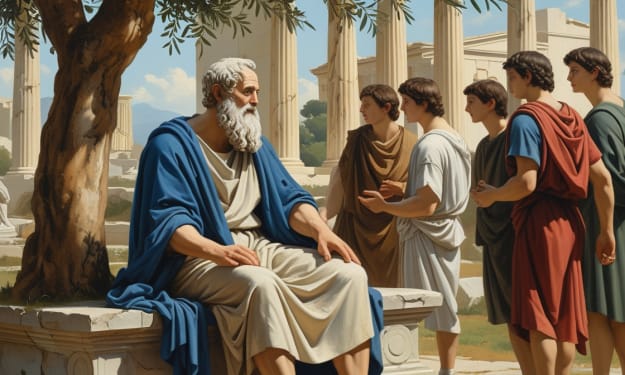
The Philosopher’s Robe: The Humble Dress of Socrates and Its Timeless Meaning
The Threads of Wisdom: Unraveling the Dress of Socrates Socrates, one of history’s most influential philosophers, is often remembered for his thoughts, dialogues, and philosophical contributions. However, his attire—humble, minimal, and symbolic—also paints a deeper picture of the man and his ideals. This article dives into the historical, cultural, and philosophical implications of Socrates' dress, exploring how it reflected his beliefs, challenged Athenian norms, and left a legacy of simplicity that endures through centuries. Article: When we think of Socrates, the first images that come to mind are his dialogues, his relentless questions, and his unyielding pursuit of truth. Rarely do we pause to consider what he wore—yet Socrates' dress is as reflective of his philosophy as his words. His minimalist clothing wasn’t just a personal choice; it was a deliberate statement against the superficial and materialistic tendencies of Athenian society. Socratic Simplicity: A Life in Rags Born in 470 BCE in Athens, Socrates lived during a time when the city-state flourished with wealth, power, and art. The citizens of Athens took pride in their appearance. Colorful tunics, intricate cloaks, and fine sandals adorned many in the upper classes. Socrates, in stark contrast, often wandered the streets barefoot and wore a single, simple tunic—called a chiton—often unwashed and unadorned. Accounts from his contemporaries and students, especially Plato and Xenophon, frequently mention his dress. He wore the same garment in summer and winter. This wasn’t out of poverty or ignorance, but a conscious decision to detach from material desire. His clothing—or lack of variety—became a visible protest against indulgence. The Chiton: Symbol of Humility The chiton, a basic linen or woolen garment, was common among Greeks. It was typically secured with a belt or clasped at the shoulders. Socrates’ chiton, however, was especially plain. Some sources suggest he often went without an outer himation (a cloak), which would have been considered improper in certain public settings. To understand why Socrates chose such dress, one must understand his views. He believed in self-mastery, discipline, and the pursuit of virtue over vanity. His minimalism was a form of armor against distraction—a way to focus the mind on what truly matters: wisdom, ethics, and the examined life. Cultural Contrast: Athenian Dress and Social Norms In Athens, appearance was deeply tied to status. Wealthy men wore bright-colored garments made from imported materials. Their sandals were leather-crafted, and hairstyles were carefully groomed. Women’s dresses were even more elaborate. To neglect one’s appearance, especially in the public sphere, was often seen as disrespectful. Socrates' attire, therefore, was more than modesty—it was defiance. He chose to appear poor, unconcerned with public image, to reinforce his philosophical arguments that virtue does not reside in possessions or appearances. Socratic Influence on Philosophical Austerity Socrates’ students and philosophical descendants often adopted similar approaches. The Cynics, particularly Diogenes of Sinope, took Socratic simplicity to radical extremes—living in barrels, owning almost nothing, and rejecting societal norms outright. The Stoics, too, drew from Socratic thought. While they didn’t necessarily dress poorly, they emphasized inner virtue over external wealth. Socrates was the model of a man who lived according to reason, not societal expectation. Artistic Depictions and Legacy Artistic representations of Socrates—from ancient busts to Renaissance paintings—frequently show him in modest robes or partially unclothed, emphasizing his ascetic nature. While artistic license plays a role, the consistency across eras points to a well-understood image: Socrates as the barefoot sage, indifferent to worldly fashion.
By Say the truth about a year ago in History