Discoveries
Letters From a Locked Drawer
The Drawer No One Touched In the quiet town of Meadowridge, 16-year-old Clara Wren lived with her father in an old, creaky house full of memories. Her mother had passed away when Clara was just a baby, and the only thing left of her was an antique wooden desk in the attic. It had belonged to her mother, and on that desk sat a single drawer locked tight for as long as Clara could remember.
By Muhammad Hayatabout a year ago in History
The Quiet Hero Who Stopped a Nuclear War
Have you ever wondered how close the world has come to ending? Not in some sci-fi blockbuster, but in real life-sweaty, chaotic, human life? Let me take you back to October 1962, when the Cuban Missile Crisis had the planet holding its breath. I was reading about this the other day, and it hit me: one man, a Soviet submarine officer named Vasili Arkhipov, might just be the reason we’re all still here. His story isn’t one of grand speeches or Hollywood heroics. It’s about a quiet choice made in a sweltering submarine, under unimaginable pressure.
By KWAO LEARNER WINFREDabout a year ago in History
Mike Waltz: From Green Beret to National Security Adviser – A Career Marked by Valor and Controversy
# Mike Waltz: From Green Beret to National Security Adviser – A Career Marked by Valor and Controversy **Introduction** Michael George Glen Waltz, born January 31, 1974, in Boynton Beach, Florida, has lived a life defined by service, ambition, and, at times, controversy. A decorated Army Special Forces officer, a three-term U.S. congressman, and briefly the National Security Adviser to President Donald Trump in 2025, Waltz’s career trajectory is a compelling blend of military valor, political hawkishness, and a high-profile misstep that led to his resignation. This article explores Waltz’s journey, from his early days in Jacksonville to his brief tenure in the Trump administration, culminating in the Signal chat leak scandal that ended his role as a key national security figure.
By MD EMRUL KAYESabout a year ago in History
Islam: Faith, Practice, and Global Impact. AI-Generated.
Islam: Faith, Practice, and Global Impact Introduction Islam is one of the largest and fastest-growing religions in the world, with more than 1.9 billion adherents—nearly a quarter of the global population. It is a monotheistic faith that emerged in the 7th century CE in the Arabian Peninsula. Its teachings emphasize submission to the will of one God, known in Arabic as Allah, and it is deeply rooted in principles of justice, compassion, and community.
By Shafi Islamabout a year ago in History
The 9/11 Attack on the World Trade Center
On the morning of September 11, 2001, the sky over New York City was a clear blue. People were going about their normal routines—commuting to work, grabbing coffee, and settling into another busy day in the city that never sleeps. No one knew that the next few hours would change the world forever.
By karimullahabout a year ago in History
Timothée Chalamet Preparing for Biopic of a Spoon: 'I've Been Sitting in Cutlery Drawers for Weeks'
Introduction. Bold and bizarre news has caught everyone's attention: Timothée Chalamet is getting ready for a new kind of role—a biopic about a spoon. Yes, a spoon! Known for choosing unique projects,
By Md Monowarabout a year ago in History
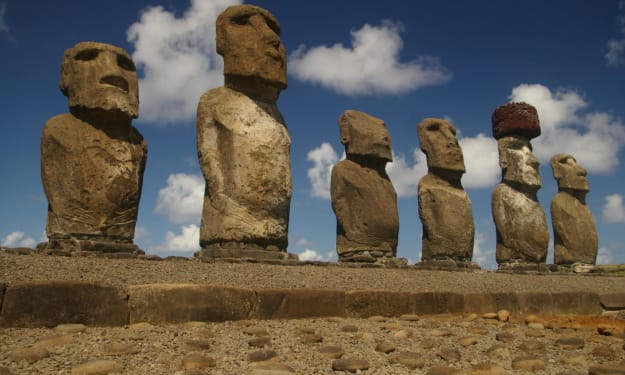
Historical Artifacts That Still Puzzle Archaeologists Today
Historical Artifacts That Still Puzzle Archaeologists Today Throughout history archaeologists have unearthed countless relics from ancient civilizations some of which have provided valuable insights into our past. However there are several artifacts that continue to defy explanation. These mysterious objects challenge conventional historical understanding and raise intriguing questions about the knowledge technology and capabilities of ancient cultures. Here are some of the most puzzling historical artifacts that remain unsolved mysteries to this day.
By Adnan Rasheedabout a year ago in History
The history about Cox's Bazar "The largest sea beach in the world"
Cox’s Bazar, a coastal town located in southeastern Bangladesh, is famous today for its unbroken 120-kilometer sandy sea beach—often claimed as the longest natural sea beach in the world. But beyond its scenic beauty and tourist appeal, Cox’s Bazar has a rich and layered history shaped by centuries of colonial influence, trade, and cultural exchange.
By Jotirmoy Sharmaabout a year ago in History
The Lost Treasures of Cambodia: Secrets of the Angkor Temples
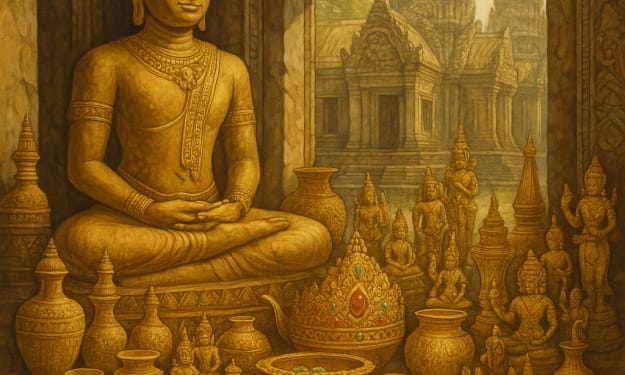
The Forgotten Riches of Cambodia’s Ancient Shrines: From Angkor's Splendor to Global Exploitation Cambodia’s ancient temple complexes, particularly Angkor Wat and its adjacent cities, are not only significant architectural feats but once housed some of the most remarkable treasures of the Khmer Empire. These valuables, lost through conflict, colonization, and plundering, have ignited international interest and initiatives for cultural restitution. This article explores the history of the Cambodian temple treasureswhat they encompassed, how they vanished, and the ongoing pursuit to retrieve them. When individuals envision Cambodia, the grand spires of Angkor Wat frequently come to minda representation of spiritual commitment and imperial magnificence. However, what many may not be aware of is that the temple complexes of the ancient Khmer Empire once encompassed vast treasures: gilded statues of Hindu and Buddhist deities, ceremonial adornments, intricately carved artifacts, and royal offerings. These were not merely tokens of affluencethey embodied the cosmic authority and divine connection of the Khmer monarchs. At its zenith between the 9th and 15th centuries, the Khmer Empire extended across present-day Cambodia, Thailand, Laos, and Vietnam. Its capital, Angkor, evolved into a spiritual and political hub, housing hundreds of temples, including Angkor Wat, Bayon, Ta Prohm, and Banteay Srei. The Function of Temples in Khmer Affluence In contrast to numerous empires where wealth was accumulated in treasuries or palaces, in Cambodia, a significant portion of the royal and religious riches resided within temples. These hallowed edifices served not only as sites of worship but also as repositories for offerings from monarchs, nobles, and pilgrims. Temple inscriptions from Angkor indicate that temples like Preah Khan once possessed thousands of gold and silver artifacts, including over 100,000 pearls and gemstones. The Lolei inscription makes reference to land grants and endowments of gold for the maintenance of temple functions and rituals. Gold statues of Vishnu, Shiva, and the Buddha were prevalent within the sanctuaries. Each temple operated its own "economy"farmlands, laborers, and artisansthat supported the priests and preserved the treasures. This close association between affluence and religious purpose made temples prime targets during incursions. Conflict, Invasion, and the Vanishing of Temple Riches The decline of Angkor in the 15th century signaled the onset of the disappearance of Cambodia’s temple treasures. The city was invaded by the Ayutthaya Kingdom of Siam (modern-day Thailand) in 1431, leading to the plundering of much of Angkor’s wealth. Some historians assert that golden statues and relics were transported to Siamese temples. The ensuing centuries were marked by unrest, resulting in the abandonment of numerous temples to the jungle. Left unprotected, they became targets for local looters and treasure seekers. By the 19th century, when French explorers re-encountered Angkor, many temples had already been deprived of numerous valuable artifacts. The French colonization of Cambodia (1863–1953) initiated another phase of cultural extraction. While some French archaeologists endeavored to preserve Khmer heritage, others dispatched temple sculptures, lintels, and statues to European museumsoften without consent. Entire temple doors, columns, and altars were removed. The Guimet Museum in Paris and other Western institutions continue to retain Khmer artifacts that were extracted during the colonial era. Numerous treasures represent not merely artistic creationsthey are sacred elements that once formed part of living temples. Modern Exploitation: The Khmer Rouge and Black Market Trafficking In the 20th century, Cambodia experienced another catastrophic erosion of its temple heritage during the regime of the Khmer Rouge (1975–1979) and the subsequent decades of civil conflict. During this epoch, extensive looting of temples became prevalent. Archaeological sites were blasted, and statues were severed from their bases and sold to international collectors. Some artifacts found their way into private collections, while others were housed in global museums. The Ta Prohm and Banteay Chhmar temples sustained considerable damage during this time. By the 1990s, a thriving black market for Southeast Asian antiquities was firmly established. Cambodia’s temple relics were among the most coveted. Statues weighing several hundred kilograms were illicitly transported out of the country, occasionally with the assistance of corrupt officials or insurgent soldiers. Repatriation and Ongoing Recovery Initiatives In recent years, Cambodia has undertaken substantial endeavors to reclaim its cultural legacy. The government, supported by UNESCO and various international entities, has initiated legal actions and negotiations aimed at returning looted artifacts. In 2023, several significant sculptures were repatriated from the United States, including from the Metropolitan Museum of Art and private collections. Some of these items had been unlawfully taken decades earlier from temples such as Koh Ker and Prasat Chen. The case of Douglas Latchford, a British art dealer accused of trafficking stolen Cambodian artifacts, garnered global attention. Following his passing, his estate began the process of returning numerous invaluable Khmer sculptures to Cambodia. Although thousands of items remain absent or held in foreign collections, the momentum is increasing. Each returned artifact represents a stride toward healing Cambodia’s cultural wounds and reestablishing the connection between the people and their ancestral heritage. Conclusion: Treasures Beyond Wealth The narrative of Cambodia’s temple treasures transcends mere riches and jewelsit embodies a saga of identity, resilience, and remembrance. While many treasures have been lost to conflict and avarice, the spiritual significance of these artifacts endures. As Cambodia endeavors to restore its past, its temples continue to evoke wonder and optimism for a future where history is preserved, and justice is achieved.
By Say the truth about a year ago in History