Discoveries
"Israel in the Quran: The Legacy of the Children of Israel"
The Role of Bani Isra'il in Islamic Scripture and Beliefs Bani Isra'il, or the Children of Israel, hold a significant place in Islamic history and theology. The Quran, the holy book of Islam, references the Children of Israel extensively, presenting their story as an important part of the broader narrative of divine guidance and prophetic missions. From the time of Prophet Musa (Moses) to the eventual emergence of Prophet Isa (Jesus), the Children of Israel are depicted as a community chosen by God, tasked with upholding His commandments and serving as a model for righteousness. The Quranic portrayal of Bani Isra'il emphasizes not only their religious and spiritual journey but also the lessons to be learned from their successes and failures. The Quranic Depiction of Bani Isra'il In Islamic belief, Bani Isra'il refers to the descendants of Prophet Ya'qub (Jacob), who was the grandson of Ibrahim (Abraham). Ya'qub’s twelve sons, the forefathers of the twelve tribes of Israel, are central figures in Islamic tradition. The Quran recounts various aspects of their lives, beginning with the trials and blessings that befell Prophet Musa, a member of Bani Isra'il. The Children of Israel are portrayed as recipients of divine favor and guidance, but their story is also marked by periods of rebellion, ingratitude, and failure to follow God’s commandments. One of the most significant themes in the Quran’s account of Bani Isra'il is their liberation from the tyranny of Pharaoh. According to the Quran, God sent Prophet Musa to free the Israelites from Egyptian bondage. The Quran highlights the miraculous events surrounding the liberation, including the parting of the Red Sea, which allowed the Israelites to escape, and the destruction of Pharaoh and his army. This event symbolizes God’s deliverance of the oppressed and the triumph of divine justice over tyranny. In Surah Al-Baqarah, the second chapter of the Quran, Bani Isra'il are mentioned repeatedly, emphasizing their role in the divine plan. The Quran recounts their history in a way that underscores the lessons to be learned from their experiences, both positive and negative. The Israelites were favored by God with prophets, miracles, and a clear code of law, yet they often strayed from the path of righteousness. Their story serves as a reminder of the consequences of turning away from divine guidance. The Lessons of Disobedience and Repentance The Quran does not merely recount the successes of Bani Isra'il; it also emphasizes their failures and the consequences of disobedience. One of the most prominent examples is their repeated rejection of the messengers sent to them. After being saved from Pharaoh, the Children of Israel were guided by Prophet Musa, who received the Torah, the divine law. However, despite these blessings, many among Bani Isra'il disobeyed the commandments of God. A significant example of this disobedience is the episode of the golden calf, which is mentioned in Surah Al-A'raf. After Musa had gone to Mount Sinai to receive divine commandments, some of the Israelites fashioned a golden calf and began worshipping it. This act of idolatry angered God, and the disobedient ones were punished. The Quran underscores that such acts of disobedience led to hardship and divine wrath. However, the story of Bani Isra'il is not one of complete despair. Throughout the Quran, God calls on the Children of Israel to repent and return to righteousness. In Surah Al-Baqarah, God reminds them of the numerous blessings they have received and urges them to adhere to His guidance. The Quran portrays repentance as a key theme in the relationship between God and His people. Even when the Children of Israel faltered, the possibility of redemption through sincere repentance was always available. The Prophets and Their Role Bani Isra'il were recipients of many of the great prophets mentioned in the Quran. From the time of Prophet Musa, the Children of Israel were continually guided by prophets who taught them the commandments of God and urged them to follow the straight path. The Quran recounts the stories of Prophets like Dawud (David), Sulayman (Solomon), and Isa (Jesus), who are also from Bani Isra'il. These prophets not only provided spiritual guidance but also served as leaders, warriors, and teachers of divine wisdom. Prophet Isa (Jesus) is particularly significant in Islamic thought. Although his story is closely associated with Christianity, the Quran presents Isa as a prophet and messenger of God. His role in guiding Bani Isra'il and calling them back to the true worship of God is central to the Quranic narrative. Isa’s teachings emphasized monotheism and righteousness, but his message was often met with opposition. The Quran presents his crucifixion in a different light from Christian tradition, suggesting that he was not crucified but rather raised up by God. In the Islamic view, the prophets sent to Bani Isra'il were all part of a long line of messengers, culminating in the final prophet, Muhammad. Muhammad, although not from the lineage of Bani Isra'il, was seen as the last messenger to humanity, bringing the final revelation, the Quran, which affirmed the messages of the previous prophets, including those sent to the Children of Israel. The Legacy of Bani Isra'il in Islamic Beliefs The legacy of Bani Isra'il in Islam is multifaceted. On the one hand, they represent a community that received divine favor, guidance, and revelation. They were given the Torah, sent numerous prophets, and witnessed miracles that testified to the power and mercy of God. On the other hand, their story serves as a warning to future generations about the dangers of pride, ingratitude, and disobedience. For Muslims, the story of Bani Isra'il is a reminder of the importance of following the guidance of God’s messengers, maintaining humility, and adhering to the commandments in the face of trials and temptations. The Quran emphasizes that all the prophets, including those sent to Bani Isra'il, preached the same core message: the worship of the One true God and the importance of righteous deeds. In conclusion, Bani Isra'il’s role in Islamic scripture is one that offers both lessons and inspiration. Their narrative in the Quran serves as a profound reminder of divine justice, mercy, and the potential for redemption through repentance. Their legacy continues to shape Islamic thought and teachings, influencing the way Muslims understand their relationship with God and the importance of upholding His commandments.
By World politics about a year ago in History
New Study Challenges Long-Held Belief About Tomb of Alexander the Great’s Father. AI-Generated.
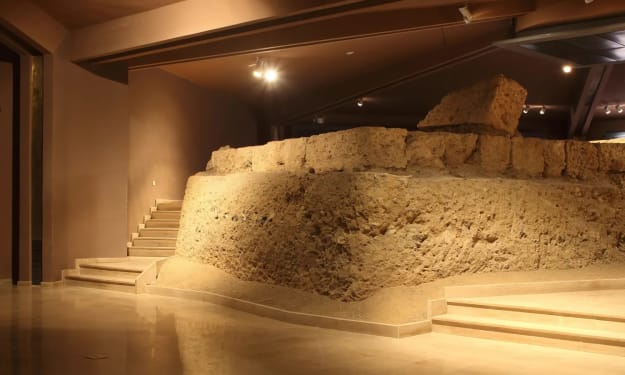
New Study Challenges Long-Held Belief About Tomb of Alexander the Great’s Father A groundbreaking new study has cast serious doubt on the long-standing belief that the tomb known as "Tomb I" at Vergina, Greece, contains the remains of Philip II of Macedon—the father of Alexander the Great. Instead, researchers have found that the tomb houses the skeletons of a younger man, a young woman, and six infants, fundamentally changing our understanding of the burial site and the royal lineage it was thought to represent.
By Adnan Rasheedabout a year ago in History
The Fragmented Kingdom of Axum: Ethiopia’s Overlooked Empire of Wealth and Prestige . AI-Generated.
The Fragmented Kingdom of Axum: Ethiopia’s Overlooked Empire of Wealth and Prestige Concealed in the highlands of contemporary Ethiopia lies the heritage of a once-formidable empire the Kingdom of Axum. Renowned for its monumental obelisks, architectural excellence, and robust trading networks, Axum served as a symbol of African influence and affluence for over 800 years. From the 1st to the 10th centuries CE, it matched the Roman, Persian, and Indian empires in cultural significance and commercial strength. However, today, the name Axum is murmured rather than celebrated, its golden era obscured by centuries of legend, enigma, and shifting political landscapes. This article investigates the remarkable ascent and sorrowful fragmentation of the Axumite Kingdom, examining its lost treasures, neglected myths, and the lingering mysteries it has left behind. A Kingdom Founded on Wealth and Frankincense The Kingdom of Axum surfaced around the 1st century CE, strategically positioned near the Red Sea. Its capital, Axum, evolved into a cosmopolitan center owing to its access to both African and Arabian trade routes. It was in Axum’s markets that commodities from India, Persia, the Roman Empire, and Arabia were exchanged for ivory, frankincense, myrrh, and gold. Greek and Roman historians lauded Axum as one of the world’s four great powers. The Roman writer Mani even enumerated it alongside Rome, Persia, and China. Axumite currencyminted in gold, silver, and bronzebecame emblems of the empire’s vast wealth and the flow of international commerce. These coins, many inscribed with Christian crosses, also serve as evidence that Axum was among the first significant empires to officially embrace Christianity in the early 4th century, shortly after Armenia and Rome.
By Say the truth about a year ago in History
The Silver City of the Andes: The Rise and Fall of Potosí’s Forgotten Fortune
The Silver City of the Andes: The Ascendancy and Decline of Potosí’s Overlooked Wealth Nestled high in the Bolivian Andes, Potosí was once the most affluent city on the planet during the Spanish colonial period. Driven by the extraordinary silver riches of Cerro Rico (the "Rich Mountain"), Potosí supported the Spanish Empire and transformed global commerce, yet its affluence exacted a lethal toll. This article examines the narrative of how the silver from a single mountain sparked an economic upheaval, wreaked havoc on indigenous labor, and ultimately faded into insignificance as the veins ran dryleaving behind remnants, myths, and the specters of imperial avarice. Article (over 700 words): In the 16th century, as Europe grappled with conflicts, reform movements, and exploration, a singular discovery in the New World altered the equilibrium of global economies. It was the mountain referred to as Cerro Ricoliterally "Rich Mountain"rising above the Bolivian city of Potosí. Beneath its exterior lay a silver deposit so immense that it empowered the Spanish Empire for more than two centuries. Presently, Potosí is largely overlooked by the global community, but its trajectory of rise and decline constitutes one of the most striking tales of affluence, exploitation, and downfall in history. The narrative unfolds in 1545 when Spanish conquistadors, accompanied by Quechua-speaking locals, encountered silver ore glistening from the mountainside. Quickly recognizing its potential, they seized the territory in the name of the Spanish Crown. By 1572, Potosí had been officially founded and elevated to city status. What ensued was a silver boom of monumental proportions. Within mere decades, Potosí’s populace surged to over 160,000, rendering it one of the largest and most affluent cities in the world at that timeoutpacing even London and Paris. Grand churches, luxurious mansions, and intricate infrastructure arose, all built with funds sourced from the mines. European traders, Spanish nobles, indigenous laborers, and African slaves all streamed into the city, aspiring to claim a share of the silver bounty. At the core of this operation was the mita systema ruthless labor conscription initially utilized by the Inca and later adopted by the Spanish. Thousands of indigenous men from throughout the Andes were compelled to labor under perilous conditions within the labyrinthine tunnels of Cerro Rico. They toiled under extreme circumstances, often lacking adequate sustenance, hydration, or ventilation, with many never emerging alive. Historians estimate that more than 8 million indigenous individuals and African slaves perished in the mines of Potosí over three centuries. The silver extracted from Potosí not only enriched the Spanish Empire; it transformed the world. Coins minted at the Royal Mint in Potosí became the foundation of international trade. These coinsemblazoned with the famed “PTSI” mint insigniaflowed to Asia via the Manila Galleons, circulated throughout Europe, and even arrived in Africa. Potosí silver financed wars, expanded empires, and ultimately catalyzed the emergence of capitalism as it is understood today. However, such lavish affluence was accompanied by unavoidable deterioration. By the 18th century, the most lucrative veins of silver were depleted. The Spanish Crown's mismanagement and excessive dependence on American silver resulted in inflation and economic stagnation. Corruption pervaded the colony. The once-flourishing city began to decline as miners and traders relocated. Uprisings and conflicts further destabilized the area, and by the early 19th century, Bolivia's liberation from Spain left Potosí a mere remnant of its former prominence.
By Say the truth about a year ago in History
The Final Enigma: The Mysterious Death of Alexander the Great
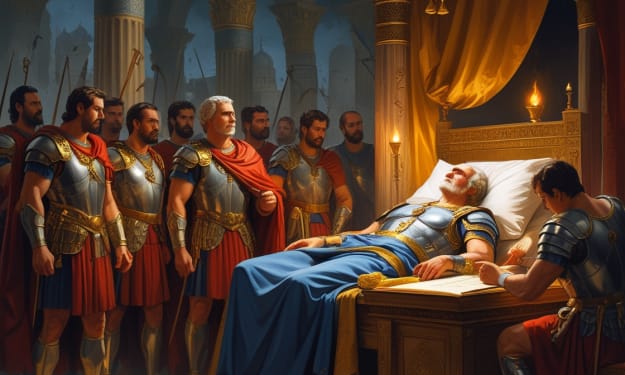
The Ultimate Puzzle: Deciphering the Enigmatic Demise of Alexander the Great The passing of Alexander the Great in 323 BCE persists as one of the most captivating historical conundrums. Was it due to poison, illness, or a more sinister cause? This article investigates the final days of the iconic conqueror, scrutinizing ancient narratives and contemporary hypotheses to reveal the reality behind one of history's most profound puzzles. The Ultimate Puzzle: Deciphering the Enigmatic Demise of Alexander the Great In June 323 BCE, within the palace of Nebuchadnezzar II in Babylon, Alexander the Great one of the most formidable and mysterious figures in human history succumbed at the tender age of 32. By that period, he had subdued most of the known world, from Greece to the Indus Valley, creating an empire that extended over 3,000 miles. His demise, however, initiated a tumult of confusion, power conflicts, and ultimately the disintegration of his empire. Yet the question that has confounded historians for more than two millennia remains: what were the circumstances surrounding Alexander the Great's death? The abrupt and enigmatic nature of Alexander's demise, compounded by conflicting historical narratives, has led to unending speculation. Was it the consequence of poison, illness, exhaustion, or a mixture of all three? Let us investigate the concluding days of Alexander's life, probing the various hypotheses regarding his premature passing. The Final Days in Babylon As per the ancient historian Plutarch, Alexander had returned to Babylon following his extensive campaigns in India. He was strategizing a new expedition this time targeting Arabia. During a feast celebrating the return of a dear friend, Alexander reportedly consumed a considerable quantity of wine and soon after developed a high fever. Over the span of several days, his health deteriorated. He ultimately lost his ability to articulate and succumbed after nearly two weeks of illness. Curiously, no observable wounds or external injuries were recorded. His generals and associates were perplexed. Furthermore, ancient authors such as Arrian, Diodorus, and Curtius Rufus present differing timelines and symptoms, further complicating the historical account. Hypothesis 1: Poison One of the earliest and most enduring theories posits that Alexander was murdered. After all, his ambitious disposition and unpredictable conquests rendered him both revered and feared even among his closest allies. This theory suggests that he was poisoned, potentially by political adversaries who were apprehensive of his future conquests or disapproved of his growing adoption of Persian customs.
By Say the truth about a year ago in History
Echoes of Stone
The prehistoric figurine known as the Venus de Losange is a small but potent testament to the symbolic world of early Homo sapiens. Carved during the Upper Paleolithic period, estimated at 25,000–30,000 years ago, this enigmatic artifact offers more than artistic intrigue—it opens a rare window into the social, emotional, and spiritual dimensions of our distant ancestors.
By Navinder Dinesh Ramabout a year ago in History
The Night the Sodder Children Vanished
It was Christmas Eve, 1945, in Fayetteville, West Virginia. The Sodder family was celebrating together. George and Jennie Sodder had ten children, and their cozy house was filled with the sounds of laughter, excitement, and Christmas cheer. That night, five of the younger children — Maurice (14), Martha (12), Louis (9), Jennie (8), and Betty (5) — were allowed to stay up a little later to play with new toys. The rest of the family went to bed. Everything seemed normal, but what happened next would become one of America’s most haunting mysteries. --- 𝗔 𝗦𝘂𝗱𝗱𝗲𝗻 𝗙𝗶𝗿𝗲: 🔥 At around 1:00 a.m., Jennie Sodder was awakened by a loud sound on the roof. It was like something heavy hit it and then rolled off. She thought it was strange but went back to sleep. About thirty minutes later, she woke up again — this time to the smell of smoke. The house was on fire. Jennie quickly woke George. Together, they got four of their children out safely. But the five younger children who had stayed up late were missing. They had been sleeping upstairs. George tried to get to them, but everything seemed to go wrong: ● The ladder he always kept near the house was suddenly missing.
By Asad khan 313about a year ago in History
Edan Alexander , A Journey Through Darkness and Hope
The Long Journey of Edan Alexander Edan Alexander was born in Israel, in the city of Tel Aviv. But when he was a small boy, his family moved to the United States. He grew up in a quiet town called Tenafly in New Jersey. Edan was a kind and friendly boy. He loved playing sports, listening to music, and spending time with his family.
By Tahir khanabout a year ago in History
🐇When Napoleon Bonaparte Was Attacked by a Horde of Rabbits
When one thinks of Napoleon Bonaparte, certain images come to mind: thundering cannons at Austerlitz, imperial crowns, bold military strategies, and exiles on remote islands. But few people know that one of the strangest and most hilarious events in his storied life involved neither war nor revolution - but an ambush by thousands of rabbits. This little-known incident, often shared as an amusing historical anecdote, is completely true and serves as a bizarre reminder that even the greatest military minds can be outwitted - by fluff.
By History Seekerabout a year ago in History
The Hidden God of War: Unmasking Yahweh, the Forgotten Lord of the Skies
Yahweh, The God Of War In the dry winds of the ancient Levant, beneath the crumbled ruins of forgotten cities and among the fractured stone tablets buried beneath the sands, lingers the shadow of a god that few truly know. Today, billions invoke his name in prayer, see him as the father of creation, the sole and omnipotent divine being who shaped the universe. But this name, Yahweh, once belonged not to a universal creator, but to a jealous and fiery god of war, a desert storm deity born from the smoke of battle, molded in tribal warfare, and later crowned the king of a nation. His name was carved in blood long before it was etched into scripture.
By The Secret History Of The Worldabout a year ago in History
🏛️ Liquid Gold of Rome: The Unbelievable Use of Urine in Ancient Roman Daily Life
Imagine walking through the bustling, sun-drenched streets of ancient Rome. The scent of roasted olives and freshly baked bread fills the air - alongside something far less pleasant: the acrid smell of human urine. But don't turn up your nose just yet. That pungent fluid was more than waste to the Romans. It was a valuable chemical resource, a cleaning agent, a source of tax revenue, and even a tool of social mobility. This is the bizarre and surprisingly sophisticated story of how ancient Romans used urine to clean clothes, whiten teeth, and make money - and how an entire economy formed around one of the most unlikely commodities in human history.
By History Seekerabout a year ago in History