Discoveries
Tiny Africa, Massive Europe
Imagine trying to draw a map of the Earth. At first, it might seem simple—until you realize you're trying to flatten a sphere. Our planet is round, but maps are flat, which makes representing it accurately a huge challenge. Think of it like peeling an orange and trying to lay the peel flat on a table without tearing or stretching it. That’s impossible, and so is making a flawless flat map of the globe. As a result, nearly all world maps are wrong and some are misleading by design.
By Francis Oseiabout a year ago in History
The Sole Survivor Of Air India Boeing 787
It was a day of heartbreak in Ahmedabad. Outside the Civil Hospital, scenes of anguish unfolded as grieving families gathered, waiting—some with hope, others in despair—for news about their loved ones. This was the hospital where victims of the catastrophic Air India plane crash had been brought, many of them lifeless. Throughout the day, the air was filled with cries, hushed prayers, and the endless shuffle of feet as people searched for answers.
By Francis Oseiabout a year ago in History
🪖 Ghost Army of the World War 2
The Ghost Army of World War II stands as one of the most extraordinary and ingenious military units ever assembled, representing a groundbreaking fusion of art, technology, and psychological warfare that significantly contributed to the Allied victory in Europe. Officially designated as the 23rd Headquarters Special Troops, this unit was activated in 1944 and assigned an unprecedented mission that diverged sharply from traditional combat roles: to mislead and confuse German forces regarding the strength, location, and intentions of Allied troops through elaborate deception techniques. By employing a combination of inflatable rubber tanks and vehicles, sophisticated sound equipment, fake radio transmissions, and expertly crafted visual illusions, the Ghost Army played a pivotal role in the success of numerous key operations, effectively saving countless lives by drawing enemy attention away from genuine troop movements and strategic points.
By History Seekerabout a year ago in History
🗺️ Piri Reis Map – A 1513 Ottoman map that accurately shows parts of the Americas and Antarctica… centuries before they were "discovered
The Piri Reis Map of 1513, crafted on a handsome piece of gazelle parchment approximately 87 by 63 centimeters, is one of the world’s most captivating cartographic artifacts. Rediscovered in 1929 in Istanbul’s Topkapi Palace, it represents the western third of an otherwise lost masterpiece, gifted by Piri Reis—an Ottoman naval officer, geographer, and cartographer—to Sultan Selim I after the conquest of Egypt in 1517. This single map fragment encapsulates an astonishing blend of ancient classical knowledge, contemporary seafaring intelligence, and a global vision that was well ahead of its time.
By History Seekerabout a year ago in History
Forgotten female inventors
Female inventors have discovered and invented countless life-changing inventions in the history of the world. I am pretty sure you would be surprised that many of the inventions you thought were invented by a man, in reality were created by a woman.
By Susan Fourtané about a year ago in History
The Original Owners of South Africa: Are the Boers Aboriginal South Africans?
The Boers, also known as Afrikaners, are one of the white ethnic groups in South Africa and Namibia. They are mainly Dutch immigrants from the 17th to the 19th century, and are formed by the integration of French and German immigrants. They communicate in Afrikaans, which is also referred to as Afrikaans. Naturally, there are some who do. The key point is that the religious convictions of the Boers are predominantly Protestant, with a minority being Catholic. According to statistics in 2022, the total number of Boers is currently about 3.5 to 4 million.
By Uchenna Cosmas Nwokafor about a year ago in History
The Wildest Heist You’ve Never Heard Of: Operation Fish
You know that feeling when you stumble across a story so wild, so perfectly absurd, that you can’t believe it’s true? That’s exactly what happened when I first heard about Operation Fish. Picture this: it’s July 1940, and while Europe’s burning under the roar of war, a quiet train pulls into Montreal’s Bonaventure Station. Nothing unusual, right? Just another day of passengers and cargo. But hidden in that moment, three men-Alexander Craig from the Bank of England, and David Mansour and Sydney Perkins from the Bank of Canada-exchange a cryptic greeting about “fish.” And not just any fish, but crates upon crates of it, so important that the fate of the free world hangs in the balance. Sounds like a spy novel, doesn’t it? But here’s the kicker: those crates weren’t filled with fish at all. They held Britain’s entire fortune-gold, bonds, securities-smuggled across the Atlantic in the most audacious heist you’ve never heard of.
By KWAO LEARNER WINFREDabout a year ago in History
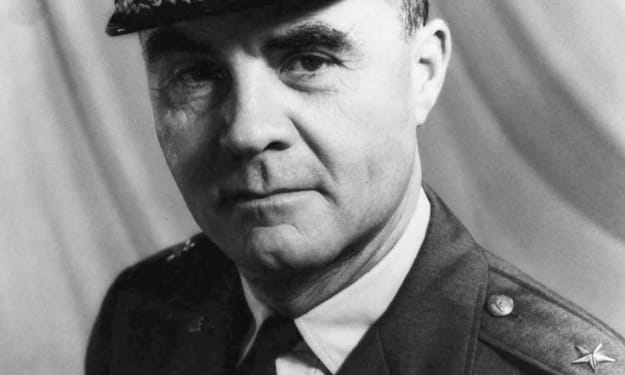
The Man Who Flew into History: Paul Tibbets’ Story
Ever wonder what it feels like to carry the weight of history on your shoulders? Picture this: it’s August 1945, and you’re a 30-year-old pilot stepping into the cockpit of a B-29 bomber named after your mother. The mission? Drop the first atomic bomb on Hiroshima. That was Paul Tibbets’ reality. His life, a mix of courage, duty, and quiet reflection, pulls you in-not just because of that one flight, but because of the human behind it. What kind of person takes on a moment like that? Let’s dig into his story.
By KWAO LEARNER WINFREDabout a year ago in History