Books
Language Evolution Chronicles
Acknowledgement for "Language Evolution Chronicles" Gratitude for the Journey of Exploring Language Evolution The creation of Language Evolution Chronicles has been an enriching and intellectually stimulating journey, one that would not have been possible without the support, guidance, and contributions of numerous individuals and institutions. This project delves into the fascinating transformation of human communication, tracing the roots of language from ancient scripts to modern dialects, and examining the socio-cultural forces that shape linguistic diversity.
By Sabina Islamabout a year ago in History
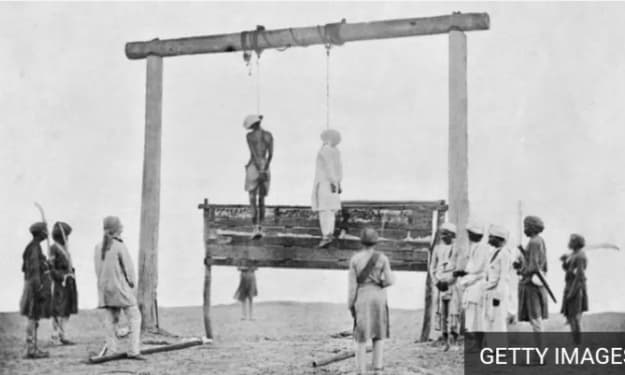
The Last Days of Bahadur Shah Zafar: The Forgotten Tragedy of the Last Mughal Emperor
The 1857 'War of Independence': When Delhi Witnessed Death Dancing "I am neither the light of anyone’s eye, nor the solace of anyone’s heart, I am but a handful of dust, of no use to anyone." In today’s world, it is unimaginable for a common person to believe that the poet of these melancholic verses, the last Mughal Emperor Bahadur Shah Zafar, had once led the Indians in the first war of independence against the British in 1857. It was Monday, May 11, 1857, corresponding to 16th of Ramadan. At around 7 in the morning, Bahadur Shah Zafar was offering the Ishraq prayer in the portrait gallery near the river at the Red Fort. At that moment, he noticed smoke rising from the Toll House across the Yamuna River. Alarmed, he immediately sent his messenger to investigate and summoned his Prime Minister, Hakim Ahsanullah Khan, and Captain Douglas, who was in charge of the fort’s security. The messenger returned with troubling news: some Indian cavalrymen, dressed in British military uniforms and wielding naked swords, had crossed the bridge over the Yamuna. They looted and set fire to the toll house on the eastern bank. Upon hearing this, the Emperor ordered the gates of both the city and the fort to be shut. Rebels Seek Royal Blessing By 4 PM that day, the leader of the rebels sent a message requesting a meeting with the Emperor. The rebels assembled in the Diwan-e-Khas (Hall of Private Audience) and fired shots into the air with their guns and pistols. A prominent nobleman of Delhi, Abdul Latif, wrote in his diary on that day: "The Emperor was like a king in a game of chess after being put in check – powerless and trapped." After a long silence, Bahadur Shah Zafar spoke, saying, "Why is an old man like me being insulted in such a manner? What is the reason for this uproar? The sun of my life has already reached its dusk. These are the final days of my life. All I wish for now is solitude." Later, in his book "Two Nations: A Narrative", Charles Metcalfe wrote: "Hakim Ahsanullah Khan told the soldiers: ‘You have worked for the British and are used to regular pay. The Emperor has no treasury – how will he pay you?’" To this, the soldiers replied: "We will bring the wealth of the entire country to your treasury." Zafar responded, "I have no army, no weapons, and no money." The soldiers answered, "We need only your support. We will bring everything else ourselves." Charles notes: "For a moment, Bahadur Shah Zafar remained silent. His inability to make swift decisions was his greatest flaw. But that day, he did not hesitate. He agreed." He sat on a chair as the soldiers, one by one, bowed before him, and he laid his hand on their heads in acknowledgment. The rebels occupied various rooms in the fort, with some even setting up their bedding in the Diwan-e-Aam (Hall of Public Audience). The Silver Throne and New Coins The Emperor, unable to manage or control such a large army, found himself under their control instead. The next day, he donned his royal attire and ascended the silver throne. Coins were minted in his name, and a great cannon blast was heard in celebration. Why and How the Revolt Began The entire episode had started on May 10, 1857, in Meerut, when sepoys of the Bengal Lancers mutinied and marched toward Delhi. Renowned historian Rana Safvi, an expert on the events of 1857, explains: "New rifles had been introduced, and the cartridges had to be bitten open with the mouth. Rumors spread that the grease used in these cartridges was derived from cow and pig fat – offensive to both Hindus and Muslims. Muslims were reluctant due to pigs, and Hindus due to cows." She further elaborates: "There were other grievances as well – they were being sent to fight overseas, which, for Brahmins, meant loss of caste. Their promotions were also limited – Indian soldiers could not rise beyond the rank of Subedar. These frustrations simmered over time." Some called it a mutiny, others called it the First War of Independence. The People of Delhi Did Not Welcome the Rebels Initially, the people of Delhi did not warmly receive the rebels. In fact, some circles – including those close to Bahadur Shah – opposed them. It was said that the rebels disrespected the Emperor and disregarded court etiquette. The courtiers complained that they did not remove their shoes before entering the royal court and came armed before the Emperor. Historian Mehboob Faruqi, author of "Besieged 1857: Voices of Delhi", explains: "Yes, Delhi’s people were upset, but that doesn’t mean they didn’t want to fight the British. Everyone wanted to resist the British in their own way – but no one wanted forty armed men suddenly taking over their home." "Even during later freedom movements with Gandhi or Bhagat Singh, there were millions who didn’t want trouble at their doorstep or police raids on their homes. The same logic applies to 1857." Order Amidst Chaos It is often said that the events of 1857 brought great upheaval to Delhi. However, Faruqi argues that despite the turmoil, order remained largely intact. "People often claim there was chaos, no leadership, no structure. But in my book, I argue that this was not the case." "Naturally, when 70–80,000 soldiers flood into a city of 150,000, there will be disruption. If, today, 3 million troops entered modern Delhi, imagine the state of the city." "Still, what’s truly astonishing is that if the Commander-in-Chief told the police chief to arrest four soldiers for skipping duty – and those four were indeed caught, brought back, and apologized – that shows a certain discipline." "If you needed 400 beds at the front lines and they were delivered – someone ordered them, someone fetched them, someone paid. That’s logistical order. Even today, wars require not just soldiers, but porters, laborers, water carriers – and back then, too, the same was true." The British Were Killed By the morning of May 12, Delhi had been completely emptied of British control. However, a few British women had taken shelter in rooms near the palace kitchen. Despite the Emperor's opposition, the rebels killed them all. Rana Safvi remarks: "On the 11th and 12th, when the rebels attacked the British, many fled the city, while others were killed. Some women sought refuge in the fort . At that very place, out of enmity, they killed 56 people—most of them were women and children, although there were one or two men among them. According to him, “When Bahadur Shah Zafar was tried, the biggest charge against him was that he had them killed. However, if you read Zahir Dehlvi’s book, it becomes clear from eyewitnesses present in the fort during the 1857 rebellion that the king had repeatedly said: ‘No religion allows the killing of innocent people.’” When the British returned and began punishing the rebels, their grip started weakening, and the Englishmen who had fled Delhi began to return. Troops from Ambala turned the tide, and the British once again entered Delhi. “He was sitting. His long white beard reached down to his stomach. He was dressed in white clothes and wore a white turban. Behind him stood two orderlies, fanning him with fans made from peacock feathers. He didn’t utter a single word, his eyes fixed on the ground.” According to him, “Just three feet away from the king, on another cot, sat a British officer. On both sides stood British sentries with bayonets, ordered to kill him immediately if anyone tried to rescue the king.” Bahadur Shah Zafar was humiliated to such an extent that crowds of British people came just to see what a Mughal emperor looked like. Historian Mahmood Farooqui says, “After his arrest, Bahadur Shah Zafar was kept in a cell in the Red Fort. British tourists would come and, just like people visit the Red Fort today, they would go to his cell to see him—this is Bahadur Shah Zafar.” “For a man, for a king of India, to be in such a condition in Delhi—it's obvious that he spent the rest of his years in yearning for death. From there, he was sent to Rangoon, and around the same time, the king of Rangoon was brought to Maharashtra.” “Such was the British rule across the world that kings were being traded from one place to another. Bahadur Shah’s final days were tragic and painful. It was in this situation that he said: ‘How unfortunate is Zafar, for burial Not even two yards of land were found in the land of his beloved.’” “What more could have happened to him? In my opinion, everything had already happened to him during and after 1857. What could be worse than keeping a Timurid successor, the emperor of India, locked in a cell, while British women and children came to gawk at him and say: ‘Oh, so this was Bahadur Shah!’” The king died on November 7, 1862, in a prison-like house in Rangoon. Some British soldiers carried the body of the 87-year-old man to a grave dug within the premises. His funeral included only two sons and a cleric. No women were allowed to attend. When some people in the market heard whispers of this, they tried to join the funeral, but armed soldiers did not allow them to come close. Before burial, soldiers poured lime into the grave so the body would decompose quickly and mix with the soil. A week later, British Commissioner H.N. Davies wrote in a report sent to London: “Afterward, I visited the residence of the remaining royal prisoners. All were fine, and none seemed affected by the old man’s death. He died due to paralysis of the throat.” “He passed away at five in the morning. A bamboo fence has been erected around his grave. By the time the fence wears out, grass will have covered the ground, and no one will know that the last Mughal emperor is buried here.”
By Ikram Ullahabout a year ago in History
Trump says he will cut prescription drug prices by 59% as shares drop
Trump's Bold Prescription Drug Price Cut: A 59% Reduction Amid Market Turmoil On May 12, 2025, President Donald Trump announced a sweeping initiative to reduce prescription drug prices in the United States by up to 59%. This move, which he plans to implement through an executive order adopting a "Most Favored Nation" (MFN) pricing model, aims to align U.S. drug prices with those of other developed nations, ensuring Americans pay no more than the lowest price paid abroad.
By Abjol Hussain Laskarabout a year ago in History
Kamala Harris
Kamala Harris, the 49th Vice President of the United States, has experienced a dynamic shift in public perception following her 2024 presidential bid. Assessments of Harris's political standing as of May 2025 reflect both her accomplishments and the difficulties she faces within the Democratic Party and the electorate as a whole. Post-Election Reflections
By Sakhawat Hossainabout a year ago in History
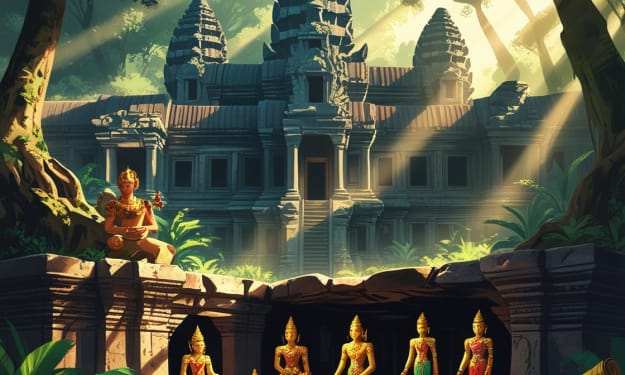
The Hidden Vaults of the Khmer Empire: Angkor’s Forgotten Gold
The Concealed Vaults of the Khmer Empire: Angkor's Neglected Gold Deep within the dense, humid rainforests of contemporary Cambodia resides one of the most remarkable architectural and cultural wonders of the ancient eraAngkor. Formerly the capital of the Khmer Empire, Angkor was an extensive urban center of temples, palaces, and intricate waterways, housing one of the most formidable and sophisticated civilizations in Southeast Asia from the 9th to the 15th centuries. While millions converge annually to appreciate the grandeur of Angkor Wat and its adjacent remnants, concealed beneath this cultural splendor is an intriguing enigma that has long fascinated explorers, archaeologists, and treasure seekers alikethe tale of Angkor's neglected gold. The Ascendancy of the Khmer Empire The Khmer Empire was established in 802 AD by King Jayavarman II, who proclaimed himself a "universal sovereign" and instituted a divine monarchy grounded in Hindu cosmology. Throughout the subsequent 600 years, the empire broadened its jurisdiction across what is now Cambodia, Thailand, Laos, and Vietnam. At its zenith, Angkor was not merely a capitalit was a megacity. Some academics estimate that over a million individuals may have resided in and around Angkor during its apex in the 12th century. The Khmer aristocracy invested substantially in monumental construction. Temples were erected not solely as sites of worship but as cosmic embodiments of Mount Meru, the focal point of the universe in Hindu and Buddhist lore. Angkor Wat, constructed during the rule of King Suryavarman II, is the most renowned of these edifices and remains the largest religious monument globally. However, the Khmer civilization was not merely spiritualit was affluent. The empire’s wealth stemmed from a combination of agriculture, commerce, and tributes from subordinate states. Gold, gemstones, silks, and spices flowed into Angkor, where monarchs commissioned opulent temples and filled royal treasuries with inconceivable riches. The Decline of Angkor and the Vanishing of the Wealth By the 15th century, the once-mighty Khmer Empire began to disintegrate. Prolonged conflicts with neighboring realms, internal insurrections, and environmental strainsparticularly the failure of Angkor’s advanced water management
By Say the truth about a year ago in History
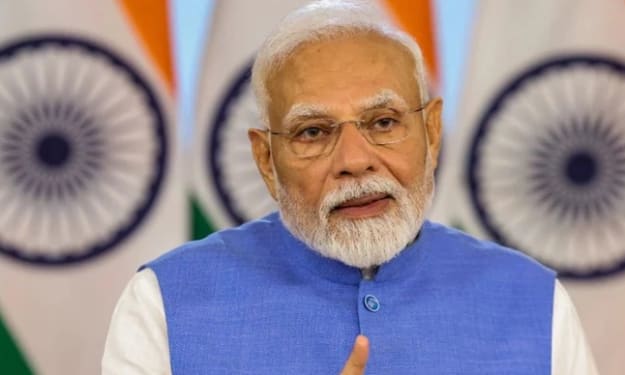
Prime Minister Urges Society to Embrace Buddha's Teachings for Peace and Unity
In a heartfelt address on the occasion of Buddha Purnima 2025, Prime Minister [Name] called upon citizens to reflect deeply on the timeless teachings of Lord Buddha and adopt them as guiding principles in modern life. Speaking at a public event attended by spiritual leaders, scholars, and citizens from across the country, the Prime Minister emphasized that Buddha’s message of compassion, non-violence, and harmony is more relevant today than ever before.
By Abjol Hussain Laskarabout a year ago in History
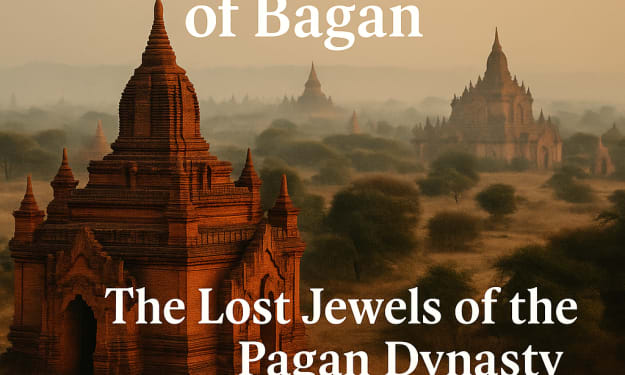
The Ruby Hoard of Rangoon: Burma’s Forgotten Fortune
The Ruby Hoard of Bagan: The Vanished Gems of the Pagan Dynasty Amidst the enchanting temples and stupas of ancient Bagan in Myanmar exists the tale of a lost cache of rubiesgems so radiant that they rivaled the riches of empires. This article examines the history of the Pagan Dynasty, the legendary ruby treasury of King Anawrahta, and the ways in which conflict, colonial avarice, and the passage of time obscured one of Southeast Asia’s most remarkable lost treasures. The Ruby Hoard of Bagan: The Vanished Gems of the Pagan Dynasty In the parched plains of central Myanmar, where over 2,000 temples embellish the ancient terrain of Bagan, legend recounts a treasure trove that sparkled with crimson brilliancea repository of rubies belonging to the once-mighty Pagan Dynasty. Esteemed for their unparalleled beauty, Burmese rubies were deemed the most valuable in the ancient world, with Bagan at their core. Amidst the towering stupas and gilded pagodas, the narrative of the Ruby Hoard continues to intrigue treasure seekers and historians alike. The Ascendancy of the Pagan Dynasty The Pagan Dynasty ascended to prominence in the 9th century, reaching its zenith under King Anawrahta in the 11th century. Anawrahta unified Myanmar through conquest, diplomacy, and ecclesiastical reform, transforming Bagan into a pivotal center of Theravāda Buddhism. To affirm his sacred authority and affluence, he commissioned monumental temple constructions and was reputed to have accumulated vast wealthincluding a treasury filled with rubies, the most coveted gemstone in Burmese heritage. Burmese rubies were not only exquisite but also epitomized authority, heritage, and spiritual safeguarding. Monarchs adorned themselves with them during coronations, and warriors embedded them within their flesh, believing they conferred immortality in combat. According to local mythology, Anawrahta regarded the ruby treasury as a divine gift, concealed deep within a stupa and sealed by a royal curse: whoever disturbed it would precipitate a cycle of warfare, fire, and devastation. The Treasury Beneath the Temple One temple frequently linked to the ruby treasure is the Shwezigon Pagoda, erected by Anawrahta and his successor Kyansittha. Inscriptions from the 12th century reference "gem-laden chambers" sealed beneath its foundations, offered to the Buddha as a merit-making acta religious observance that ensured rebirth in a celestial realm. The royal vaults, if they exist, may have been concealed in one of these subterranean chambers. Throughout the centuries, earthquakes and invasions have damaged many of Bagan’s temples. Yet, despite thorough archaeological investigations, the ruby hoard remains undiscovered. Some assert it lies beneath collapsed stupas, while others contend that it was removed or pillaged during one of the kingdom’s numerous declines. Still, others believe it was a spiritual offering, never intended to be unearthed. Colonial Avarice and Despoilment When the British Empire incorporated Burma in the late 19th century, stories of the ruby treasure reemerged. British soldiers and adventurers, frequently masquerading as archaeologists, combed the temple complexes equipped with maps and implements. In 1886, a British officer allegedly disappeared while investigating an underground passage beneath a deserted monastery. His diary, subsequently discovered in Rangoon, detailed a “chamber of crimson radiance” that corresponded with the myths of the ruby reservoir. Despite years of fascination, no conclusive finding was achieved. Nevertheless, colonial exploitation of Burmese relics did transpire on an extensive scale. Entire panels from pagodas, sculptures, and artifacts were transported to museums in London, Calcutta, and other locations. Whether any rubies were taken remains uncertain, although speculations continue that private collectors in Europe may possess gems associated with Bagan’s vanished vault. Seismic Activity, Concealment, and Sacred Terrain One of the most significant obstacles in unearthing the ruby treasure is the sanctity of Bagan’s temples. Local monks, who serve as custodians of these locations, frequently prohibit or limit intrusive exploration. Many contend that disturbing the holiness of these revered places invites ill fortune. Furthermore, recurrent earthquakes in the region have transformed the landscape of temple sites, potentially collapsing or burying any chambers that may have once contained riches. In 2016, a quake with a magnitude of 6. 8 inflicted damage on over 400 structures, rekindling interest in what might be concealed beneath the debrisbut also advising against thoughtless excavation. A Legacy of Cultural Treasure Perhaps the most significant treasure of Bagan is not of rubies or gold, but of knowledge, history, and craftsmanship. The city’s frescoes, carvings, and inscriptions unveil a sophisticated civilization that amalgamated Indian, Mon, and local influences into a distinctive Buddhist culture. Nonetheless, the legend of the ruby treasure persists. Amateur explorers, mystics, and even Burmese military officials have discreetly continued their quest for evidence of the lost vault. Satellite imagery, ground-penetrating radar, and LIDAR mapping may eventually uncover concealed chambers beneath the centuries-old dust of Bagan. Whether reality or folklore, the narrative of the Ruby Hoard of Bagan serves as a reminder that history is interwoven with enigmaand occasionally, hidden beauty awaits rediscovery beneath the surface of sacred lands.
By Say the truth about a year ago in History
BagelTechNews.org: A Modern Gateway to Technology News and Digital Innovation
In the ever-evolving landscape of technology journalism, where information travels at the speed of light and trends shift almost daily, it takes more than just flashy headlines and fast reporting to stand out. It takes credibility, clarity, consistency, and a deep understanding of the tech world to capture and retain the attention of a digitally savvy audience. One platform that has successfully established itself as a trusted voice in this chaotic and fast-paced arena is BagelTechNews.org. With a unique name that sparks curiosity and a commitment to quality journalism that delivers substance, BagelTechNews.org is fast becoming a leading destination for readers who crave more than surface-level stories about the digital age.
By Zainab Harleeabout a year ago in History