Books
Photos of Macron’s U.K. State Visit, From a Carriage Ride to a Polite Kiss
French President Emmanuel Macron and his wife, Brigitte, commenced a three-day state visit to the United Kingdom, marked by ceremonial elegance, political symbolism, and moments of personal charm. The grand diplomatic event that was to follow began with their arrival at RAF Northolt. Greeted by the Prince and Princess of Wales, Macron's gallant gesture of gently air-kissing Princess Kate's hand drew both admiration and curiosity, as such gestures are rarely seen in royal protocol but not expressly prohibited.
By GLOBAL NEWSabout a year ago in History
"Socrates: The Gadfly of Athens
The year was 2025, but something ancient stirred in the air. Amidst the skyscrapers, self-driving cars, and endless streams of digital noise, a man appeared in Athens. Not just any man—but one with a face eerily familiar from marble busts in museums. His robe was rough, his sandals dusty, and his eyes carried centuries of silence. He said his name was Socrates. At first, the world laughed. A performance artist, they assumed. Or perhaps an AI deepfake gone viral. But the man walked the streets of modern Athens asking the same questions he once posed centuries ago: > “What is justice?” “Can virtue be taught?” “Do we live well, or merely live?” Teenagers on scooters filmed him and posted videos online. “Old dude grilling random people – Part 1!” the captions read. But as views exploded into the millions, so did the realization that this wasn’t performance. His questions weren’t tricks. They were genuine. And disturbingly relevant. He sat in coffee shops and asked executives if their jobs served the public good. He wandered through universities, quietly challenging professors on the foundations of their knowledge. He stood at protests and asked both sides if they understood the truth behind their convictions. And people listened. Or rather—many argued, many mocked, but deep down, many were shaken. One day, a famous tech billionaire invited him on a live podcast. The host smirked, “So, you’re the great Socrates? What’s your opinion on artificial intelligence and the future of humanity?” Socrates leaned forward gently. “I ask only: will your machines make us more wise, or merely more efficient in our folly?” Silence. The clip went viral again. But not everyone was pleased. Politicians called him dangerous. “He undermines public confidence,” they said. “He offers no solutions, only questions.” Commentators labeled him a cynic, a destabilizer, a menace to rational progress. When a crowd gathered outside Parliament, holding signs that read "We Know Nothing", the government acted. A tribunal was formed. Charges? “Corruption of minds,” “Public disruption,” and the ambiguous but damning “Undermining social unity.” It was happening again. At the trial, broadcast live to millions, Socrates stood calmly. They asked, “Are you not a threat to peace?” He replied, “I threaten only illusion. If peace depends on ignorance, then perhaps it is not peace at all.” They asked, “Why do you not give answers? Only questions?” He smiled. “Because the disease of certainty is worse than doubt. I have never claimed to know. But I urge others to know that they do not know.” A student in the crowd wept. A minister scoffed. The judge, after a pause, read the verdict. “Guilty.” He was offered a choice: exile from all digital platforms, isolation from society, and total silence—or punishment. He chose punishment. > “I would rather die asking questions than live as a slave to unchallenged beliefs.” The sentence: digital deletion. All records, traces, and identities wiped. The modern hemlock. And so, Socrates vanished again. His accounts were removed. His videos disappeared. Search engines returned no results. To the world, he had never existed. But for those who had heard him, the questions remained. One university painted his words across a wall: > “The unexamined life is not worth living.” A group of teenagers began a podcast called “Digital Dialogues” — where every week they explored modern issues with the Socratic method. No rants. Just questions. In hushed corners of the internet, encrypted groups now meet weekly to debate philosophy, ethics, and meaning. They call themselves The Gadflies. And every so often, someone in a café, or on a train, or in a dark hallway hears a voice say: > “What do you believe? And why?”
By Naqeeb Khanabout a year ago in History
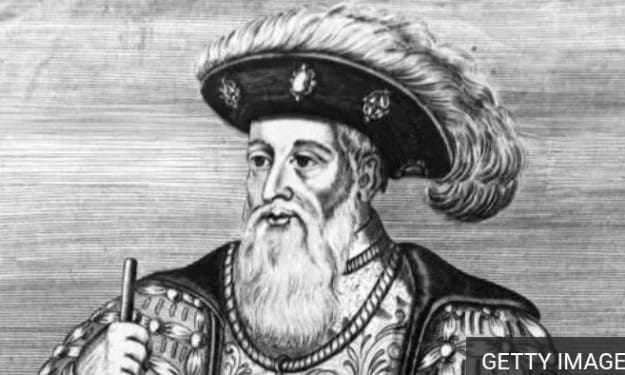
Vasco da Gama: Explorer, Conqueror, or Villain?
When Vasco da Gama Set Fire to a Ship Filled with Women and Children Heading to Mecca The character Kelu, raised under Portuguese rule, had only one thought in mind: to eliminate Vasco. This is the dialogue introducing the main character Chirakkal Kelu in the famous Malayalam film Urumi, even before he appears on screen. The life of the film's protagonist, Kelu, revolves solely around the mission of killing the Portuguese sailor Vasco da Gama. To achieve this goal, he faces numerous obstacles, builds a revolutionary army, and clashes with the Portuguese forces. In this battle, he loses his closest friend. But in the end, not only does he fail to achieve his goal, but he also loses his life. Chirakkal Kelu, who desires to assassinate Vasco da Gama, is a fictional character. But Prithviraj’s portrayal of this role in Urumi became a great cinematic experience and gained immense popularity in Kerala. Viewers praised the film highly. Although Vasco da Gama is celebrated in European history for discovering the sea route to India, in Malayalam films, folklore, and songs, he is portrayed as a villain. On March 25, 1497, Vasco da Gama set out from Lisbon, the capital of Portugal, for India. He had the backing of the Portuguese king for this voyage. After months of travel, he became the first European to reach India by sea. This journey earned him the title of a “hero” in European history. Even in our school textbooks, Vasco da Gama is credited for opening trade routes and playing a significant role in the spice trade. Europe’s Dream of Reaching India American historian Charles E. Nowell, in his book The Great Discoveries, writes about Vasco da Gama: > “Vasco da Gama, who established direct contact with India, was a man of strong physique and strong character. Although he was illiterate, cruel, and violent, he was also loyal and fearless.” He was given the responsibility of leading the voyage to India, a task not meant for the soft-hearted. In January 1497, King Manuel I of Portugal tasked Vasco da Gama with fulfilling “Europe's dream of reaching India.” For centuries, many European nations tried to be the first to reach India. Even a small country like Portugal was competing in this race. However, Arab and Persian traders had already reached India and established trade networks. They were importing spices, particularly from the Malabar region (present-day Kerala), through Muslim merchants. Historian John F. Richards writes in The Mughal Empire: > “Before the Portuguese arrived, Muslims and their ships dominated Gujarat, Malabar, and Arabian Sea ports.” In 1492, Columbus arrived in the Americas. Until his death, he believed that the land he had discovered was part of Asia and that India was nearby. George M. Tully writes in his book The Voyages and Adventures of Vasco da Gama: > “This is why he called the inhabitants of that land ‘Indians.’” For Europeans, India was envisioned as a wealthy land filled with gold, diamonds, precious stones, and expensive spices like pepper. Asia—especially India—was viewed as a land of immense riches and allure. William Logan writes in Malabar Manual that Vasco da Gama's fleet consisted of three ships: > São Rafael, São Gabriel, and São Miguel. Each ship was staffed with officers, sailors, and other crew members. When Vasco da Gama first came to India, his fleet was quite small. Historical sources differ on exactly how many people accompanied him. But one thing is certain: some of them were convicts. The book M. Nomed Deus: The Journal of the First Voyage of Vasco da Gama to India, 1497–1499 mentions that during the voyage, ten convicts were pardoned and sent along. The Portuguese king pardoned their crimes and sent them to assist on this mission. Some historians suggest another reason behind this decision—perhaps the king thought it better for these convicts to risk dying at sea rather than waste away in Portuguese prisons. One of the most important of these criminals was a "New Christian" named João Nunes, a recently converted Jew who could speak some Arabic and Hebrew. The same journal states: > "João Nunes was intelligent and understood the Muslims' language." Was He the First European to Set Foot in India? When Vasco da Gama’s ship reached Kerala on May 20, 1498, food was arranged on board while anchored just off the coast. It is recorded that Vasco first landed at Kappad village in the Kozhikode district of Kerala. However, according to historian and scholar M.G.S. Narayanan, Vasco first visited the Pantalayani region near the Kollam district. Small Malabar boats approached Vasco's ships and questioned his origins, asking, “Which country are you from?” It is quite possible that the first European to set foot on Indian soil was not Vasco da Gama himself, but one of his crew members—a convict. According to Vasco da Gama and the Sea Route to India: > “Before Vasco set foot on land, he sent someone who could speak Arabic and Hebrew to the shore.” Thus, the first European to reach the Malabar coast may have been João Nunes, a recent convert who spoke Arabic and Hebrew. But there is no concrete documentation to confirm this. A Disappointing First Visit to India When Vasco da Gama's translator met two Arab traders onshore, they suspected him to be an enemy. They shouted, “May the devil take you!” They then asked, “Why have you come here?” The translator replied, “We are Christians and have come in search of spices.” This exchange between the first European visitors and the Arab traders is mentioned in many historical accounts. Later, Vasco da Gama, along with a few selected men, went ashore, leaving the rest of the crew on the ships with instructions to remain alert. Historical accounts suggest that he was received with courtesy and respect. However, Vasco’s first visit to India was not as successful as he had hoped. The Hindu king of Kozhikode (called the Zamorin by the Portuguese) considered Vasco’s gifts simple and unimpressive and mocked them. The Arab Muslim traders, who dominated the spice trade, strongly opposed the arrival of the Portuguese. Historian M.G.S. Narayanan, in an interview with The Hindu, said: > “The Portuguese demanded a monopoly on the pepper trade, but the Zamorin refused because the trade was already under Muslim control.” After this, the Portuguese allied with the Kingdom of Cochin and established trading centers there. Later, they turned toward Goa, near the Vijayanagara Empire. Vasco da Gama returned to Europe in 1499 with a small quantity of spices. Nevertheless, he was given a grand welcome in Portugal. K.M. Panikkar writes in Asia and Western Dominance: > “The spices brought back from India during Vasco's first voyage were sold at a huge profit, many times more than the cost of the entire expedition.” It was then that the Portuguese realized the wealth of India. Vasco’s Second Voyage to India Vasco da Gama’s first voyage (1497–1499) established a sea route between Europe and India but failed to secure a strong trade agreement with the Zamorin of Kerala. Arab Muslim traders, long dominant in the Indian Ocean spice trade, condemned and resisted the Portuguese. Historian Sanjay Subrahmanyam writes in The Career and Legend of Vasco da Gama: > “For Vasco, the Muslim traders of Kozhikode were not only economic rivals but religious and cultural enemies.” > “Their strong position at the Zamorin’s court was a major obstacle to Portuguese ambitions.” To counter this threat, the Portuguese government planned a second expedition. This time, the goal was clear: establish Portuguese dominance in India, take revenge for earlier failures, and monopolize the spice trade. In February 1502, Vasco da Gama set out from Lisbon with 20 warships and about 1,500 soldiers. The fleet was equipped with cannons and other weapons, ready for battle. On September 11 of the same year, his fleet arrived at the coast of Kannur in Kerala. One of Vasco's crew members documented in The Journal of the First Voyage of Vasco da Gama to India: > “There we saw ships returning from Mecca. These ships were transporting spices to our country (Portugal). We captured them so that only the king of Portugal could directly trade spices from India.” > “We then captured a ship bound for Mecca, carrying 380 men, many women, and children.” > “We looted at least 12,000 ducats (gold coins) and other valuables from the ship. Then, on October 1, we set the ship and everyone on board ablaze.” The ship referred to here as the "Mecca ship" was a large vessel named Miri. According to historian K.M. Panikkar, this ship belonged to the brother of Khoja Qasim, a wealthy merchant from Kozhikode. The ship, seized by Vasco’s forces, was carrying many women, children, and elderly pilgrims bound for Hajj. It was also filled with valuable trade goods. > “Vasco ordered the ship to be burned. Women begged for mercy for their children. Portuguese soldiers watched from their ships as every soul aboard was burned alive, their screams echoing across the sea.” Gaspar Correia writes in Lendas da Índia: > “No one survived. The cries of those on the brink of death echoed across the ocean. Vasco remained unmoved, as calm as if nothing had happened.” This incident deeply disturbed even some Portuguese of the time and became a key reason why Vasco da Gama is remembered in Kerala’s history as a villain.
By Ikram Ullahabout a year ago in History
Why some see the dollar's drop as a sign America is losing its financial might
**The Dollar’s Decline: A Sign of America’s Waning Financial Might? ** In recent months, the U.S. dollar has seen a notable decline against major global currencies, sparking widespread debate among economists, investors, and policymakers. This depreciation is seen by some as a warning sign that America may be losing its long-standing financial dominance, rather than just a market fluctuation. While others see it as part of a natural economic cycle, the perception that the dollar’s weakening reflects a deeper erosion of U.S. financial influence is gaining traction.
By GLOBAL NEWSabout a year ago in History
The Unforgotten Pain of Frank Embree
Imagine a young man, barely 19, standing in the scorching Missouri sun, his wrists bound, his body stripped bare. The air is thick with the shouts of a crowd-over a thousand strong-their faces twisted with rage. This isn’t a scene from a movie. This was Frank Embree’s reality on July 22, 1899, in Fayette, Missouri. His story, one of unimaginable cruelty, pulls you in and forces you to look at a truth so raw it stings. How does a single moment of injustice echo through generations? Let me take you there.
By KWAO LEARNER WINFREDabout a year ago in History
The Librarian Who Catalogued Silence
Buenos Aires, Argentina — 1976 to Present The military came at night. Not with tanks. With lists. In March 1976, Argentina’s military junta seized control in a swift coup. They called it the “Process of National Reorganization.” But on the streets, it became known as something else:
By Natik Ahsanabout a year ago in History
Twice in the Blast
In the summer of 1945, as World War II neared its devastating climax, a 29-year-old Japanese engineer named Tsutomu Yamaguchi boarded a train from his hometown of Nagasaki to Hiroshima. Employed by Mitsubishi Heavy Industries, he was sent on a three-month business trip to help design a new oil tanker. The city of Hiroshima was still untouched by war, a bustling industrial hub nestled among green hills and quiet rivers.
By Atif khurshaidabout a year ago in History
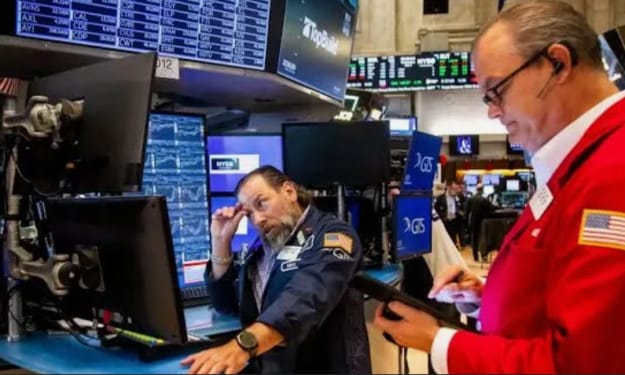
Dow futures fall as Trump officials signal limited breathing room before tariffs ‘boomerang back’
**Dow Futures Fall as Trump Officials Warn of Tariff Repercussions** U.S. stock index futures fell early Monday morning after key Trump administration officials signaled that there may be limited time before escalating tariffs on China and other trade partners start to backfire on the American economy. Dow futures dropped more than 150 points as markets digested growing signs that trade tensions are not just here to stay—but may intensify in ways that hurt domestic industries.
By GLOBAL NEWSabout a year ago in History
The Blood of Karbala
In the scorching heat of the desert of Karbala, a tragedy unfolded that would echo through the ages, engraving itself into the heart of every believer. It was the 10th of Muharram, 61 AH. The sands were stained with the blood of the noblest of men, and the heavens wept as the grandson of the Prophet Muhammad ﷺ, Hazrat Hussain ibn Ali (RA), stood firm in the face of tyranny.
By Khalid khanabout a year ago in History
Gorée Island Echoes from the Atlantic Shore
Gorée Island A Historical Testament to Pain and Memory Nestled just three kilometers off the coast of Dakar, Senegal, lies a small island with a weighty past — Gorée Island. Known for its pastel-colored colonial houses and serene ocean views, the island belies a dark and painful legacy as a major center of the transatlantic slave trade. Despite its modest size, Gorée has become one of the most emotionally powerful places in Africa, drawing visitors from around the world to witness and reflect on its tragic past.
By Mukhtiar Ahmadabout a year ago in History
the lost map of santorini
It was the summer of 2022 when Maya Kapoor, a 27-year-old travel blogger from Mumbai, arrived on the sparkling Greek island of Santorini. Known for her Instagram page filled with exotic destinations and beautifully edited vlogs, this trip wasn’t meant to be about content. This time, Maya was tired — of algorithms, of online expectations, and most of all, of pretending to be “living the dream.” She needed something real. Something raw.
By haider aliabout a year ago in History