Books
The Republic We Were Meant to Keep
The United States is not a monarchy. It is also not a democracy, at least not a direct or pure one. What we have is a constitutional republic, a system of government designed with layers of accountability, separation of powers, and checks and balances so that no single ruler, party, or majority can dominate the rest. Our representatives are democratically elected, but their authority is limited by the Constitution. The will of the people matters, but only within the guardrails of law. That distinction is the cornerstone of liberty.
By Peter Thwing - Host of the FST Podcastabout a year ago in History
Adolf Hitler: The Rise, Reign, and Ruin of a Dark Vision
In the annals of history, few names strike fear, fascination, and horror as powerfully as Adolf Hitler. His story is one of obsession, ambition, and destruction—a tale of how one man’s ideology reshaped the world and left a scar that can never fully heal.
By Fazal wahid about a year ago in History
Breaking Barriers: Jesse L. Brown's Historic Achievement and the Legacy of the USS Jesse L. Brown
Breaking Barriers: Jesse L. Brown's Historic Achievement and the Legacy of the USS Jesse L. Brown On October 21, 1948, a young man from Mississippi pinned on his wings and changed history forever. Jesse L. Brown stepped into the cockpit as the first African-American naval aviator in the U.S. Navy. His story breaks through barriers and lights the way for others. Imagine facing doubt at every turn, yet pushing forward to fly high. This moment came right after World War II, when the military started to open doors for Black service members. Back then, segregation ruled much of the South and the armed forces. African Americans fought for a spot in the skies, but rules kept them grounded. Brown's success marked the start of real change in naval aviation.
By Story silver book about a year ago in History
Room 207 – The Haunted Hostel That Taught the Value of Time
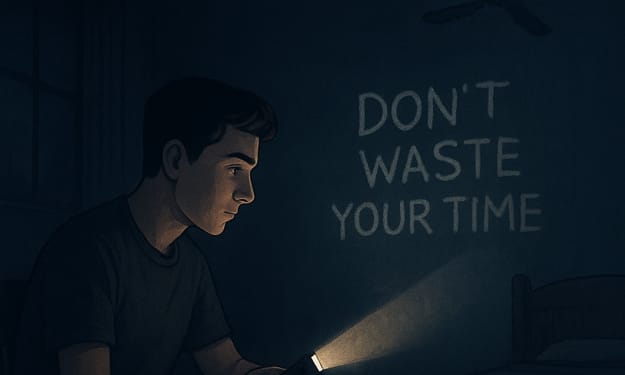
🕯️ Room 207 It was the first week of college, and the boys’ hostel was alive with laughter, music, and the chaos that only new beginnings can bring. Among the hundreds of students dragging their suitcases down the long, echoing corridors, Ahmed stood out — quiet, curious, and eager to start fresh. When the warden handed him his room key, he smiled politely. “Room 207,” the warden said. “Top floor, end of the hallway.” Then, almost as if by reflex, he added under his breath, “No one’s lasted there long.” Ahmed raised an eyebrow. “Why?” The warden looked away. “You’ll be fine,” he said curtly and walked off. --- The Room Room 207 was old — older than the rest of the hostel. The paint on the walls peeled in thin strips, the ceiling fan groaned like it carried secrets, and the window rattled every time the wind blew through the courtyard. But it had a good view — the college tower on one side and the football field on the other. Ahmed liked it. That night, he unpacked, played some music, and started arranging his books. Around midnight, when the hostel lights dimmed, he noticed something odd on the wall behind the study desk — faint white chalk marks. He leaned closer. It said: > “Don’t waste your time.” He smiled. “Some senior’s idea of a joke,” he thought, and rubbed it off. --- The Whisper Two nights later, while he was studying for his first quiz, the lights flickered and went out. The whole building fell silent except for the rain tapping against the window. He took out his phone flashlight — and froze. The same message was back on the wall. Fresh. > “Don’t waste your time.” This time, the handwriting looked… different. More deliberate. More recent. Ahmed laughed nervously, trying to shake off the chill creeping up his spine. “Must be one of the guys pulling a prank,” he muttered. But the door was locked from inside. He didn’t sleep much that night. --- The Story of Salman A few days later, Ahmed was chatting with his roommate from next door, Bilal, when he casually mentioned the writing on the wall. Bilal’s face went pale. “You don’t know about that room?” he asked. Ahmed frowned. “What about it?” Bilal looked around, lowered his voice, and said, “There used to be a student named Salman in that room. Brilliant guy. Always top of his class. But during finals last year, he… well, he didn’t make it.” Ahmed stared. “What do you mean?” Bilal sighed. “He pushed himself too hard. Barely slept, barely ate. The night before his last exam, they found him unconscious at his desk. Heart failure. He’d been awake for three nights straight.” He paused. “After that, people said strange things started happening in 207. The message started appearing — the same words Salman used to tell everyone: ‘Don’t waste your time.’” Ahmed didn’t know what to say. He laughed it off, but deep down, the story stayed with him. --- The Change That night, Ahmed sat at his desk again, staring at the blank wall. He whispered, “If you’re still here, Salman, I hear you.” From then on, things were different. He started managing his time better. He woke early, studied with focus, and took breaks when needed. The wall remained blank for weeks — until one night before finals. When Ahmed came back from the library, exhausted, he noticed a faint glow on the wall. The same words had returned: > “Don’t waste your time.” But this time, there was something new below it. > “You’re doing well.” He stood still for a long time, heart pounding — not from fear, but from something else. Gratitude. --- Graduation Day Three years passed. Ahmed became one of the top students in his department. Everyone admired his discipline and calm confidence. When people asked how he managed to stay so consistent, he always smiled and said, > “Someone once reminded me that time is precious.” The day he graduated, he returned to Room 207 one last time. The hostel was quieter now, almost peaceful. He unlocked the door, stepped inside, and looked around. The same peeling paint, the same creaking fan — and the same wall. He picked up a piece of chalk from the desk and wrote carefully beneath the old message: > “Thank you, Salman. Your words changed my life.” Then he placed his graduation cap on the desk, as if leaving a gift for an old friend. --- Years Later Five years later, a new batch of students arrived. One of them, a first-year named Hassan, got assigned to Room 207. The warden hesitated but handed him the key anyway. That night, as Hassan unpacked, he noticed faint words on the wall. > “Don’t waste your time.” He chuckled. “Must be the previous student’s handwriting,” he thought. He turned on some music, sat down to study — and for a brief moment, felt as if someone was sitting beside him, quietly turning the pages of his notebook. From that day, Hassan never procrastinated again. --- The Legacy Room 207 became more than just a room — it became a quiet legend. Students whispered about it in the mess hall, seniors warned juniors not to take it lightly, but those who stayed there always came out changed. Some said they felt a presence that pushed them to do better. Others claimed that whenever they were about to give up, they’d find that same message reappearing — glowing faintly on the wall. > “Don’t waste your time.” No one ever erased it completely. It became a symbol — a reminder that some lessons are too powerful to fade, even with time. --- The Realization One evening, Ahmed returned to campus as a guest lecturer. After his talk, he visited the old hostel, just for nostalgia. The corridors still smelled the same — like damp walls and chai. When he reached the third floor, he paused in front of Room 207. The door was open, light spilling into the hallway. Inside, a student sat studying, unaware of Ahmed standing there. The chalk writing was still visible on the wall — the same words that had once changed his life. Ahmed smiled, whispered softly, > “You kept your promise, Salman.” And as he turned to leave, the fan above creaked — once, gently — as if someone was acknowledging him. Outside, the sun dipped below the horizon, and the hostel lights flickered on, one by one. But in Room 207, the light never really went out. --- ✨ Moral: > Some people leave this world, but their lessons stay alive — written not just on walls, but in the hearts of those who choose to listen.
By Muhammad Daud about a year ago in History
The Historical and Logical Case for Jesus Christ, the Son of God
The following is not an appeal to blind faith or emotion. It is a reasoned argument grounded in history, logic, and evidence. Whether one accepts the divinity of Jesus Christ or not, the data surrounding His life, death, and resurrection demand an intellectually honest examination. Truth, by nature, does not depend on belief to exist; it simply is.
By Peter Thwing - Host of the FST Podcastabout a year ago in History