Books
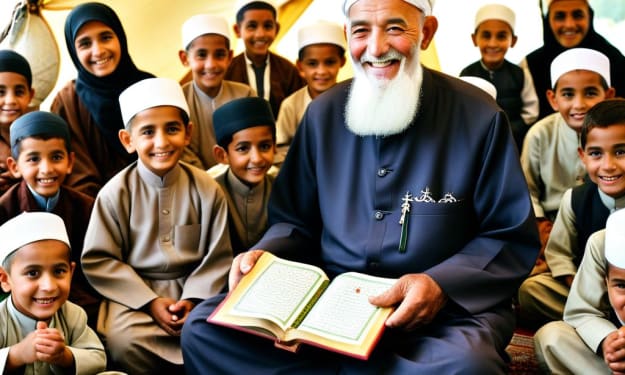
Inspiring Muslim Figures: Lessons from Their Noble Actions
1. The Prophet Muhammad (PBUH): A Beacon of Mercy and Justice The Prophet Muhammad (peace be upon him) stands as the ultimate example of moral excellence and leadership. His life embodies mercy, compassion, and justice, making him an enduring role model for Muslims and non-Muslims alike.
By youssef mohammed2 years ago in History
The Appearance of Lord Jagannatha
The Divine Plan for Jagannatha’s Manifestation Five thousand years ago, Lord Krishna, along with His elder brother Balarama and His younger sister Subhadra, visited Kurukshetra in a chariot during a solar eclipse. This event became the inspiration for the later manifestation of the deities of Jagannatha, Balarama, and Subhadra. About two thousand years after this visit, King Indradyumna of Orissa, a great devotee of Lord Vishnu, desired to establish a temple in Puri with deities representing this divine journey.
By Himansu Kumar Routray2 years ago in History
THE LAST ARENA
The Last Arena Eirik remained at the edge of the precipice, the salt breeze pulling at his hair as the principal light of day break broke into the great beyond. Underneath him, the town of Eldfjall mixed to life. The crash of mallet on metal reverberated from the smithy, where metal forgers molded blades and safeguards for the champions getting ready for the fight to come. The air was thick with the scents of fire, steel, and ocean. It was a universe of solidarity, yet underneath that strength, Eirik felt something different—something weighty, a biting sense that the next few days would request a greater amount of him than he was prepared to give.
By Chronicle Canvas2 years ago in History
The Legacy of King Baldwin IV: The Leper King of Jerusalem
The Legacy of King Baldwin IV: The Leper King of Jerusalem Introduction King Baldwin IV of Jerusalem, known as the "Leper King," is one of the most enigmatic and inspirational figures of the Crusader period. Despite suffering from leprosy, a debilitating disease, Baldwin displayed extraordinary resilience, wisdom, and courage, ruling the Kingdom of Jerusalem during a tumultuous time. His short yet impactful reign has fascinated historians and storytellers alike, as it represents a tale of leadership, endurance, and the struggle to maintain peace and power in the Holy Land during the 12th century. Early Life and Diagnosis Baldwin IV was born in 1161 to King Amalric I of Jerusalem and Queen Agnes of Courtenay. From a young age, Baldwin exhibited unusual physical symptoms. It was his tutor, William of Tyre—a notable historian and archbishop—who first identified Baldwin's insensitivity to pain, particularly when the boy felt no discomfort after injuring his hand. This was a chilling early sign of leprosy, a disease then feared for its contagiousness, stigma, and lack of cure. Despite the grim prognosis, Baldwin was provided with a rigorous education. He learned Latin, theology, warfare, and diplomacy under the guidance of his tutors, who prepared him for leadership in a volatile political landscape. By the time of his father’s death in 1174, Baldwin, at just 13 years old, ascended to the throne as King Baldwin IV. The Kingdom of Jerusalem and Political Challenges The Kingdom of Jerusalem was a Crusader state established during the First Crusade, holding significant religious and strategic importance. Baldwin inherited the throne at a time of immense external and internal pressures. Internally, factional disputes among the nobles weakened the kingdom. Externally, the Muslim forces, led by the rising power of Saladin, threatened the Crusader states. Despite his youth and illness, Baldwin IV quickly demonstrated an aptitude for leadership. His regency under Raymond III of Tripoli ensured stability during the early years, but Baldwin took control of his kingdom as he matured. His leprosy did not weaken his resolve; instead, it seemed to embolden him to act with urgency and determination. Baldwin IV as a Warrior King One of Baldwin's most notable traits was his unwavering courage on the battlefield. Despite his deteriorating health, he led his army with remarkable skill and charisma. Baldwin’s most famous military success came in 1177 during the Battle of Montgisard. In this battle, Saladin, the powerful Sultan of Egypt and Syria, launched a large-scale invasion of the Kingdom of Jerusalem. Baldwin, though severely ill, led a significantly smaller Crusader army against Saladin's forces. Riding with his men and clad in armor, the young king inspired his troops to a stunning victory, routing Saladin’s forces and forcing the Sultan to retreat. The victory at Montgisard was celebrated as a miraculous triumph, solidifying Baldwin's reputation as a capable and fearless leader. He became a symbol of hope for the Crusader states, proving that even a king suffering from leprosy could defy the odds. Baldwin’s Diplomacy and Struggles Baldwin IV was not just a warrior but also a shrewd diplomat. He understood the necessity of forming alliances and maintaining a delicate balance of power. He sought to strengthen ties with the Byzantine Empire and encouraged the arrival of reinforcements from Europe. However, his reign was marred by internal discord. Factions within the nobility, such as those led by his mother’s family and other Crusader lords, often competed for influence. Baldwin had to navigate these rivalries while dealing with his declining health. To secure succession and protect the kingdom, Baldwin arranged the marriage of his sister, Sibylla, to Guy of Lusignan. However, Guy’s leadership proved controversial and divisive, further complicating the kingdom's political landscape. The Decline of Health and the End of Baldwin IV’s Reign Leprosy is a progressive disease, and as Baldwin grew older, its effects became more severe. His eyesight began to fail, and his body weakened, rendering him unable to ride or actively lead his forces. Yet Baldwin refused to abdicate his responsibilities. Even when physically incapacitated, he continued to govern from his sickbed, issuing orders and making strategic decisions. In 1183, Baldwin crowned his nephew, Baldwin V, as co-king to ensure a smooth succession. However, Baldwin IV’s health rapidly declined, and by 1185, he succumbed to the disease. He was only 24 years old at the time of his death, leaving behind a kingdom facing the brink of collapse. Legacy and Impact
By Say the truth 2 years ago in History
Spiritual Versus Religion
The terms spirituality and religion are often used interchangeably but are considered quite different in most aspects. Both represent the way to understand higher explanations of life, such as who we are, why we are here, and what happens after this life. However, their approaches, practices, and meanings can differ significantly.
By Taviii🇨🇦♐️2 years ago in History
"WW2 Uncovered: Secrets & Shocking Truths You Never Knew About the Greatest Conflict!"
World War II: A Global Conflict and its Enduring Legacy World War II was one of the deadliest conflicts in history, with an estimated total of over 70 million people losing their lives. This staggering number represents roughly 3% of the world’s population at the time. The war left nations shattered and plunged the world into a new era marked by unprecedented change. Its influence is felt even today, as we analyze its causes, key events, and lasting effects. The Road to War: Causes and Tensions The Treaty of Versailles and its Consequences The Treaty of Versailles, signed in 1919, imposed heavy reparations on Germany, amounting to about $132 billion. This led to deep resentment among Germans, who felt humiliated and economically strained. The loss of territories like Alsace-Lorraine and significant military restrictions only added to the instability in Europe, setting the stage for future conflict. The Rise of Fascism and Nazism Amidst the economic turmoil, totalitarian regimes began to gain power. In Italy, Benito Mussolini promoted fascism, while Adolf Hitler's Nazi Party rose in Germany. These regimes shared expansionist desires, aiming for military conquest. Early acts of aggression included Germany’s remilitarization of the Rhineland in 1936 and Italy’s invasion of Ethiopia in 1935, which showcased their ambitions. Appeasement and the Failure of Diplomacy Britain and France adopted a policy of appeasement, hoping to avoid war by conceding to some of Hitler's demands. A key example is the Munich Agreement of 1938, where they allowed the annexation of Sudetenland. This approach ultimately failed, as it only emboldened Hitler to further aggression. The Major Players and Theaters of War The Axis Powers The Axis powers consisted of Germany, Italy, and Japan. Germany, with over 4 million soldiers, led groundbreaking military strategies like Blitzkrieg, focusing on speed and surprise. Casualties for the Axis were staggering, with millions perishing by war’s end. The Allied Powers The Allies, including Britain, the United States, and the Soviet Union, fought bravely against the Axis. For example, by 1943, the U.S. had amassed over 12 million soldiers. The Allies suffered immense losses, with Soviet casualties alone estimated at around 27 million, showcasing the brutal nature of warfare. Major Battles and Turning Points Significant battles marked crucial shifts in the war. The Battle of Stalingrad (1942–1943) saw the USSR defeat Germany, turning the tide on the Eastern Front. In 1944, the D-Day invasion at Normandy involved over 156,000 Allied troops landing on the beaches of France, demonstrating remarkable strategy. General Dwight D. Eisenhower famously stated, "The eyes of the world are upon you," emphasizing the operation's importance. The Holocaust and War Crimes The Systematic Persecution of Jews and Other Groups The Holocaust stands as one of the most horrific chapters of WWII. Approximately 6 million Jews, alongside millions of others including Romani, disabled individuals, and political dissidents, fell victim to Nazi policies. Propaganda depicted these groups as threats, justifying their persecution. War Crimes and Atrocities Alongside the Holocaust, numerous war crimes occurred. The brutal occupation of Poland saw widespread executions and forced labor. The Rape of Nanking in 1937 involved horrific atrocities committed by Japanese troops against Chinese civilians, highlighting the cruelty of war. The Nuremberg Trials Following the war, the Nuremberg Trials were held to prosecute Nazi war criminals. These landmark trials established the principle of accountability, with figures like Justice Robert H. Jackson stating, "The wrongs which we seek to condemn and punish have been so calculated and so malignant." They laid the groundwork for modern international law. The End of the War and its Aftermath The Atomic Bombings of Hiroshima and Nagasaki In August 1945, the United States dropped atomic bombs on Hiroshima and Nagasaki, resulting in over 200,000 deaths. The decision to use these weapons was aimed at hastening Japan's surrender but sparked ongoing debates about morality and necessity. The Surrender of Japan and Germany Germany surrendered unconditionally on May 8, 1945, after relentless Allied pressure. Japan followed suit on September 2, 1945, with Emperor Hirohito stating, "The war situation has developed not necessarily to Japan's advantage,” marking the end of the conflict. The Beginning of the Cold War The aftermath of WWII led to the emergence of the Cold War. Tensions rose between the United States and the Soviet Union, as each sought to expand its influence. This divide resulted in decades of political conflict and military preparedness. The Enduring Legacy of World War II Geopolitical Shifts and the Formation of the UN WWII resulted in significant geopolitical changes. The formation of the United Nations aimed to prevent future conflicts. The new organization emphasized international cooperation and diplomacy, reflecting lessons learned from the war. Technological Advancements and Their Impact The war accelerated technological advances, including radar, jets, and medical innovations like antibiotics. Many inventions continued to shape industries and everyday life in the decades following the war. Remembering and Learning from the Past To truly grasp the impact of WWII, engaging with history is vital. Resources for deeper understanding include: Books: "The Second World War" by Antony Beevor Documentaries: "The World at War" Museums: United States Holocaust Memorial Museum Conclusion World War II reshaped the world in countless ways. By examining its causes, major events, and aftermath, we gain vital insights into our past. Understanding this conflict helps us navigate today's complex global landscape, reminding us of the importance of peace and diplomacy. Reflecting on these lessons allows for meaningful actions toward preventing future conflicts.
By Story silver book 2 years ago in History
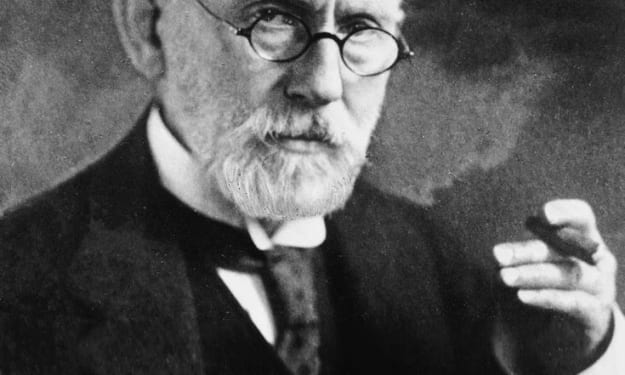
Paul Ehrlich: A Pioneer in Medicine and Immunology
Paul Ehrlich: A Pioneer in Medicine and Immunology Paul Ehrlich (1854–1915) was a German physician and scientist whose groundbreaking work in immunology, hematology, and chemotherapy revolutionized modern medicine. Widely regarded as a pioneer, his discoveries laid the foundation for many therapeutic advancements and scientific methodologies. Below is an overview of his life, career, and significant contributions to science.
By Mahalakshmi2 years ago in History
Ivan Pavlov: The Pioneer of Classical Conditioning
Ivan Pavlov: The Pioneer of Classical Conditioning Introduction Ivan Petrovich Pavlov (1849–1936) was a Russian physiologist renowned for his groundbreaking research on conditioned reflexes. His experiments with dogs not only transformed our understanding of behavior but also laid the foundation for modern psychology, neuroscience, and education. Pavlov's work transcends disciplinary boundaries, influencing areas like psychiatry, learning theory, and behavioral therapy.
By Mahalakshmi2 years ago in History
Christmas Through the Ages
1. Early Christian Identity (221 AD) The celebration of Christmas on December 25 was first recorded by Julius Africanus VI in 221 AD. He linked the date to the Day of the Annunciation (March 25) which was believed to coincide with the vernal equinox. According to this logic, on December 25, nine months were completed, ending with the birth of Christ.
By Muhammad Rashid2 years ago in History
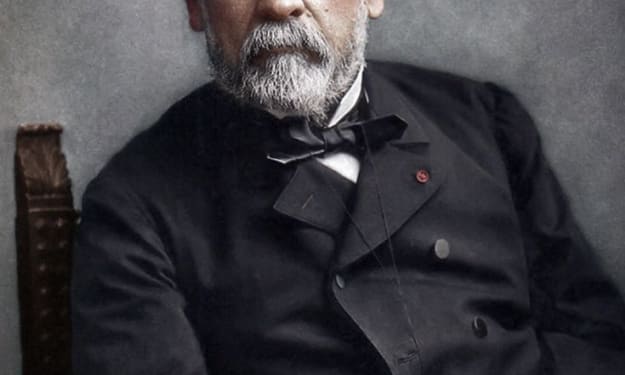
Louis Pasteur: Pioneer of Microbiology and Immunology
Louis Pasteur: Pioneer of Microbiology and Immunology Louis Pasteur (1822–1895) was a French chemist and microbiologist whose groundbreaking work revolutionized science and medicine. Known as the father of microbiology, Pasteur's contributions to germ theory, pasteurization, and vaccination have saved countless lives and continue to shape modern scientific practices.
By Mahalakshmi2 years ago in History